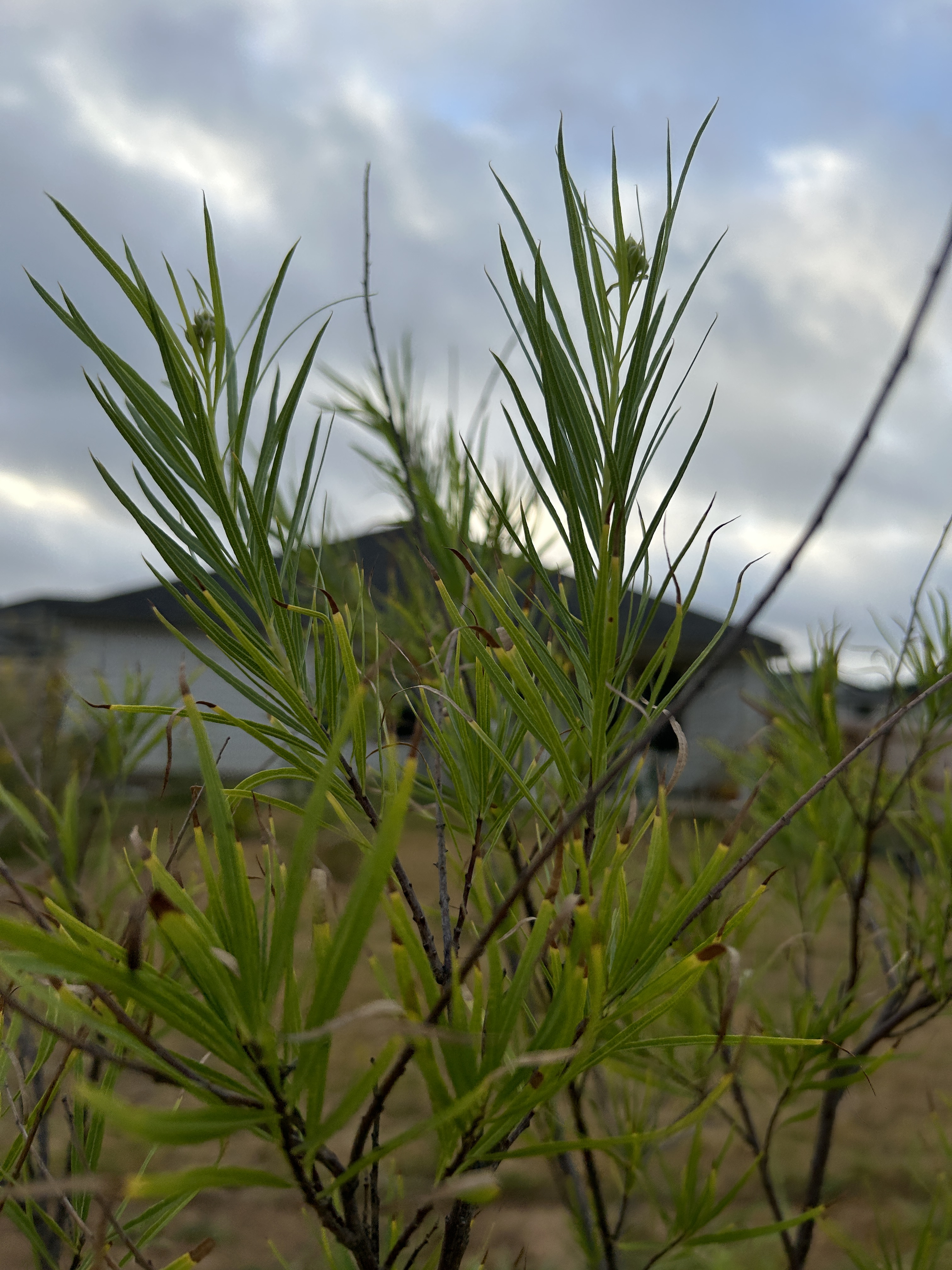
When I started constructing this wildlife-friendly garden in 2023, I knew that native milkweed plants would eventually be included (to provide a place for Monarch butterflies to breed). However, I had more pressing priorities to deal with first and I didn’t start adding milkweeds until last year.
On the subject of Monarchs, you don’t necessarily have to have milkweed plants to support that population. A key need for them is food during their fall migration, and so if you have nectar plants that bloom during September to November, you are already doing a lot to help Monarchs and other pollinators.
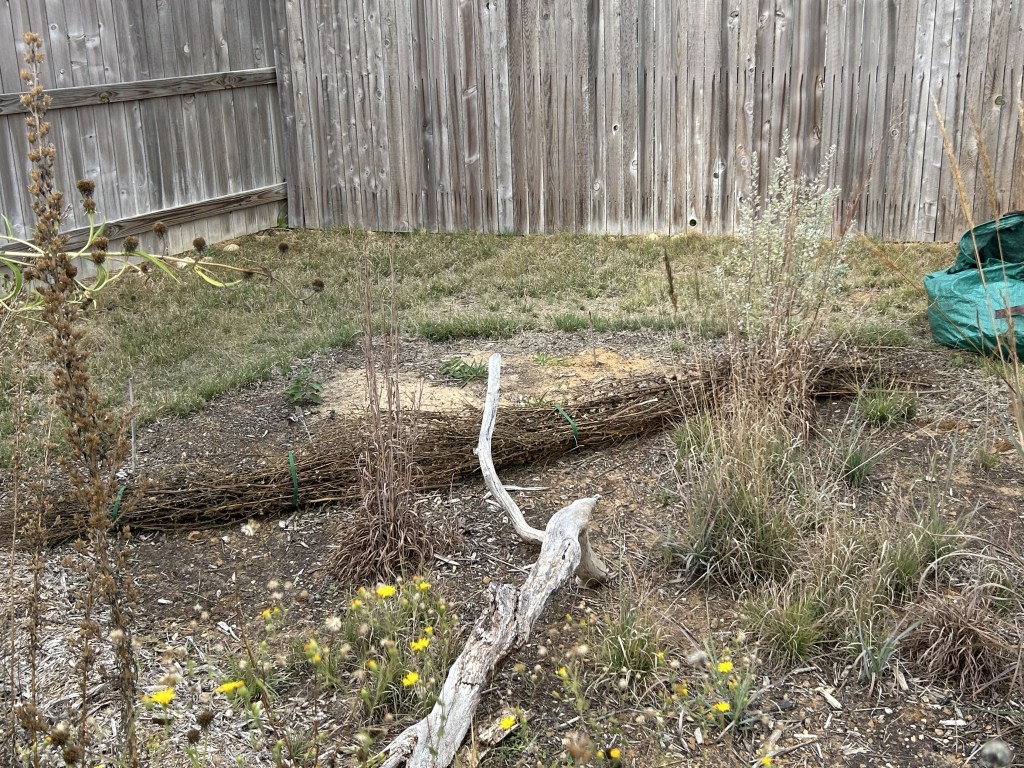
The little area at the back of the garden that I have set aside for milkweeds has suffered some significant soil erosion in the past two years. When rainfall is enough to flow across land in our development, water from neighboring lots enters at the back right corner, and then moves diagonally across the garden until it flows beside the house and onto the street. The photo at the top of this post shows this area, looking towards the back fence where run-off initiates.
Over time, as my plants grow and put down longer roots, I hope to capture more water within the garden and reduce run-off. However, the current situation is that I’ve lost what little good soil I had in the milkweed area and have struggled to get milkweeds established. Those two facts may or may not be related.
These are milkweeds that I have planted or seeded so far. The first three in this list were the ones I was advised were best suited for the Seguin environment.
- Antelope Horns Milkweed (Asclepias asperula)
- Green Milkweed (Asclepias viridis)
- Zizotes Milkweed (Asclepias oenotheroides)
- Butterflyweed (Asclepias tuberosa)
- Arizona Milkweed (Asclepias angustifolia)
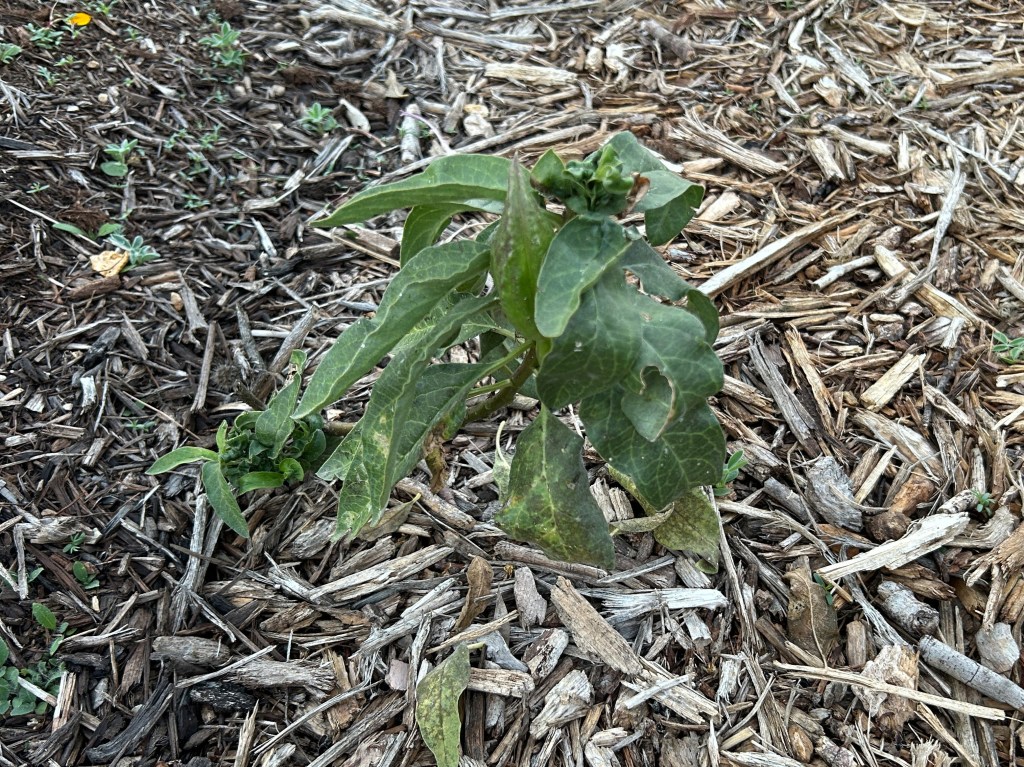
Currently growing (in November 2025) I see Antelope Horns, Zizotes, and Butterflyweed. Zizotes has already self-seeded to several other places in the garden, so that at least seems to be happy here. The Zizotes doesn’t always choose the most convenient locations to grow — here’s one in the middle of a mulch pathway (with a seed pod forming).
Native milkweeds tend to die back over the winter, so if I don’t see a particular plant right now, it might still re-emerge in spring. However, most of the time that has not been the case for me, and my plants have remained small so far. For instance, a mature clump of Antelope Horns Milkweed can be 1-2 feet across, and yet mine have barely managed a strand or two and they have never bloomed.
As a fall project, I have made a couple of modifications to the milkweed area. One is to make small berms out of pruned stems and mulch, and the other is to add more soil.
Here’s a photo of the area after I had bundled up some pruned annual plant stems to start construction of a berm. You can see how badly eroded the soil is.
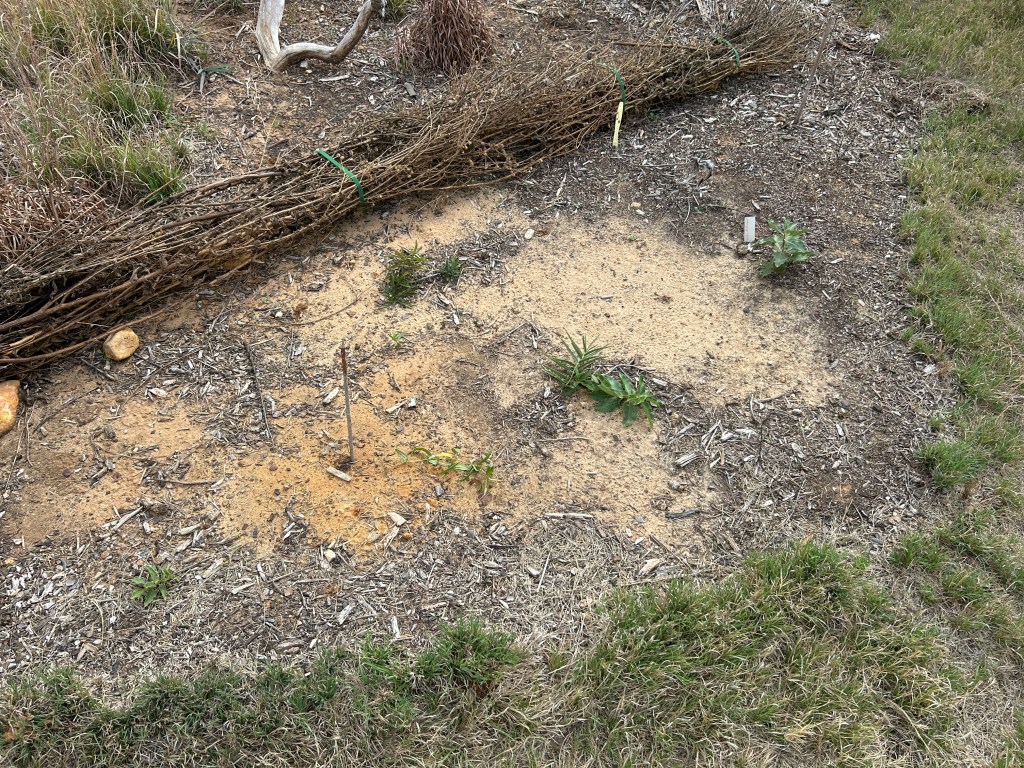
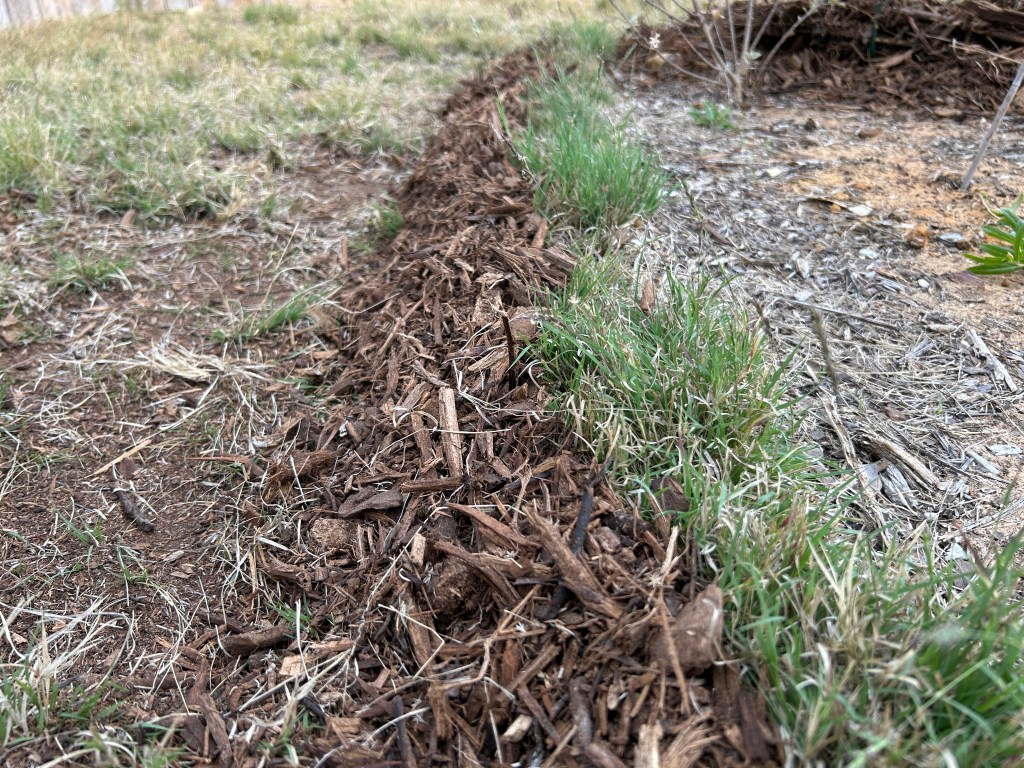
Then I added mulch to the berm, and also used mulch to make a small ridge between the grass border and the milkweed bed area.
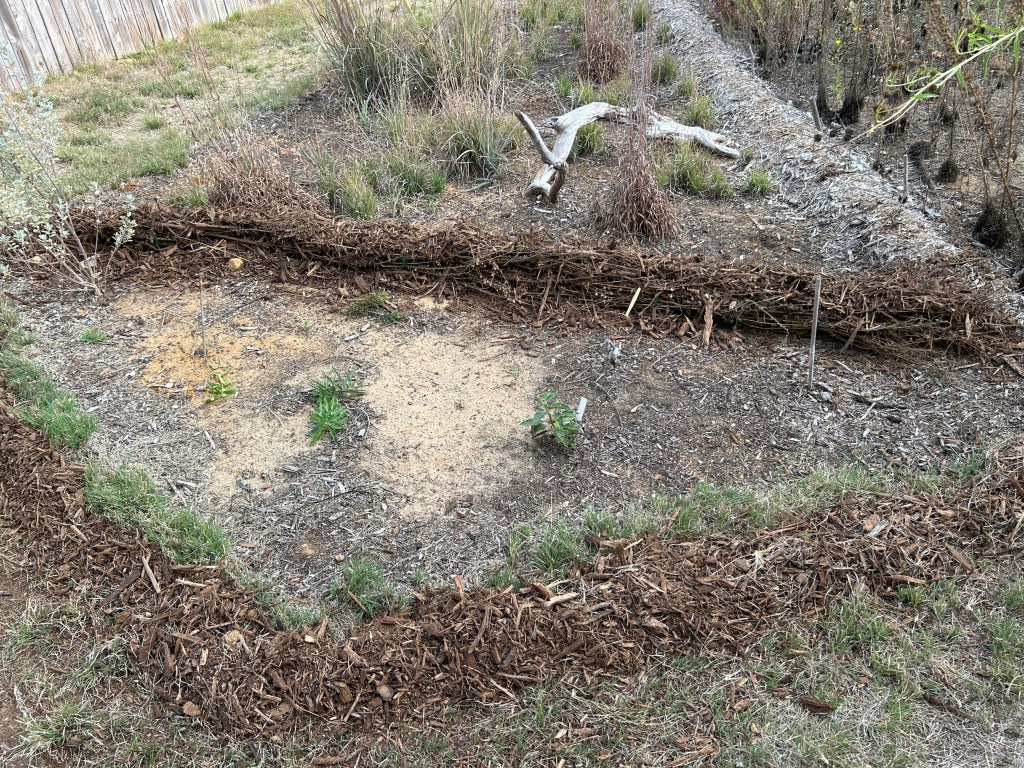
When I first constructed this milkweed area, I put a line of mulch between the grass and the soil. Over time, the grass grew into a ridge up against the mulch, and then the mulch eventually washed away. I’ve left the grass ridge in place, and this time have put mulch on the other side of it.
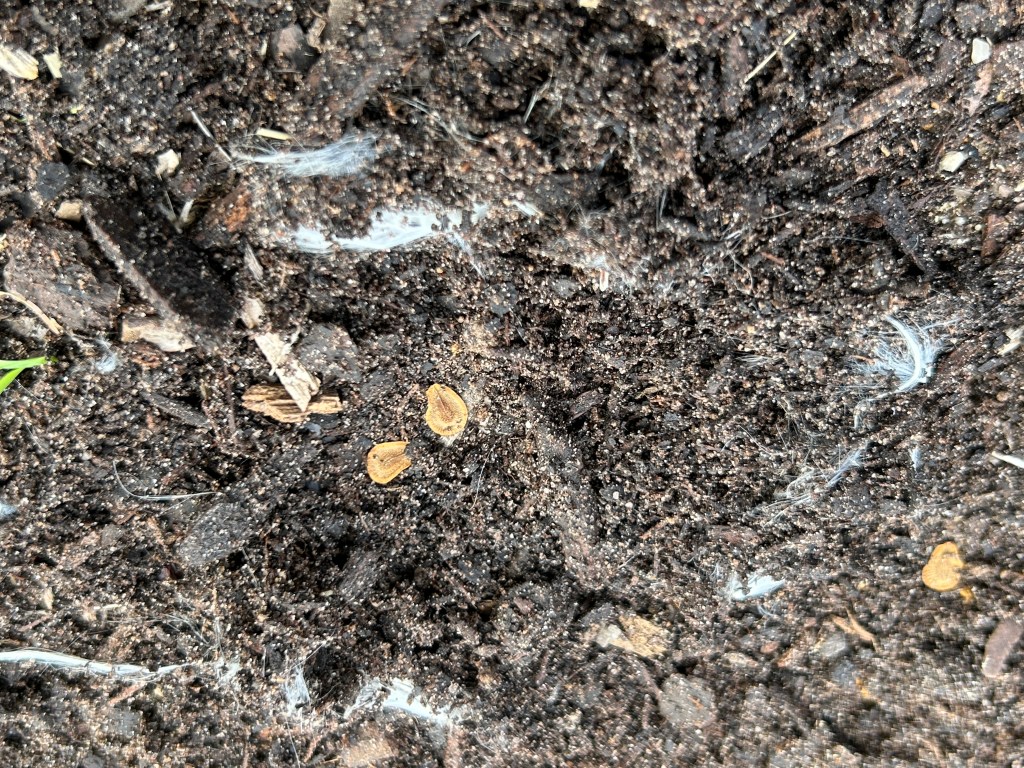
Then I added some new soil that also contained some Antelope Horns Milkweed seeds (they are the flat orange-colored pieces in the second photo below).
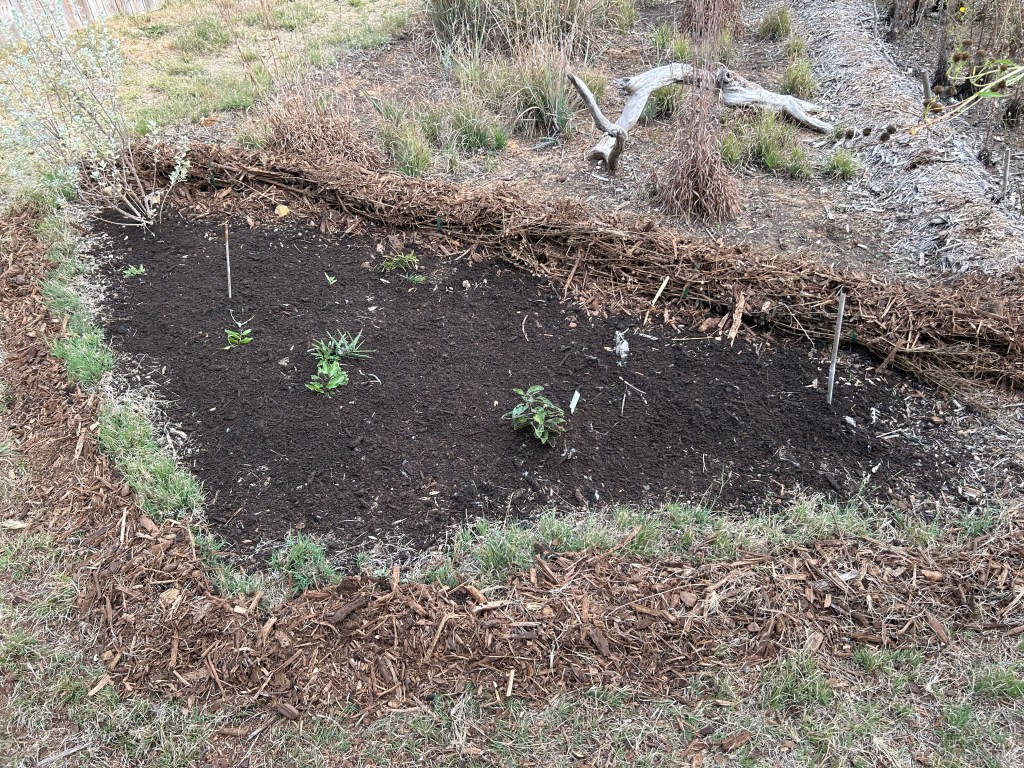
Here’s an update after I wrote the above but before I published it. Last night there was 1.73 inches of rain (much needed!). The mulch berms stayed in place, but the soil in the milkweed area was moved around. I think that I will continue to add light layers of soil, compost, or mulch as needed until there are more plants in the area to hold it in place.


 Rewilding My Lot
Leave a comment