I am used to seeing mushrooms occasionally pop up, especially in areas with mulch or after moist conditions. These are welcome, because fungal activity helps to recycle nutrients and my impoverished soil needs all the help it can get.
There are three types of fungal growth in the wildflower meadow area in front of the house that I haven’t seen before. I wanted to find out what they were because (1) I’m curious, and (2) I wanted to be sure they weren’t indicative of a problem. I don’t have good knowledge or resources for precise identification of fungi, but I think I’ve got reasonably close with these.
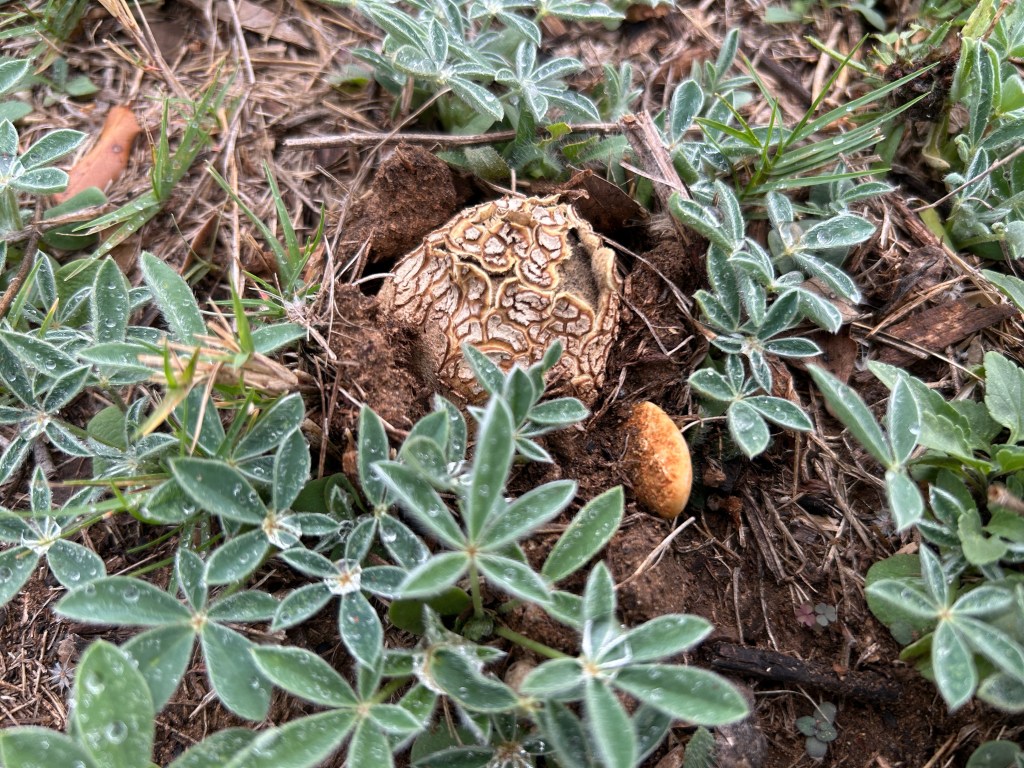
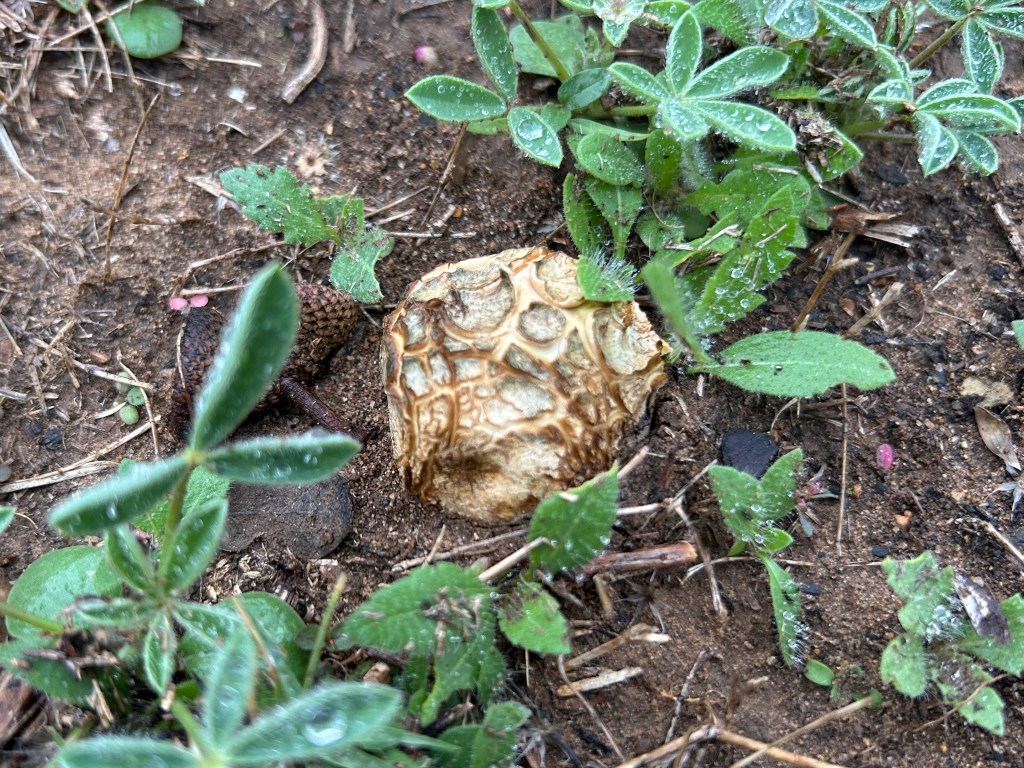
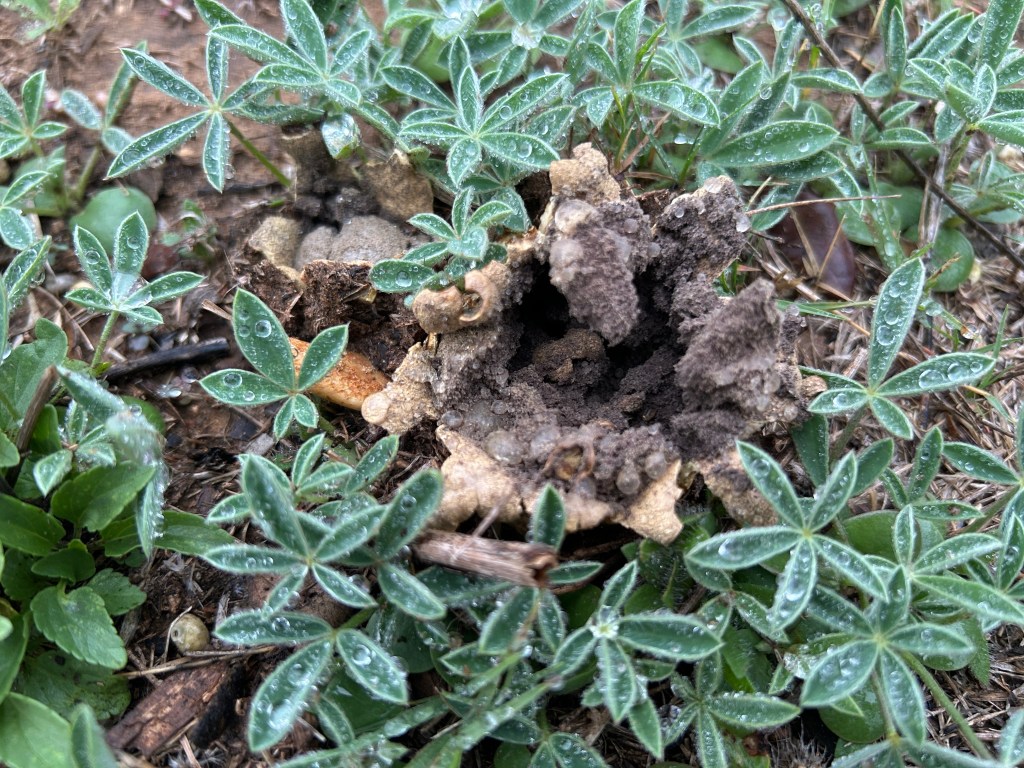
Two of the growths, just a few inches apart, are probably earthballs (Scleroderma sp.). They have a hard skin (hence the scientific name) with dark spores inside. Most species of earthball are thought to be mycorrhizal, meaning that they have a cooperative and beneficial relationship with plant roots. The fruiting bodies start their lives buried, usually near trees, and then force their way above ground. This is exactly what mine have been doing (near an oak tree), and one of them has burst open to reveal its interior. I’ve been watching these for about a month now.
One of the sources I read for information about earthball fungi was this page from Mushroom Appreciation, which contains a delightful statement addressed to homeowners who might not want these actually helpful fungi in their manicured lawns:
“The truth is these unsightly fungi are likely improving the health of your soil by breaking down decaying material and generating helpful nutrients. While they aren’t the prettiest, they are serving the health of your lawn.
The upside is that these little buggers don’t stick around very long. Their life cycles are quite short, so their unsightliness isn’t permanent. Our recommendation is to accept them as part of the natural world; they’re not hurting anything and, in fact, are helping. Also, it might be time to reevaluate the importance of a pristine lawn.”
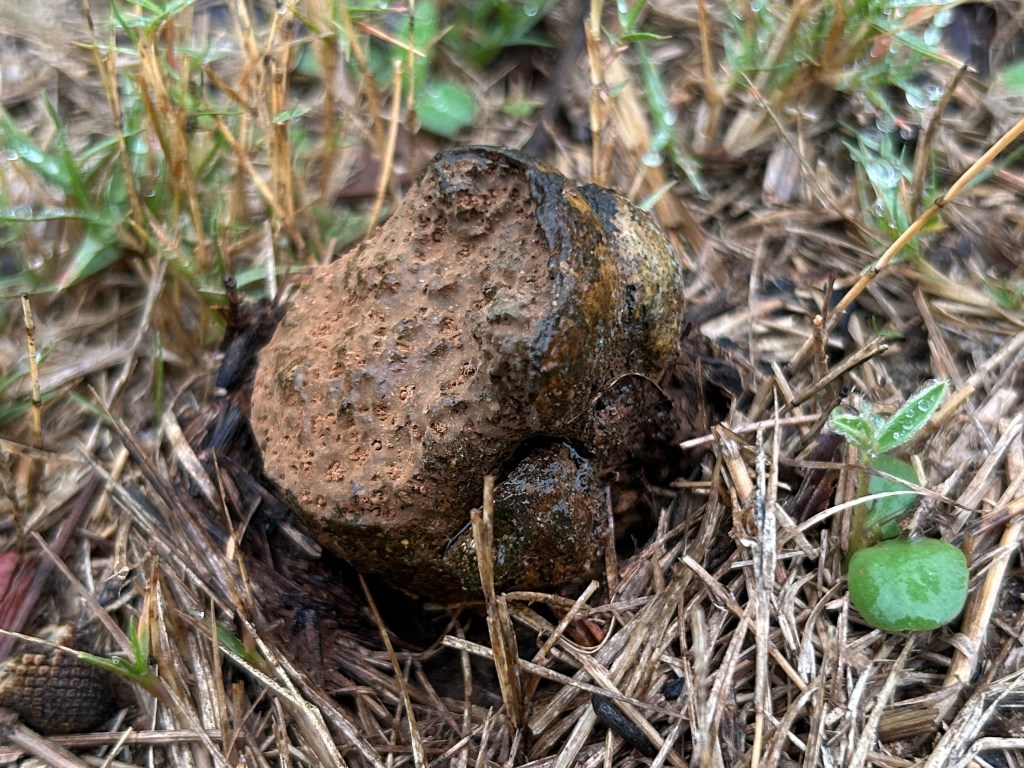
Another two fungal growths nearby are possibly Pisolithus arhizus, which goes by a variety of apt common names such as dog turd fungus, dead man’s foot, or dyeball. Pisolithus, like the nearby earthballs, have fruiting bodies that push their way up from underground, feature thick skins and dark spore interiors, function as helpful mycorrhyzae, and are considered to be ugly!
Here are photos of the two growths I see (also near an oak tree):

More widespread throughout the wildflower meadow, I found multiple small clusters of a white fuzzy fungus. This might be Chromelosporium sp.
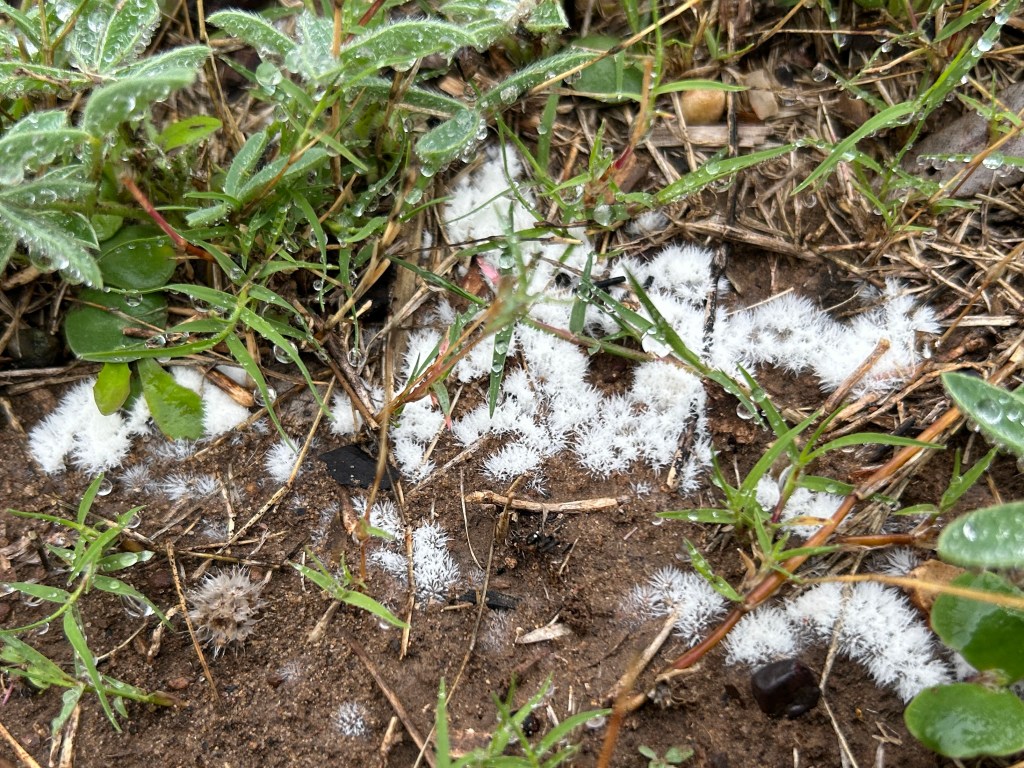
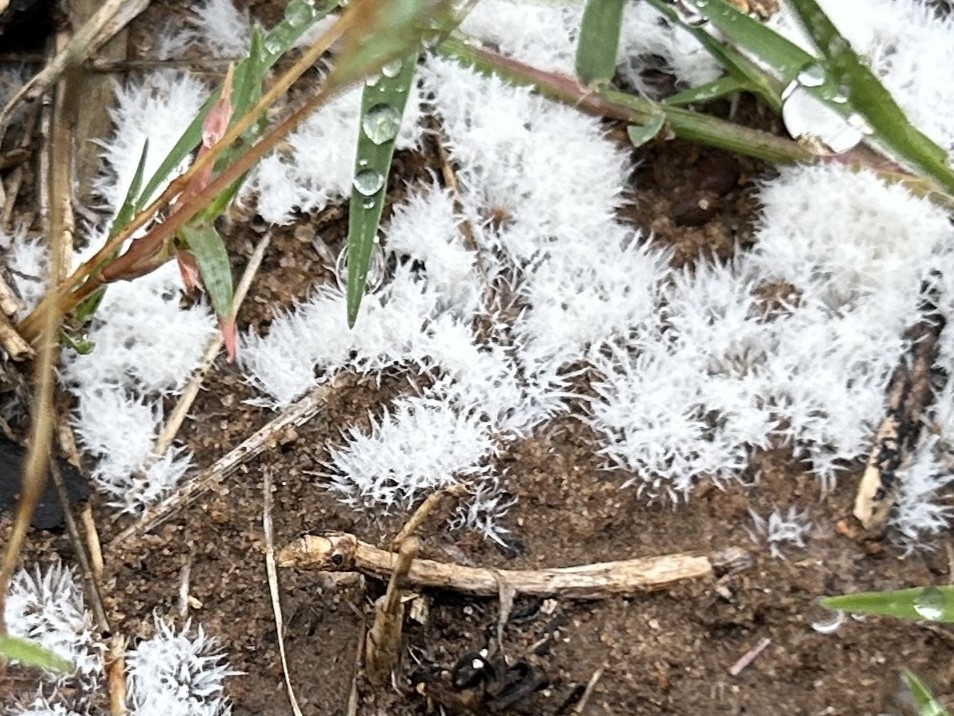
One example of this genus is Peat Mold (Chromelosporium fulvum), which is found in east and central Texas, typically growing on soil, plant debris, and dung.
In summary, I find all this fungal activity in the wildflower meadow encouraging. Because the area has many annual plants that last only one season, their roots decay each year to add nutrients to the soil. We live in a new housing development with poor quality soil brought in by the builder to replace the original soil that was scraped away. Therefore, improving soil health here is a major priority and I want to use an organic approach to that, avoiding chemical fertilizers.


 Rewilding My Lot
Leave a comment