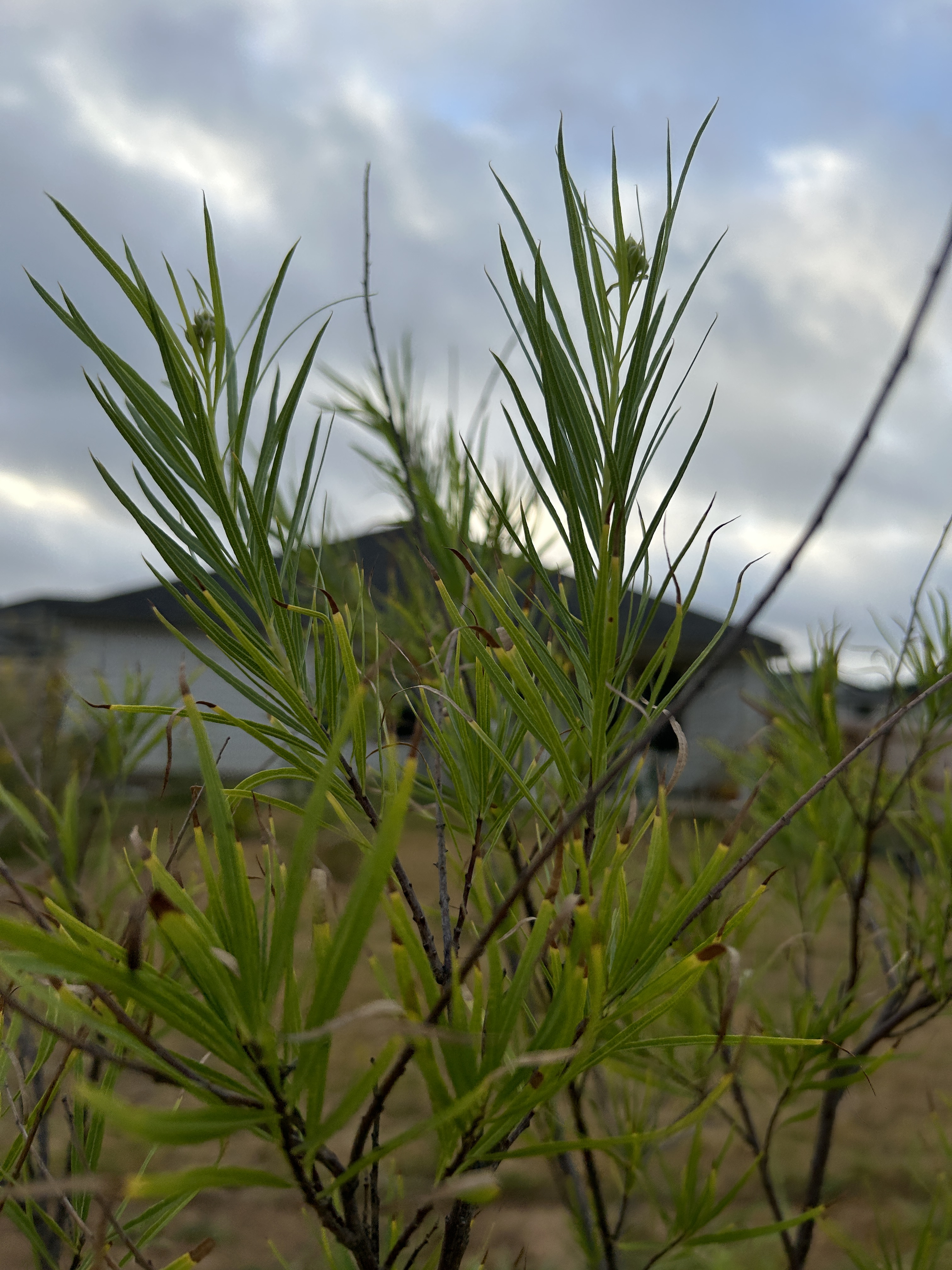
The native milkweed plant that has been most successful here is Zizotes Milkweed (Asclepias oenotheroides). I have volunteers popping up all over the place, including this one in the middle of a pathway (photo taken in November 2025).
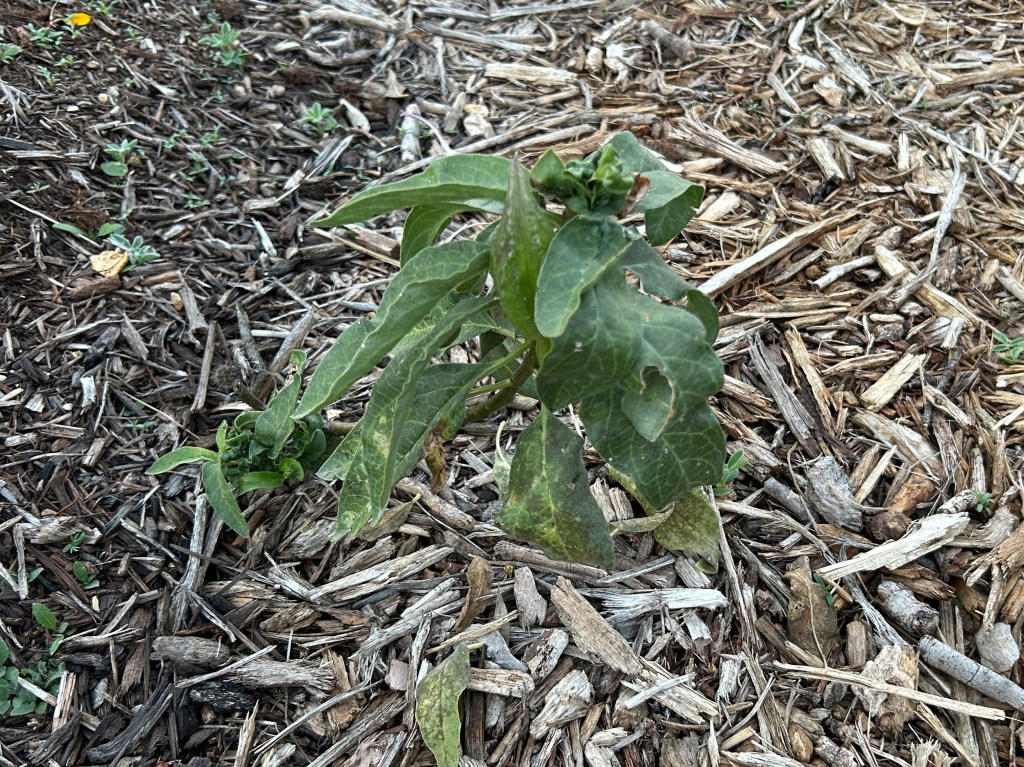
I’d like to try introducing Zizotes Milkweed to the pollinator garden at Park West in Seguin, so I decided to capture some seeds from one of my plants here.
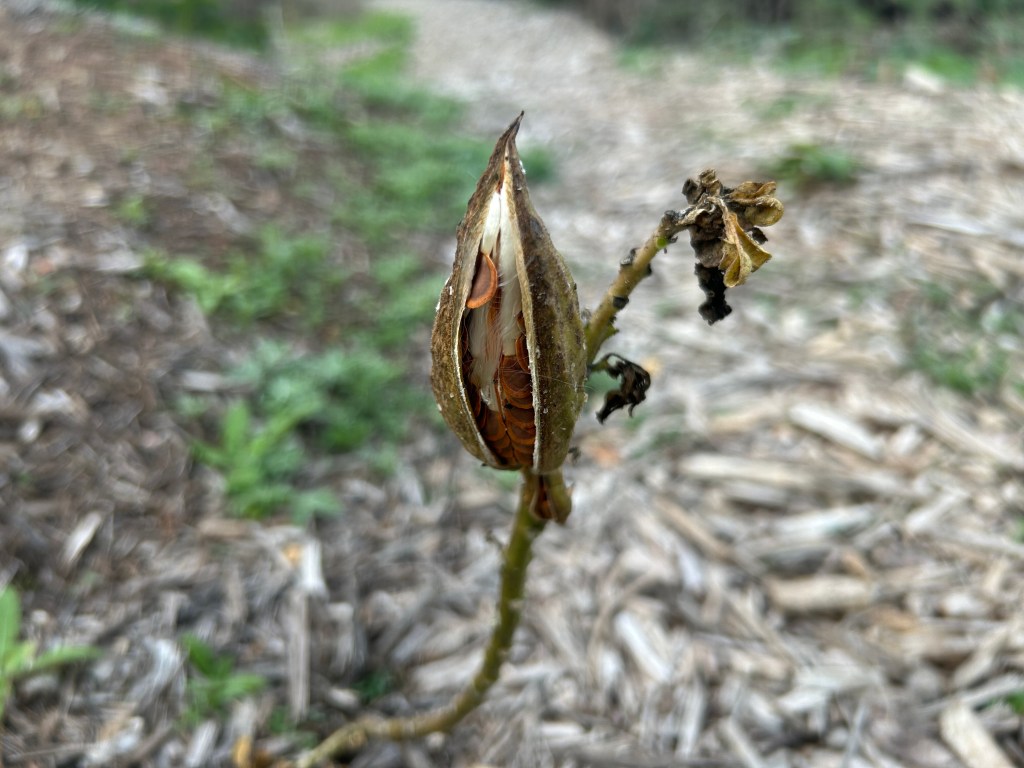
It’s rather late in the season, but the “pathway Zizotes” produced a seed pod that I watched every day until I saw it split. That was my signal that the seeds were ready, so I needed to act quickly before the pod opened completely. Milkweed seeds are attached to tufts of hair that act as parachutes to carry them through the air. If I had waited too long, then the seeds would have been blown away. Some terms I have seen used for the tufts of hair on milkweed seeds are pappus, floss, silk, or coma.
I snipped the seed pod off and placed it in an organza bag. Then I had two choices: I could either plant the seeds immediately in Park West, or I could put the seed pod in the fridge for the winter and plant the seeds in early spring after our annual cut back of the garden following any winter freezes. I chose the latter to reduce the chances of seedlings being accidentally trampled during a work day. Once the garden is set for the spring, then I’ll put out the seed. The time in the cold at home should substitute for natural chill that the seeds would have experienced if left outdoors over the winter.
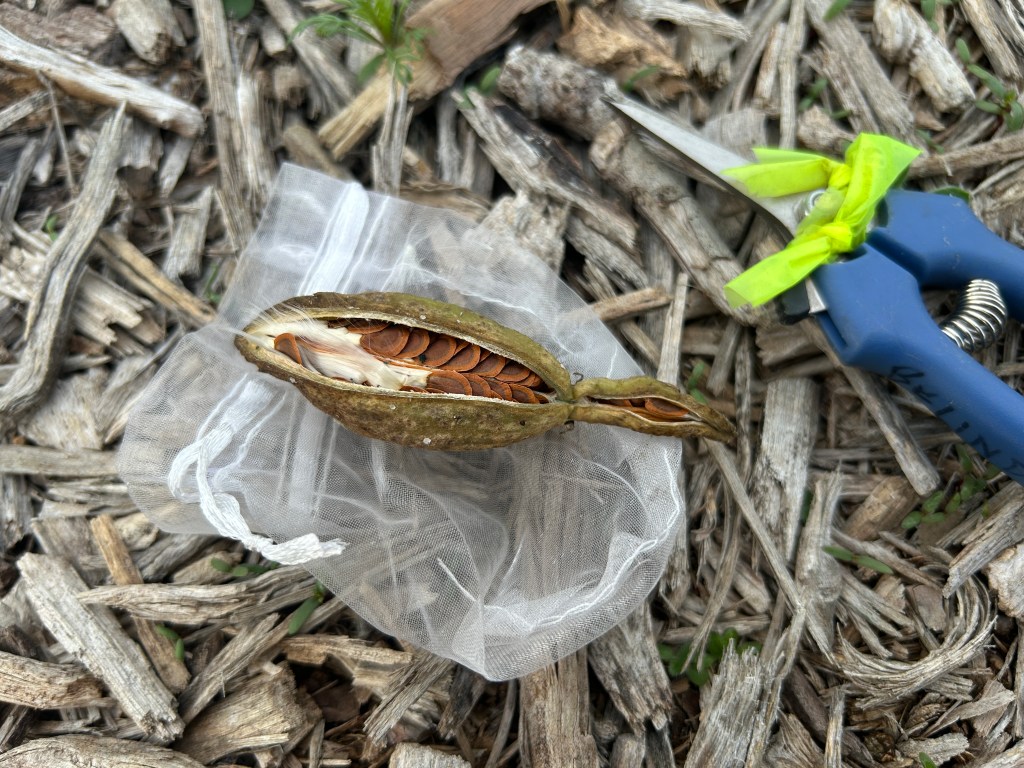
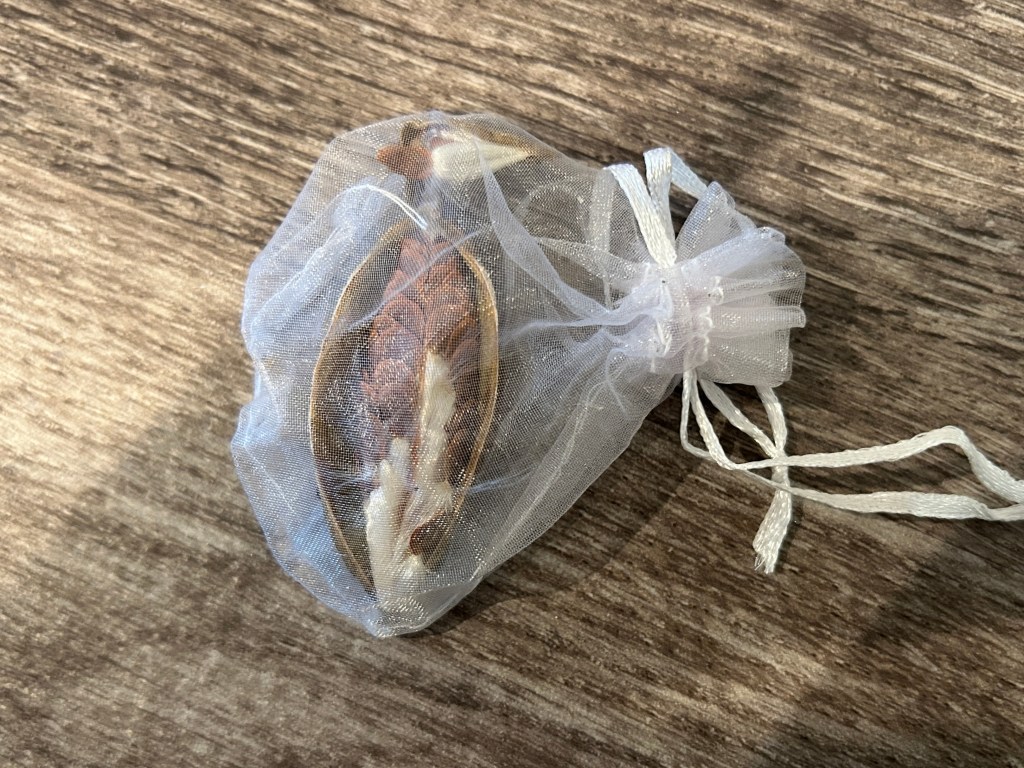
Before I take the seeds to the park next year, I’ll separate them from their hairy parachutes to make it easier to place them in the garden and have them not blow away. The last time I dispersed milkweed seeds taken from a pod I didn’t remove the pappus. It was a windy day and I regretted that omission!

 Rewilding My Lot
Leave a comment