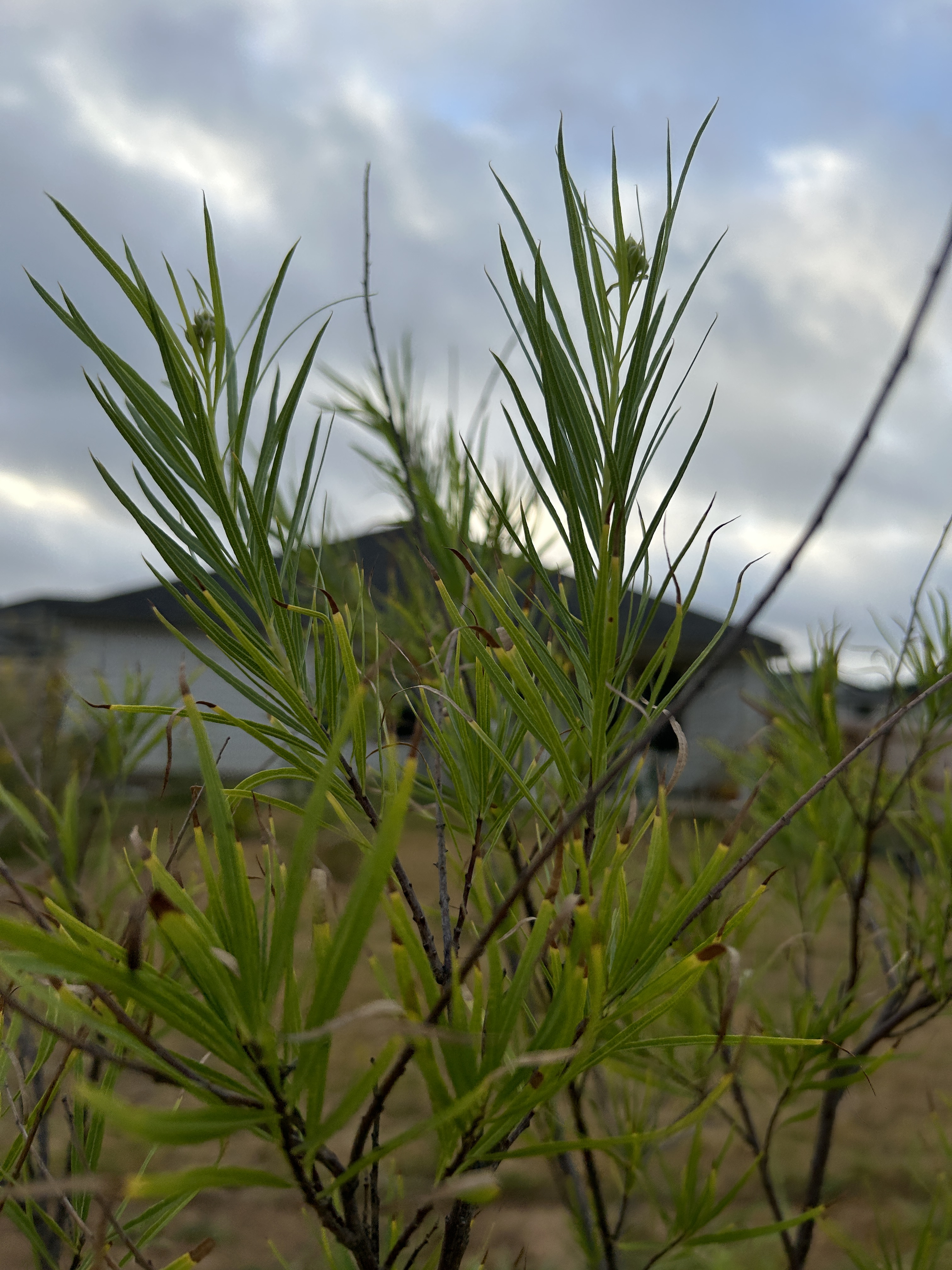
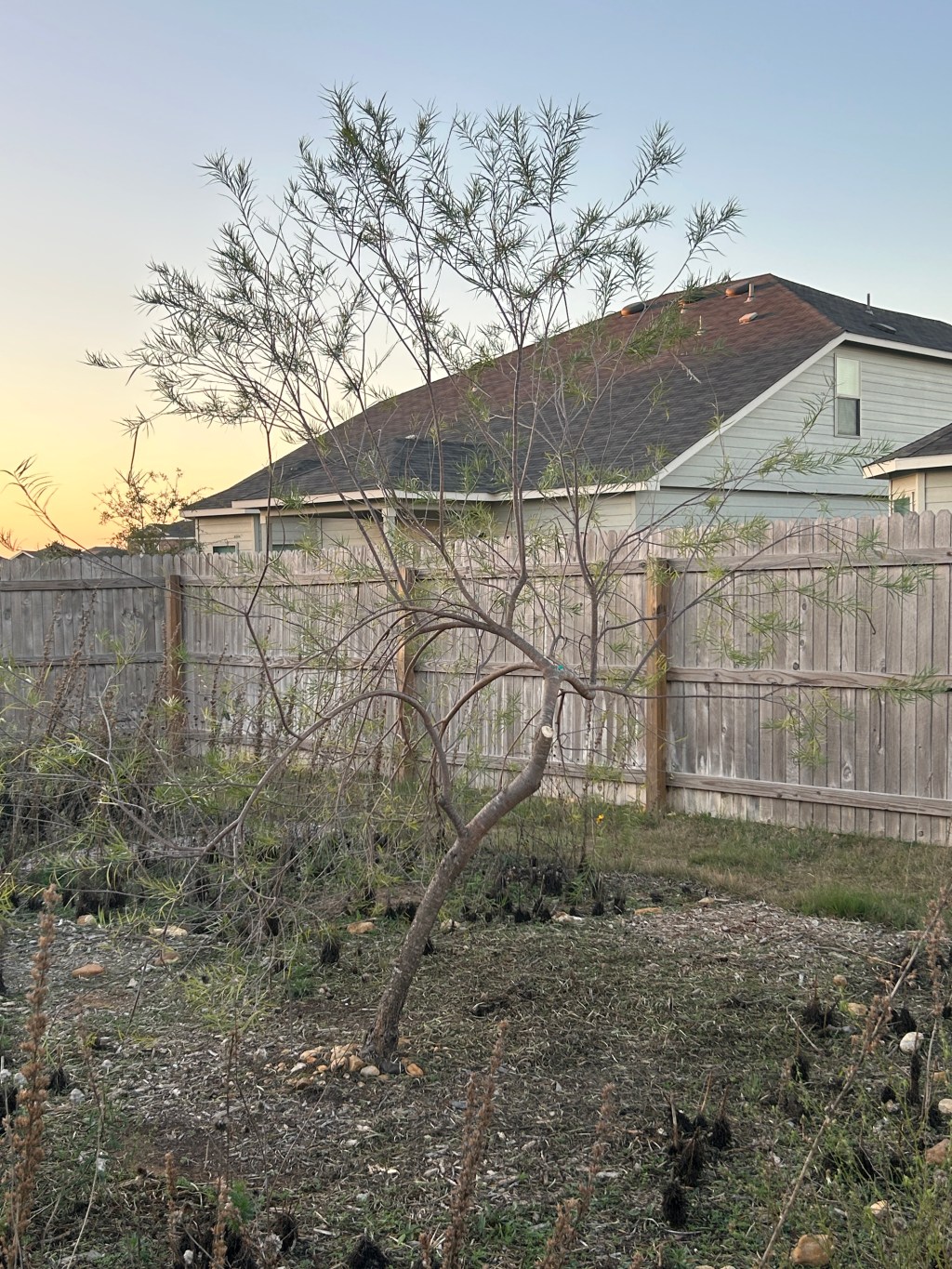
I am very fond of my Desert Willow (Chilopsis linearis) tree. It has grown the fastest, tolerates — even thrives on — our poor quality soil and limited water, has a long blooming season, and is beloved by hummingbirds and other pollinators. It has a flexible structure that moves gracefully when the wind blows. However, that last feature has consequences, as the rest of this post will show.
The Desert Willow, planted in spring 2023, has had two traumatic events in its short time here.
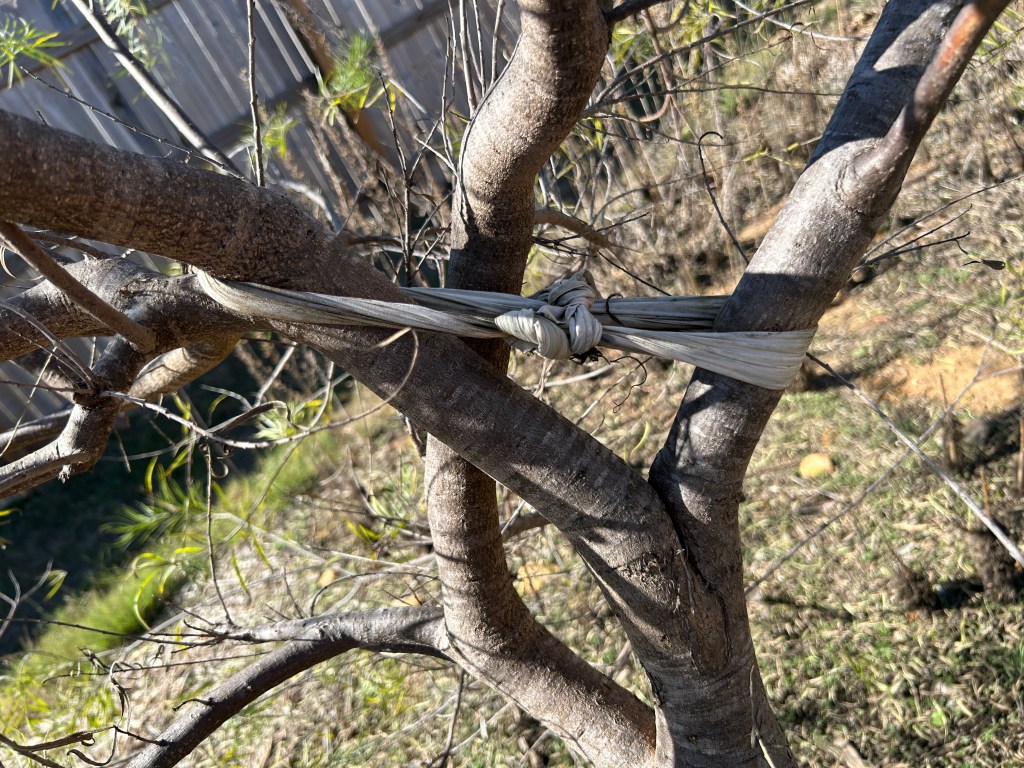
In May 2024, a significant wind event (70 mph gusts) caused a major branch fork to split. I attempted a repair by binding the fork together with rooting powder, but the split never completely healed and if it weren’t for the bandana holding the fork together (a semi-permanent fixture), I was concerned that it could split again.
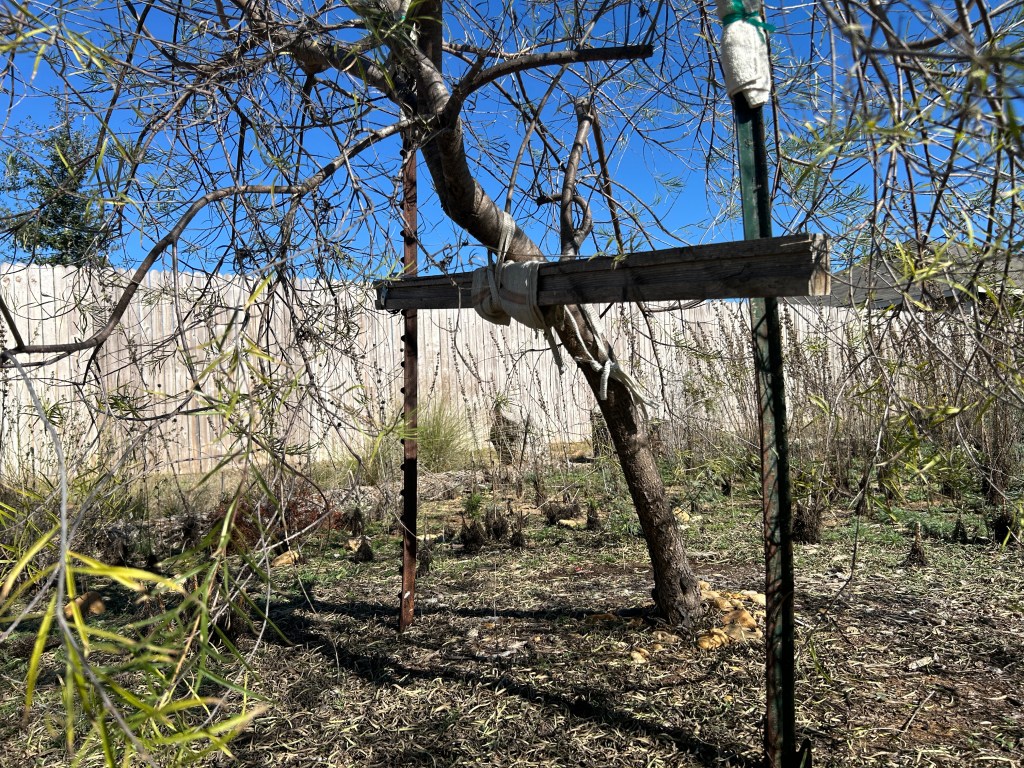
Later the same year (September 2024), I realized that the tree was slowly toppling over. At that point, a friend built a brace and I pruned the tree quite severely to reduce the volume of tree above ground. That brace has remained in place until now.
Why was the tree falling over? I don’t know, but the best theory I can come up with is that the vigorous growth above ground (more biomass to catch the wind) was too much for whatever root growth had occurred since it was planted.
With the Desert Willow now being almost three years in the ground and approximately 10 ft tall, this is the winter that I have chosen to do some strategic shaping for future strength and structure. And after 15 months with the brace it was time to remove that as well. I realize that in removing potential weak points in this tree, it is likely to look odd and unbalanced for a few years. However, I am hoping for a good long-term outcome with a larger, sturdy tree.
Given that the split fork did not completely heal, I have removed the lesser of the two branches in the fork. That took out a big chunk of the tree on one side.
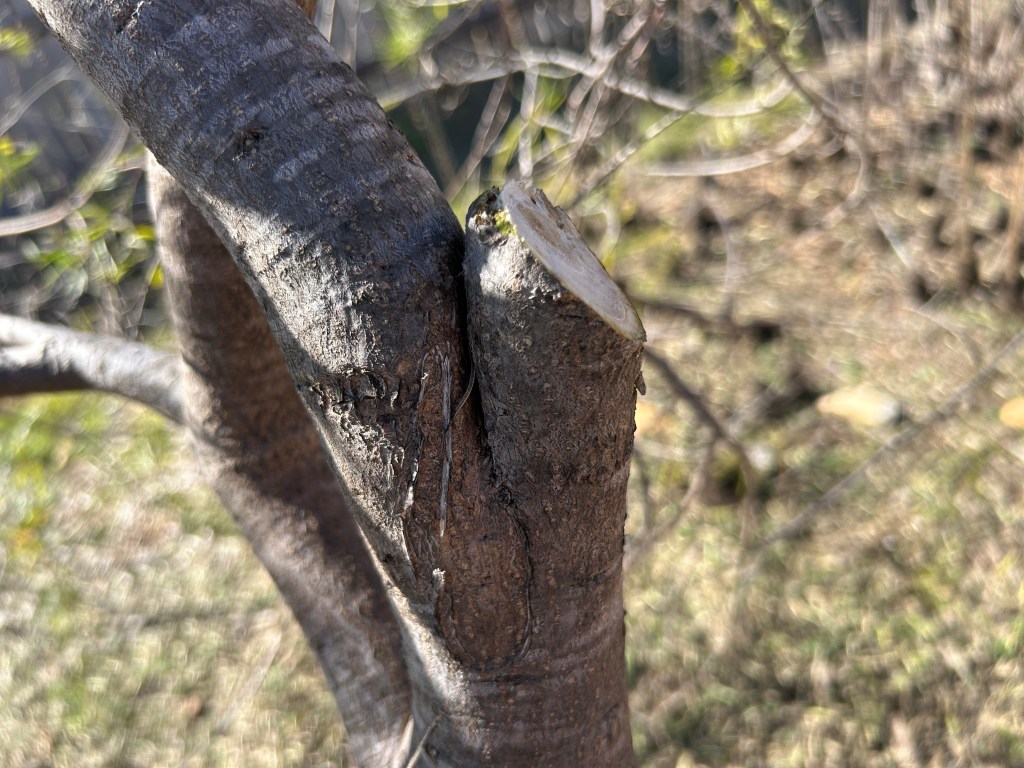
The other main objective I had was to reduce weight that might pull the tree down in the direction of its earlier topple. There was a good candidate there: a major side branch with a narrow angle of attachment that was a significant weight in that direction. This branch was also in danger of rubbing against others that I wanted to keep, so I cut it off. (In the photo below, the fresh wound is the branch I first removed, described above.)
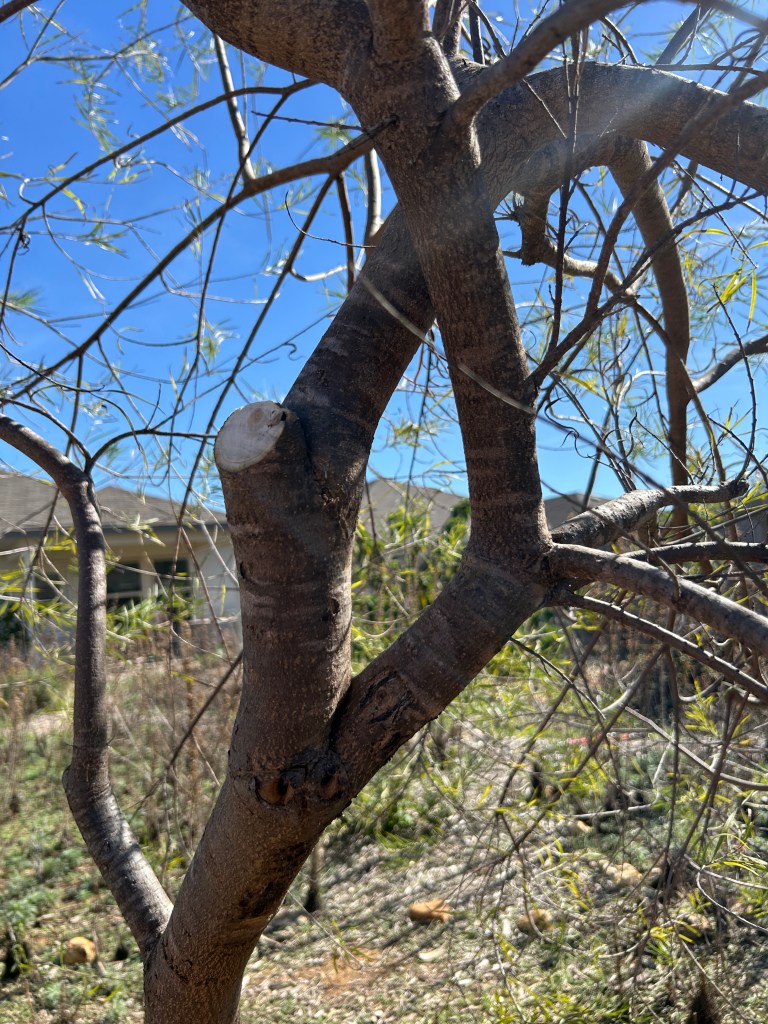
So in summary I removed two large branches, which in total represented about one-quarter of the tree’s bulk. That’s a lot to remove in one year, so I stopped there. There is a third branch, which, if removed, would leave the tree more balanced. However, it does not seem to be of immediate structural risk and so instead I marked it for consideration next year.
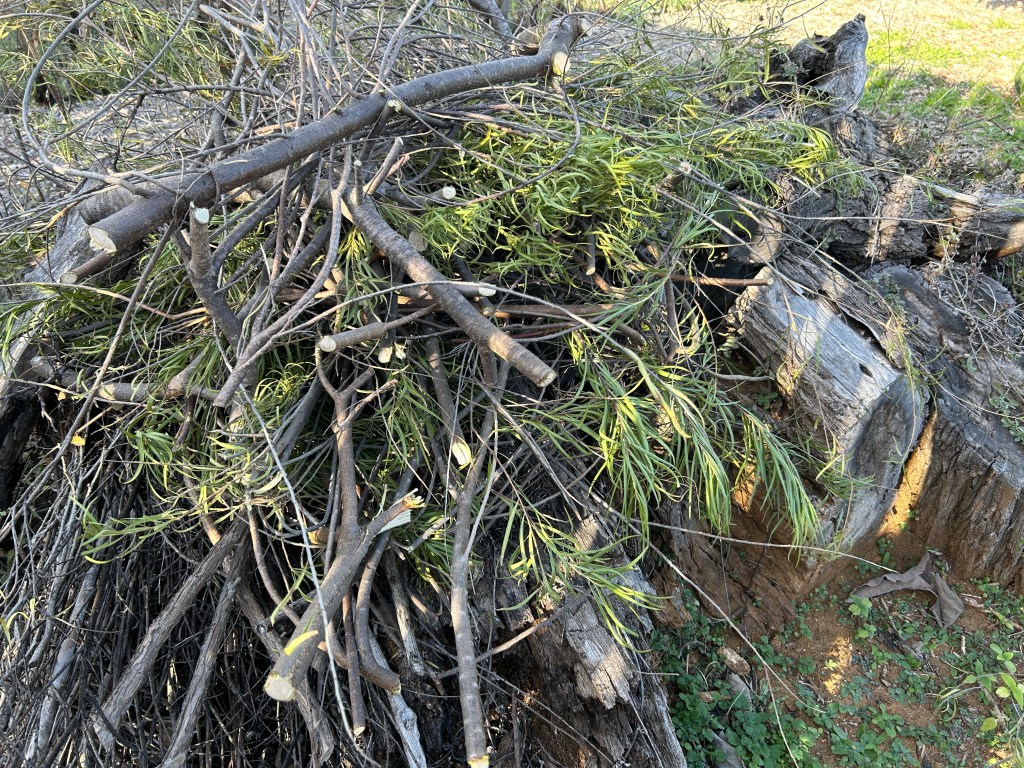
The branches that were removed were trimmed into shorter pieces and added to the wood pile.
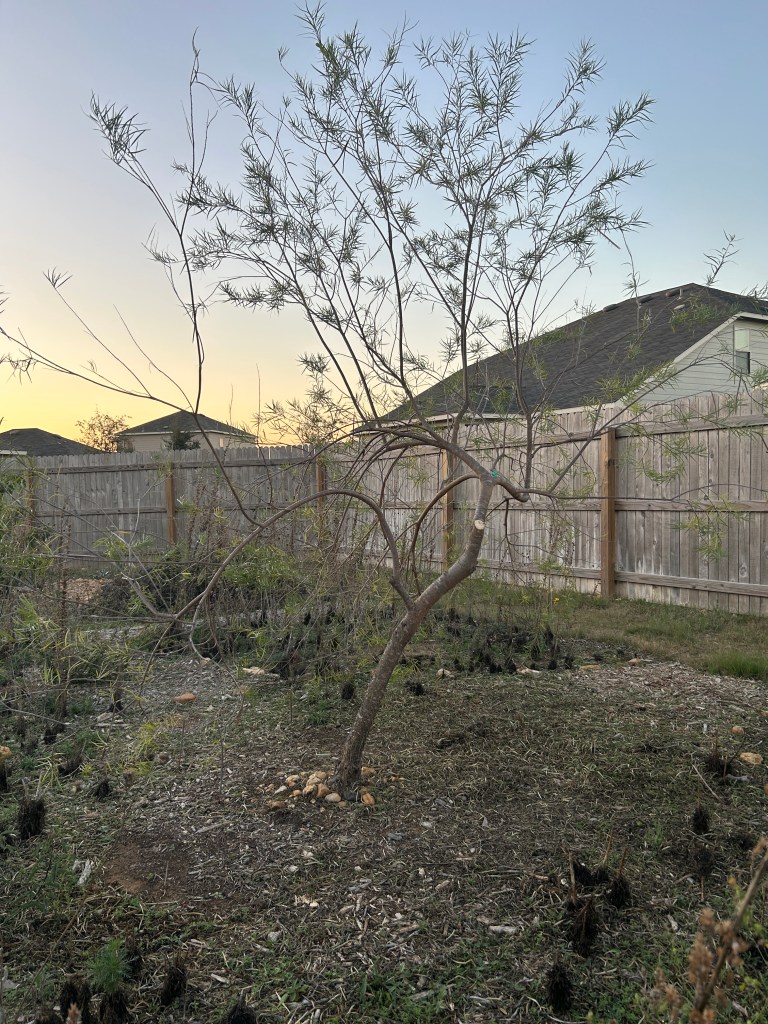
What I am left with at this time is a 10 ft tall Desert Willow tree with a curved trunk and major gaps in the branching. I am less concerned about its shape than I am about its health, strength, and stability — and the hummingbirds won’t mind if most of the flowers are on one side. I expect that it will take 2-3 years to decide what shape it wants to be, and in the meantime I hope that the roots are strong enough to hold it in place. Note that by now about half the tree’s leaves have fallen, which makes the branch structure more obvious at this time of year.
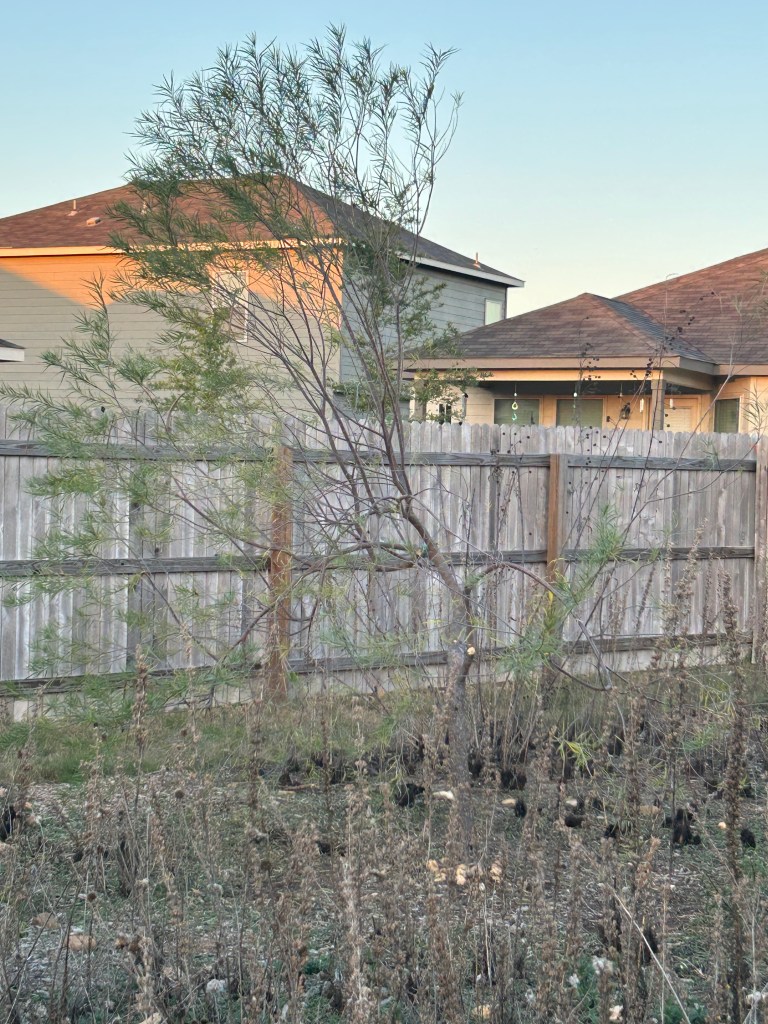
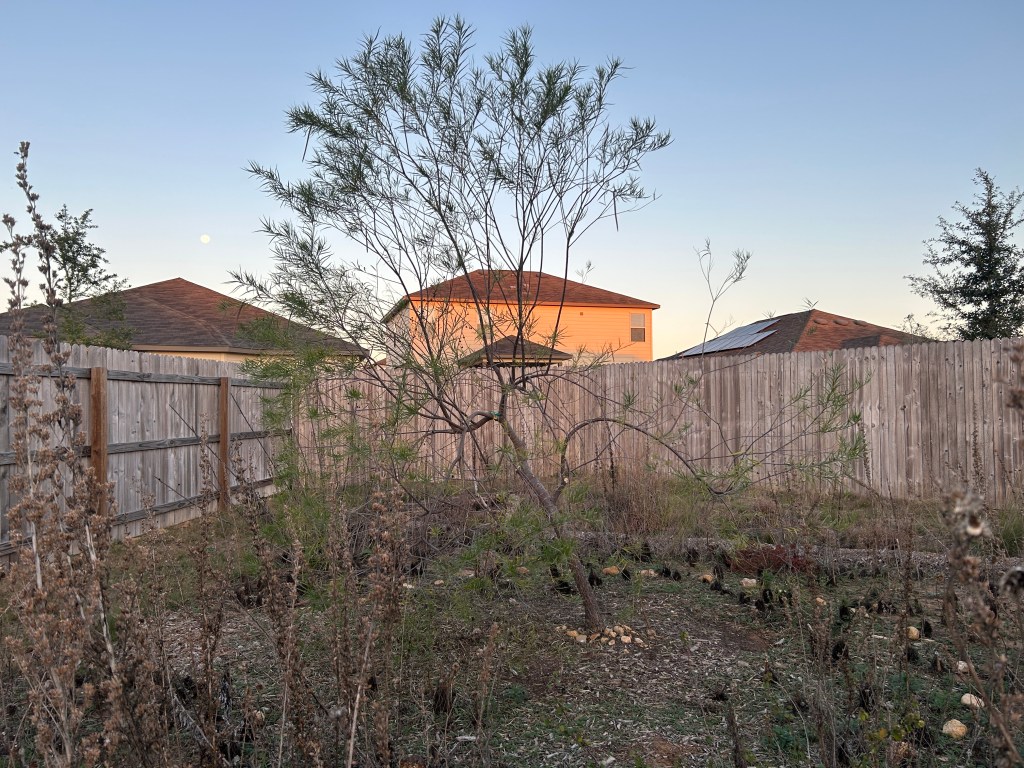
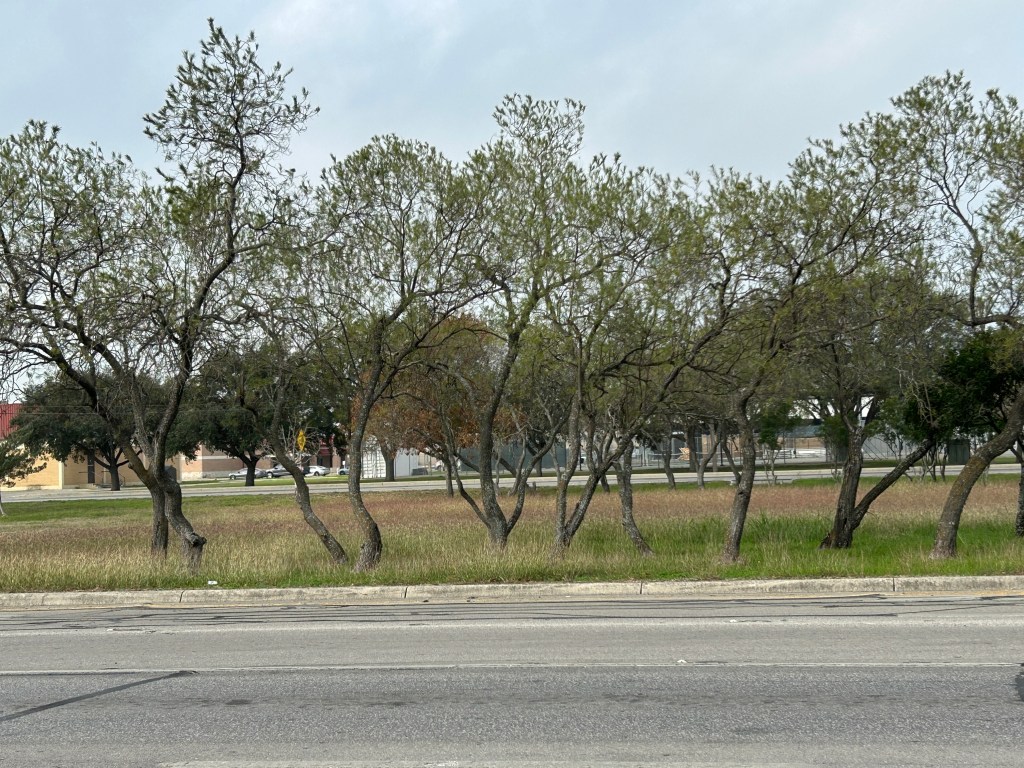
Whatever the outcome, this tree will have a story to tell. And when I look at the many Desert Willows that are in road medians near here (example photo below), most of them have quirky shapes as well. These are trees with personality.


 Rewilding My Lot
Leave a comment