The Texas Mountain Laurel (Dermatophyllum secundiflorum) was the very first tree that I planted here, in spring 2023.
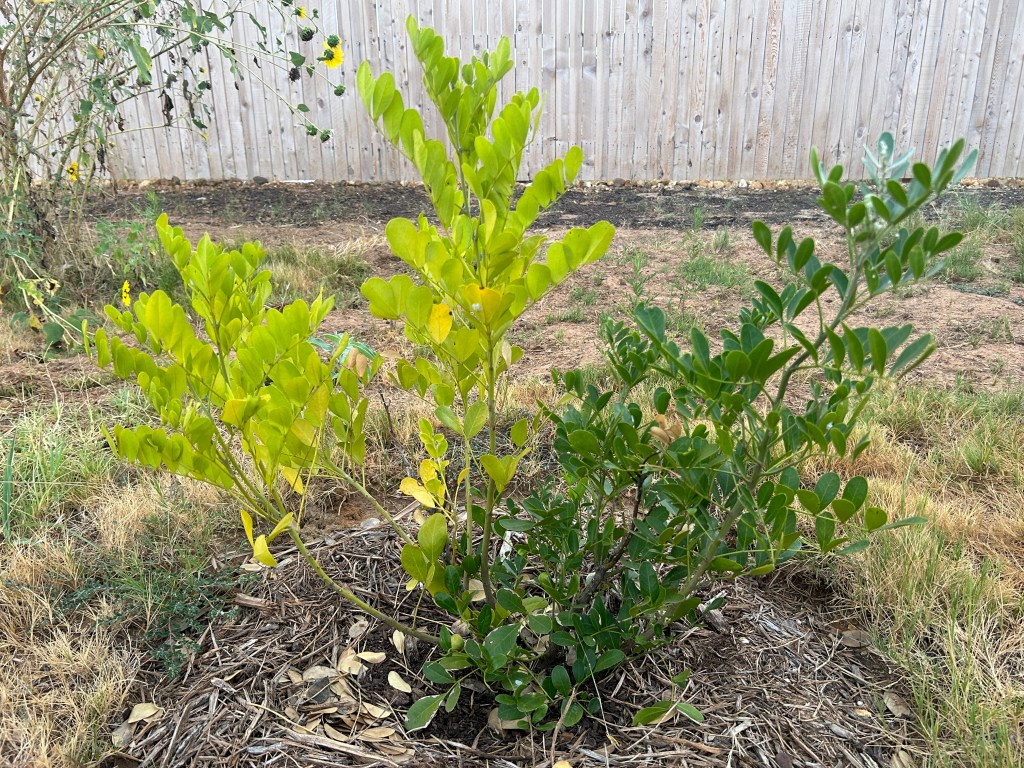
During its first year, half of the tree appeared sickly and pale. I never did find out exactly what the problem was — perhaps the most likely explanation was iron deficiency caused by some root issue on that side — but in any event the tree seems to have recovered nicely. In its third year it has put on several feet of new height, and buds suggest that it will bloom for the first time this spring. For comparison, here’s a photo from July 2023, when it was still just a tiny thing:
And here are photos from January 2026:
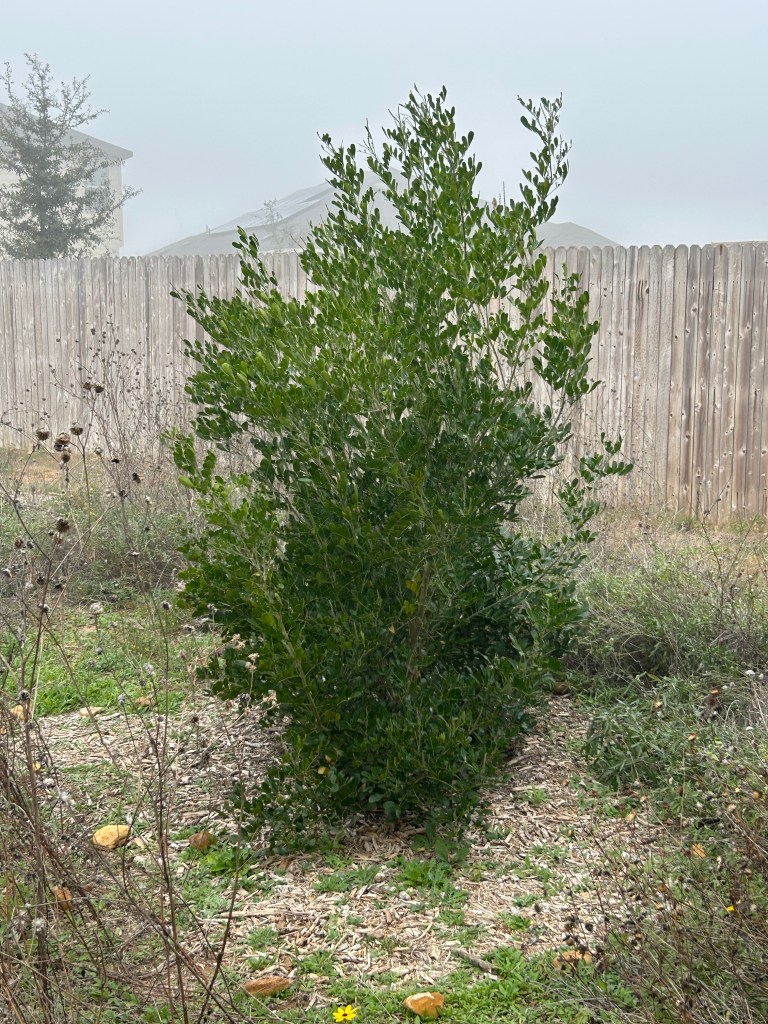
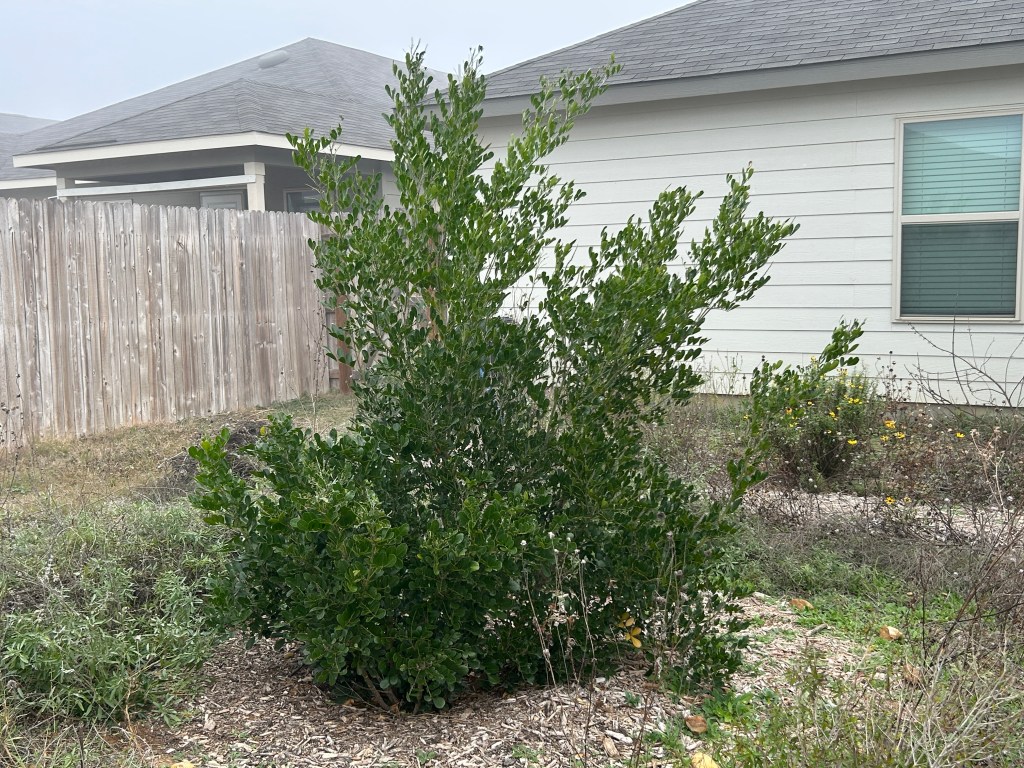
When planting the Texas Mountain Laurel, in my inexperience I dug the hole too deep. (The hole should be significantly wider than depth of the soil in the pot, but no deeper.) Consequently, the tree has sunk over time. It now sits in a little hollow, and soil had accumulated around the trunks. I am daily reminded of my planting mistake when I look at this tree — learn from me!
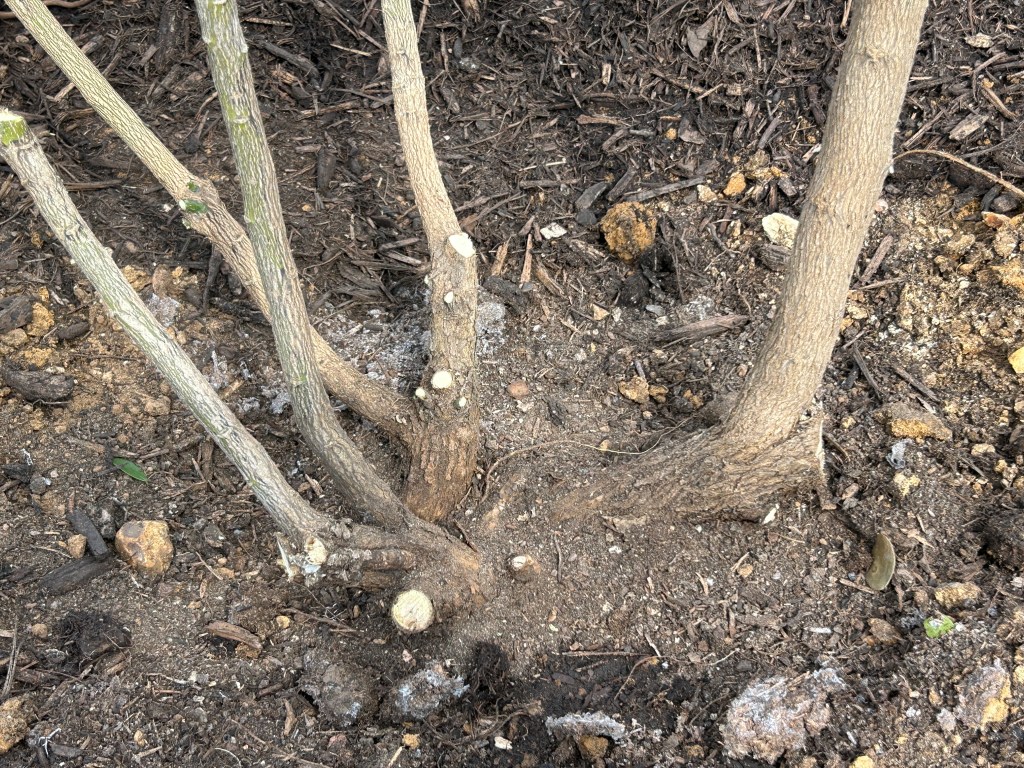
For this first time of pruning the Texas Mountain Laurel, my main objective was to clear branches at ground level so I could see more clearly how the trunks were emerging from the soil, which ones I wanted to keep, and how much I needed to scrape soil away from the base of the tree.
I cut away a couple of major branches that were so low and horizontal that they were effectively lying on the ground, and also cut away a few branches that were just inches from the ground.
That left the tree with five major vertical branches (in effect, trunks). It’s possible that in subsequent years I might reduce the number once I see how the tree develops, but I think that’s a reasonable trimming for now.
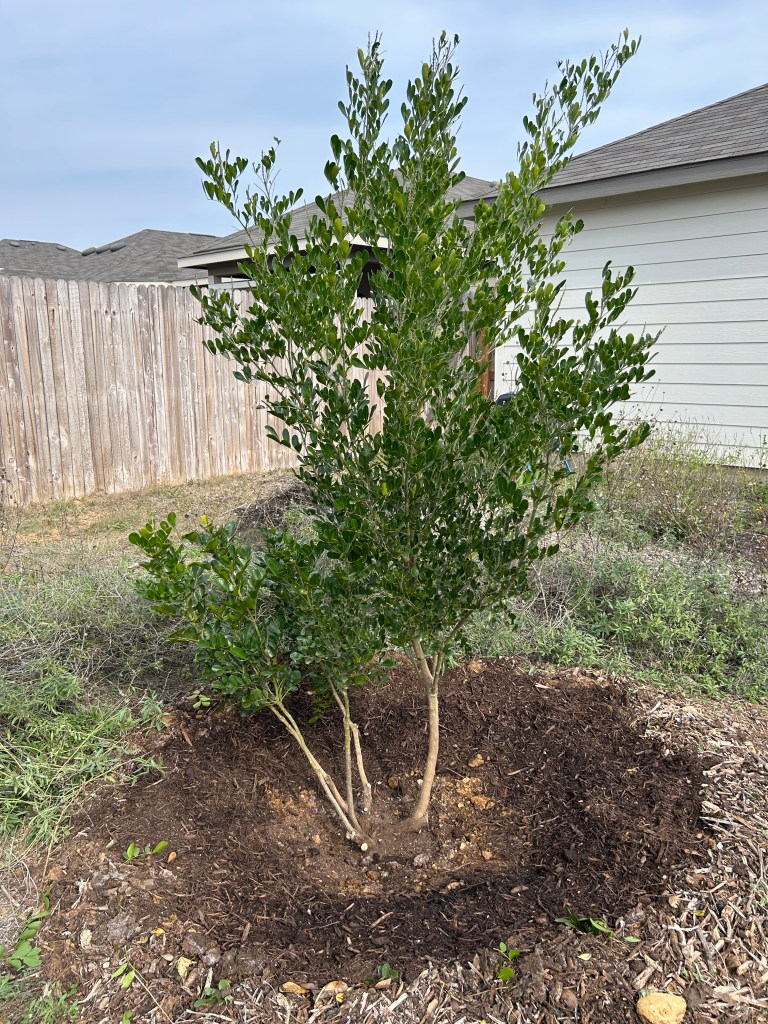
Here are a couple of photos taken after pruning. Also see the first photo in this post for a closer view of the five trunks.
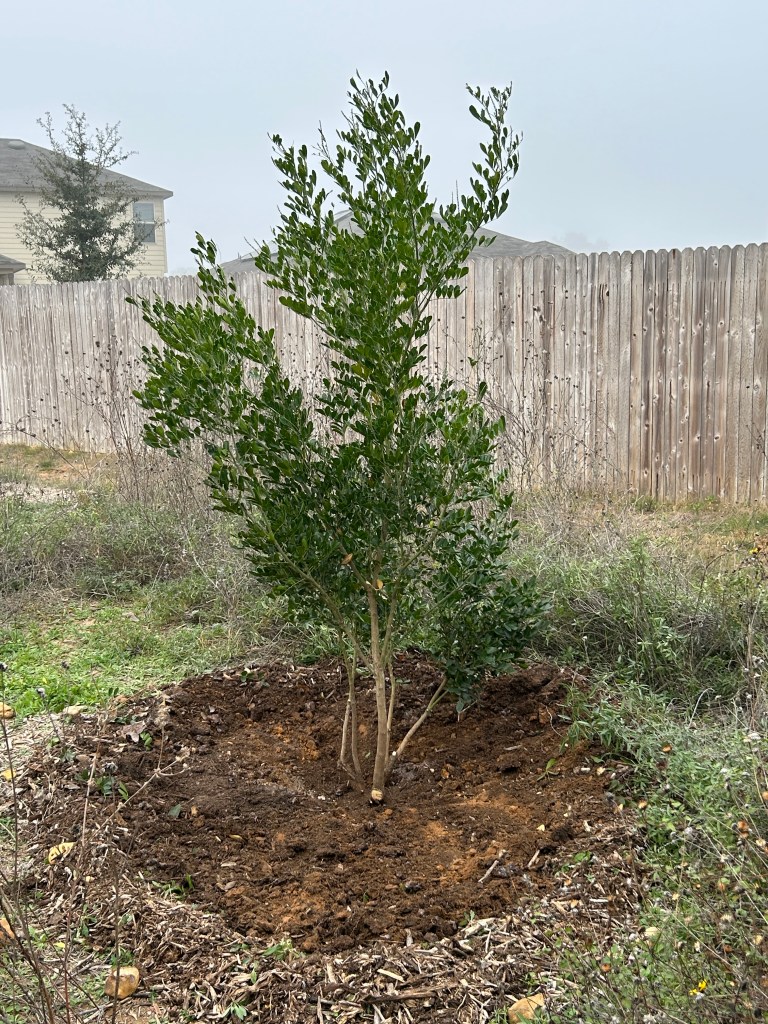
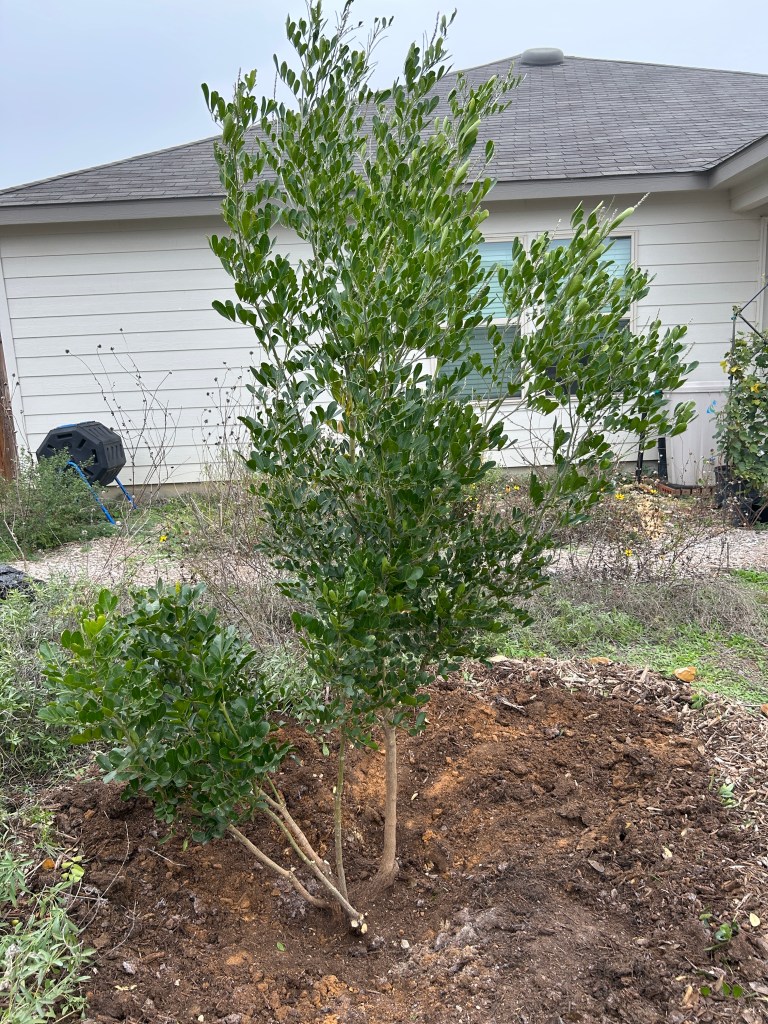
After trimming off branches and scraping soil away from the base of the tree, I added more mulch near but not touching the trunks. Now that I can see this area more clearly, it will be easier to move the soil back if needed.
The thickest of the five trunks grows tall and straight. If I had to pick one, I’d say this is the leader. The four remaining trunks that are clustered together on one side are all about a third of the height of the leader. Interestingly, this cluster corresponds to the region that was pale in the tree’s early life, and they are significantly shorter than the rest of the tree. It will be interesting to see how the tree will develop in the next year or two. The weak side my eventually catch up, or it may remain stunted and overshadowed by its stronger sibling.

 Rewilding My Lot
Leave a comment