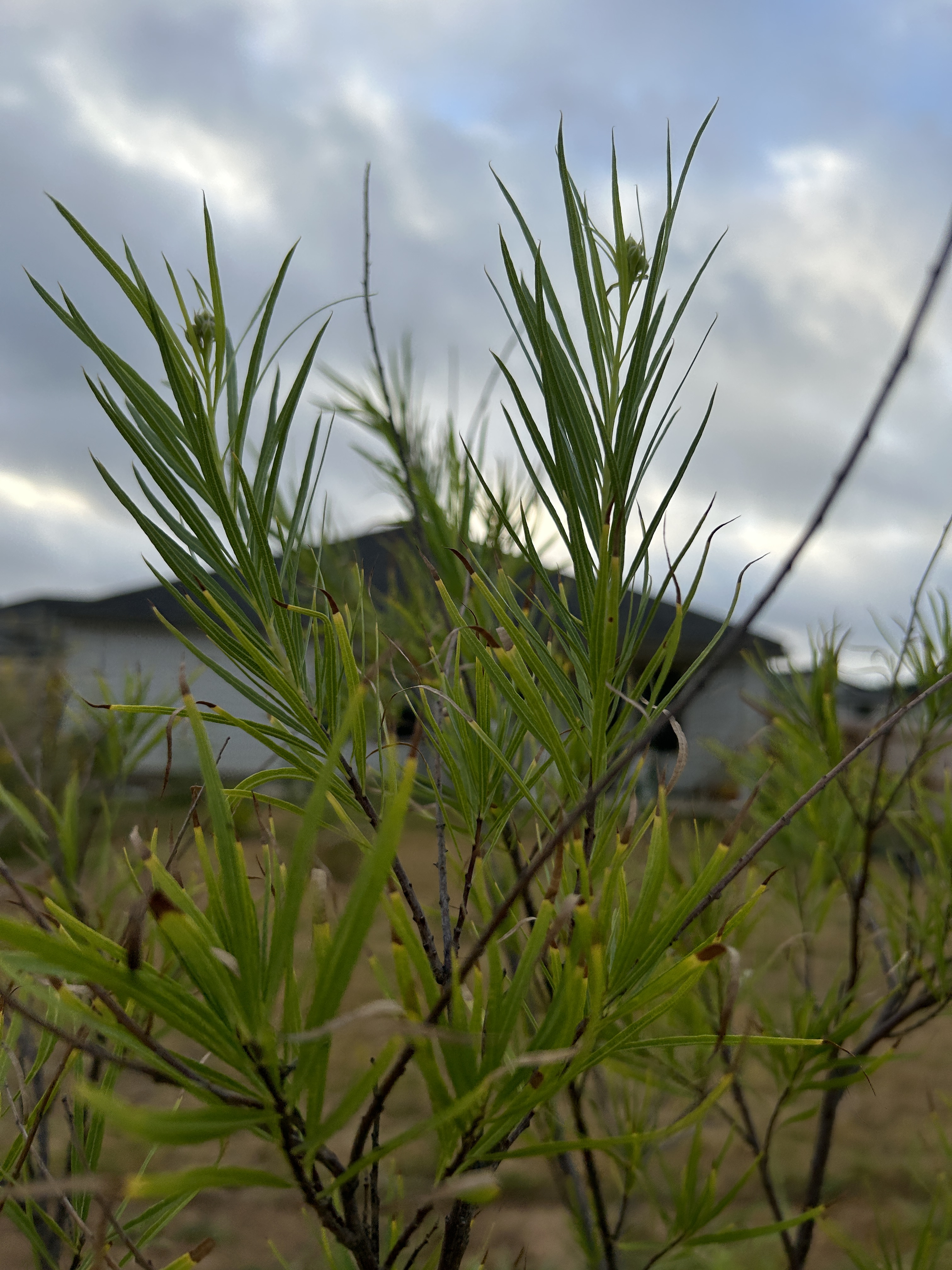
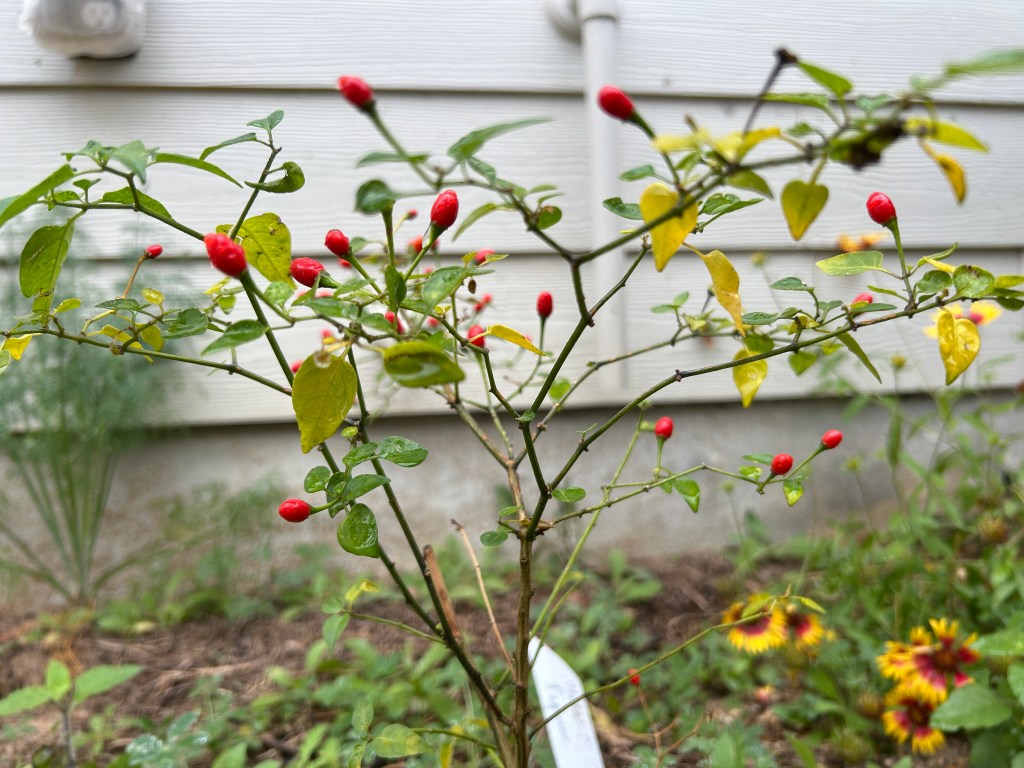
A couple of years ago I planted a Chile Pequin (Capsicum annuum) behind the house (facing west). I thought that location would be shaded enough by the house for this plant, but failed to account for the brutality of the afternoon sun in Central Texas. The plant is still alive, but small and I don’t think I’ve seen any peppers on it yet.
In contrast, when I made a shade bed on the north side of the house last fall and planted a Chile Pequin there in October, it thrived. It has already grown bigger and produced an impressive harvest of peppers for its first year. This also fits what I have observed in a local forest, where Chile Pequins happily grow and seed themselves in the shaded understory habitat.
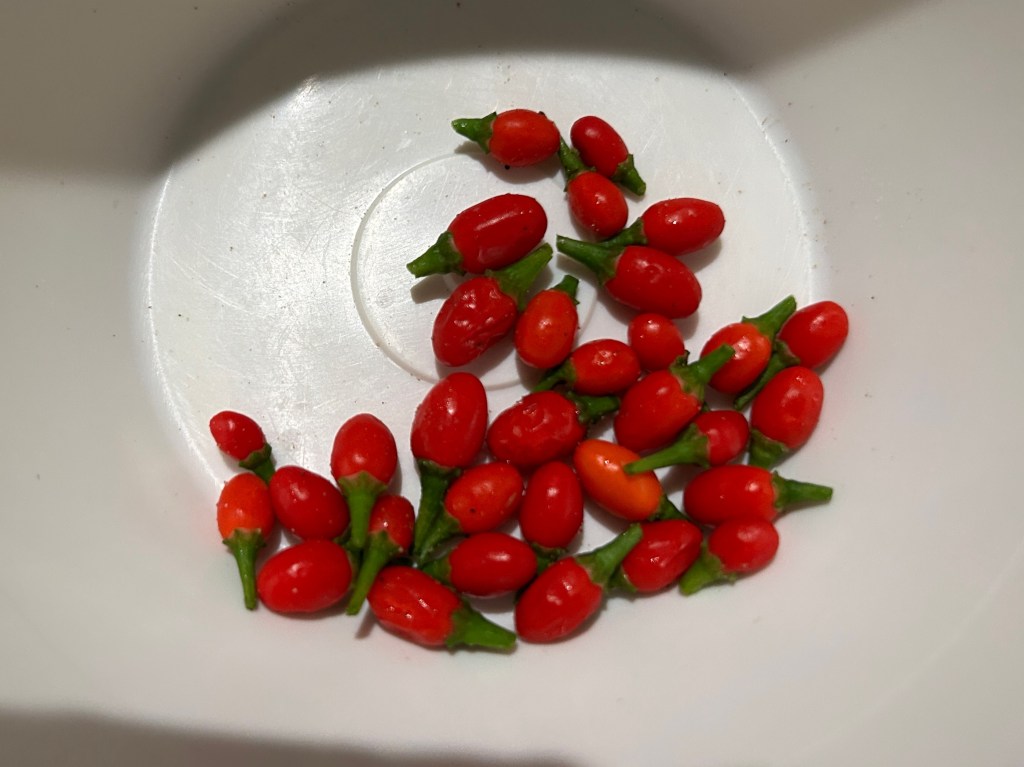
I am not brave enough to eat chile pequins myself — they score 30,000-60,000 on the Scoville scale — but birds like them, and I have “spicy” friends who use them, too!
My two pepper plants, just a few yards apart, are a useful illustration of how location can determine how well a plant does. Certainly I found greater success in gardening once I stopped choosing plants based on appearance alone and instead paid more attention to what would grow best in my environment. Growing plants native to the area is ideal, but even then you might have to pay attention to micro-habitat factors like shade, drainage, shelter from wind, etc. My observation in Seguin is that Chile Pequin plants will survive in sun, but will grow better in shaded environments.

 Rewilding My Lot
Leave a comment