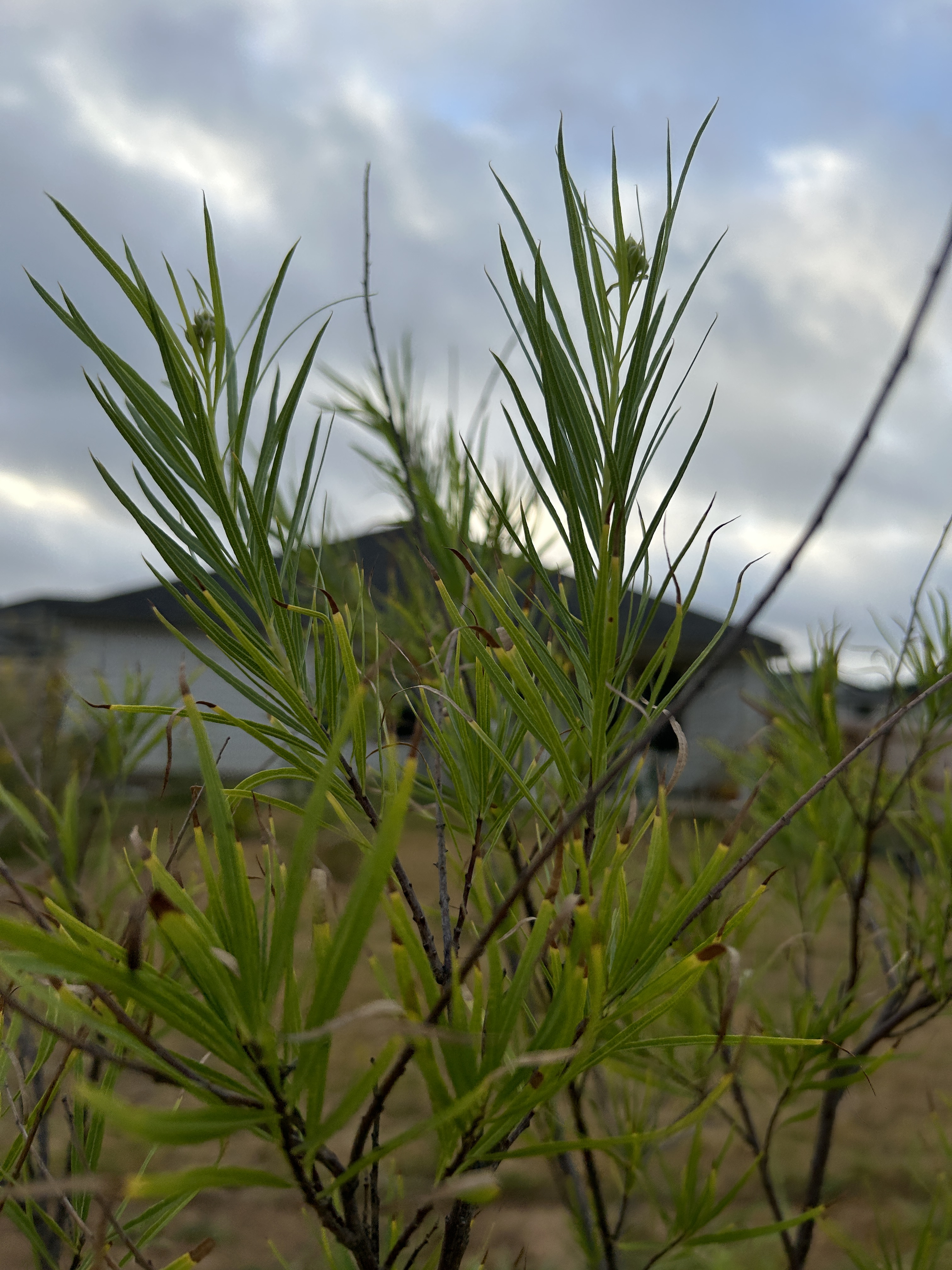
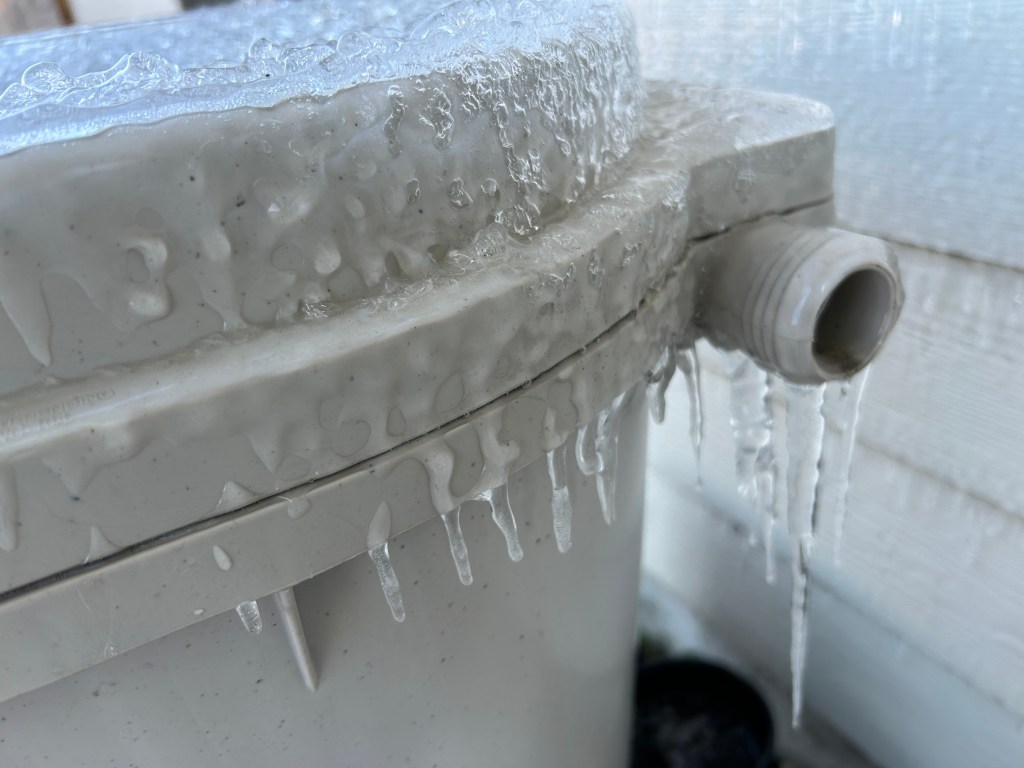
Since the garden here is primarily made up of native plants, I generally don’t need to worry about winter freezes — the plants have evolved to handle those situations. However, there are a few protective things that I do before, during, and after freezes to take extra care. Here’s a summary.
Until January 2026, the winter had been extremely mild. However, in mid-January we had one night that dipped below freezing (27.3 degrees F), and then on January 24 we settled in for an extended period of overnight freezes with the lowest recorded temperature being 18.5 F. We emerged from that period on February 1.
Here’s how I prepared for the freezes:
- General watering. We are still in drought and plants are stressed. Wet soil retains heat better than does dry soil with air pockets, and so I gave my most vulnerable (or valuable!) plants some extra water before the freeze came. I was also assisted by 0.5 inches rainfall just before the freezing temperatures arrived.
- Extra mulch. For shrubs that were planted just a few months ago (Kidneywood, Pride of Barbados), and for two of my trees (Mexican Olive, Mexican Plum), I piled mulch around the bottom of the plants in a “volcano” shape. Note that at other times, you absolutely do NOT want to have mulch piled up against a stem or trunk, but for a few days during a freeze it will provide some extra insulation.
- Covering. I have two trees that are still just a few inches tall (Mexican Buckeye, Red Buckeye). These were each covered with a bucket weighed down with stones.
- Pond top up. I made sure that the pond was at its maximum level so that the Mosquitofish had the greatest depth to stay out of the cold. I still see plenty of them swimming around after the freezes so they seemed to have fared well.
- Drain rain barrels. I didn’t drain the rain barrels completely, but I did lower the water levels to below half. If we had not had so much rain just before the freeze, I would have used all of the rain barrel contents to saturate the garden.
- There was no need to bring pots inside — all my plants are in the ground.
Once the freezes were over, this is what I noticed.
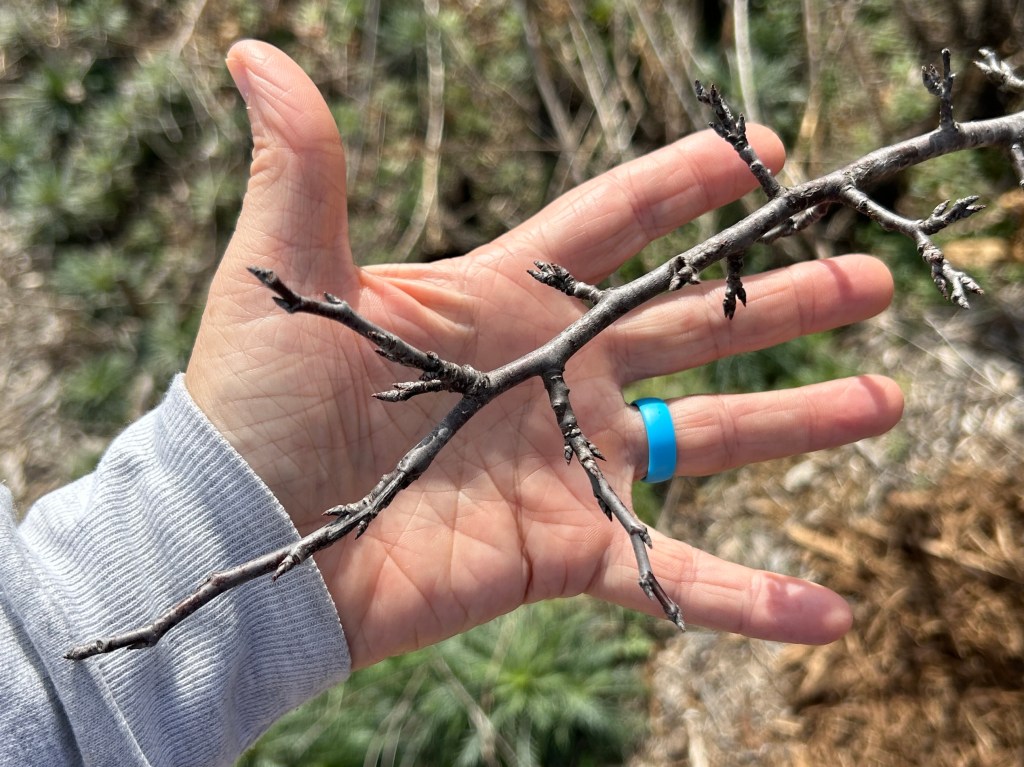
Some things were already dormant by the time the freezes came and showed no visible change, e.g., Mexican Plum (Prunus mexicana). This is a tree that goes to sleep early and is one of the first in spring to wake up.
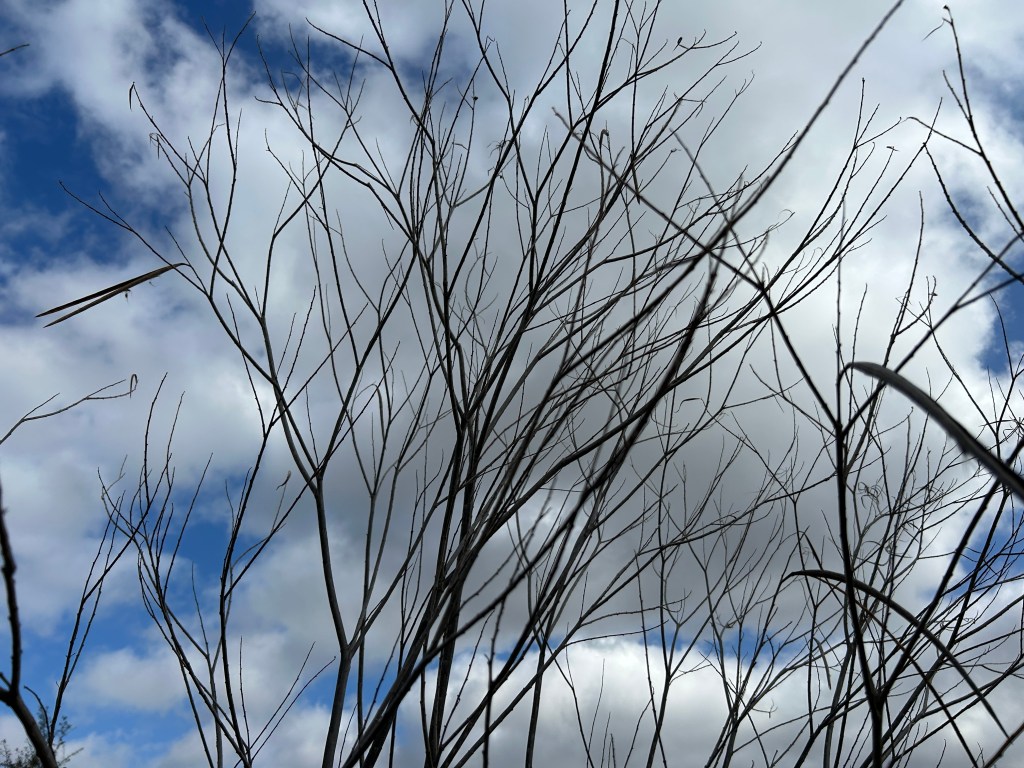
Some plants reacted to the freezes by having their remaining leaves turn brown and fall off, e.g., Desert Willow (Chilopsis linearis). This is part of their normal deciduous process and new leaves will emerge from the branches in spring.
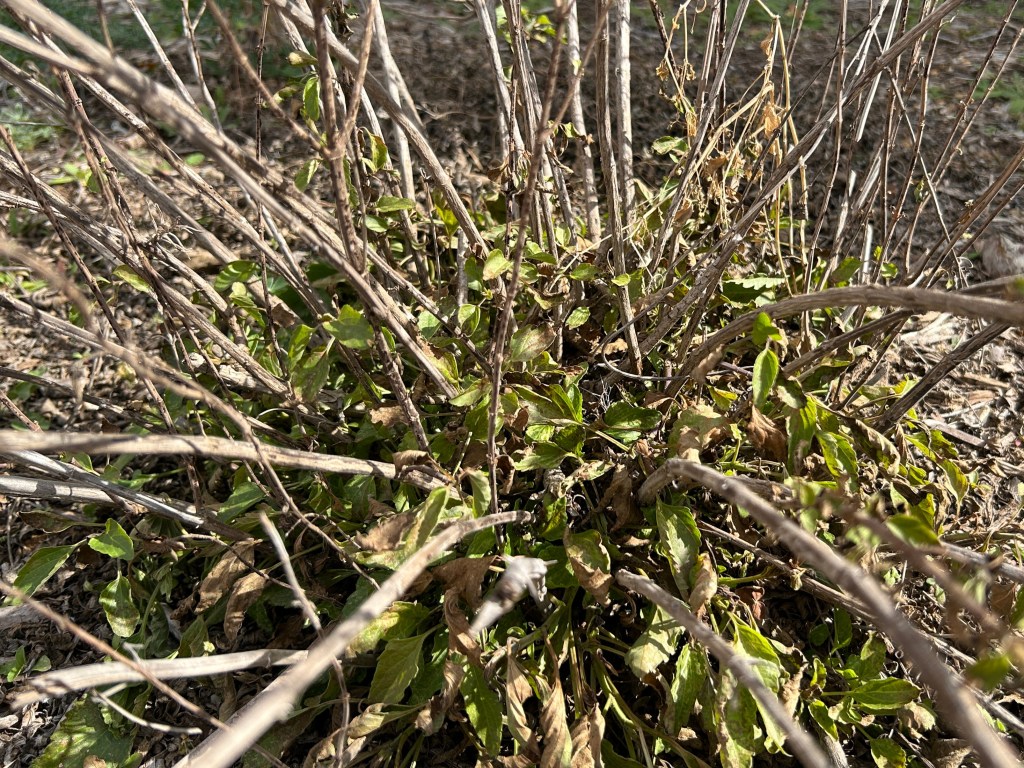
Some perennials routinely die back to the ground in the winter, but either have already sprouted fresh new growth at the ground (e.g., Mealy Blue Sage, Salvia farinacea)…
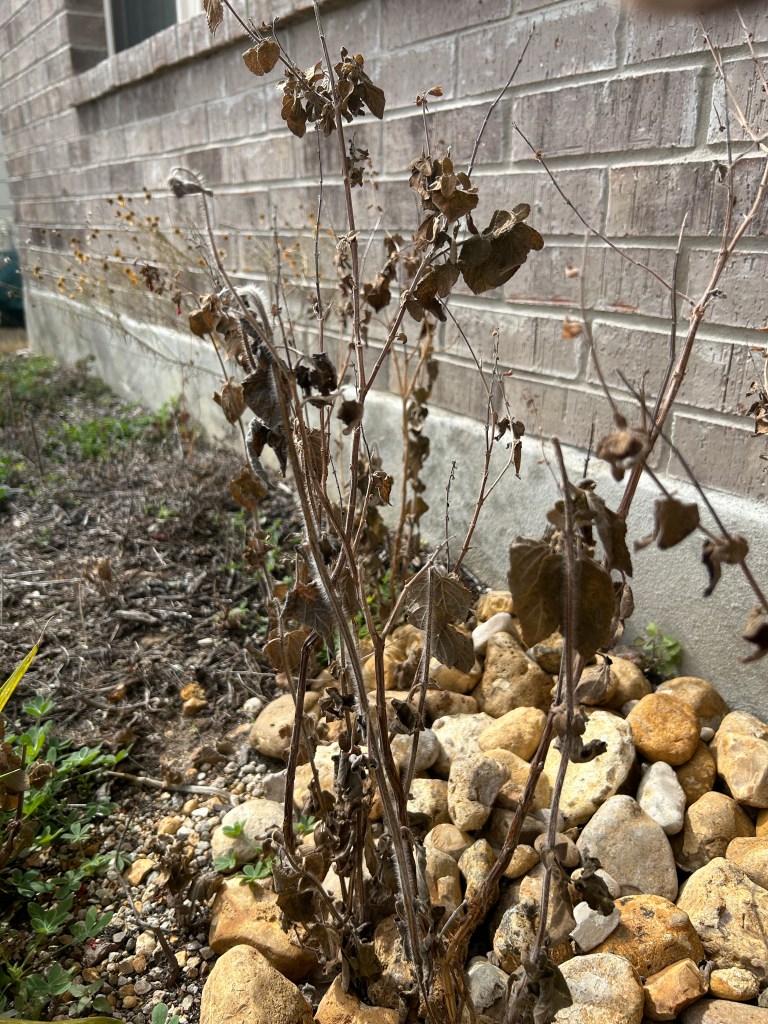
…or will do do in the spring (e.g., Scarlet Sage, Salvia coccinea).
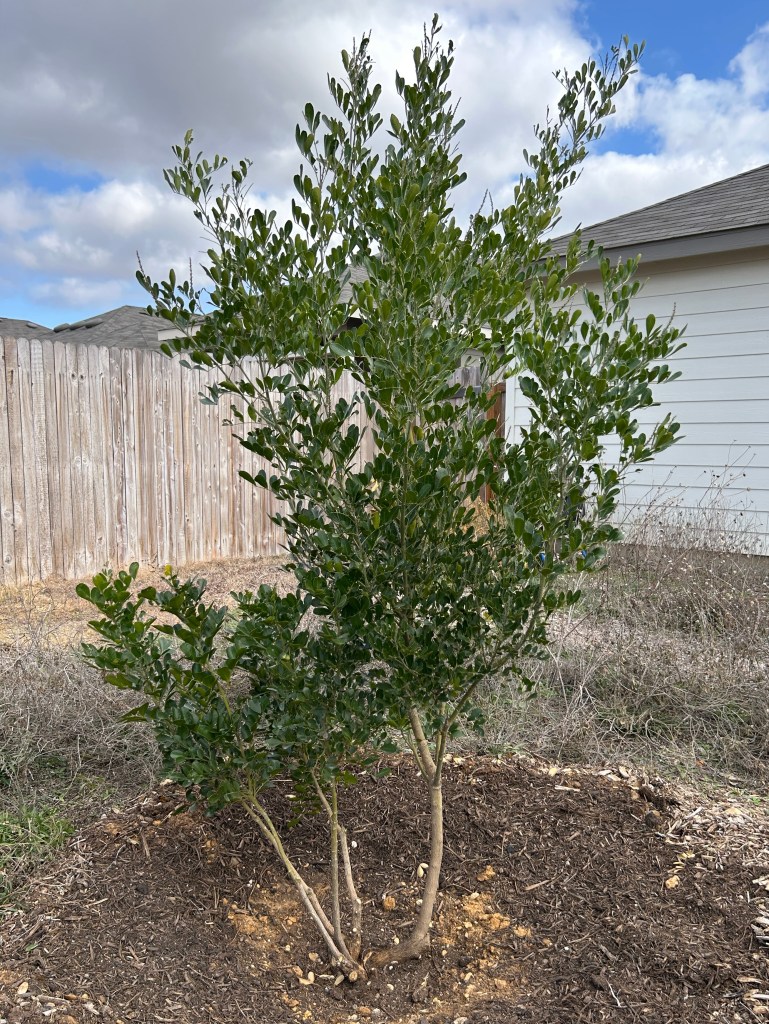
Some plants are cold hardy and either need or don’t mind freezes. The evergreen Texas Mountain Laurel (Dermatophyllum secundiflorum) tree is still as green as it was beforehand…
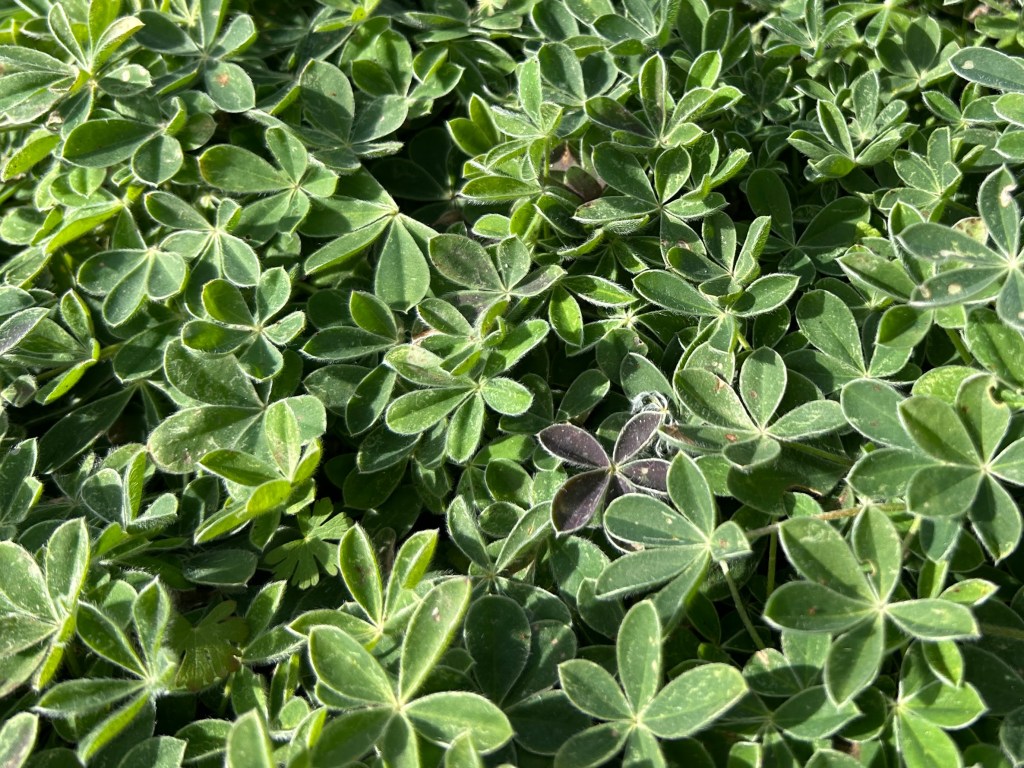
…and this year’s little Bluebonnet (Lupinus texensis) plants are rearing to go.
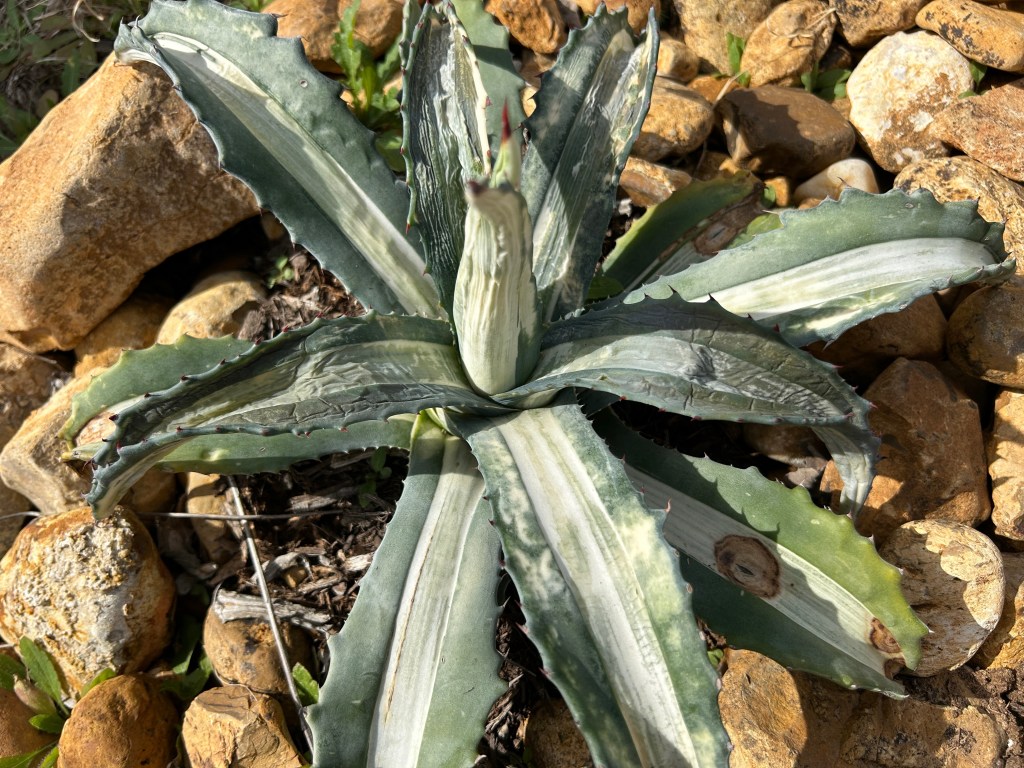
In a very few cases, I see evidence of damage that might temporarily set a plant back. I can’t say yet whether anything was killed outright, but I think that is unlikely. One example of damage is the Agave Americana (Agave americana) (my variegated version is possibly not a true native), where some of the leaves have become mushy. Those leaves may be lost. This plant was undamaged in freezes last winter, but perhaps what made the difference this time was that it was a wet event with freezing rain and ice. I think that in the future I should cover this plant during freezes until it gets too big to do so.
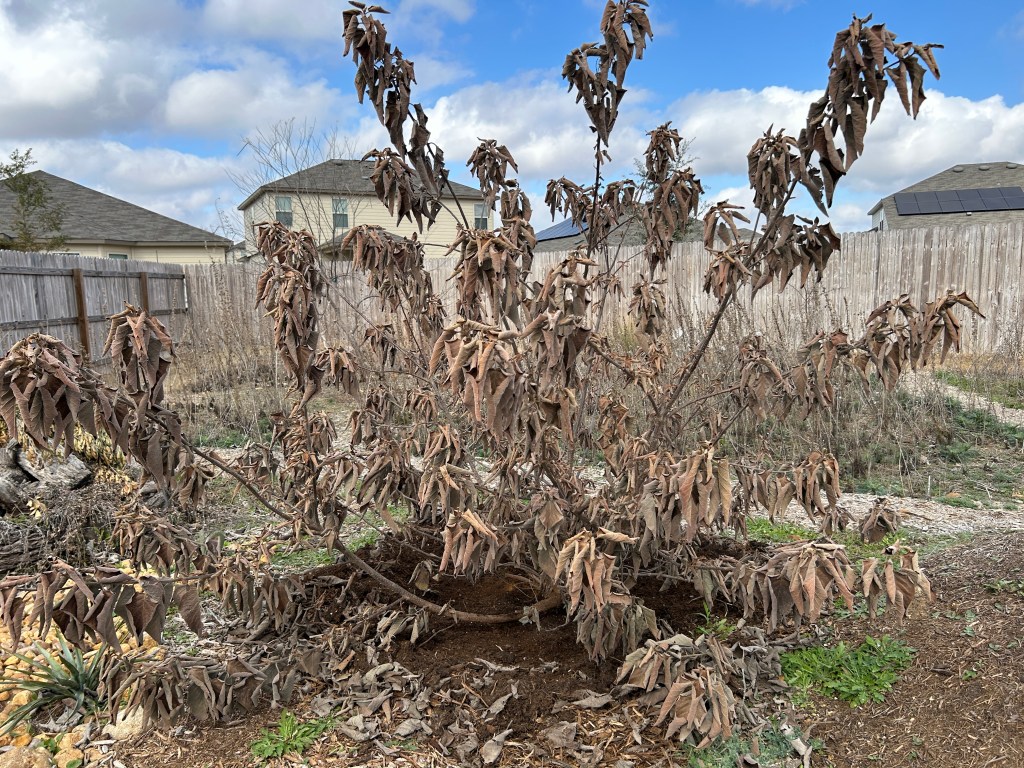
The most vulnerable big plant here is the Mexican Olive (Cordia boissieri) tree. Here, it is close to the northern part of its range and while it tolerates hot and dry summers beautifully, it does less well in cold. In its first winter here, some growing points on tips of branches died, but the tree produced more. In its second winter here, it froze back almost to the ground, but then grew back impressively (over 6 ft in height and 10 ft in width in just a few months!). I don’t know if this tree will ever grow to be taller than a big bush, or whether over time it will get hardier. I haven’t pruned this tree yet this winter — I plan to do that after the danger of frost has passed.
What is the next step?
Immediately after the freeze nights had ended, the buckets covering the two small trees were removed so that the trees could get sunlight again.
A couple of days later, I had time to scrape back mulch that had been piled against trunks.
As tempting as it is to cut away dead stems after a freeze, it is too early to do that yet. There is still the possibility of more freezes in the next month. Cutting back dead stems now might stimulate new growth, which then could be damaged by a late winter freeze. Dead stems also provide a little insulation for new growing points, and they may still be being used as habitat for overwintering creatures (e.g., insects, spiders). The plants will look rather untidy (from a human perspective) for a few more weeks, but that is the way with a native garden.

 Rewilding My Lot
Leave a comment