Secondary ecological succession naturally occurs after land is disturbed in some way. This is when plants and other aspects of nature appear in a somewhat predictable order to repopulate an area that has been disrupted by fire, hurricane, farming, etc. (Primary succession occurs in areas where there has never been soil before, such as at Canyon Lake Gorge, which was washed down to bare rock in 2002.)
After attending a presentation by Andy Blair at my local Native Plant Society of Texas chapter about how Bluebonnets and other wildflowers function as early succession plants, I realized that what I am doing here is in effect mimicking that process.
When I moved into this new development, the ecosystem was badly damaged. Before the houses were built, the land was farmed and so the soil was probably exhausted. Then, trees and topsoil were removed by the developer. What we homeowners inherited was rubble, poor quality imported soil, invasive non-native bermudagrass, and a couple of newly planted immature trees.
The first plants to arrive in early succession when it occurs naturally are usually annuals. They grow from seed (brought in by creatures or already in the ground), bloom profusely, produce a lot of seed, and die. The dead roots underground decay to provide nutrients for other organisms, and the dead plants on the surface function as mulch, which protects and adds to the soil.
When I first moved here, I did plant a few trees and native grasses quickly. However, beyond that, I planned to take time to try to determine what the garden wanted to do and to learn more about this region. In the meantime, I spread annual wildflower seeds over most of the lot (in front of the house I scalped the bermudagrass to stress it, and behind the house I removed the bermudagrass altogether). I didn’t realize it at the time, but my efforts to introduce native annual plants were mimicking nature’s succession process, including my shredding of the spent plants and returning the resulting mulch to the soil.
Bluebonnets are especially beneficial to depleted soil, because they fix atmospheric nitrogen in collaboration with bacteria living in nodules on their roots. The fixed nitrogen, a key plant nutrient, is released into the soil when the plant dies. (A faster way to release fixed nitrogen is to have an animal eat the plant and drop its waste onto the ground!) Bluebonnets are fantastic early succession plants because of their action to repair soil health. In fact, over time in a recovering area, bluebonnets may become less prevalent as later succession plants take their place. Their job is done!
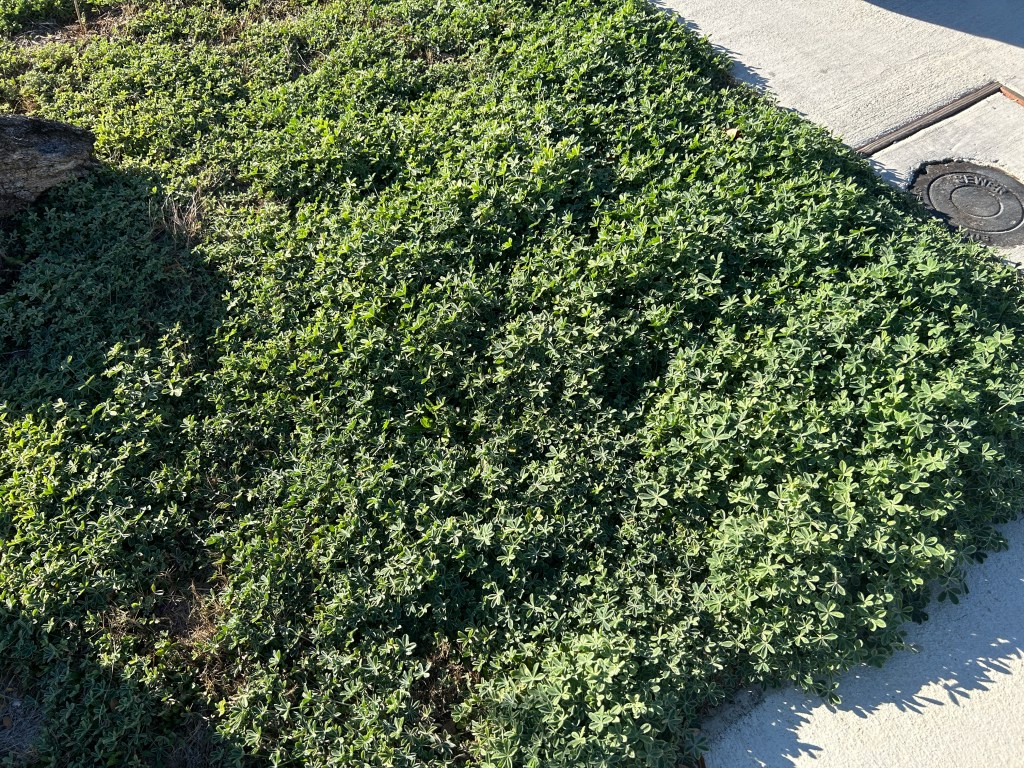
In my first year here I seeded bluebonnets in my front lawn area (the “meadow”) and in the front part of the back garden, where I sowed seeds for shorter annual wildflowers. In both of the subsequent springs, bluebonnets have grown exceptionally well here, and their seeds have populated areas where I did not originally sow them. This coming spring, there will be even more bluebonnets (the plants have been growing since last fall, so I can see where they are) — the first photo in this post shows a blanket of bluebonnet plants in the meadow.
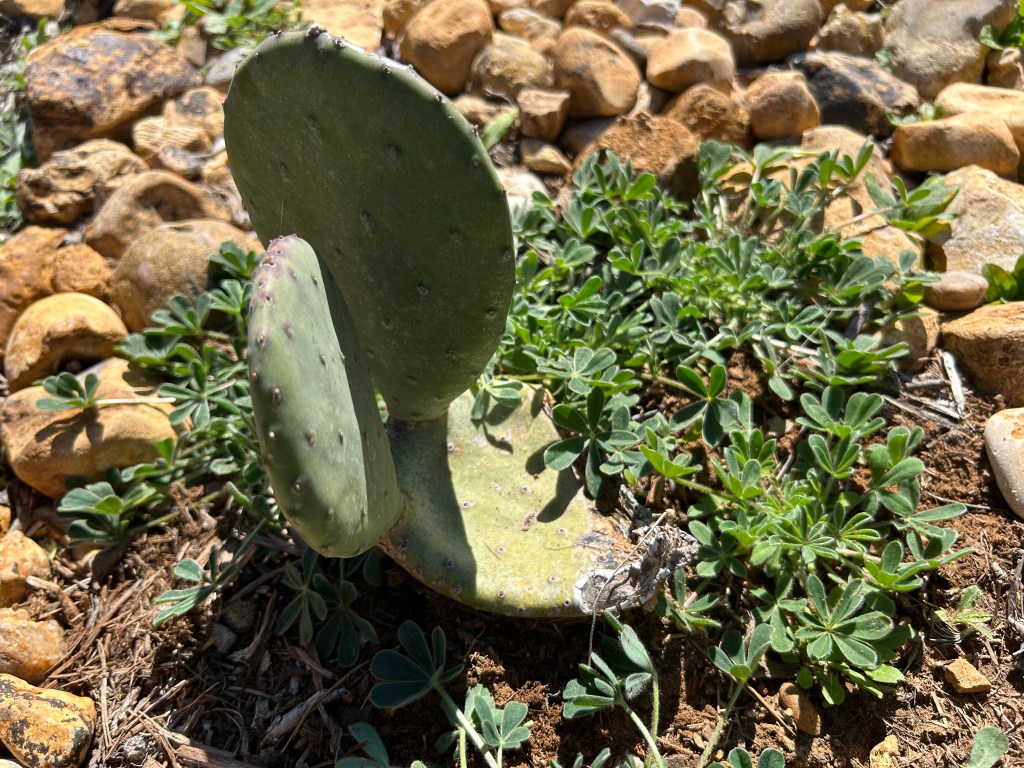
Even if bluebonnets are growing in an area where I walk or mow, I do not remove the plants. I don’t need their blooms in those locations, but the soil will still be fertilized by their roots. Here are some examples of where bluebonnets have volunteered here.
Next to the Spineless Prickly Pear,
…in mulch next to a Live Oak tree,
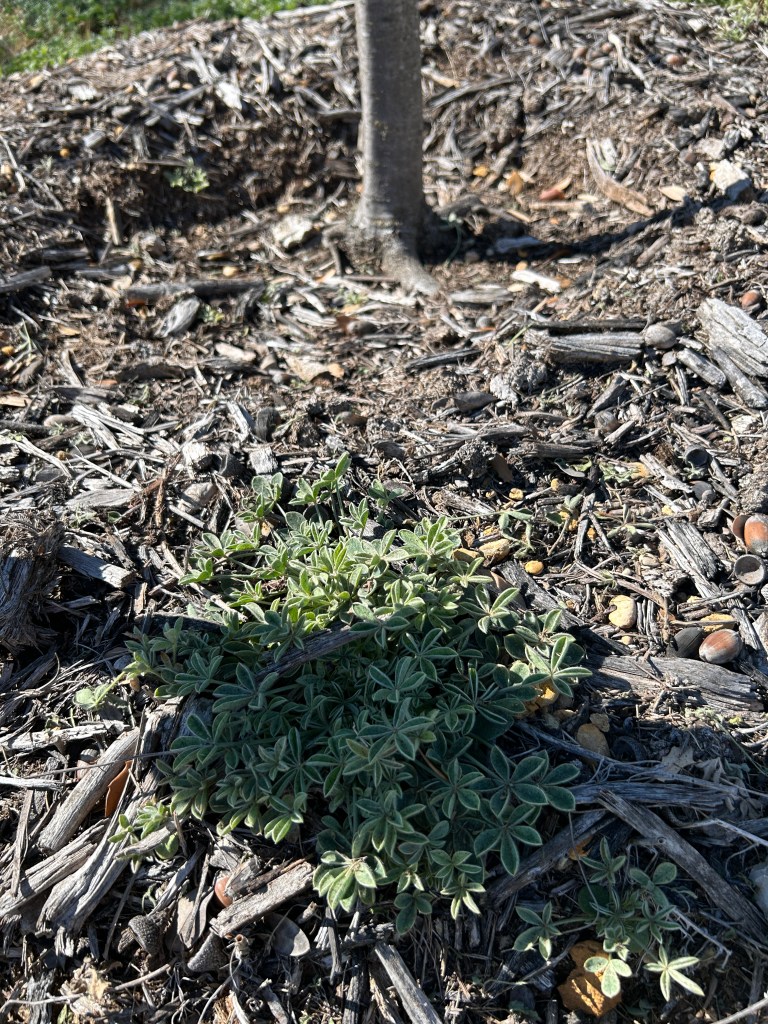
…in leaf litter underneath the Desert Willow tree,
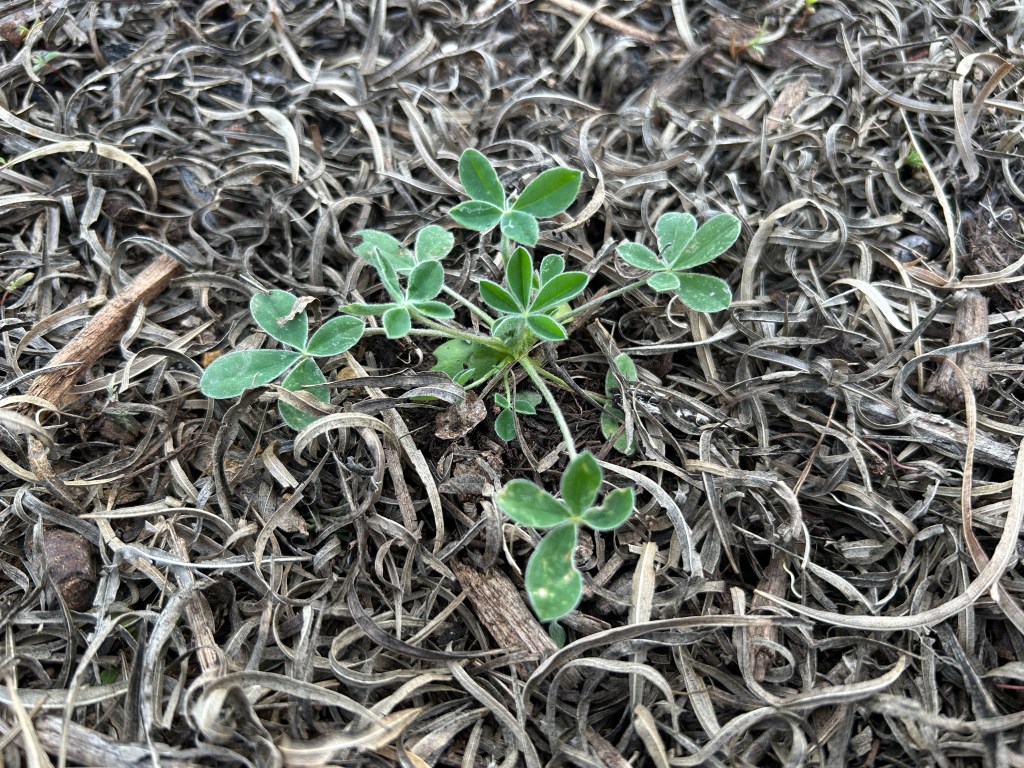
…underneath the White Mistflower shrub,
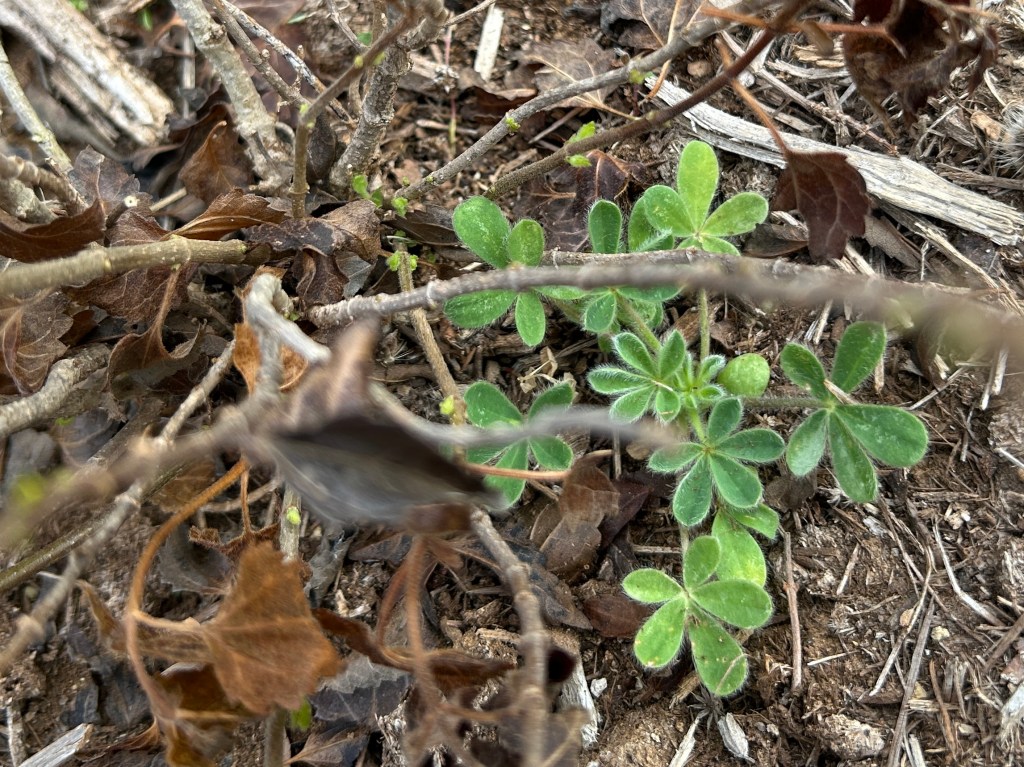
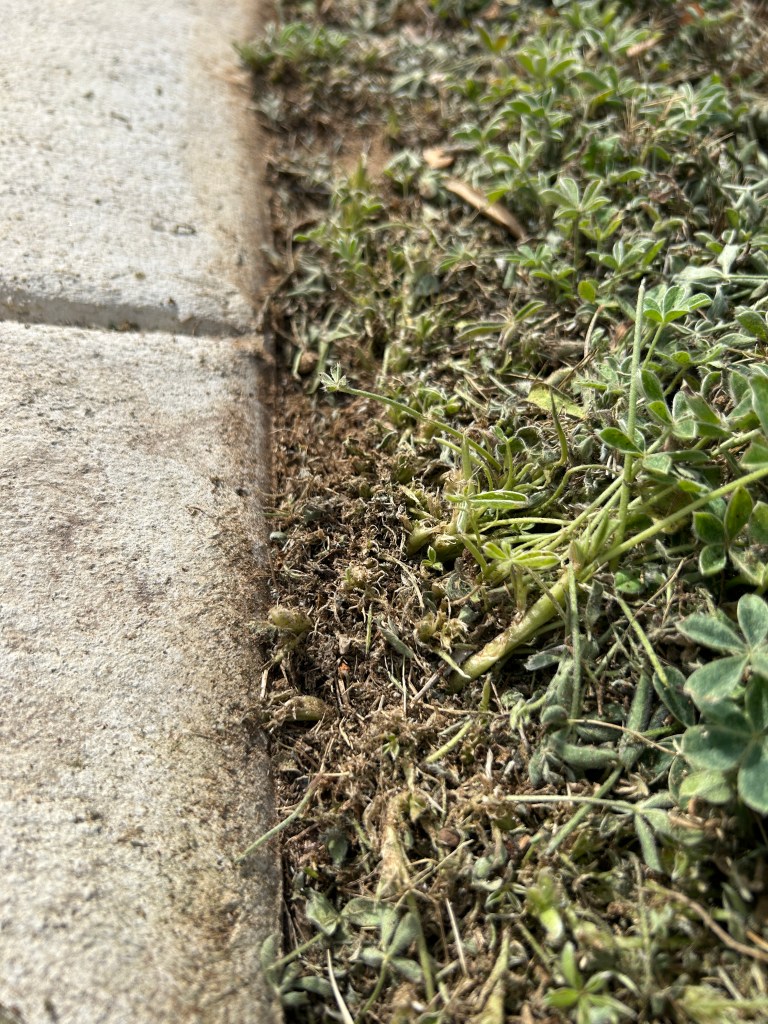
…and right next to the sidewalk where I mow to keep the meadow edges neat.
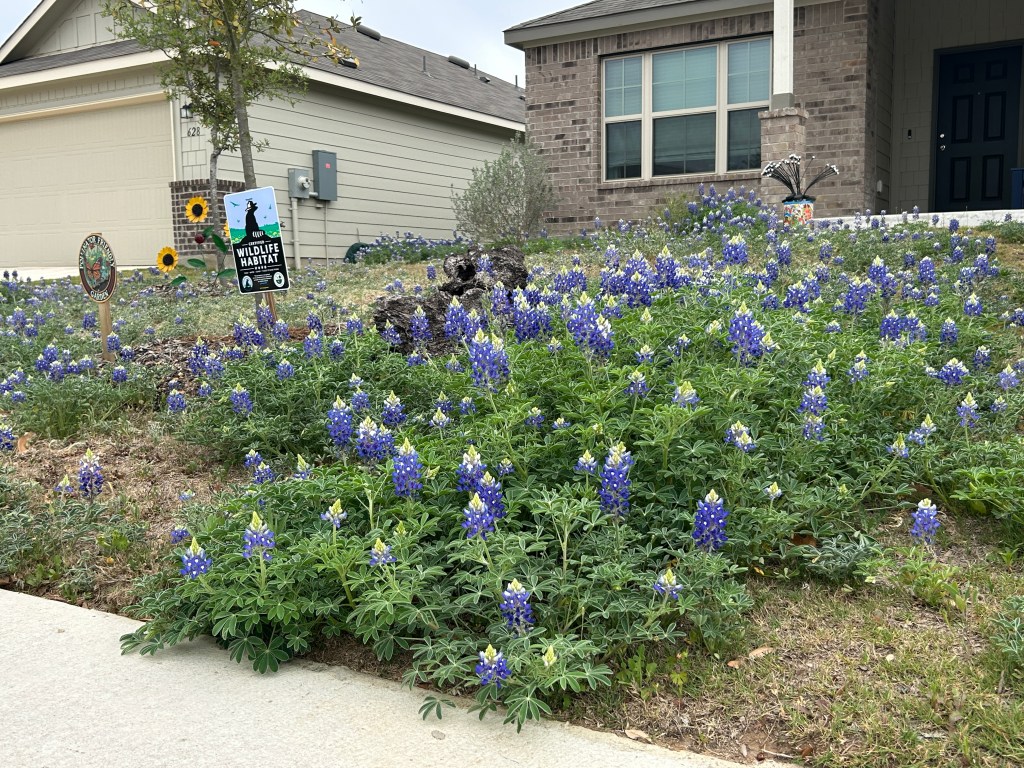
Bluebonnets do not grow well in the heavy clay soil of Houston, where I used to live. So they were at the top of my list to plant in the dryer conditions that I have in Seguin — I had visions of a seasonal bluebonnet meadow in front of my house, which in fact came to be (the photo below is from April 2025, its second year). However, I didn’t know then what I know now — that bluebonnets are gracious guests and leave the ground in better condition than they found it.

 Rewilding My Lot
Leave a comment