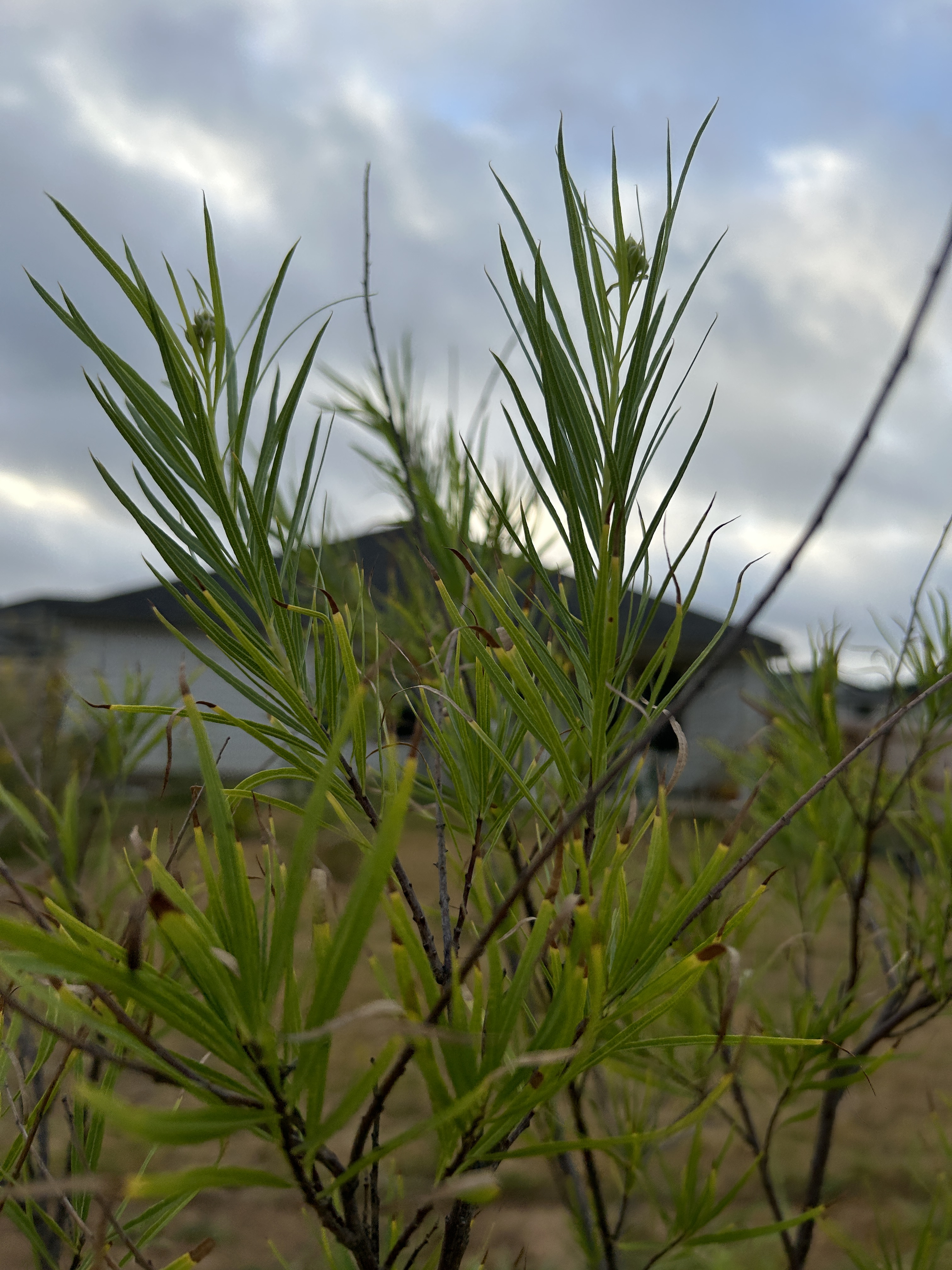
Trimming away dead parts of plants in front of the house was a fairly small job. The meadow area had already been cleaned up last October, and tidying up the pollinator garden plants a week ago didn’t take very long.
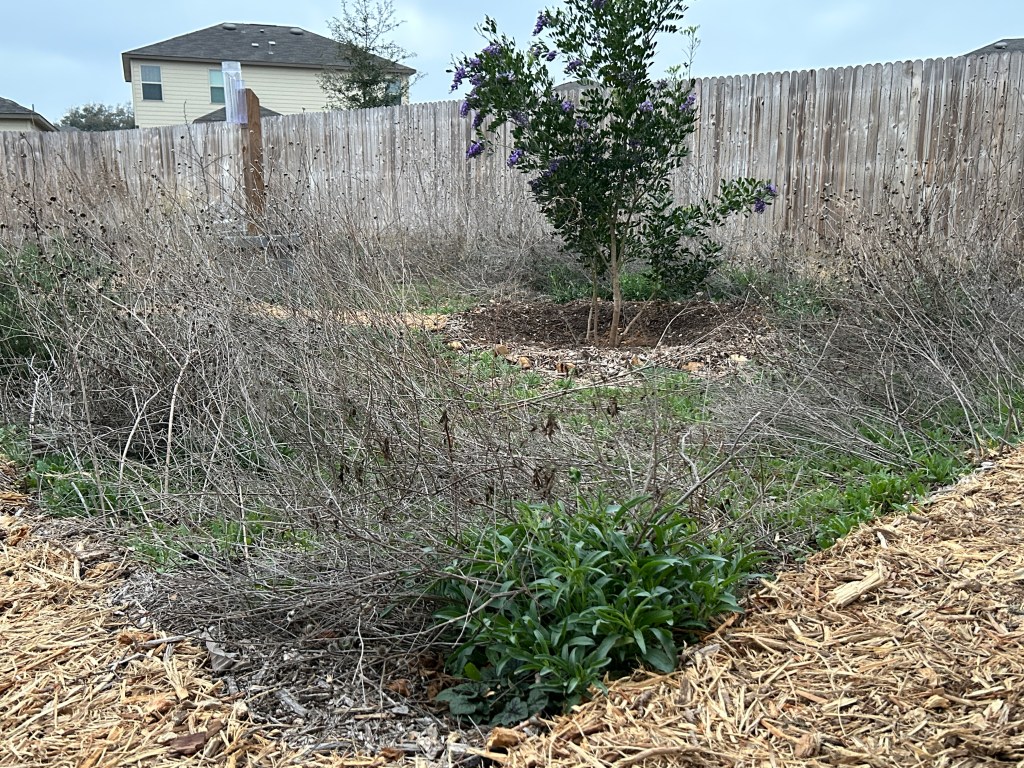
The back yard is a different story. Because it’s out of view, I let it remain “untidy” through the winter — old dead stems and dried seed heads can be habitat and food.
However, now it’s the beginning of March, I am ready to clear the way for new spring growth. In the back yard, that’s a multi-day process.
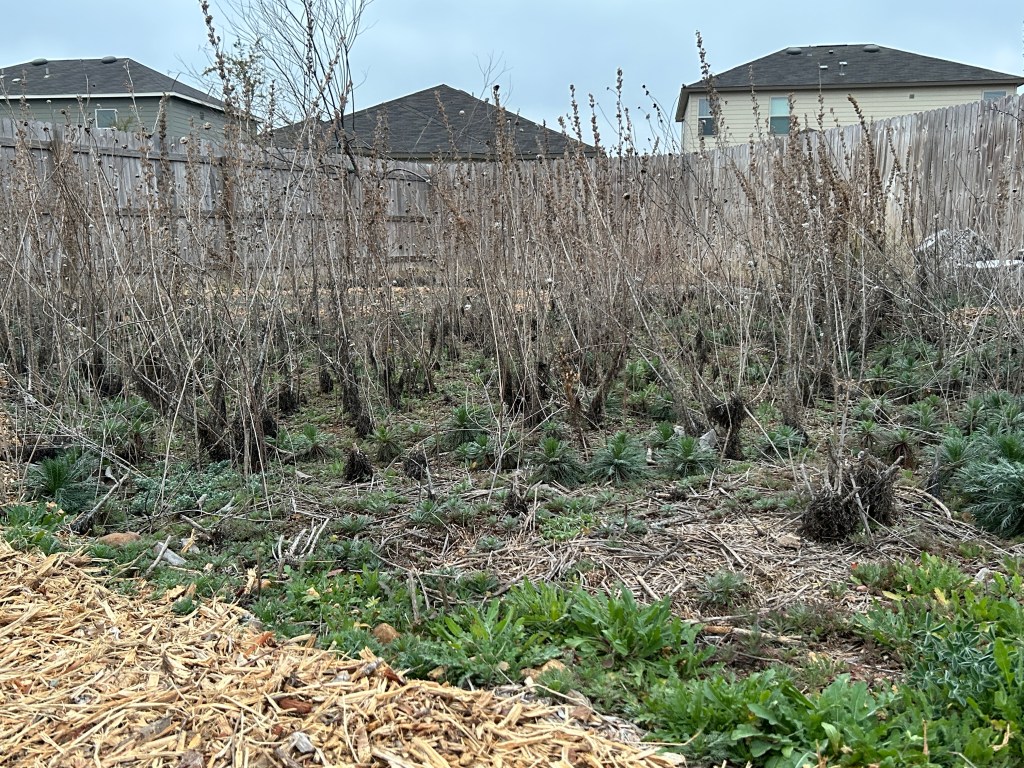
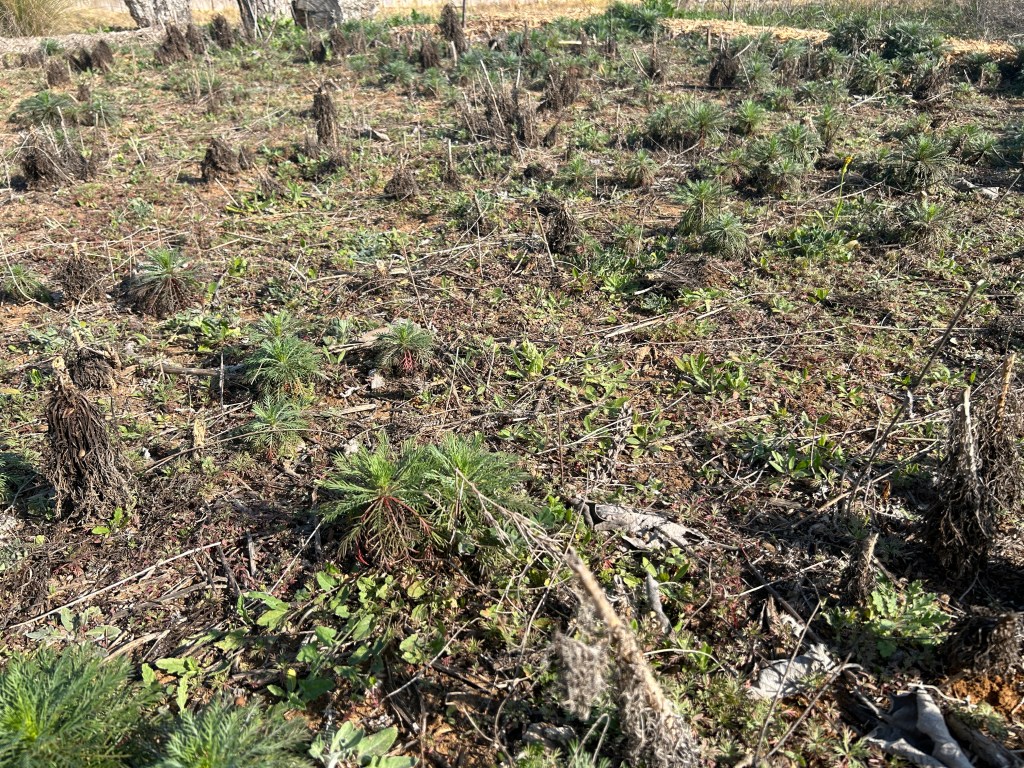
First, I cut back the old Standing Cypress (Ipomopsis rubra) stems (see photo above for the “before”). This particular plant is extraordinarily successful at self-seeding here, and so to minimize its appearance in other sections of the garden I kept the cut stems in the same area as the plants. When I shred them, I’ll move the shredder over there, and put the resulting straw mulch on the same ground. (Last year I was less choosy in where I used Standing Cypress mulch, which led to hundreds of seedlings in places where I didn’t want them. Lesson learned!)
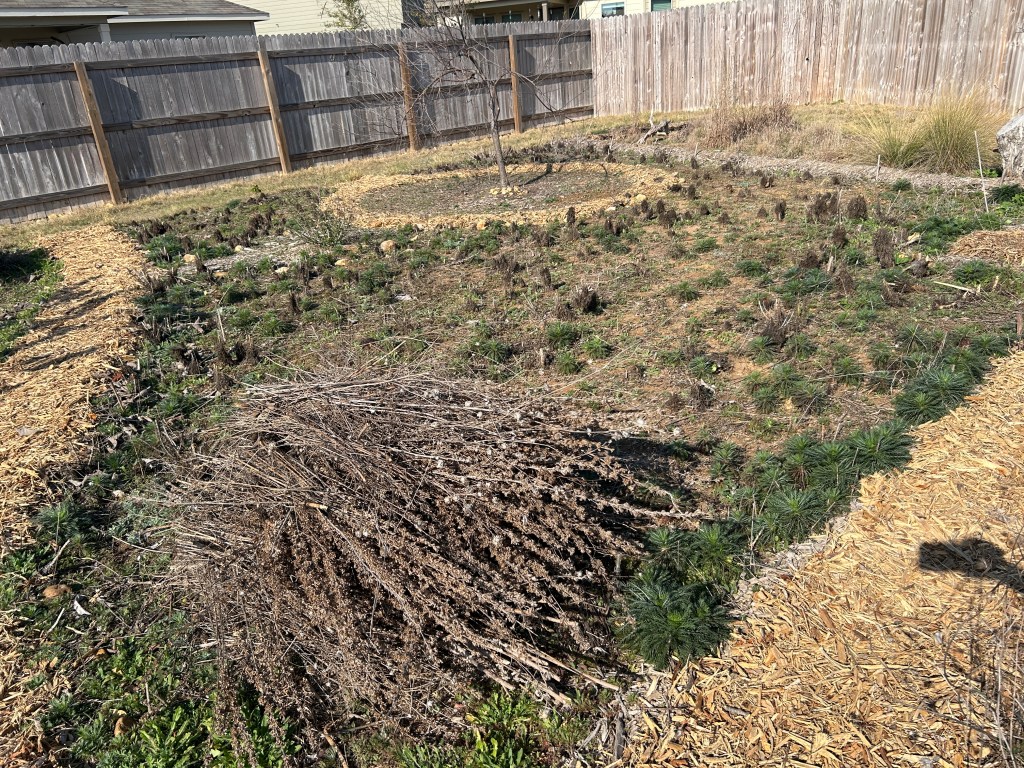
After the Standing Cypress clean-up, there was a mixture of cut-down dead plant stumps, larger ferny rosettes that are in their second year and are expected to bloom in a few weeks, and small seedlings that are newly germinated. There are a few other wildflowers in that area as well.
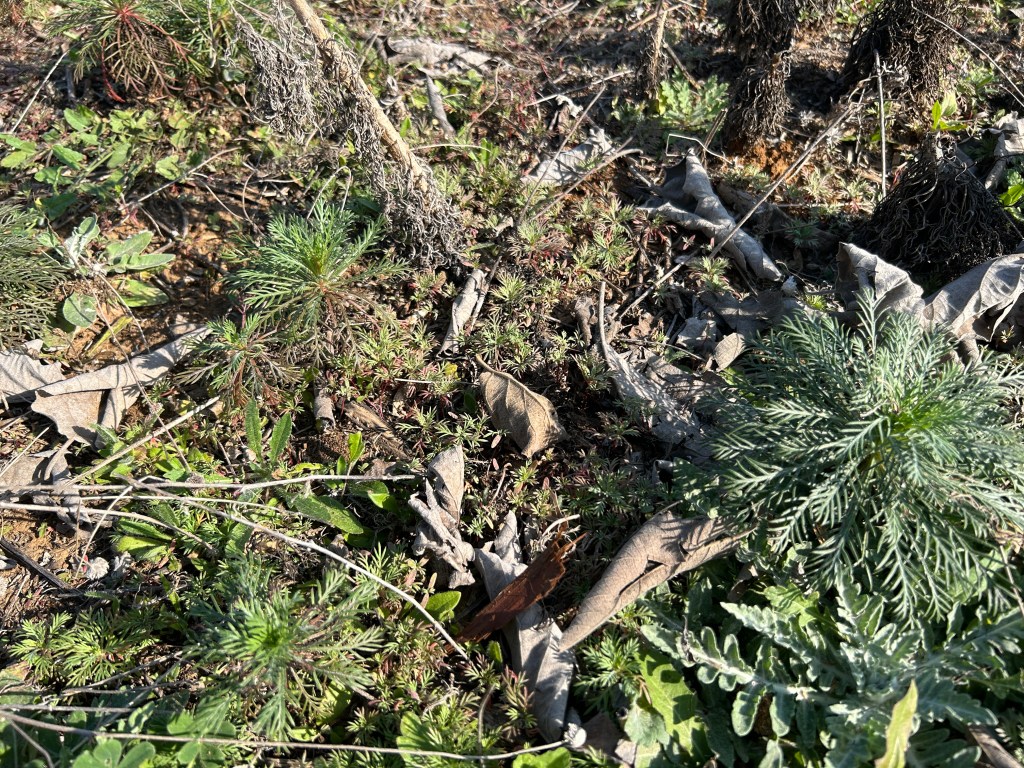
Nearer the front of the garden I have areas where Mealy Blue Sage (Salvia farinacea) and sunflowers grow.
There were dead stems from both of those plants last year, so I cut those down and stacked them nearby for future shredding.
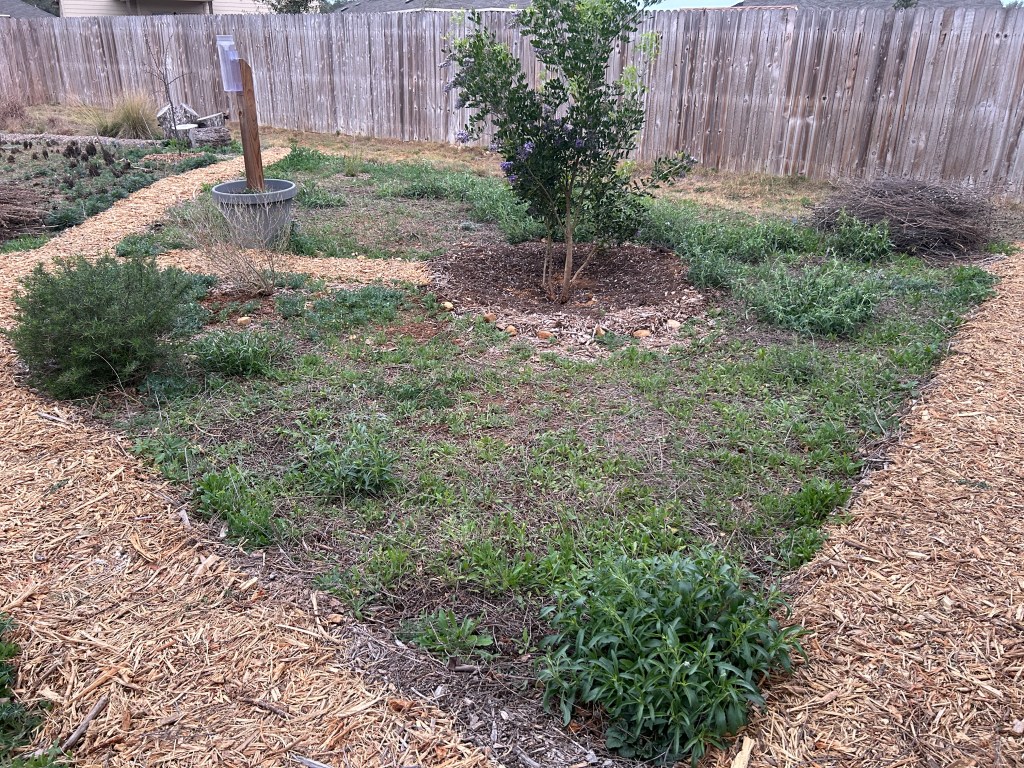
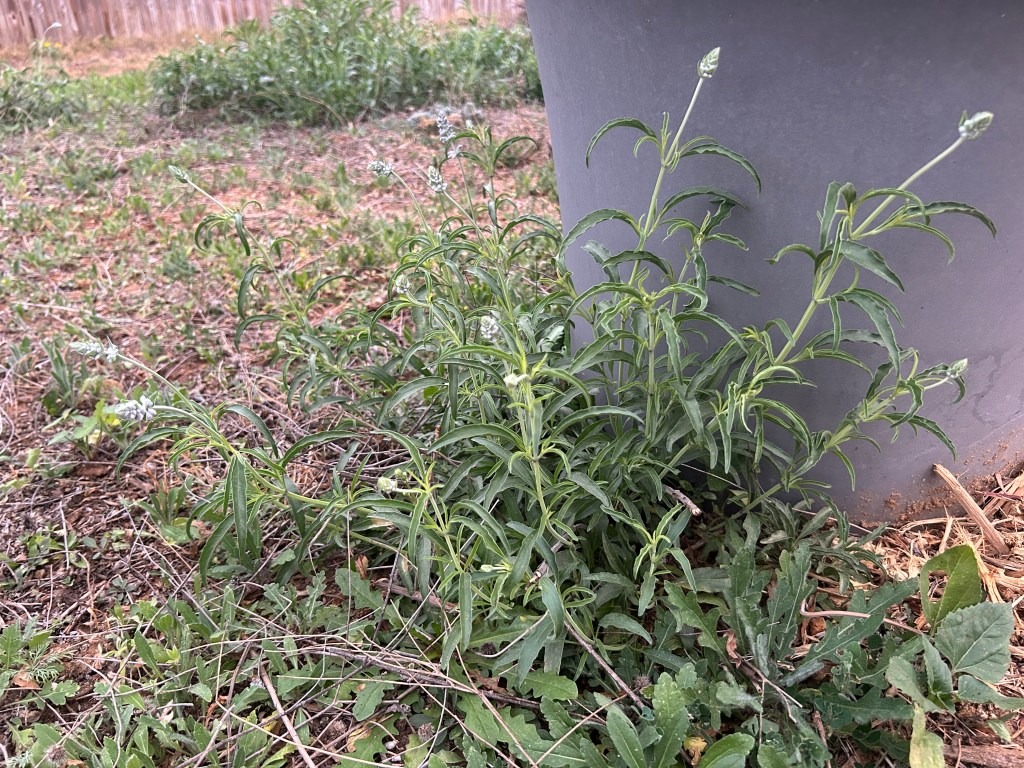
The sunflowers are annuals and so I expect to see entirely new seedlings in a few weeks. Mealy Blue Sage plants are perennials, and these have already started new growth at the ground. Some have even progressed to the point of blooming.
After the dead stems were cut away and stacked for future shredding, that allowed me to see the ground more clearly. I will try to identify what grows so that I know what to keep. Things that I have seeded and volunteer native plants that are not too intrusive will be welcome. Others — “weeds” — will hopefully be removed before they propagate. Examples of weeds for me would be bermudagrass, johnson grass, burclover, spotted spurge, and sow thistle.

 Rewilding My Lot
Leave a comment