Occasionally I have seen white bluebonnets here. I wrote about that when I saw my first one, but I’ve seen a few more of them now.
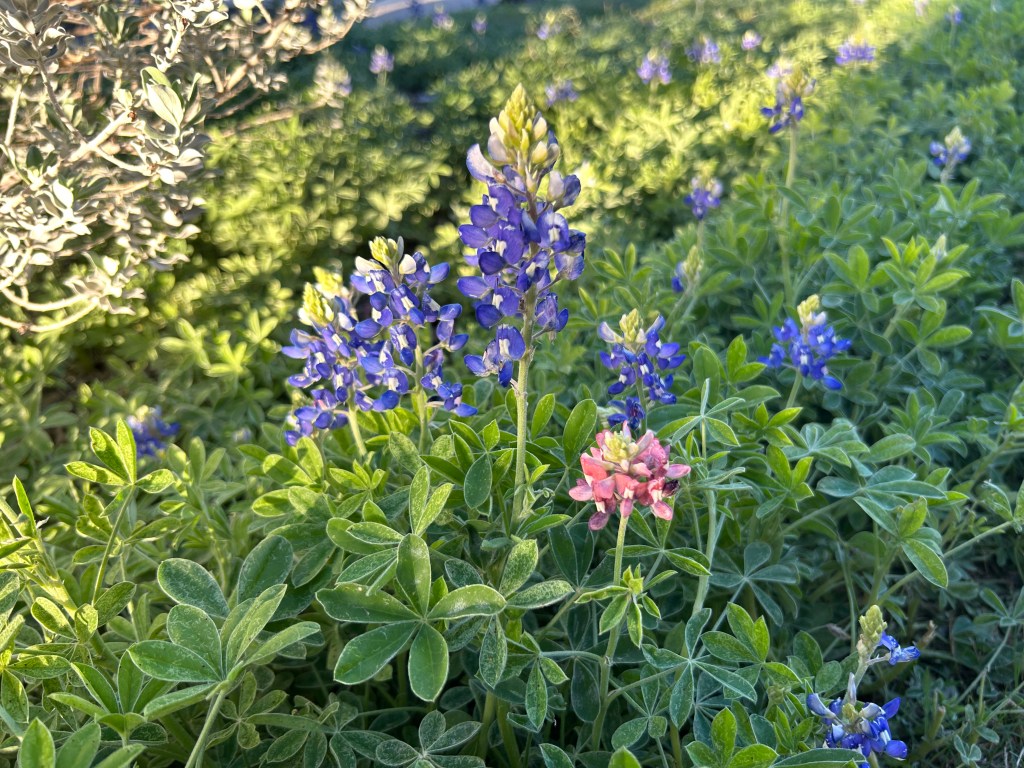
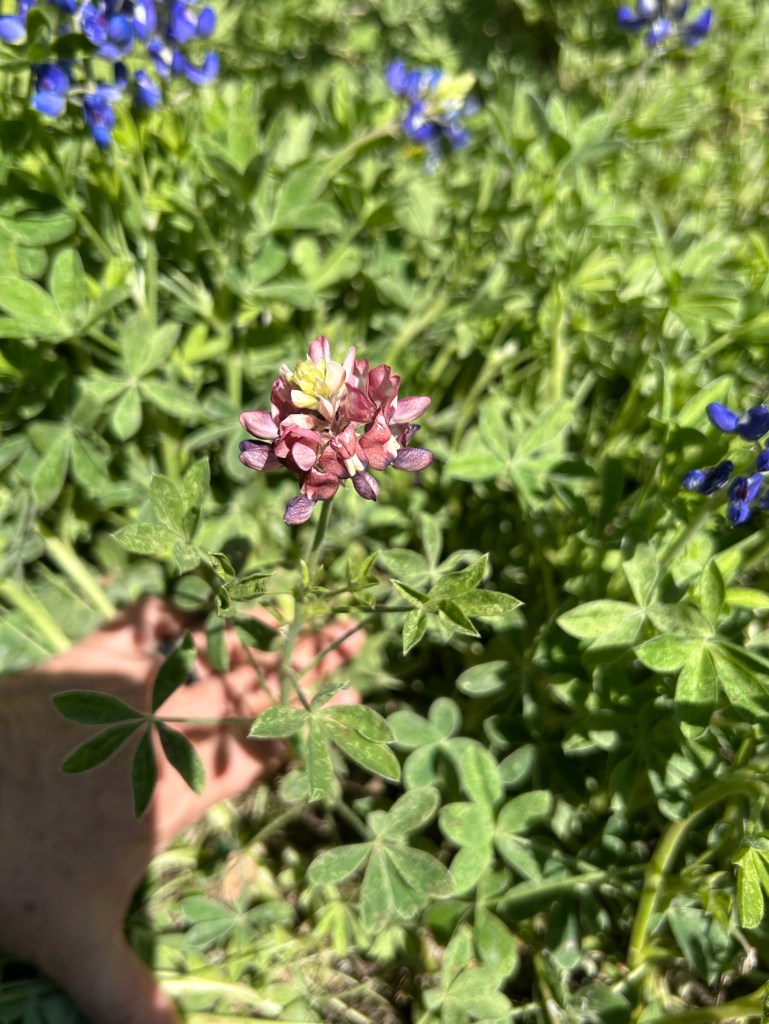
What I hadn’t seen until now was a pink bluebonnet. This one popped up in my wildflower meadow. Pink blooms result from a normal genetic mutation that sometimes occurs (less commonly than the white).
It may look as if this is a single pink bloom on a plant that also has blue, but when I follow the stem down, that is a small plant with only one bloom. (There are so many bluebonnet plants in the meadow that they are very crowded!)
In general, color variations don’t stick around in the general population because the blue color is dominant. If pollen from a more common blue plant pollinates the flower of another color, then the offspring of that cross will have blue flowers. Therefore blue will easily swamp out other colors in a general population.
Horticulturalists can use selective breeding of color variants to create new varieties, such as the maroon variant affectionately nicknamed the “Aggiebonnet” released in the year 2000 (see Texas A&M horticulture history page here, and a longer account here). However, I don’t plan to do anything special with this one beyond enjoying its variety.

 Rewilding My Lot
Leave a comment