The passionflower that I have (Scarletfruit Passionflower, Passiflora lanuginosa) is not a true native. However, it functions well as a host plant for Gulf Fritillary (Dione vanillae) butterflies, and attracts other nectar-feeding insects. Providing human interest, the flowers are amazingly intricate and the fruits brightly colored. I’ve eaten the fruits, although they are not the same as the passion fruits that grow in more tropical areas and are sold as food.
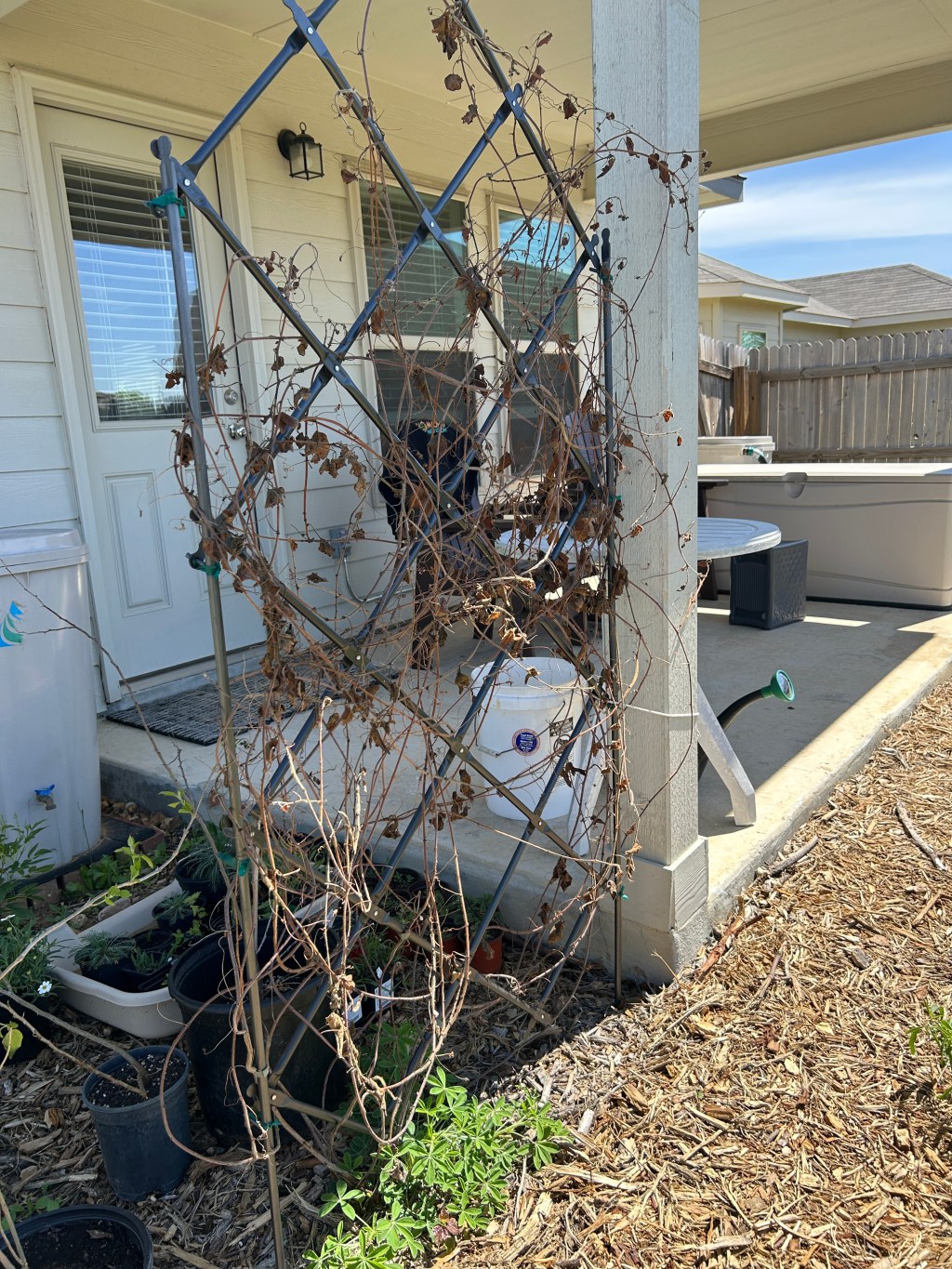
My passionflower was planted as a seedling in 2024 and bloomed for the first time last year. It grows up a small trellis near the back patio.
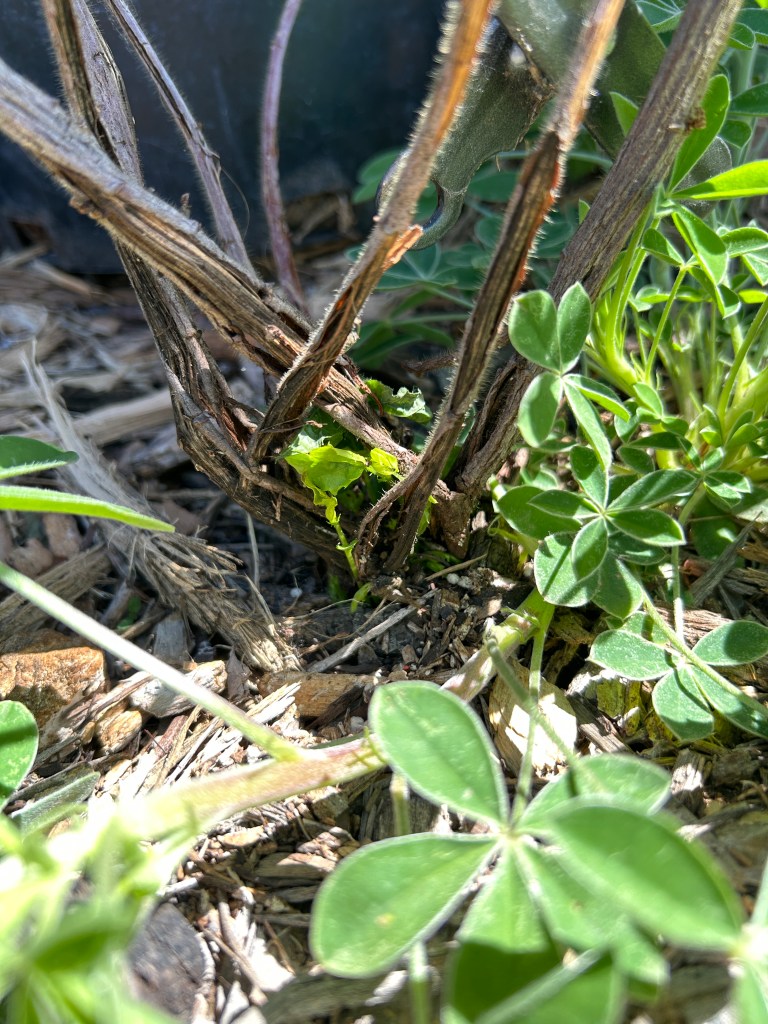
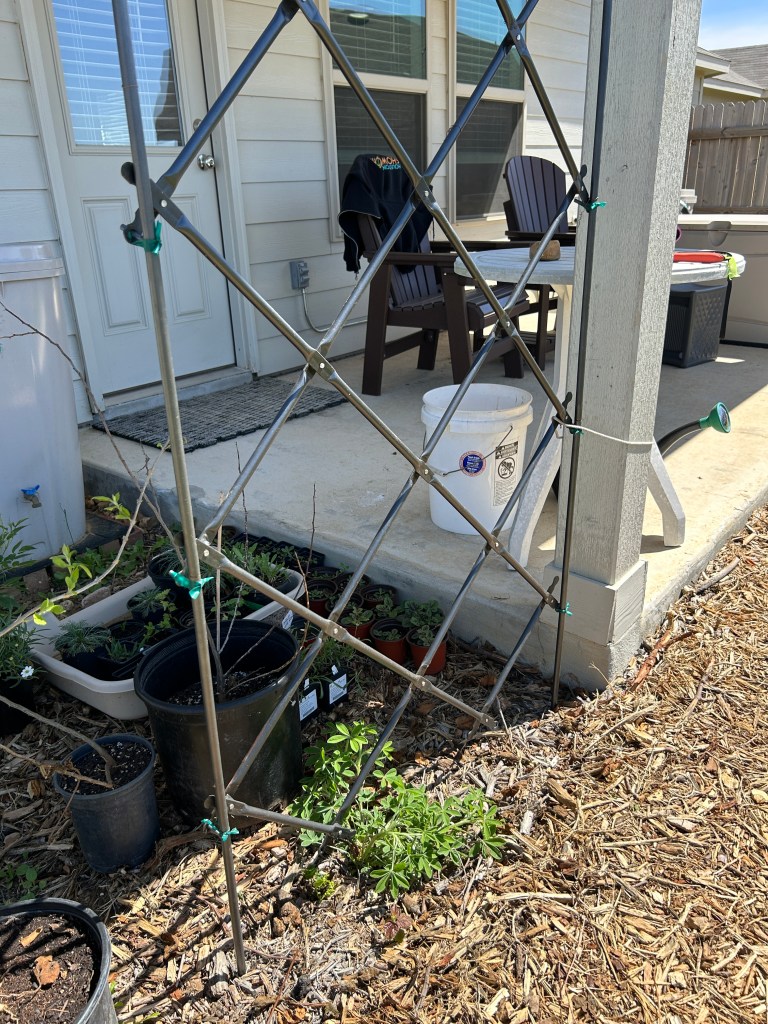
As expected, over the winter, the above-ground parts of the plant died back. In mid-March 2026, I cut back the dead parts. Hiding underneath a volunteer bluebonnet plant, I see new passionflower shoots already forming, so it won’t be long before the vine rapidly climbs the trellis again. (The leaves on the right in the photo below are from the bluebonnet.)
There is also an entirely new passionflower shoot nearby.
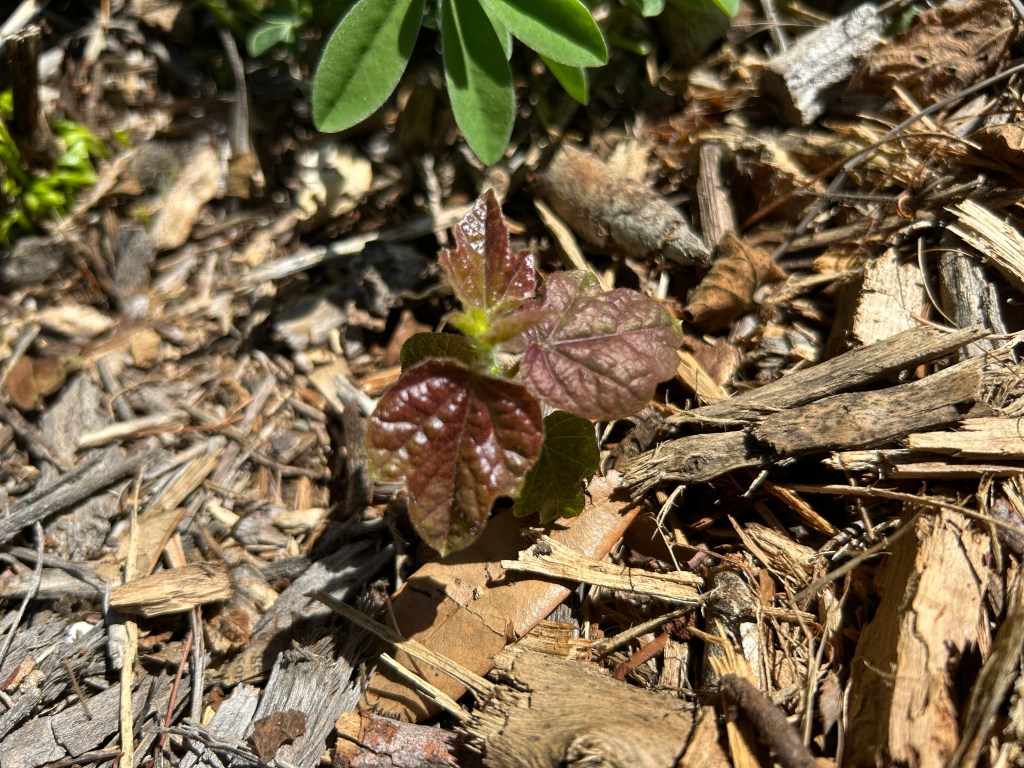
Passionflowers are known for pushing up new shoots from their widespread root system, sometimes feet away from the original plant, and I certainly have witnessed that. I remove anything that isn’t at the original, intended location — unrestrained passionflower shoots can creep over and cover an area. This extra one was removed.
So here’s the trellis now, ready for new passionflower vines growth. I choose to leave most of the bluebonnet volunteers in the garden in place, even if they’re close to other plants that are growing, because of their nitrogen-fixing action that fertilizes the soil. This one will have completed its lifecycle in a few weeks. At that point I’ll harvest its seeds and cut it down (leaving the roots in the ground for soil nutrition).

 Rewilding My Lot
Leave a comment