There are two builder-installed Live Oak trees in front of the house, possibly Quercus fusiformis. These trees are semi-evergreen or “tardily deciduous” in that they don’t shed their old leaves until the new ones have begun to emerge. The whole process of conversion from old to new leaves takes just a few weeks in spring.
My oak trees are in the middle of replacing their leaves right now (mid to late March). They are just starting their fourth year here and I’m noticing some things this year that I haven’t seen before.
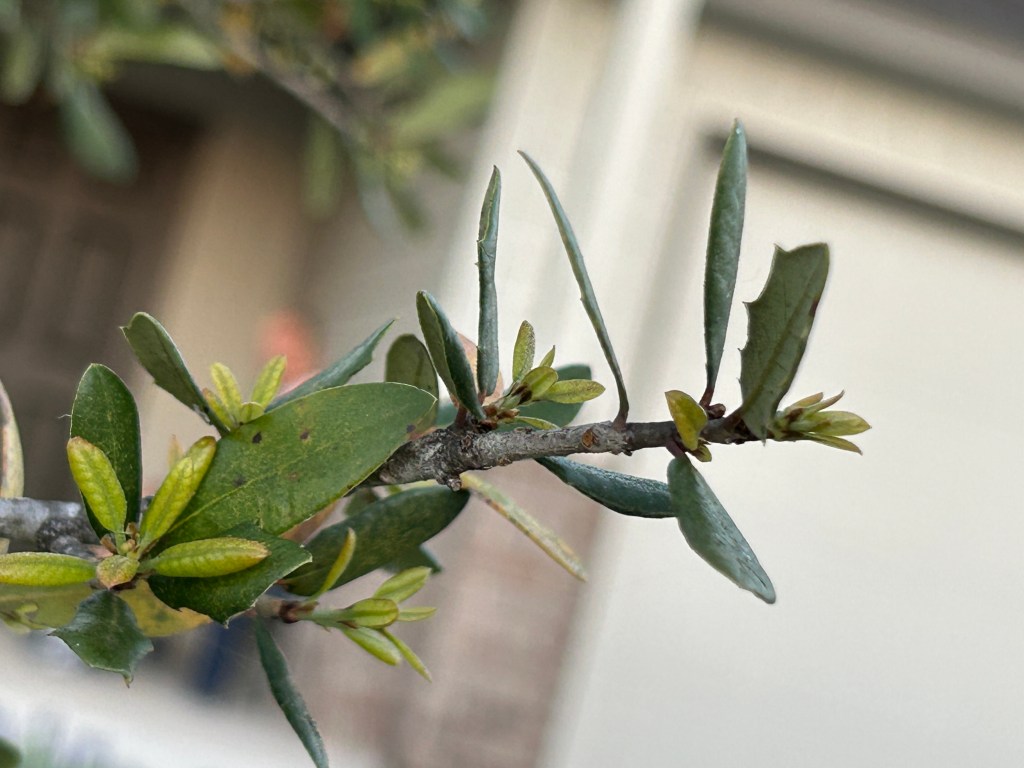
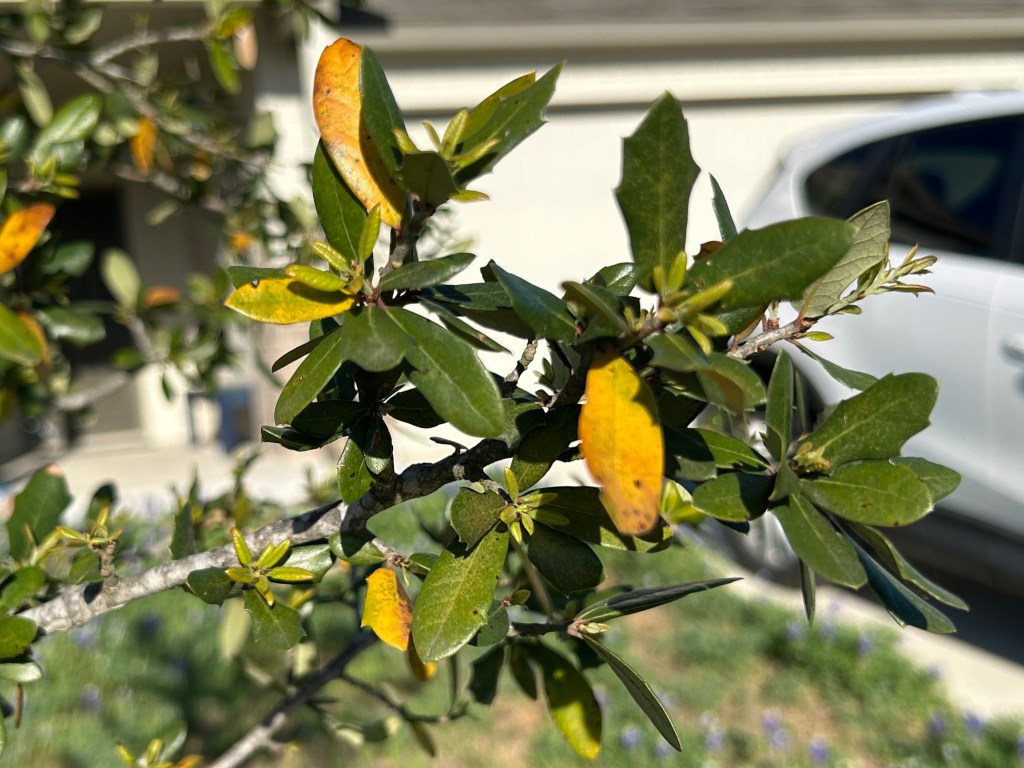
Here’s a cluster of leaves where there is a mixture of old (orange) leaves ready to fall, old (larger, green) leaves not ready to fall yet, and new (smaller, light green) leaves.
These trees seem healthy and I gave them their first “grown up” pruning this past winter. Until now, they have remained largely unchanged in stature (i.e., about 8 feet in height). However, what I am seeing this spring is new growth that extends branches in addition to just replacing old leaves. So when I measure my trees next January for the annual check of how they’re doing, I expect to see that they have grown.
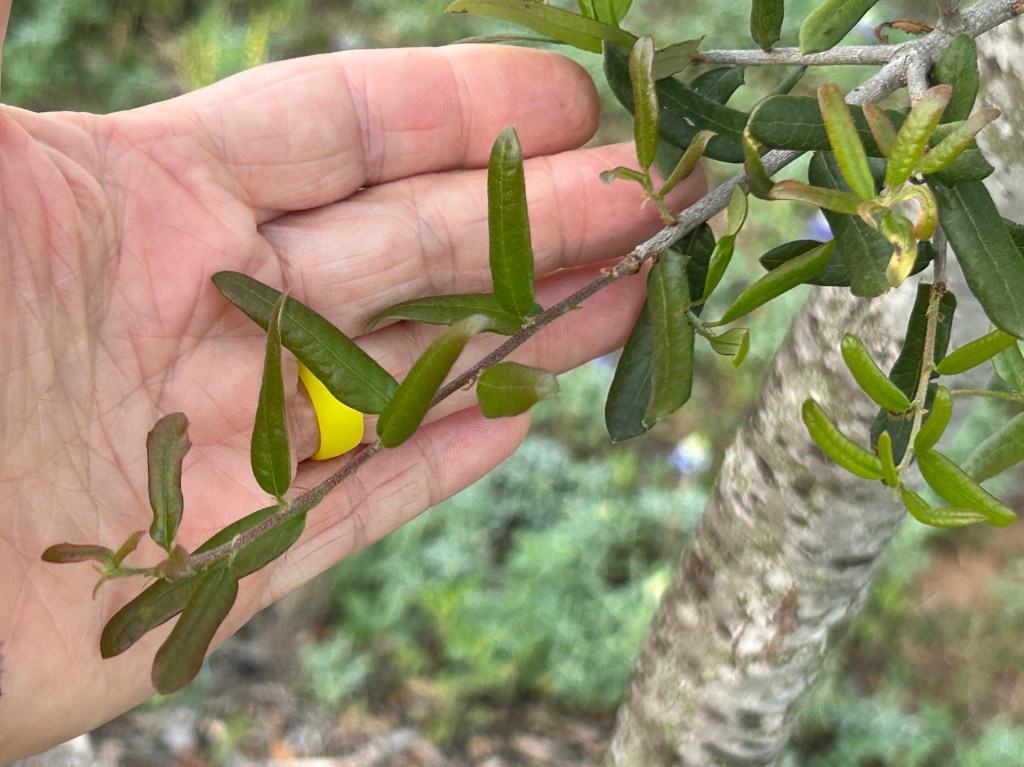
Here’s the tip of one branch where several inches of stem are new (brown) growth.
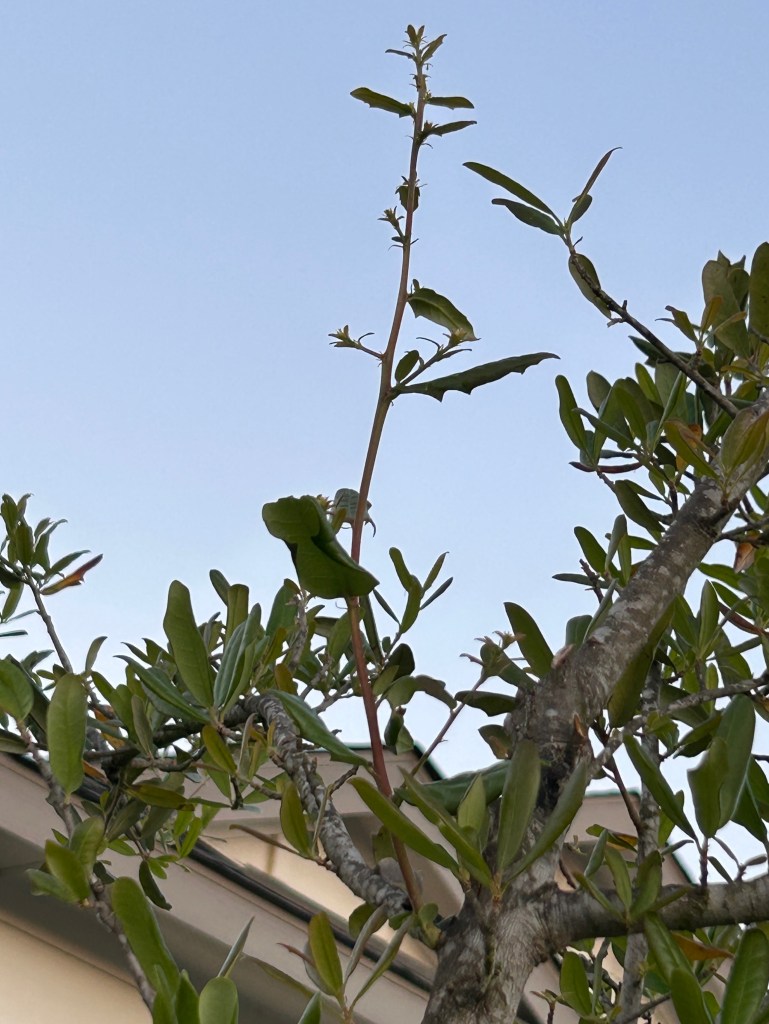
And here’s an example of an entirely new branch that is already a few feet long.
From the beginning, both of my oak trees have produced acorns (one of them even germinated). Oak trees have male and female flowers on the same tree. The male flowers that produce pollen appear in spring, and the female flowers that eventually develop into acorns are so hidden that they are often not seen.
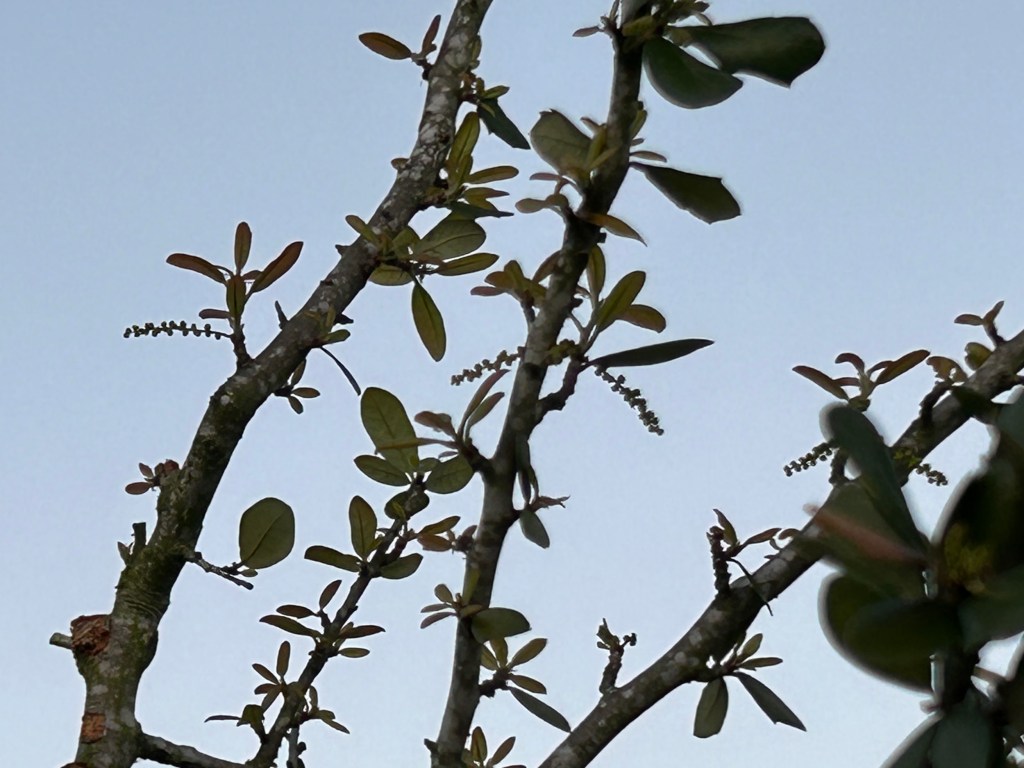
Despite looking, I had never been able to spot the male flowers until now. However, finally I saw some at the top of one of my oaks. The male flowers appear as bumps along slender structures called aments (also known as catkins).
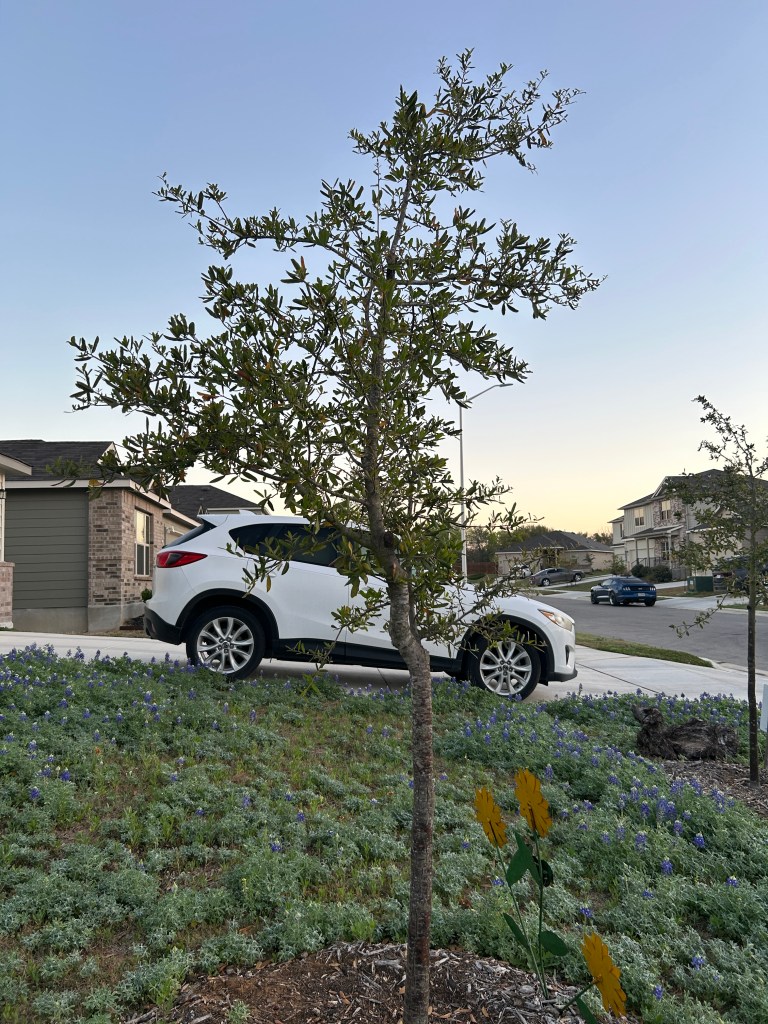
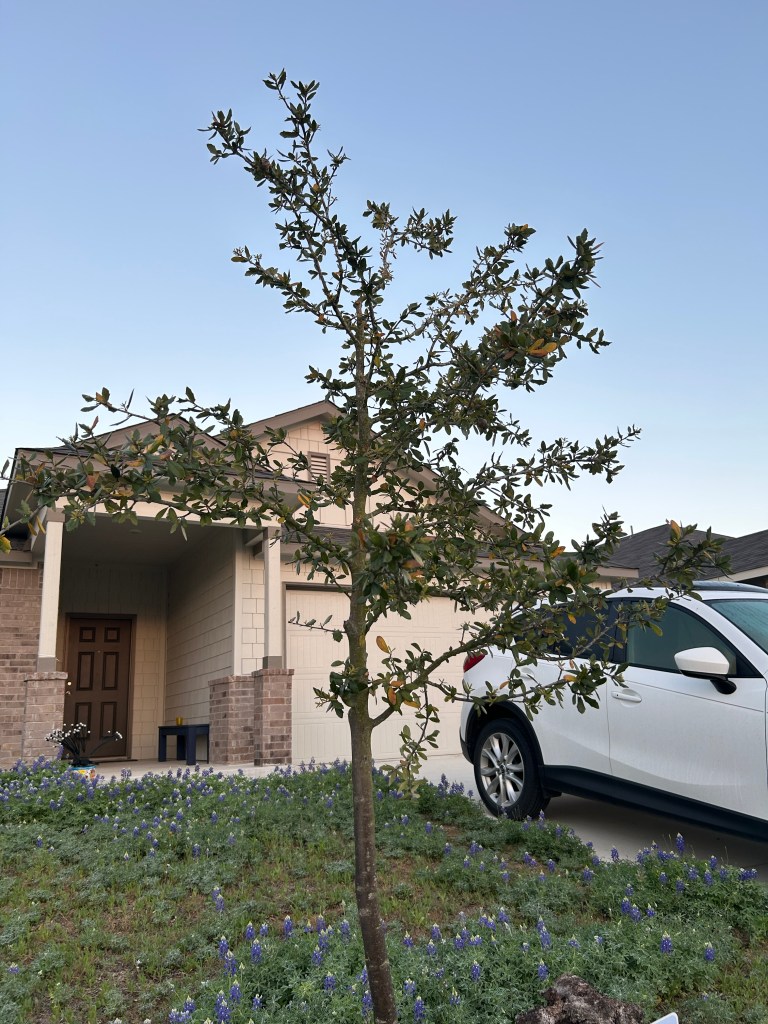
So these are my two Live Oak trees as of the end of March 2026. I hope that this is the start of a growth spurt.

 Rewilding My Lot
Leave a comment