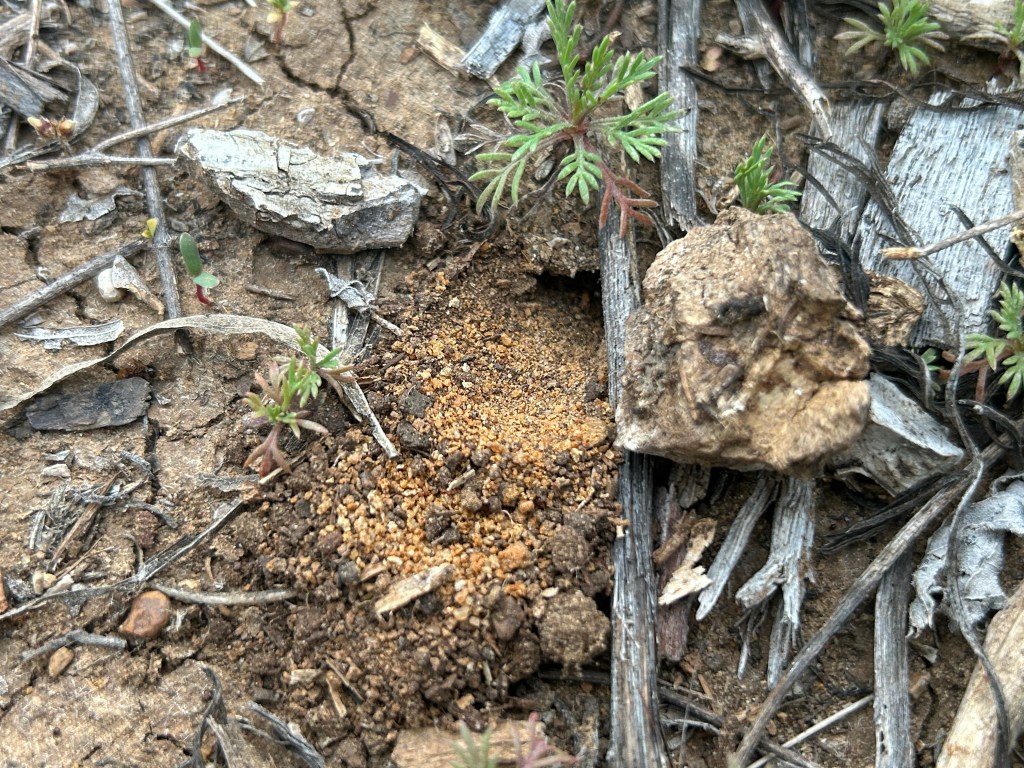
Quietly walking through the garden early one morning, I heard a bee buzzing. As it zoomed by my head, I said , “good morning” — as one does — and then watched as a second later it disappeared into this hole in the ground (photo above).
Approximately 90% of bees native to Texas are solitary species. They build their own nests, and unlike social insects tend not to be aggressive. It is better for a single female to survive in order to take care of her brood than die in a fight. Male bees don’t even have stingers.
The bee disappeared into her home too fast for me to identify it. All I could tell was that it was medium sized — bigger than a honeybee, smaller than a carpenter bee — and with a round black rear end.
That brief observation led me to some delightful research into Texas native bees and where they make their home. For instance, this is a colorful and informative Texas Bee Identification Guide from Pollinator Partnership.
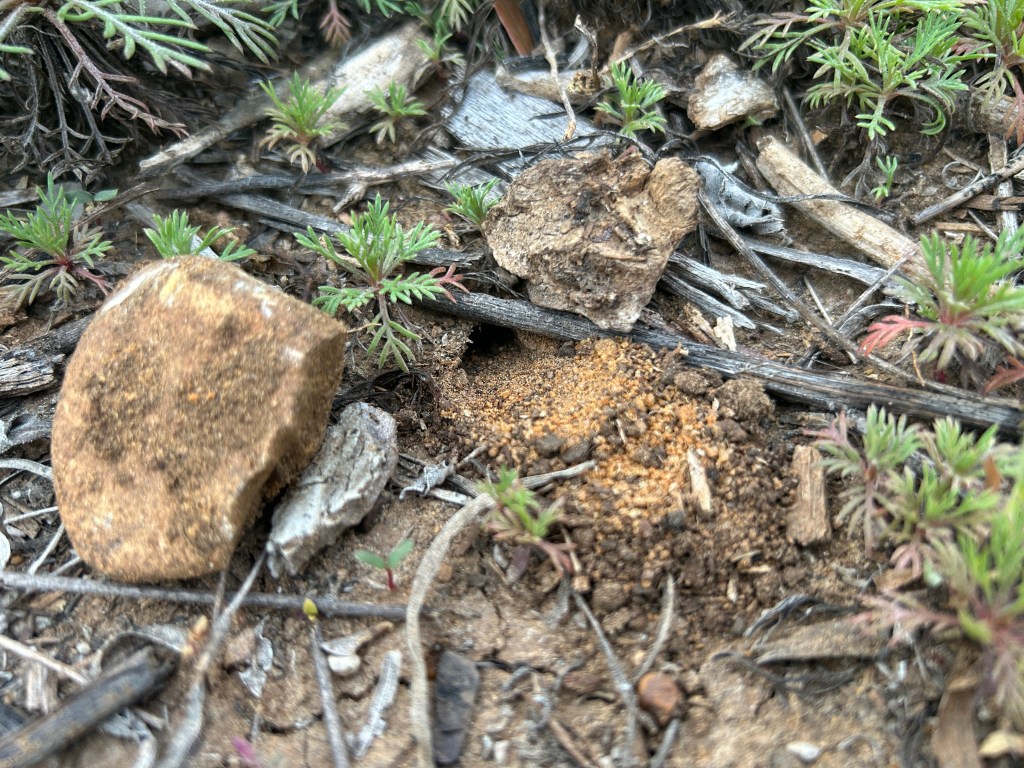
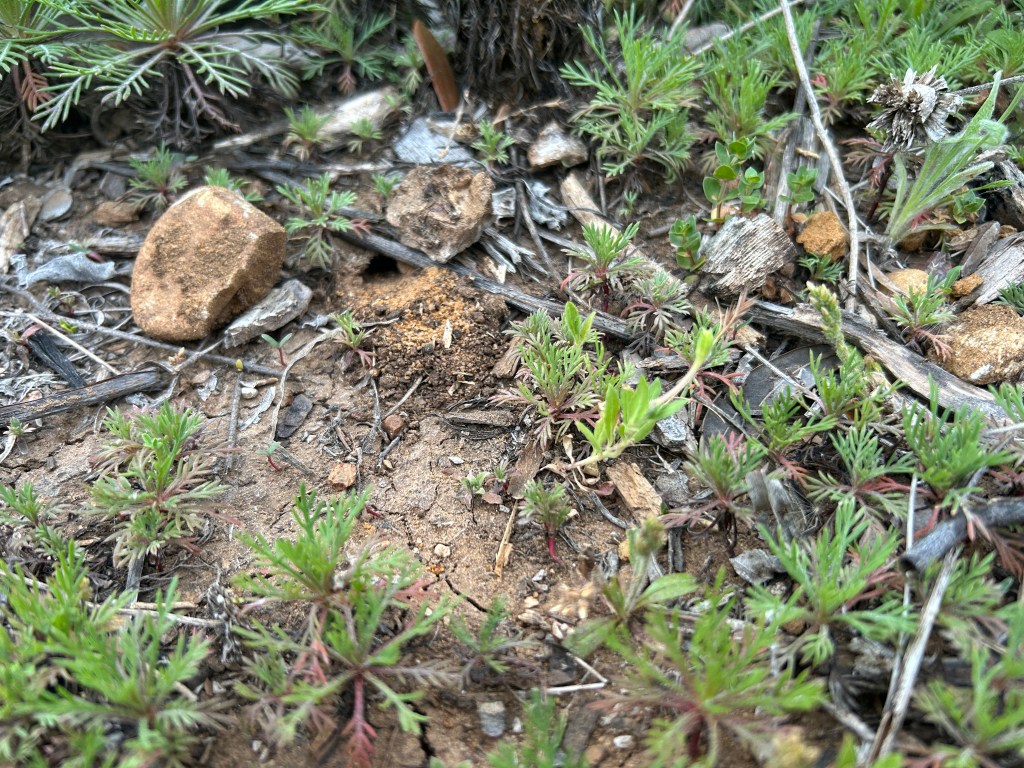
This Texas Parks & Wildlife page says that, “The majority of solitary bees are ground-nesters that excavate burrows in well-drained, sunny patches of bare-ground.” That is exactly the situation in the area of my garden where I saw the bee. I don’t know what kind mine is, but in case I might see her again, I put a small stone next to the burrow entrance (on the left) so that I can easily find it again. I hope that doesn’t confuse her.

 Rewilding My Lot
Leave a comment