Blog
-
A Hungry Caterpillar
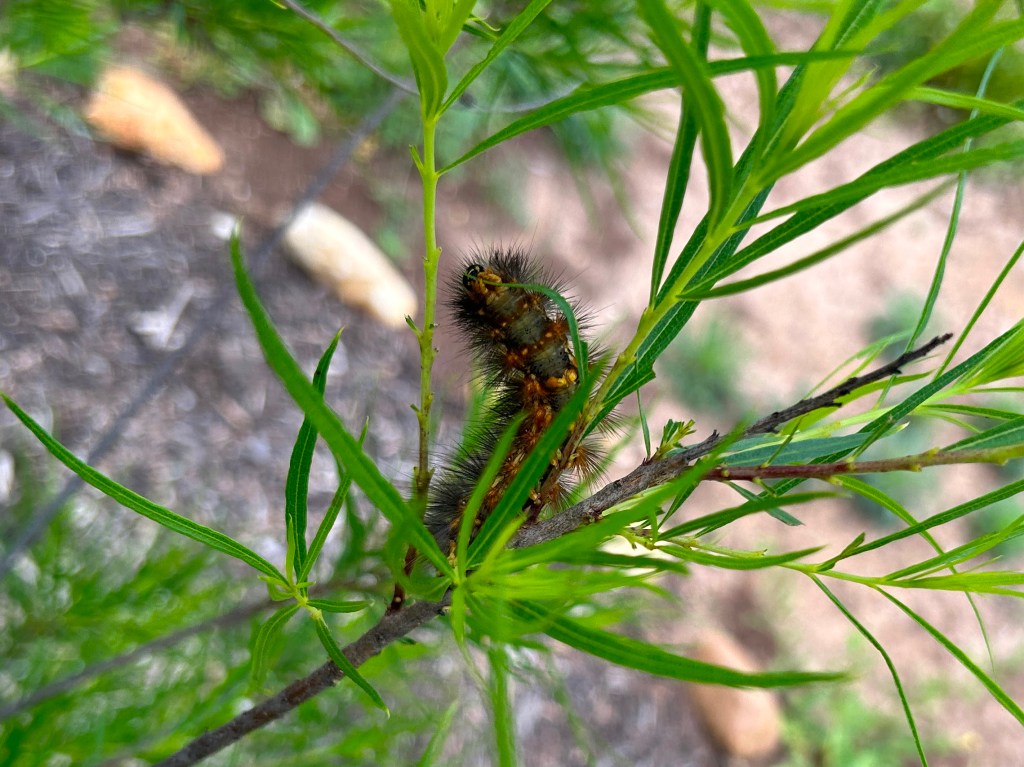
I see a lot of these dark fuzzy caterpillars here. They grow into Salt Marsh Moths (Estigmene acrea). They seem to feed on a variety of plants, which I don’t mind, unless they happen to visit a tiny plant that I am nurturing. If I spot that, then they get hurled to a different part… Continue reading
-
Three Visitors On One Flower

As I wander around, or sit in, my little developing nature garden, I get to watch abundant life. I can’t always identify or photograph what I see, so the things I share here represent just a small portion of my enjoyment. On this occasion, I happened to spot three separate visitors on one Smallflower Desert-Chicory… Continue reading
-
Identifying A Few More Volunteer Plants
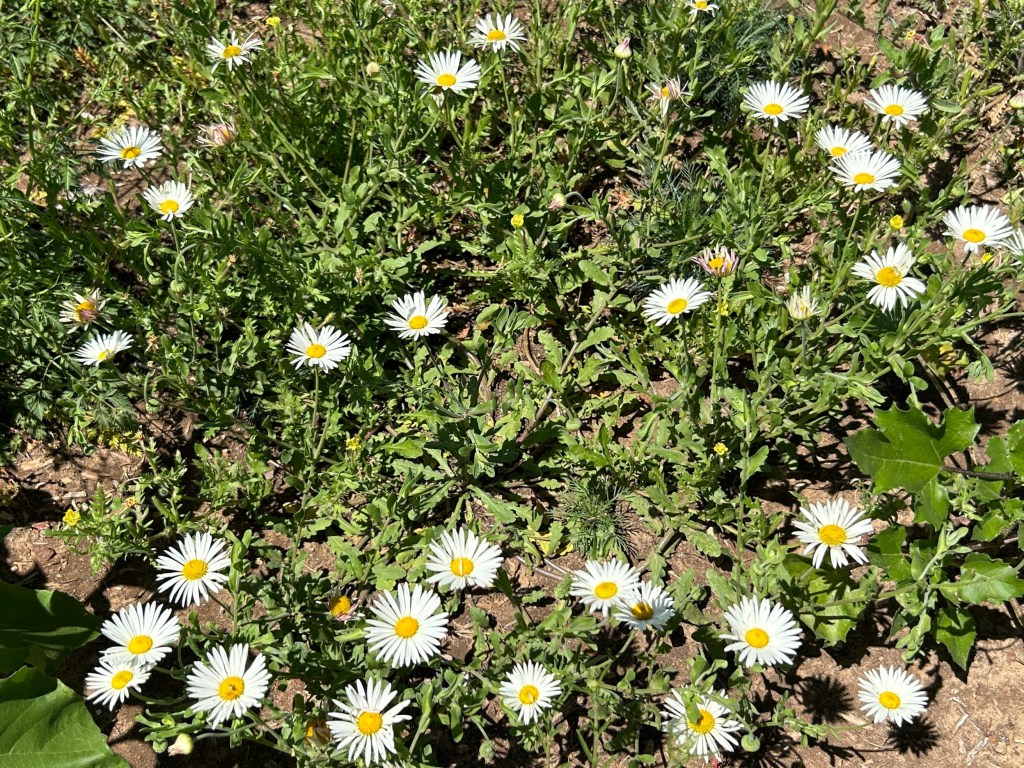
I am slowly gathering a list of plants that have volunteered here, usually using iNaturalist as a guide to get the identifications. Here are some more of my favorites (loved by bees and butterflies, too). Plains Fleabane (Erigeron modestus)This has volunteered in both front and back gardens. Apparently if I cut the plant back, there… Continue reading
-
Lyreleaf Sage
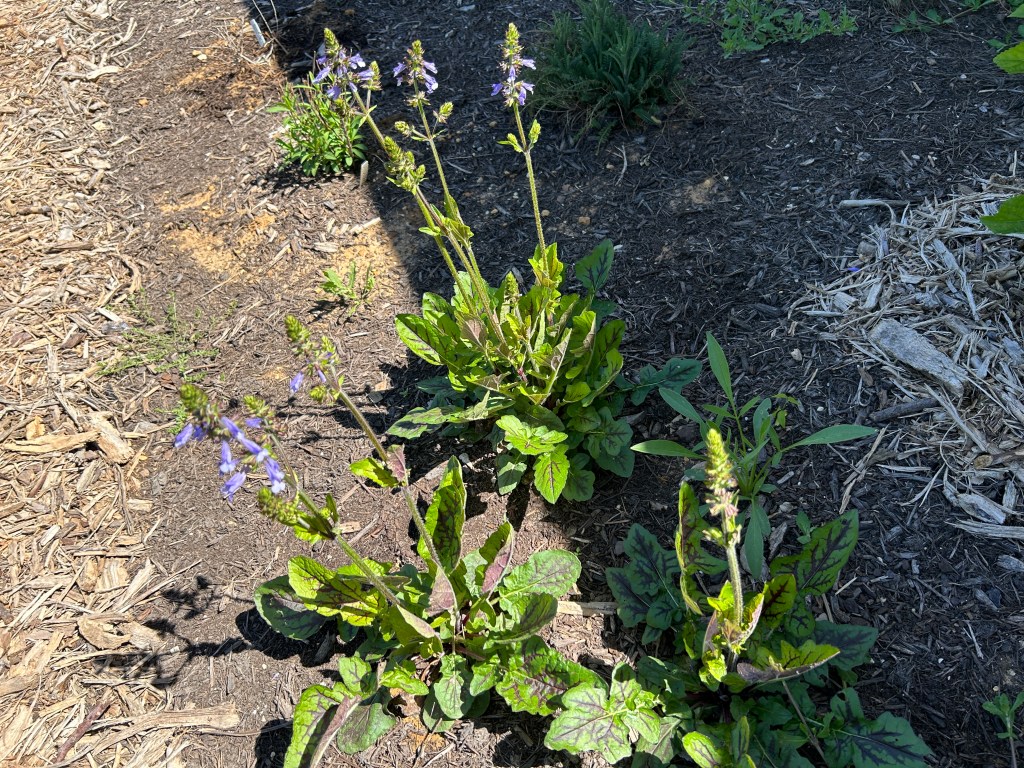
I had some Lyreleaf Sage (Salvia lyrata) plants in Houston, and was glad to see that they do well in Seguin also. The leaves have interesting markings, it is hardy in a variety of conditions (wet, dry, sun, shade!), and it spreads gently. It can even function as an evergreen ground cover. The Lyreleaf Sage… Continue reading
-
Native Milkweeds
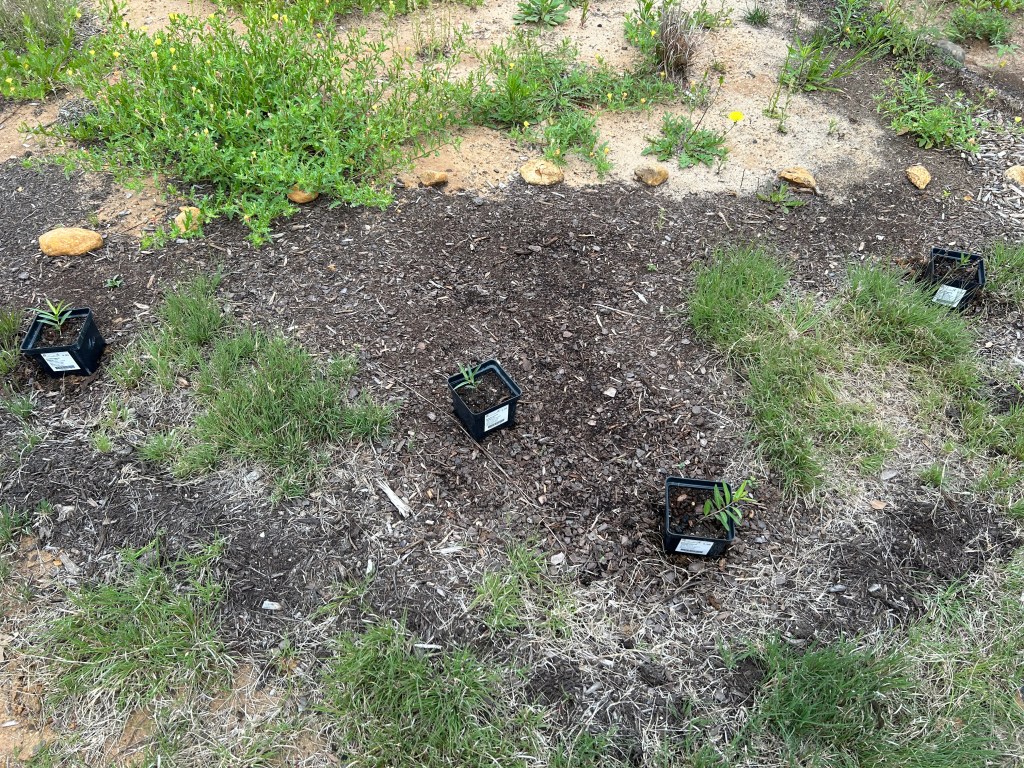
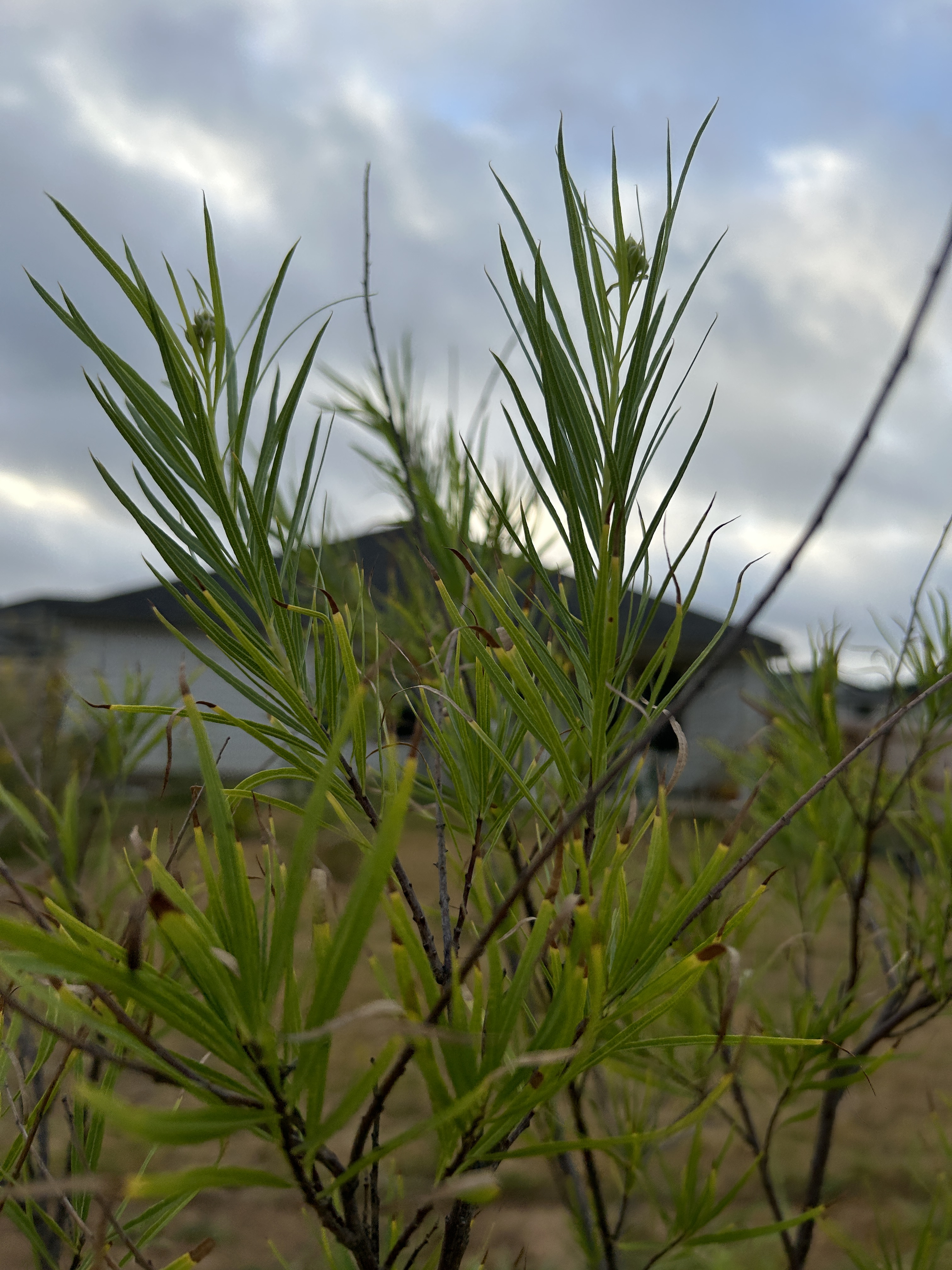
Milkweeds are the only plant that Monarch butterflies will use to lay their eggs and host their caterpillar larvae. I intentionally did not plant any Milkweeds last year — I was more focused on initially building a more generally wildlife-friendly environment. However, I knew that eventually I would want to include Milkweed plants here. There… Continue reading
-
Red Yucca Bloom Is Beginning To Open
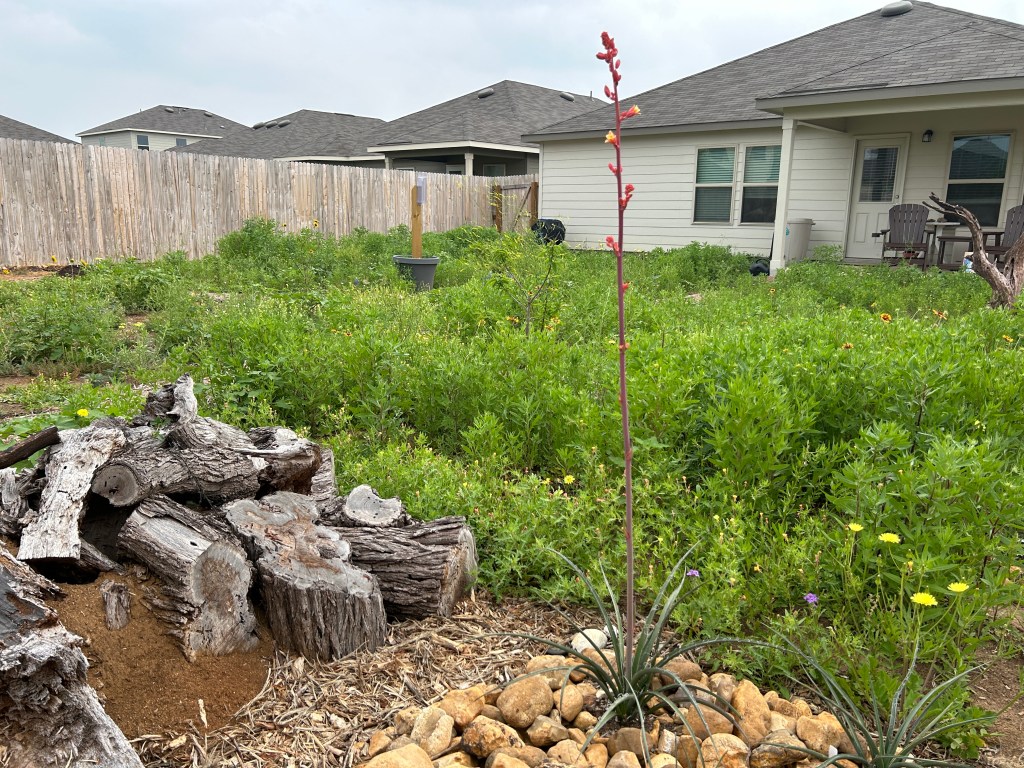
At a current height of 55 inches, the single bloom spike that I have on my Red Yucca plants is beginning to open. I first saw the spike emerging on March 6, and this photograph was taken April 1. That’s 55 inches in 27 days = 2 inches per day. Continue reading
-
Red Buckeye
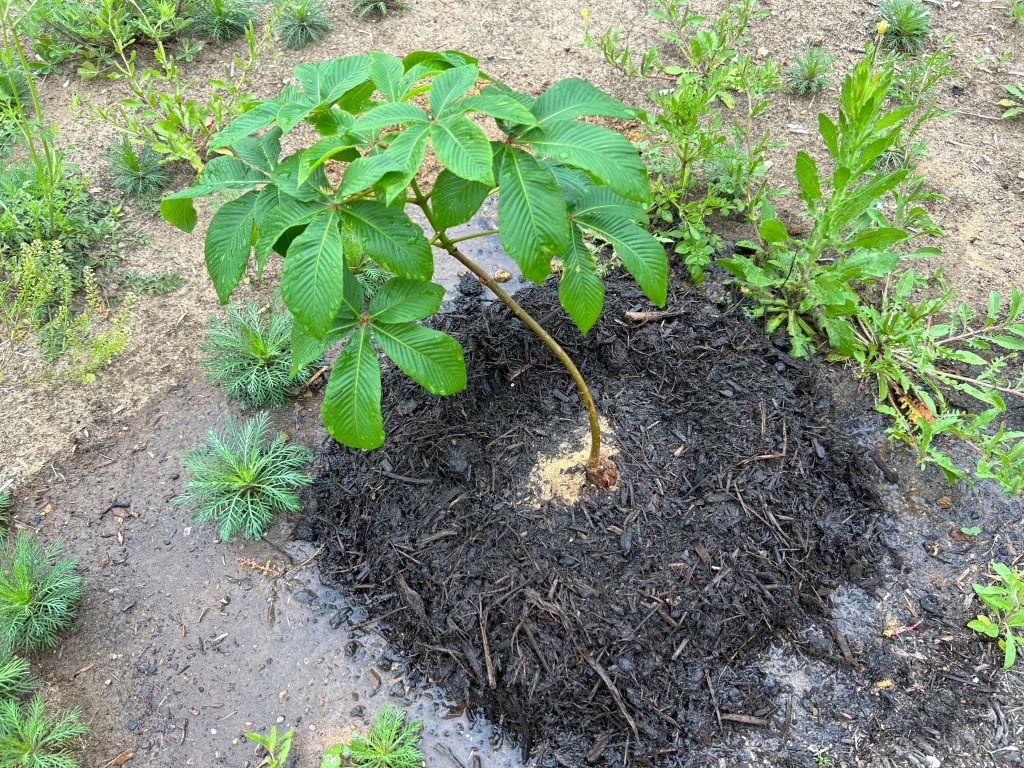
Last year I planted four trees in the back yard (Desert Willow (Chilopsis linearis), Mexican Plum (Prunus mexicana), Mexican Olive (Cordia boissieri), and Texas Mountain Laurel (Sophora secundiflora). Recently I bought a fifth for the collection, a Red Buckeye (Aesculus pavia). It’s a small understory tree, so I’ve put it close to the back fence where it should… Continue reading
-
Another Attempt At Swiss Chard
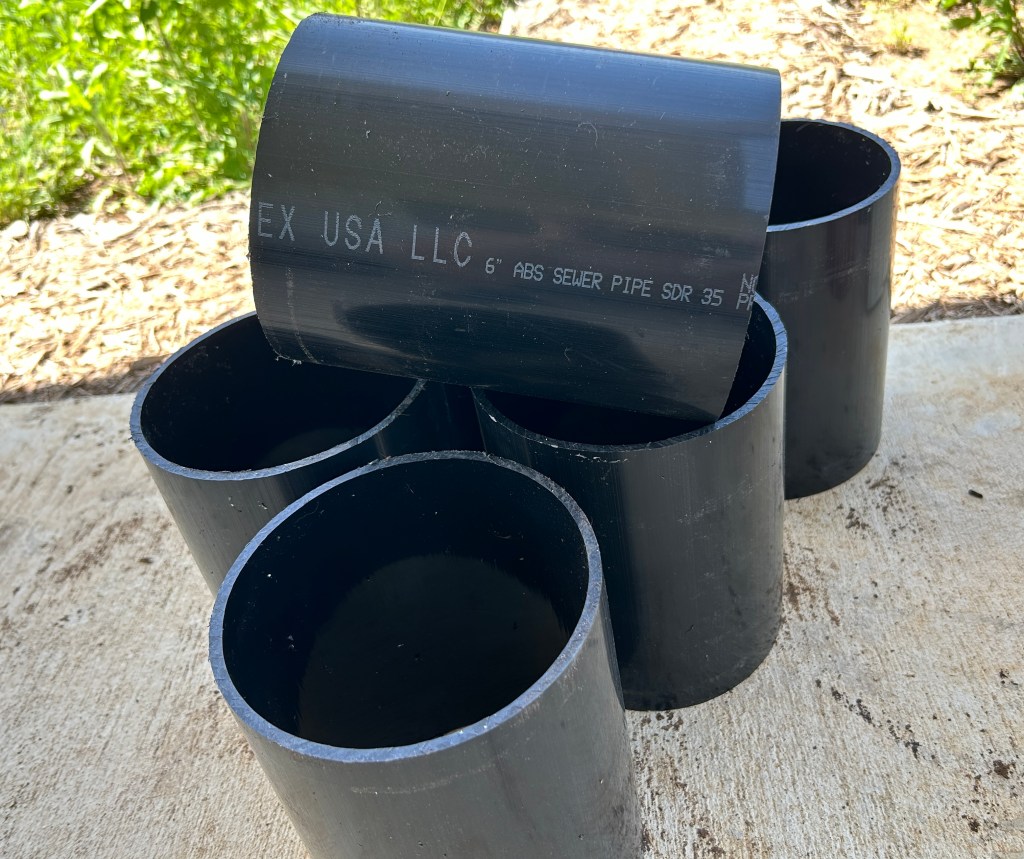
My first attempts to seed Swiss Chard in small mounds of soil were not successful. So I’m giving it another go with a different approach. With the help of a friend with a saw, I cut 6-inch diameter drainage pipe into 8-inch sections and pushed them into the ground to make tiny raised beds. Each… Continue reading
-
Adding Extra Beebalm To The Front Meadow
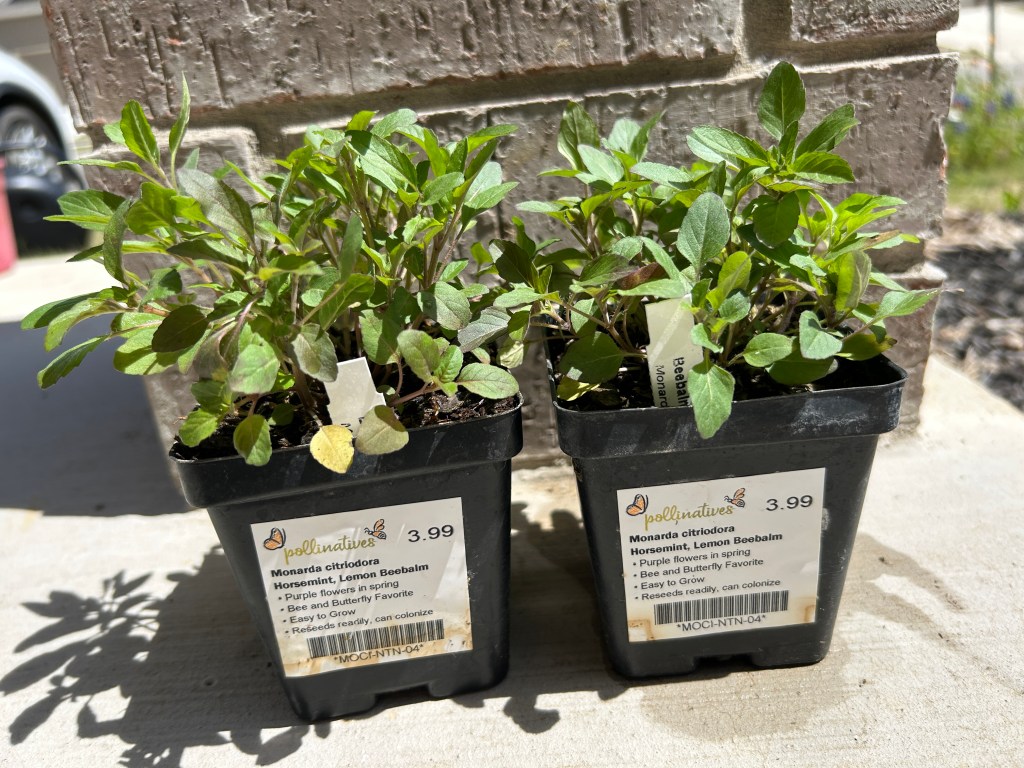
My front yard “wildflower meadow” was seeded last fall with Texas Bluebonnet (Lupinus texensis), Indian Blanket aka Firewheel (Gaillardia pulchella), and Spotted Beebalm (Monarda punctata). The Bluebonnets and Indian Blankets have already grown and are blooming very nicely. I haven’t noticed any Spotted Beebalm yet, but it’s still a few weeks before the expected bloom time. I recently visited… Continue reading
-
Defending Corn From Caterpillars
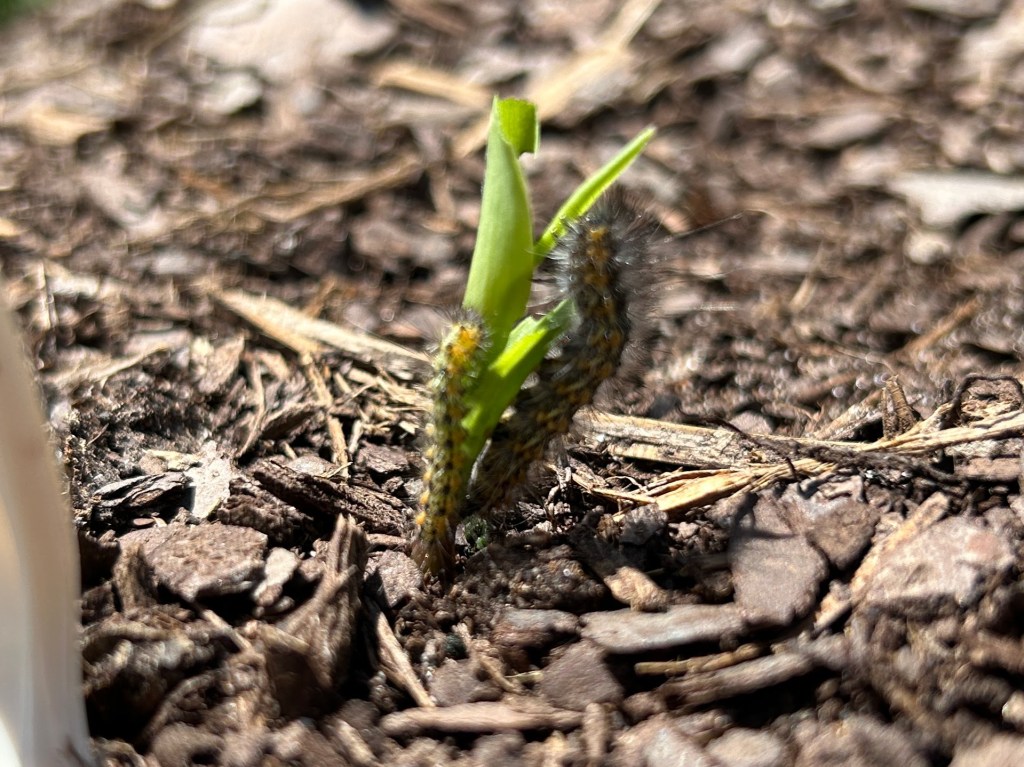
When I first posted about the new spikes of corn growing in my Three Sisters Garden, someone asked whether I expected problems with them being nibbled on by squirrels. In the center of the housing development where I am, we have no mature trees and I don’t see squirrel visitors here yet. However, I did… Continue reading
About Me
Nature Lover.
Inquisitive Observer.
Student Gardener.
I invite you to join me on my journey to convert my sterile (from a nature point of view) new house lot to a healthy and diverse ecosystem, as I make discoveries, mistakes, and hopefully progress. I am not an expert or professional. The project started in February 2023 and the location is Seguin, Texas, USA.
 Rewilding My Lot