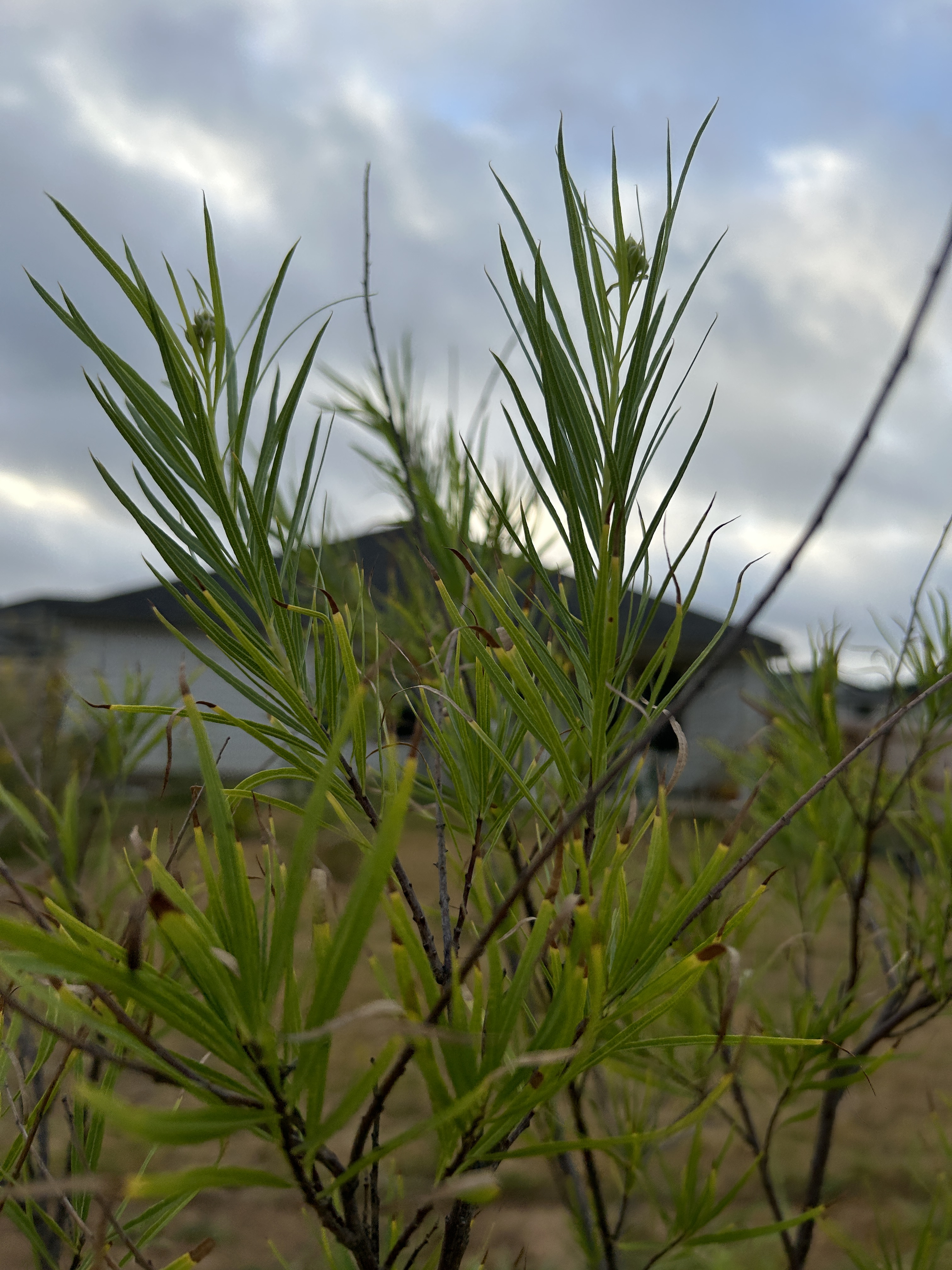
host plant
-
Gulf Fritillary Caterpillars

Gulf Fritillary (Dione vanillae) butterflies and caterpillars are frequent visitors to my Scarletfruit Passionflower (Passiflora lanuginosa) vine. Our winter thus far has been exceptionally warm, and even in January I have blooms and visitors on this plant. Gulf Fritillary butterflies are predominantly orange with additional black and white markings. They flit around a lot so photographing… Continue reading
-
When A Photographer Visits The Garden
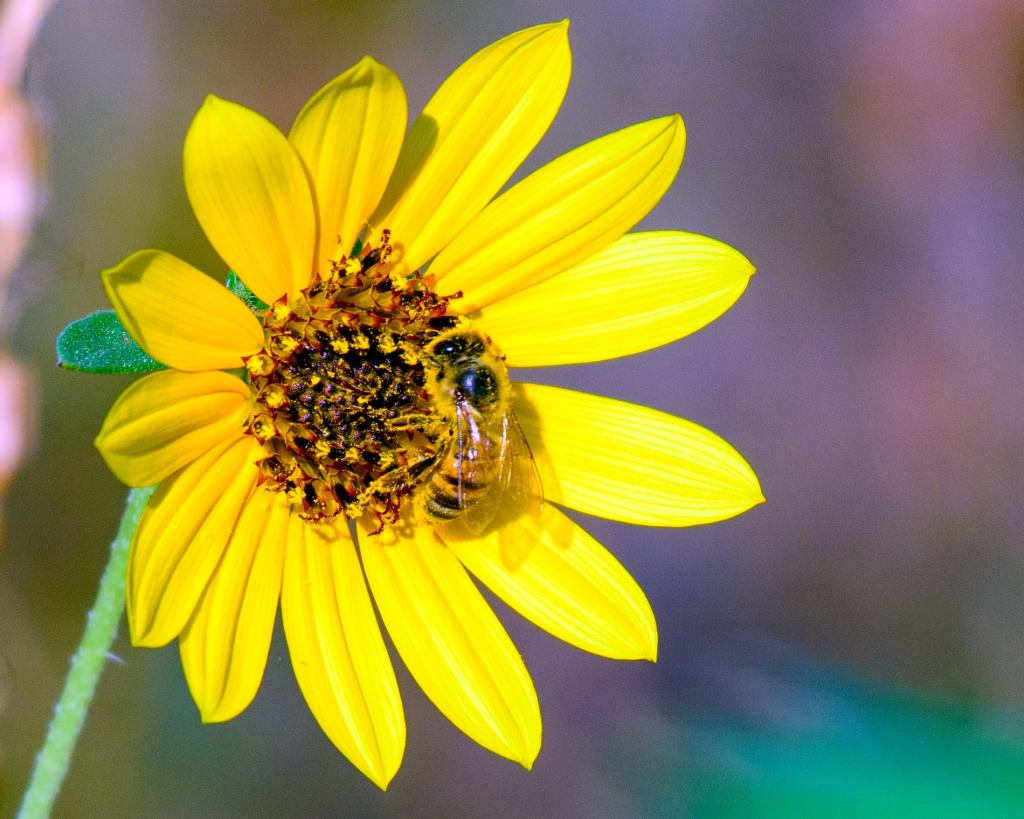
The only camera I have is the one in my phone. For the convenient little device that it is, the quality of the photographs that I can get is pretty good. However, when my friend Ken Harvey visited the garden with his proper camera, the images he was able to capture were so much better… Continue reading
-
Gulf Fritillary Caterpillars Doing Their Thing
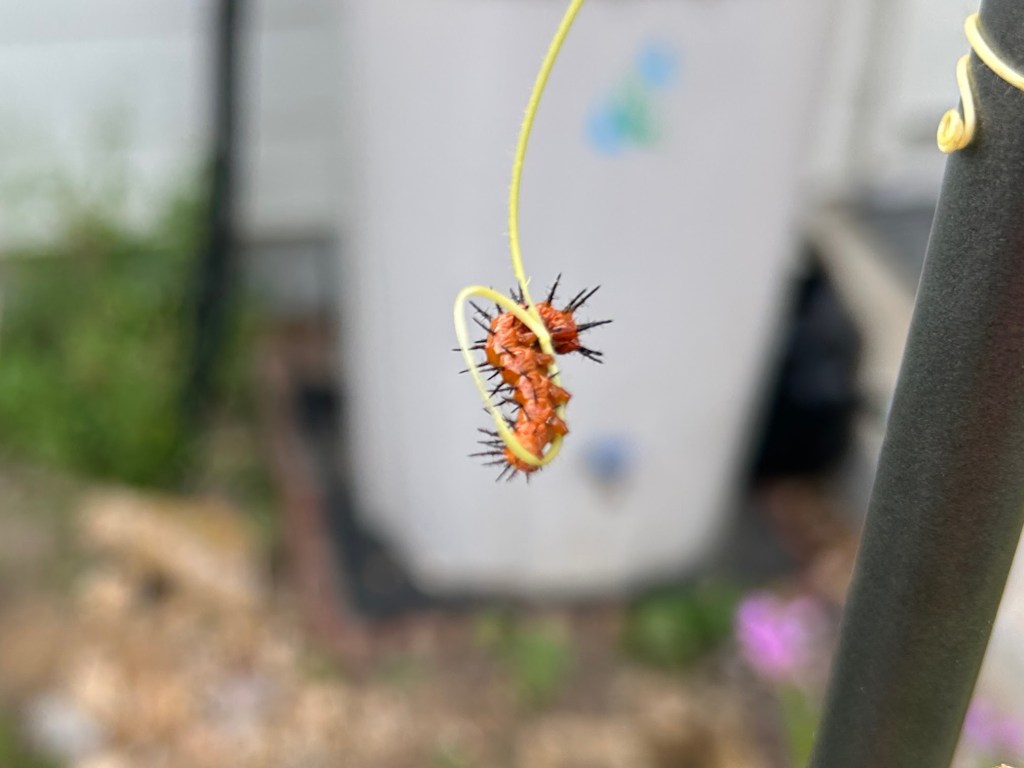
I have seen plenty of Gulf Fritillary (Dione vanillae) butterfly activity around the Scarletfruit Passionflower (Passiflora lanuginosa), including some egg laying. So it was not at all surprising to notice one day that there was caterpillar frass on leaves of this plant. (It was just over a year ago when I discovered that the name… Continue reading
-
Gulf Fritillary Eggs & Tiny Caterpillars
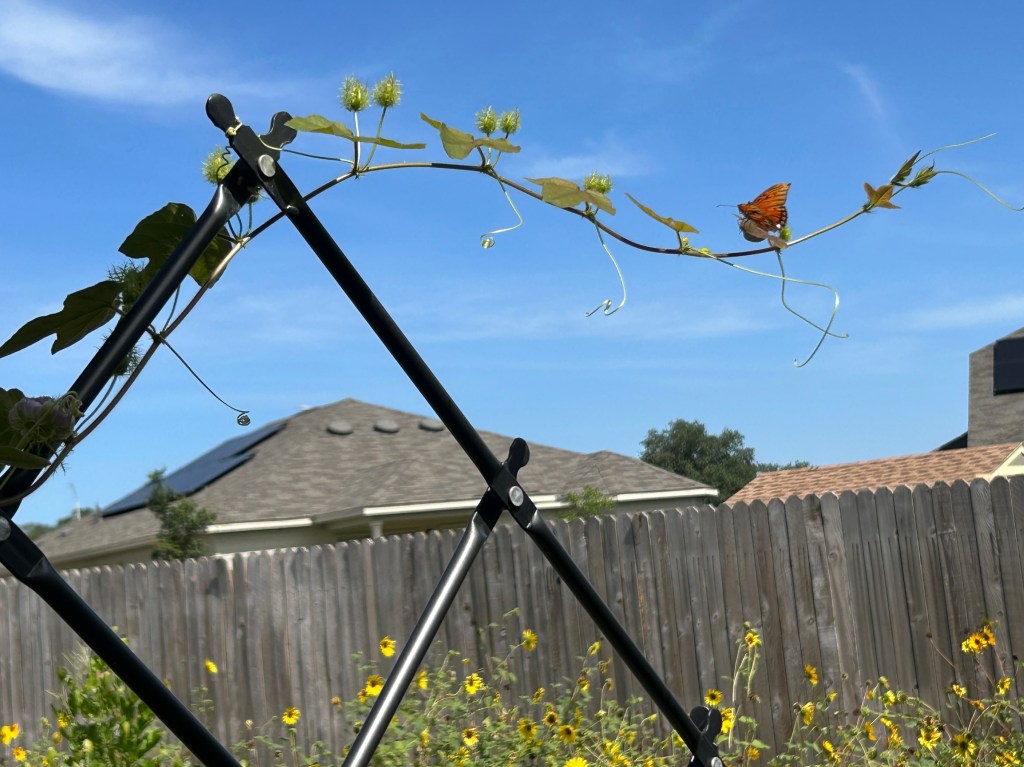
When a butterfly visits a plant it is usually for one of two reasons: (male or female) to feed from flowers or (female) to lay eggs on leaves of host plants. It’s usually quite easy to tell which is happening by watching which parts of the plant are visited, for how long, and by whom.… Continue reading
-
Native Milkweeds
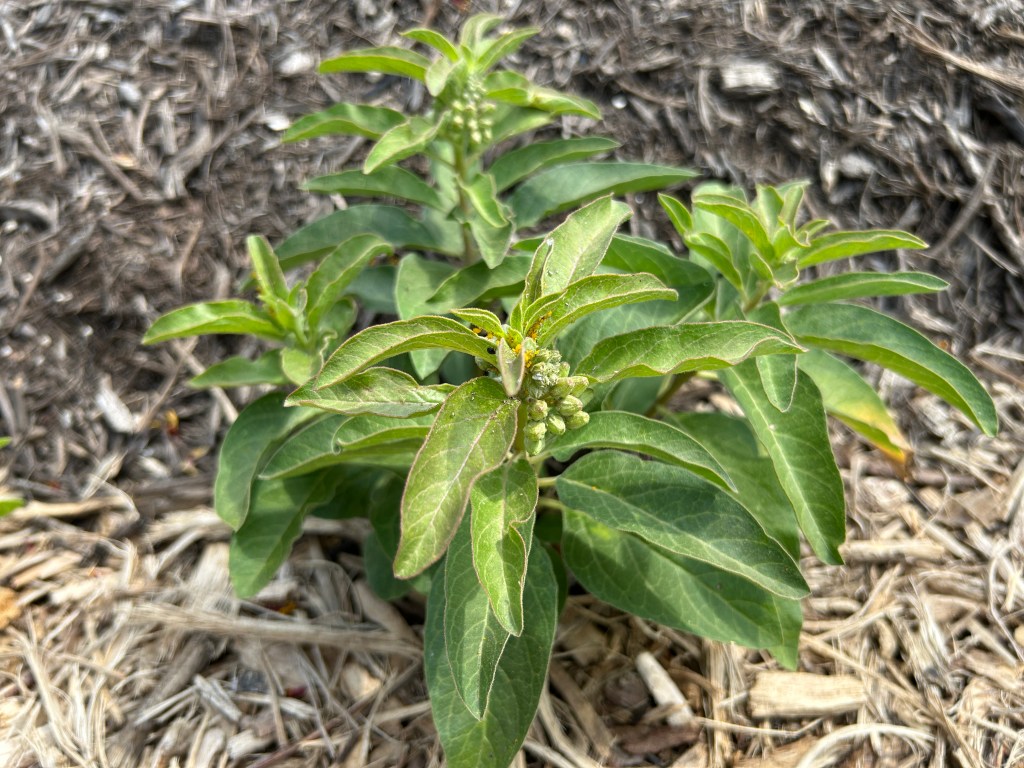
Milkweeds are the only plant that Monarch butterflies will use to lay their eggs and host their caterpillar larvae. However, Monarchs will feed from a lot of other nectar sources, as will other creatures, and so before planting milkweeds I focused more on building a garden with a variety of food sources to be more generally… Continue reading
-
Giant Swallowtail Caterpillars Have A “Back Off!” Signal
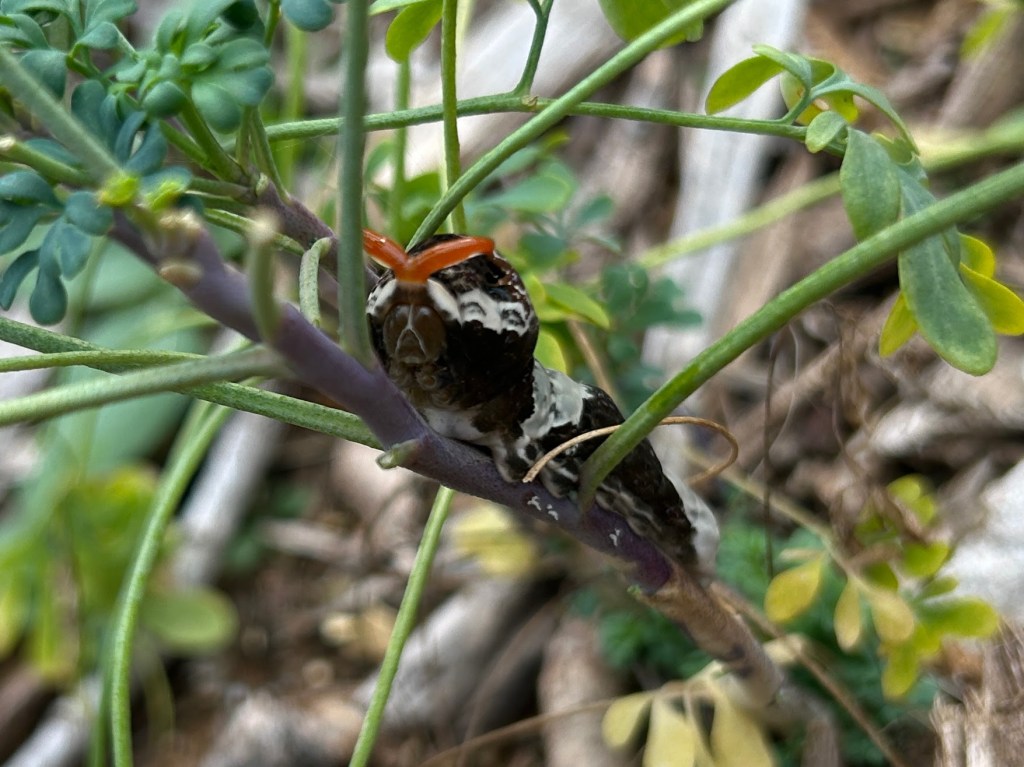
During one of my regular wanderings of the garden I spotted a Giant Swallowtail (Papilio cresphontes) caterpillar on a Common Rue (Ruta graveolens), which is one of its host plants. Given the size of this caterpillar (nearing pupation, I think), it must have been there a while and I just hadn’t noticed it before. As… Continue reading
-
“Bird Poop Caterpillar” Is Growing Nicely

A couple of weeks ago I planted two new Common Rue (Ruta graveolens) plants here, and one of them came pre-populated with a Giant Swallowtail (Papilio cresphontes) caterpillar [post]. This caterpillar also carries the nickname of “bird poop caterpillar,” which seems apt. The disguise is really very good, and I even had to look closely to… Continue reading
-
Not Native, But Helpful Nevertheless

My preference is to plant things here that are native to the area. By doing so, those plants should be accustomed to our soil and climate and should not need amendments or supplemental water once established. Sometimes I have made exceptions to choosing true natives, however. For instance, climate change is causing some plant ranges… Continue reading
-
Relocating Caterpillars

Since I last reported finding a Queen caterpillar in my milkweed patch, of course I visited often to see how it (and the plant it was eating) was doing. Over the course of the next two days I realized that there were actually three other Queen caterpillars moving among the milkweed plants. Each was about… Continue reading
-
Observations At The Wood Pile

One of the first things I did when starting the garden last year was obtain a pile of logs from a dead tree that was cut down and assemble them into a wood pile. I planted a Frogfruit (Phyla nodiflora) in one of the internal pockets of the pile, and then pretty much left the… Continue reading
About Me
Nature Lover.
Inquisitive Observer.
Student Gardener.
I invite you to join me on my journey to convert my sterile (from a nature point of view) new house lot to a healthy and diverse ecosystem, as I make discoveries, mistakes, and hopefully progress. I am not an expert or professional. The project started in February 2023 and the location is Seguin, Texas, USA.
 Rewilding My Lot