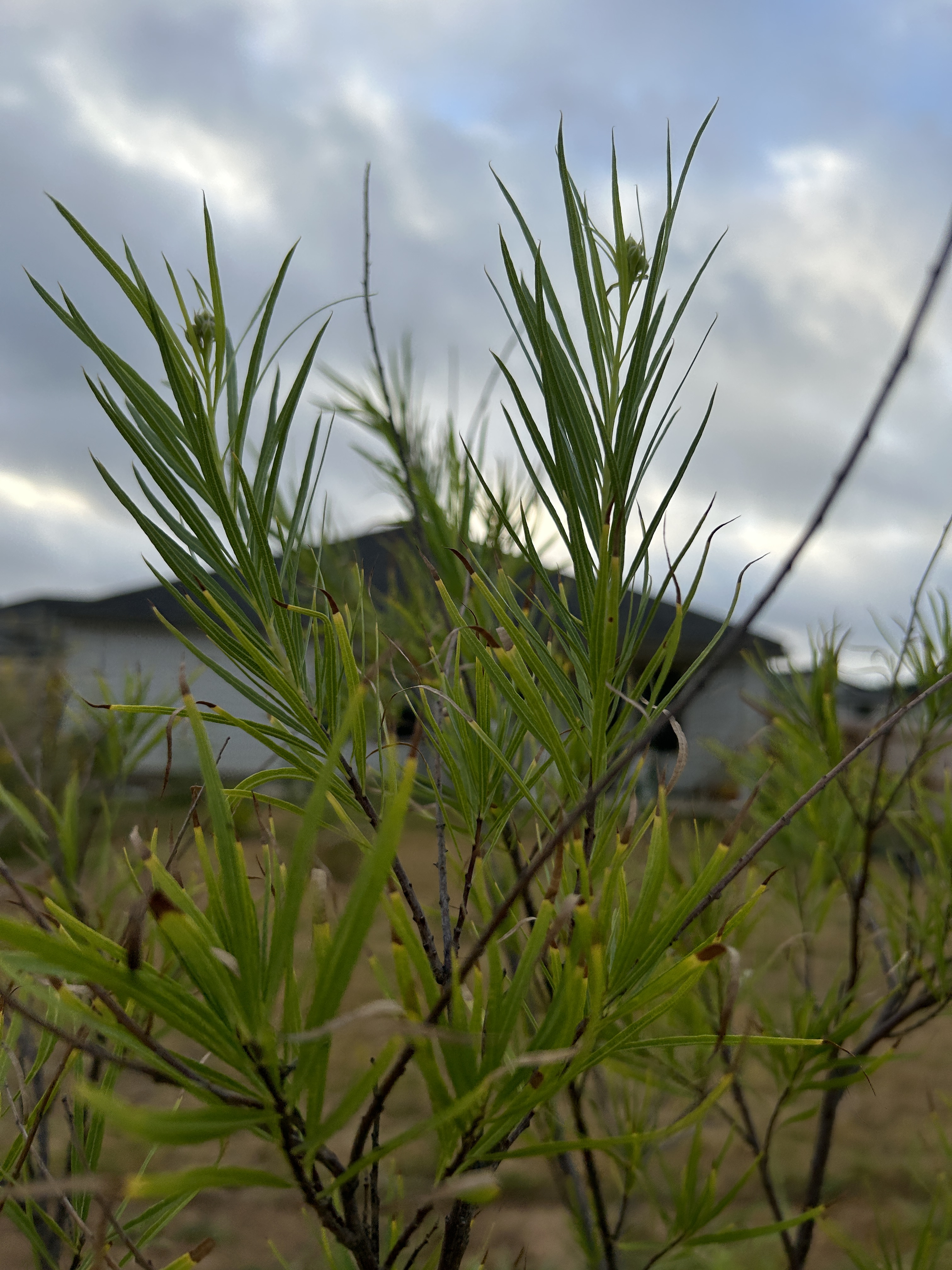
Sophora secundiflora
Height in July 2023: 2.5 ft
Lady Bird Johnson Wildflower Center database entry
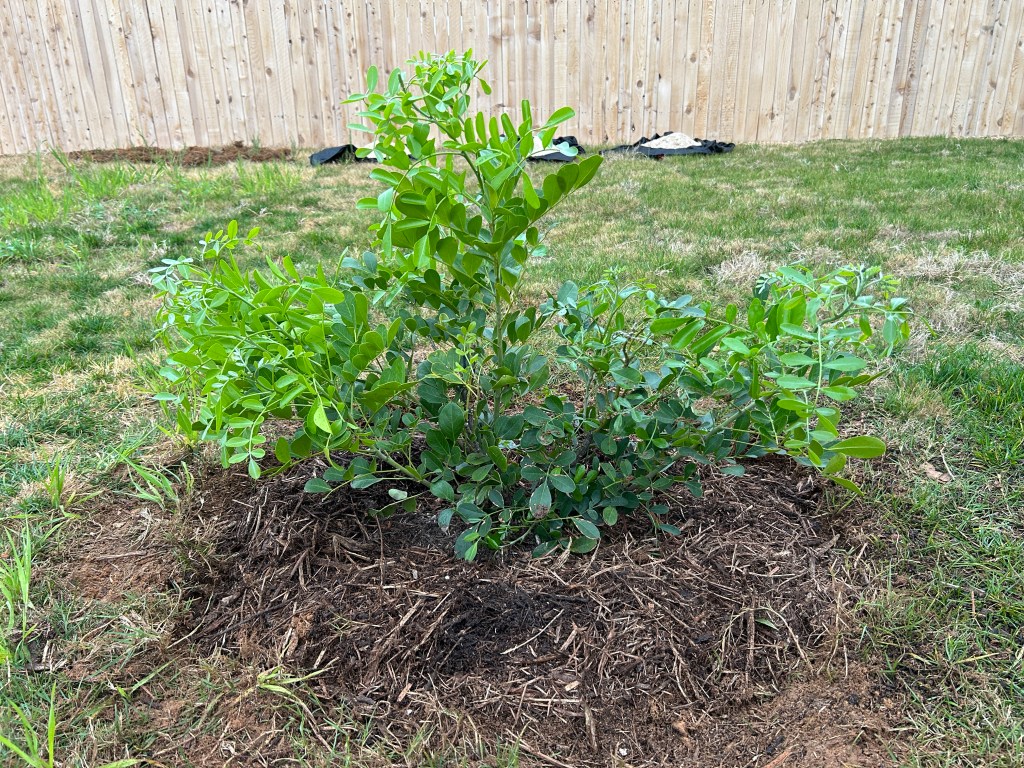
Texas Mountain Laurel was another easy choice as a tree to plant here. It has low water needs and the blooms are very showy and fragrant. I had not encountered it before, but it was recommended by several local gardeners and research resources.
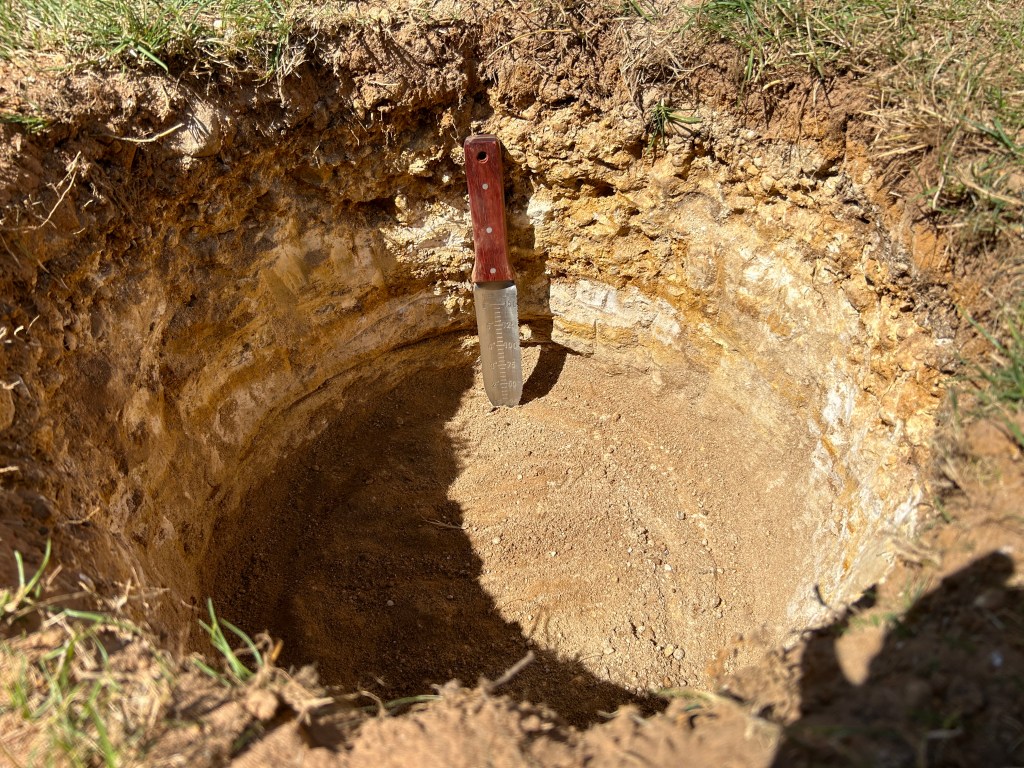
This was the first tree that I planted here, and creating the hole was an interesting energetic experience (several hours of digging) and soil study. The tree was in a 15-gallon pot and I dug the hole even larger than that — in fact an entire 40-pound bag of soil went in the hole as well as the pot contents. At 18 inches down, I was finally through the builder’s sand and stones and into what I presume to be native chalk.
After planting, the tree seemed happy for weeks, but then I noticed that half of the tree had paler leaves than the rest of the plant. The two different leaf colors correspond to separate trunks that disappear underground, so I wonder if I actually have two separate trees in there. The dark half seems more vigorous (new leaf buds) than the pale half.
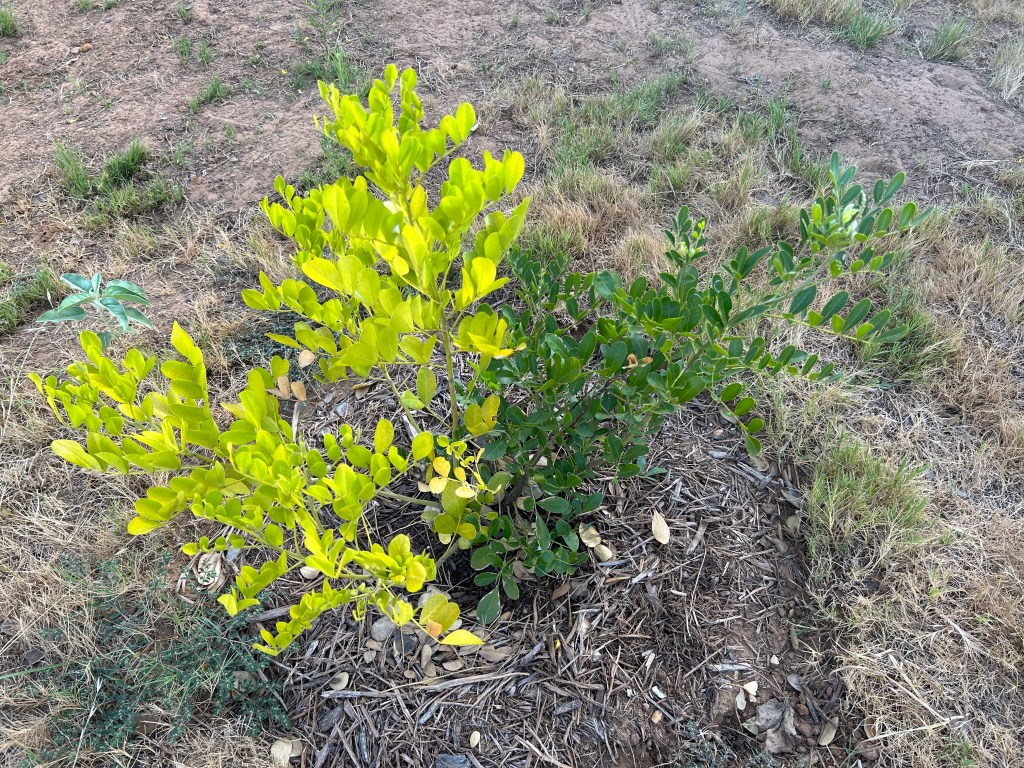
Current theories from online research and asking around include:
- Overwatering, which may or may not lead to iron deficiency, hence paleness. But why is one part of the tree doing just fine and the other part not?
- Insect infestation, but only on that one side. There certainly have been many insects that I have seen on that tree — that’s part of the point of having a nature garden. The presence of insects is not usually a problem.
Does anyone else have any ideas?


 Rewilding My Lot
Leave a reply to More Treatment Of The Texas Mountain Laurel – Rewilding My Lot Cancel reply