Previous post: Planning
To clear the area for planting native grass seeds, first I had to get rid of about 1,000 sq ft of Bermudagrass sod and I started doing this in February 2023. I literally tore it off the ground with my hands. That one task took about two months, but I learned a lot about how Bermudagrass grows and what is the nature of the ground I am working with. [Bermudagrass spreads via rhizomes (underground stems) and stolons (above-ground stems). The ground is compacted, dry, and stony.]
Things I learned during this process:
- Because the ground here is hard (there is effectively no organic matter and it has been compacted by machinery), I learned to wait for rain to soften the soil and then I could get a few days of sod removal done before the ground was too dry to work again. If I tore up sod in dry conditions, then I would be more likely to tear the roots and leave active pieces behind.
- First I simply inverted pieces of sod as I removed them and put them back upside down. The thinking was that this would temporarily hold the soil in place while the turf would die, at which point I could shake off the soil and discard the grass parts. In fact, the Bermudagrass simply took a few days to reorient itself, and then started growing again — leaves up, roots down.
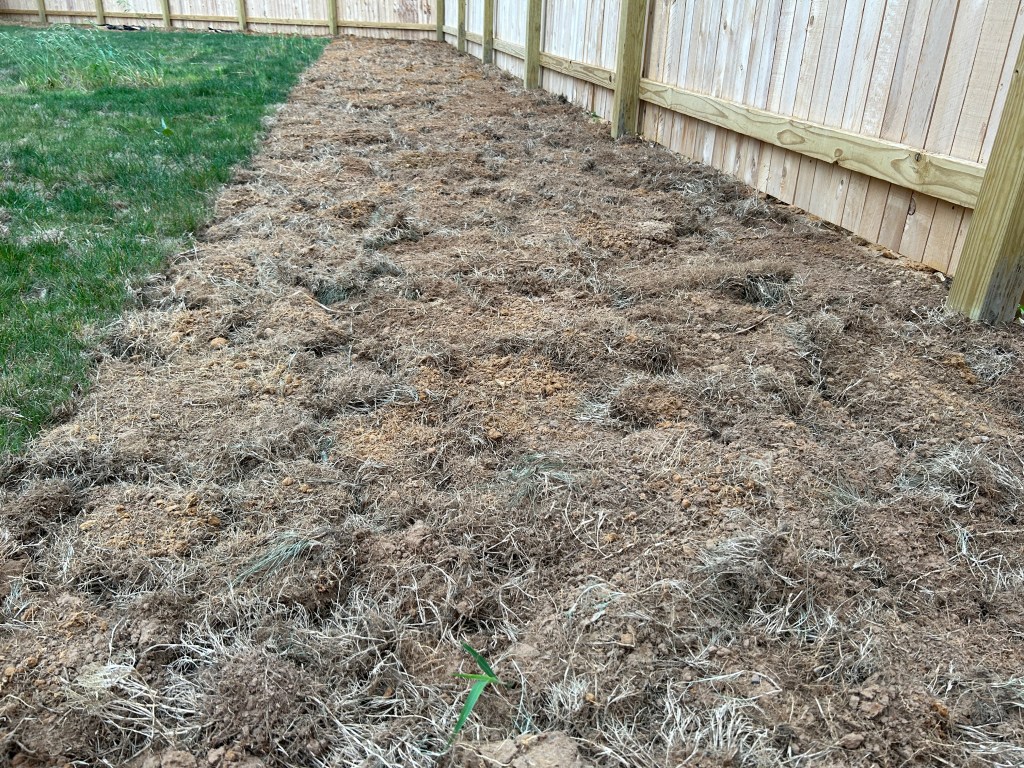
- Once I saw that strategy wasn’t working well, I moved the sod pieces into a long pile that was about two feet high, four feet wide, and 20 feet long. I thought surely the Bermudagrass would die this time. Most of it did, but then what happened was that the giant pile (privately called my “turf turd”) became an ecosystem in its own right. A host of volunteer plants started to grow on the mound, and it also became home to many impressive ant colonies.
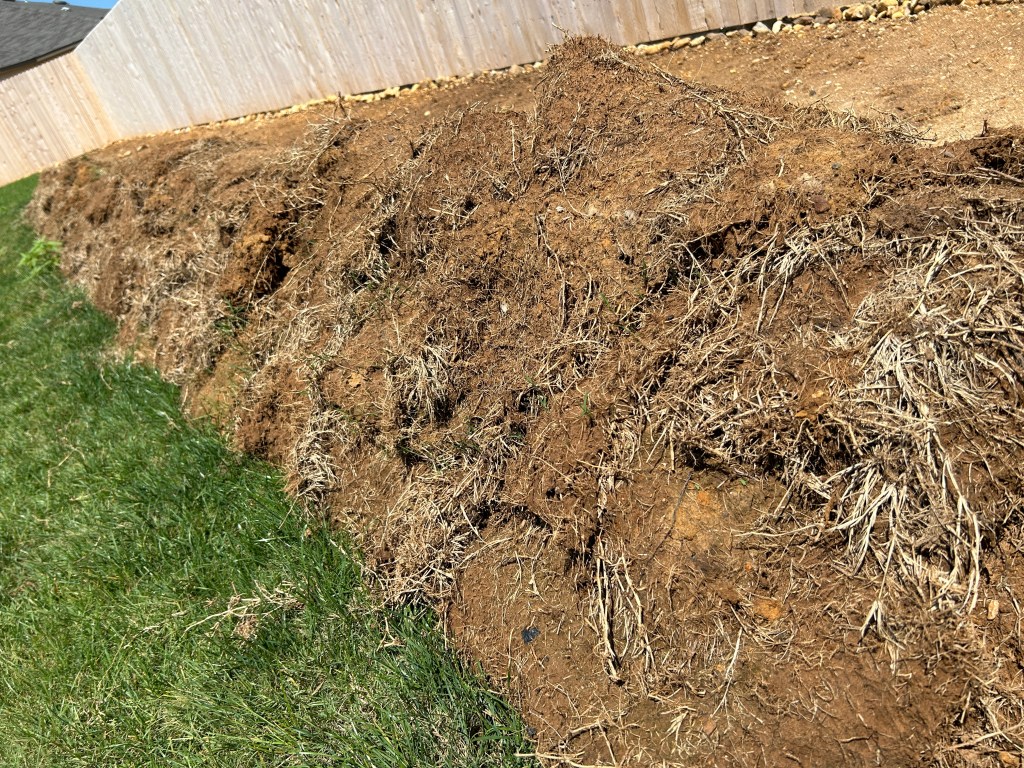
- By this time I was well and truly tired of moving sod pieces around, although over time as they dried out they did get lighter. Eventually I was able to dismantle the mound, salvage as much soil as possible, and discard the rest. Although the Bermudagrass did look pretty dead by then, I didn’t want to trust using it for compost.
Once the sod was removed from the areas where I was going to seed grass, then periodically I did a round of weeding to remove remnants of Bermudagrass and other unwelcome volunteer plants.


 Rewilding My Lot
Leave a reply to Reseeding The Short Native Grasses – Rewilding My Lot Cancel reply