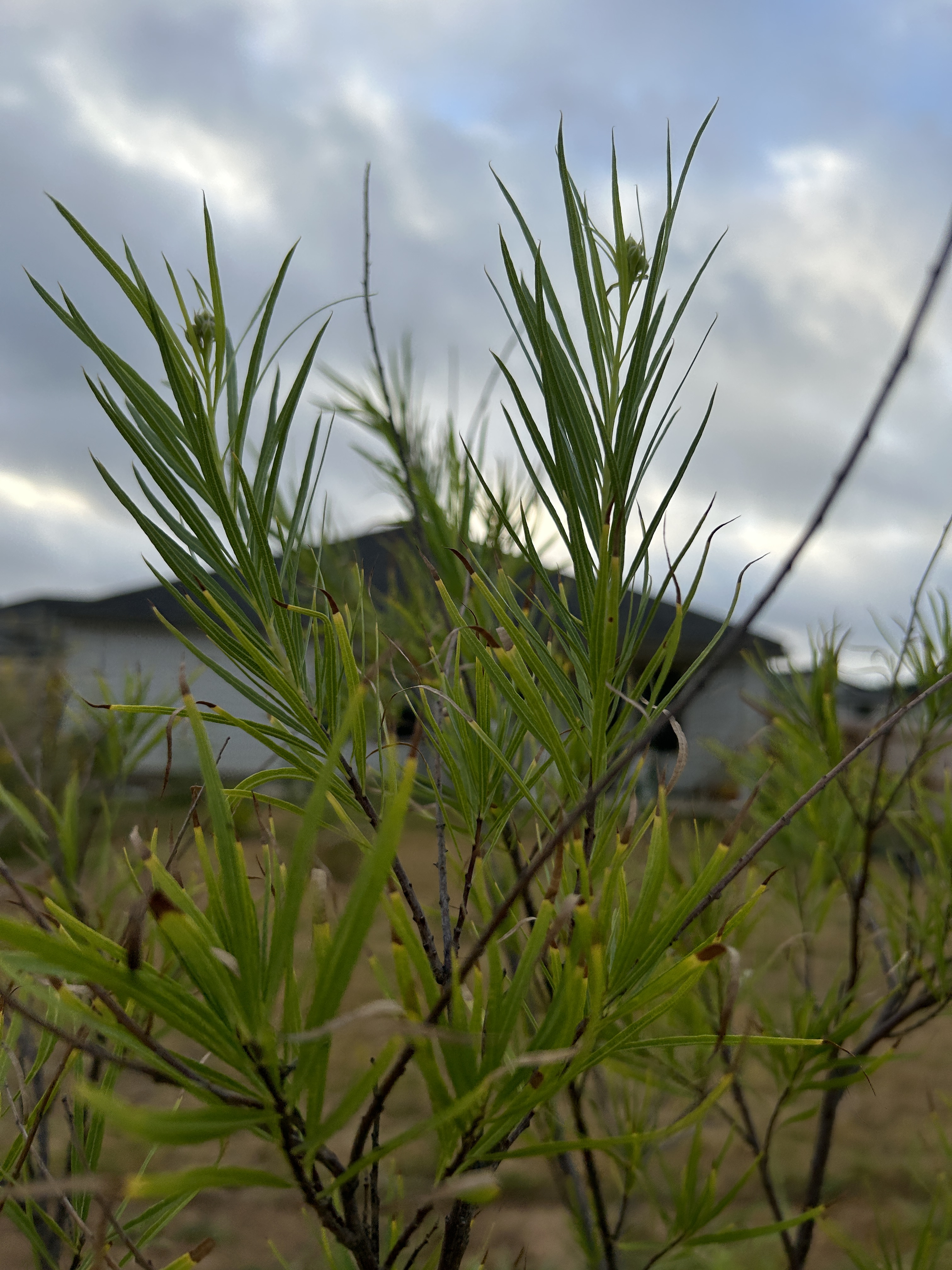
I chose to plant a Huisache tree here because is it a very hardy and drought-tolerant native, and a good host plant for birds and insects.
However, after I arrived here, I encountered many gardeners and ranchers who do not like this tree AT ALL. Ranchers in particular consider it a weed because it spreads so readily, and because it’s thorny, cattle don’t like to graze near it. And once it’s growing, it is hard to dig out of the ground.
According to one rancher I met, Huisache was historically kept under better control by periodic controlled fires. Now that fires are less used, this tree has become unmanageable in ranch settings.
I am not a rancher, and my lot is comparatively small. With these additional cautions in mind, I thought my best strategy was to keep a close eye on my one tree to make sure it doesn’t spread, to dig out seedlings as I find them, and to take care not to be attacked by its thorns.
Then another thing happened that made me rethink having this tree at all.
After a few months here, I noticed that the Huisache was growing well, but only sideways. On closer examination, I saw that the growing point of the vertical stem was damaged, so all the plant could do was make new growth sideways. Not having owned a Huisache tree before, I wondered if it would adapt (or could be trained) to grow vertically again. One of the places where I seek advice about native plants is the Growing Texas Natives Facebook group, so I described what was going on there to ask for advice.
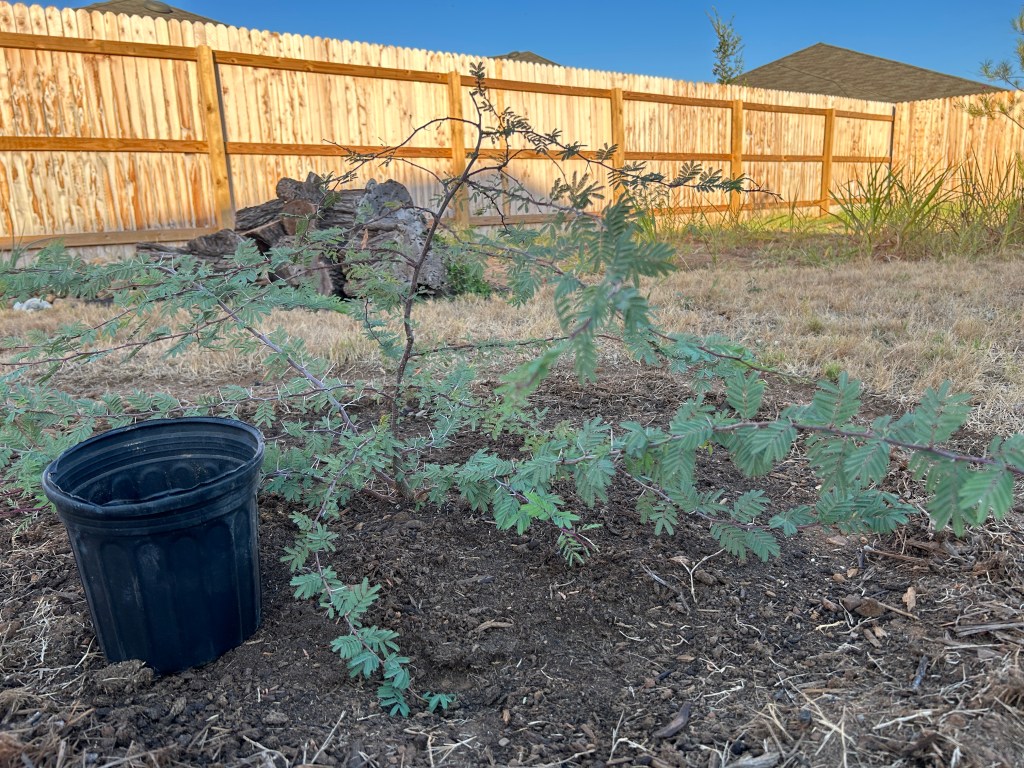
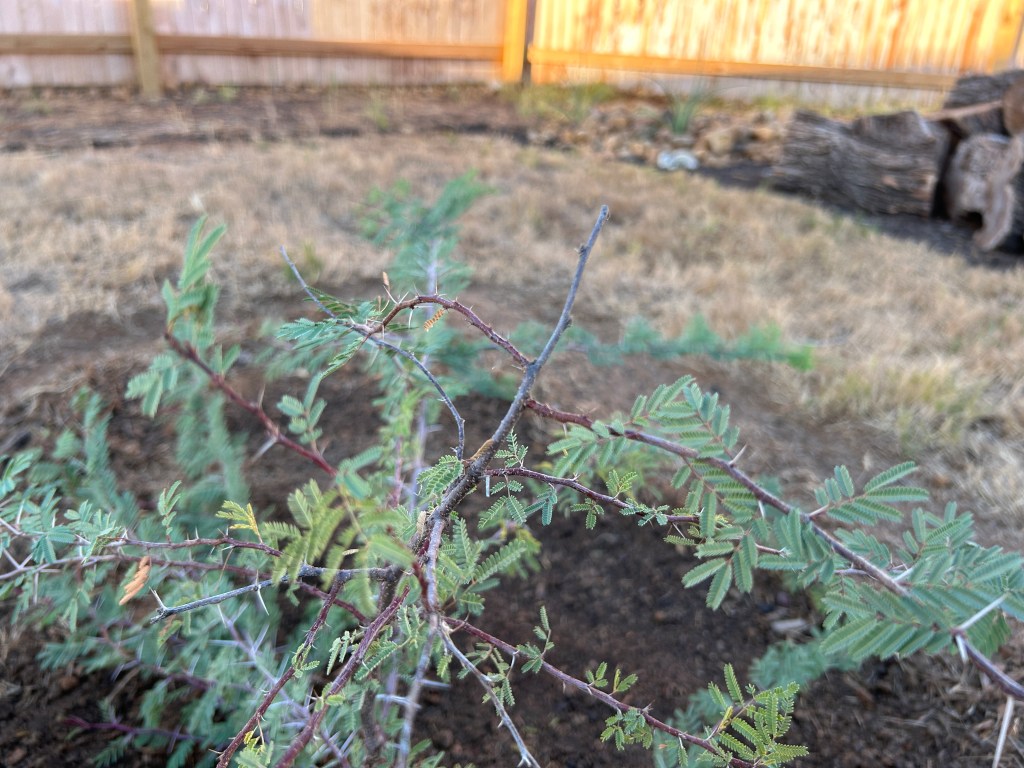
I wanted feedback, and I got plenty! There were a couple of knowledgeable people who said that if I wanted to keep the tree that yes, I could prune the lower lateral branches back and that the tree would probably eventually figure out how to grow vertically again. However, the vast majority of the responders (including the ones with pruning advice) said that they do not recommend this tree.
Here are some of the caution comment excerpts:
- “Seedlings sprout up everywhere. Only specific sprays kill it. In the country, it is a fight to control it. If you keep it, good luck.”
- “Just be aware that you will have them pop up everywhere, and you cannot kill this plant with over-the-counter products. They are very thorny and they HURT, so be sure you know what you’re getting into with this plant. Native so it has some benefit, but I feel strongly that the cons outweigh the pros – especially in a landscape setting.”
- “This tree will hurt you. One way or another, it will hurt you!”
- “My neighbor has one and now my yard has them popping up literally everywhere. It’s very aggressive in spreading out.”
- “To each their own, but I would not have one of those trees on my property voluntarily.”
- “I’m doing everything I can think of to rid my property of this tree and you’re planting it! I hope you didn’t pay much for it. I could have mailed you a million seedlings for free!”
So then what should I do with my Huisache tree? My choices seem to be to prune it in the hopes that it will eventually grow tall, or replace it. Of the three trees that I have planted here so far, this cost a fraction of the others (perhaps I now know why). Given that I have more ideas of trees that I would like that will fit in this space, and that I have not invested a lot of money in this particular tree, I think I will replace it with something that is better behaved. However summer time in the middle of a drought is no time to be planting trees. So I’ll prune it now and leave it in the ground. In the fall I’ll replace it with a different tree but use the same hole.
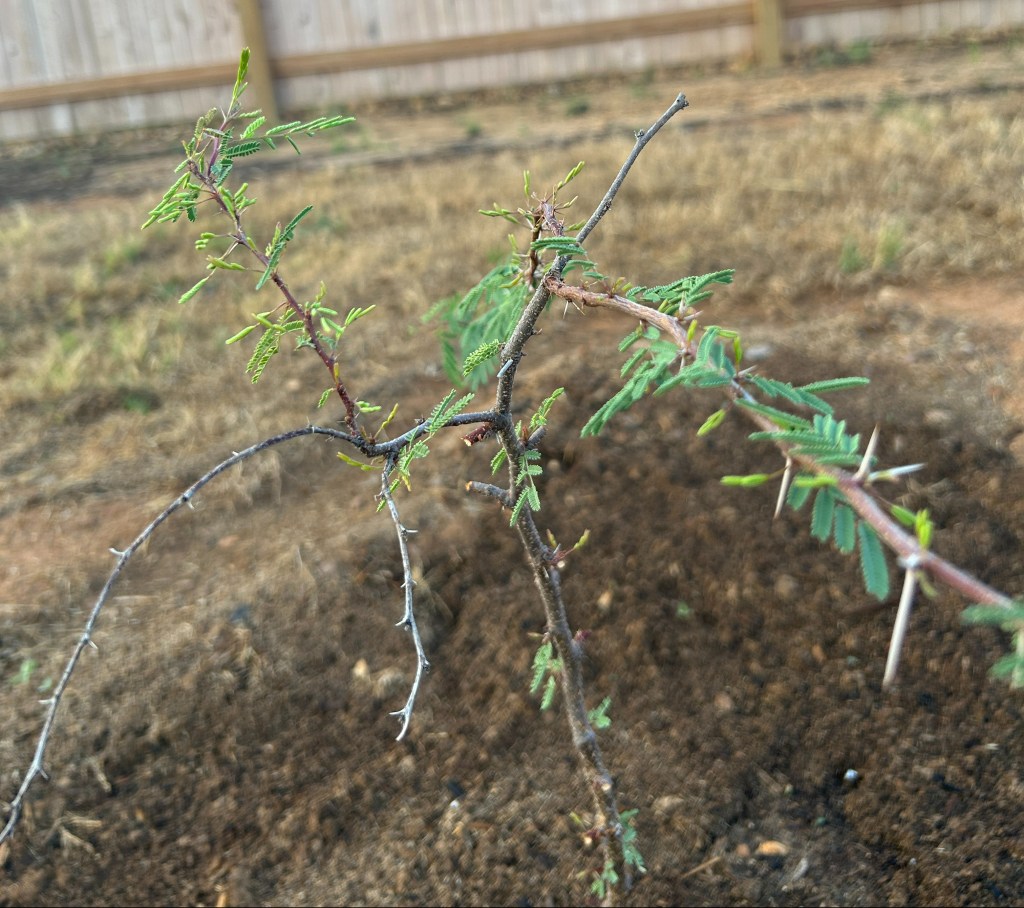
Here’s the tree after its severe pruning. There is one branch that is turning upwards, so if I did leave it here, my guess is that it probably would figure out how to grow taller.


 Rewilding My Lot
Leave a reply to Thorns, Spines, And Prickles – Rewilding My Lot Cancel reply