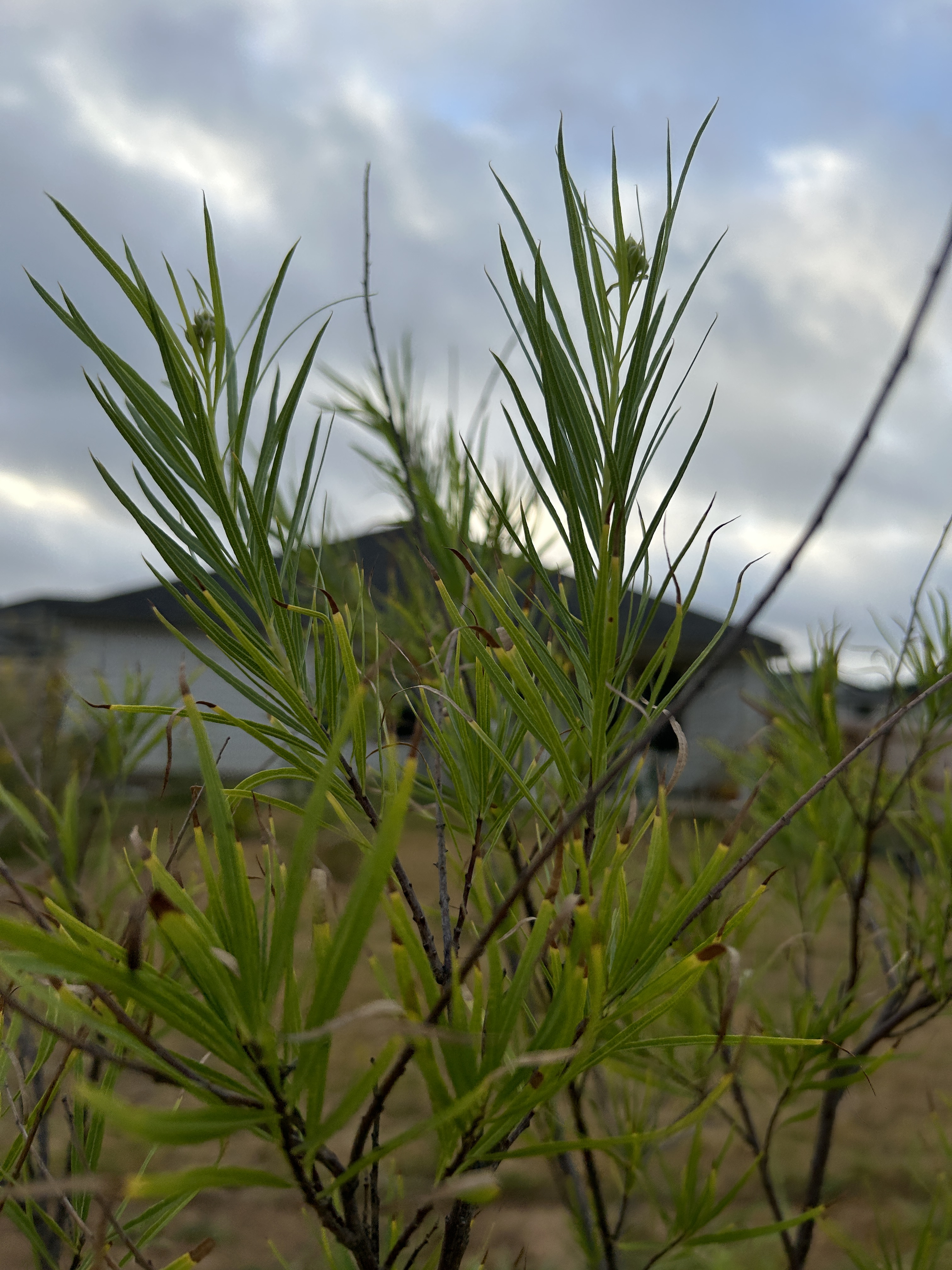
I arrived here in February 2023. Spring was designated for planning and the planting of trees and native grasses. Summer was designated for infrastructure projects and more planning. And fall is intended to be a big planting season.
It is not my goal to finish planting the garden this year. However, I want at least to get all of the ground in the back yard covered with something. Plants will be introduced by pot or seed, and other areas that are to be pathways or the site of future projects will get a covering of mulch.
Here’s a provisional list of fall projects, subject to time, budget, energy, and availability of plants!
- Level the front and side yards with added soil (the builder-laid Bermudagrass is very uneven, dangerously so in places). In the resulting bare patches, place seeds for Buffalograss, Bluebonnet, Firewheel, and Spotted Beebalm. I’ll probably sneak some Frogfruit in there as well.
- Add new plants to the bed in front of the house: Flame Acanthus, Fall Aster, and others to be determined. Remove the remaining builder-planted Boxwoods.
- Add soil to the back yard, maintaining the current slope.
- Reseed the native grass areas where there are gaps, with the original choices of Buffalograss, Blue Grama, Curly Mesquite, and Little Bluestem.
- Replace the Huisache tree with a Mexican Olive tree.
- Plant additional trees: Mexican Plum, Barbados Cherry.
- Perhaps move the Turk’s Cap. Now that I see how water travels here, it’s too close to where I think the future pond or rain garden needs to be.
- Add plants to the bed behind the house near the patio. This gets morning shade and afternoon sun.
- Define pathways, and build them with cardboard and mulch. They can be moved later if they’re not in the right place.
- Set aside an area for a future “Three Sisters” garden and cover it with cardboard and/or mulch.
- Seed the back part of the remaining garden with plants that are estimated to be 4-6 feet tall: Standing Cypress, Rattlesnake Master, Blue Wild Indigo.
- Seed the front part of the remaining garden with plants that are estimated to be 1-3 feet tall: Firewheel, Mealy Blue Sage, White Prairie Clover. The clover is a nitrogen-fixing plant, so it should help to pull nutrients into the soil.
If I choose a few specific plants for particular areas, and plant them from pots, then I will have a framework for the layout. By sowing seed in the other areas, the investment is not so great and I have more options to change things later as the garden develops and key plants grow larger. If I later need an area that is populated with seeded plants for something else, they can be cut down and used to feed the soil — in effect, a cover crop.
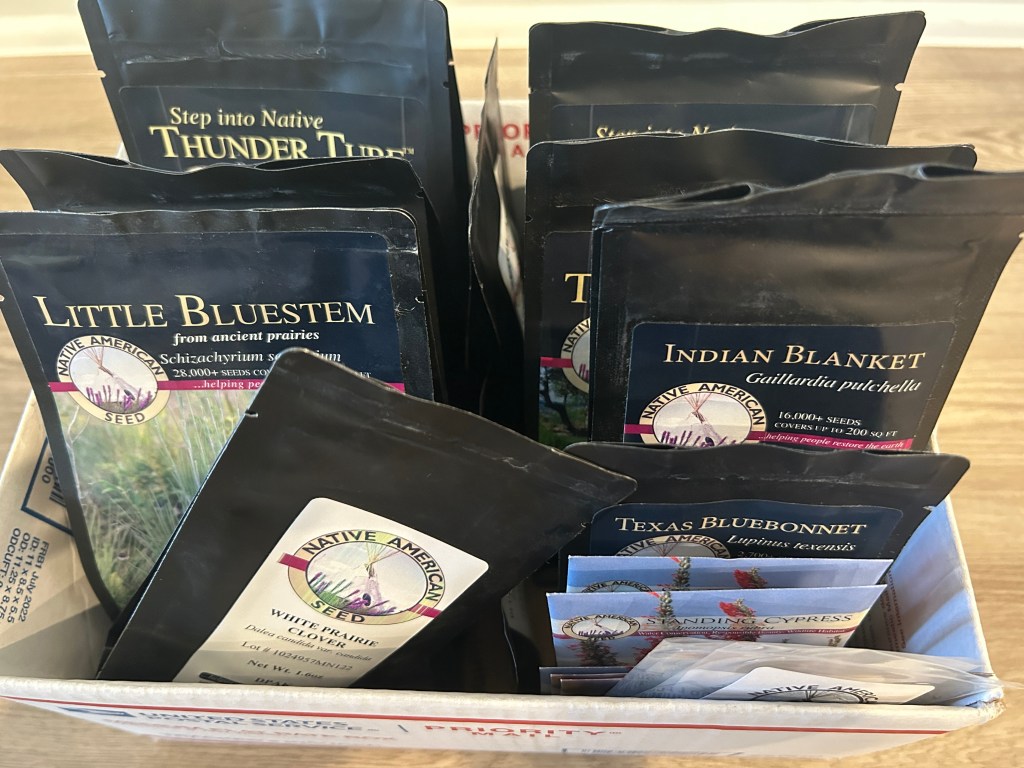
I won’t buy the potted plants until I’m ready to put them in the ground, but the seeds have arrived!
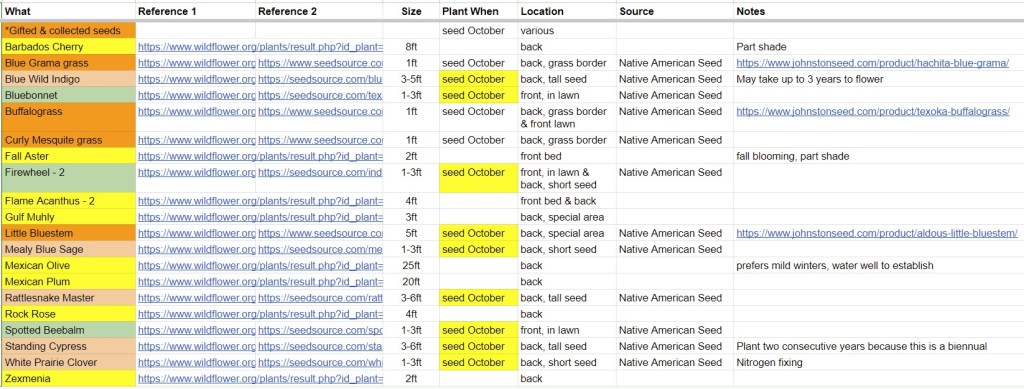
And this image I include as a nod to those who know me personally. Of course there’s a spreadsheet.


 Rewilding My Lot
Leave a reply to henri Childers Cancel reply