I’m taking different approaches for the front and back gardens in this new lot. The back area is a major work-in-progress that will probably take 2-3 years to take shape. In contrast, the front — and more visible to the public — area is intended to look more managed, even as changes are being made.
Since we arrived in February 2023, I have exchanged many of the builder supplied landscape plants for plants that are mostly native or adapted, and welcoming to wildlife. With two recent additions (planted after the volunteer sunflower was removed), I think that I have finished adding plants to this bed for now, and I will watch how things develop over the next year or so.

Here are the key players in what is now a mini pollinator garden:
- Chili Pequin (Capsicum annuum). This plant didn’t handle the heat this summer as well as I’d hoped, but perhaps it will be stronger next year. It did produce a few peppers, although before I could harvest them, something else ate them!
- Texas Barometer Bush aka Texas Sage (Leucophyllum frutescens). The leaves of this bush are an interesting grey-green color that provide a nice contrast with the other plants. It bursts into bloom for only a few days at a time, usually before or after a rainfall.
- Texas Lantana (Lantana urticoides). I had one of these in Houston, where it did well even when it froze back every few years. If it gets too big here, I may need to prune it.
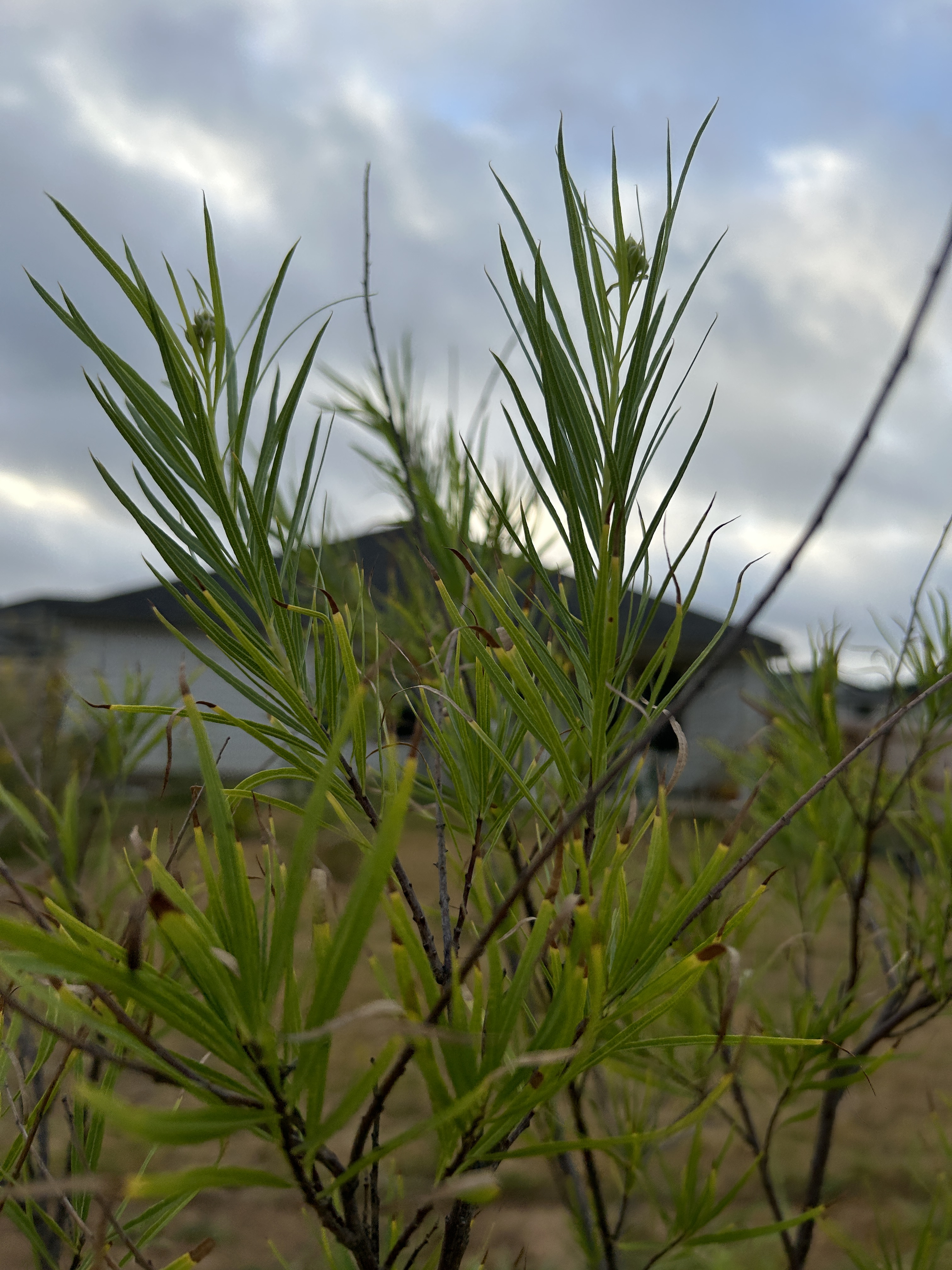
- Skeleton-Leaf Goldeneye (Viguiera stenoloba). This was one of several plants that I dug out of a neighbor’s garden, where it had “volunteered.” It recovered from the transplant, and then proceeded to grow and thrive throughout the summer’s drought. I have often seen butterflies and bees there.
- Fall Aster (Symphyotrichum oblongifolium). I chose this after having seen it in the Park West pollinator garden. It blooms in the fall, so it provides food and color after other plants have finished their flowers.
- Black & Blue Sage aka Anise-Scented Sage (Salvia guaranitica). This wasn’t on my list (and is not a native), but was an impulse buy at Green Jay Gardens. The flowers are a striking deep blue color, emerging from black calyces.
- Scarlet Sage (Salvia coccinea). Salvias are very easy to grow and they readily self-seed. I will probably trim mine back a couple of times a year to stop them from getting too straggly.
- Gregg’s Mistflower (Conoclinium greggii). This plant is a favorite with butterflies and very easy to grow. It does tend to spread, so I may have to cut it back if it starts to take up too much space.
- Flame Acanthus (Anisacanthus quadrifidus var. wrightii). I also chose this after seeing it in Park West. Hummingbirds love this plant.
There are also some plants in this front bed that are transplants from our previous Houston home, including pieces of a yucca that was an early houseplant purchase more than 30 years ago, and which was eventually evicted to the garden where it grew into a grove covering several square feet.
There are still a few original landscaper plants, most of which will eventually be removed. However, for now they serve a purpose in filling space.


 Rewilding My Lot
Leave a reply to Salvaged Plants – Rewilding My Lot Cancel reply