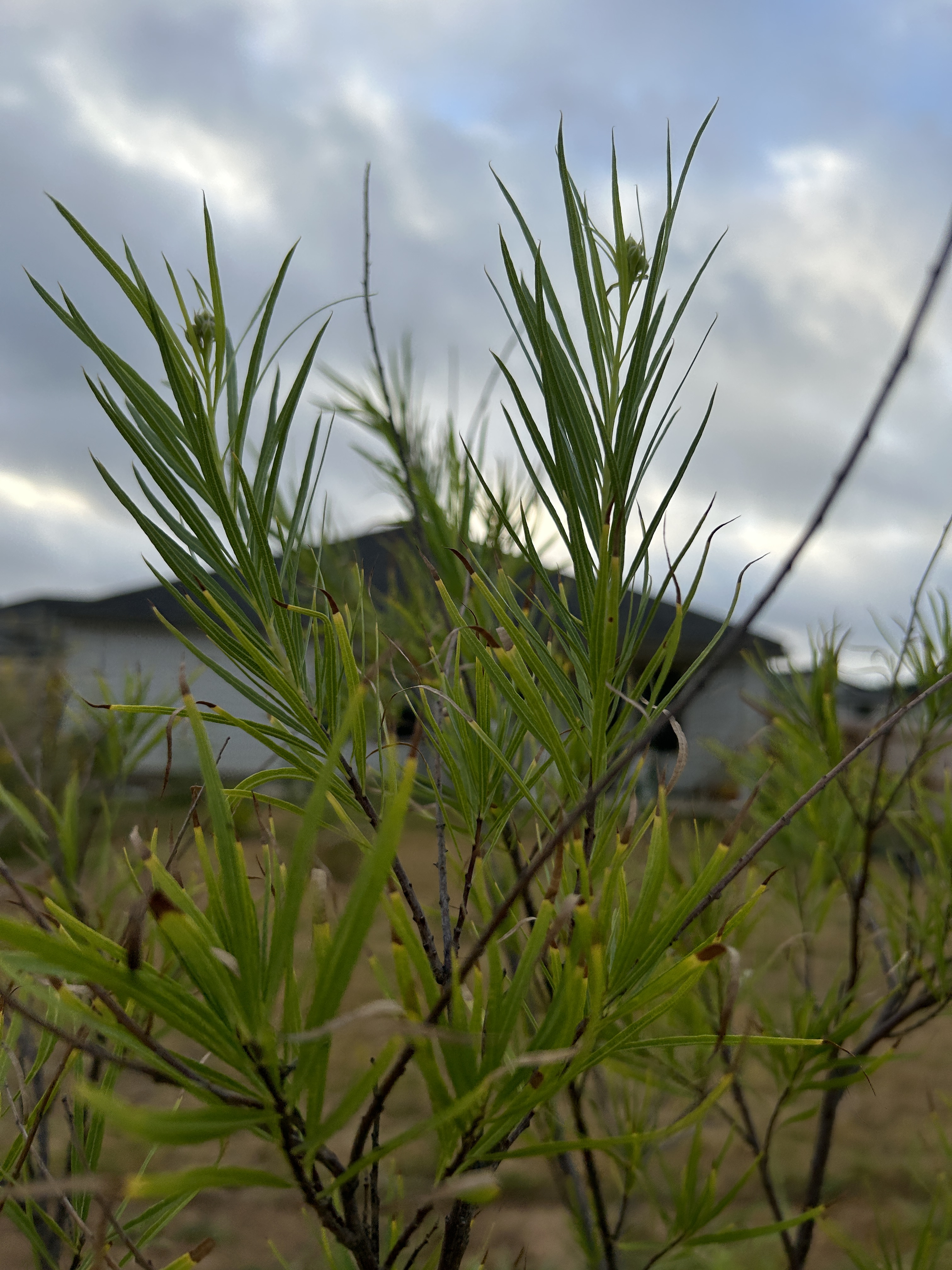
Now that the original Bermudagrass turf in the back yard is gone (although I expect to be fighting remnants for a long time yet), better quality soil has been added, and pathways defined, I am ready for fall seeding of native flowers.
There are a few plants that have been introduced from pots in the back yard, but in this first year I plan to cover most of the area with seed. This strategy has a few advantages:
- It’s a more economical way to get a lot of useful (native) plants in the ground quickly to hold down the soil.
- Because the investment is less than buying potted plants, I have the flexibility of adding other specific plants later by removing seeded plants as needed. Even if I do replace plants later, the original ones can be cut up and given back to the soil for nourishment.
- Not all seed will germinate immediately. Hopefully the soil here will start to accumulate a seed bank of useful native plants to help to overcome any unwanted weeds in the future. (Although I realize that managing unwanted volunteer plants will be a lifetime task!)
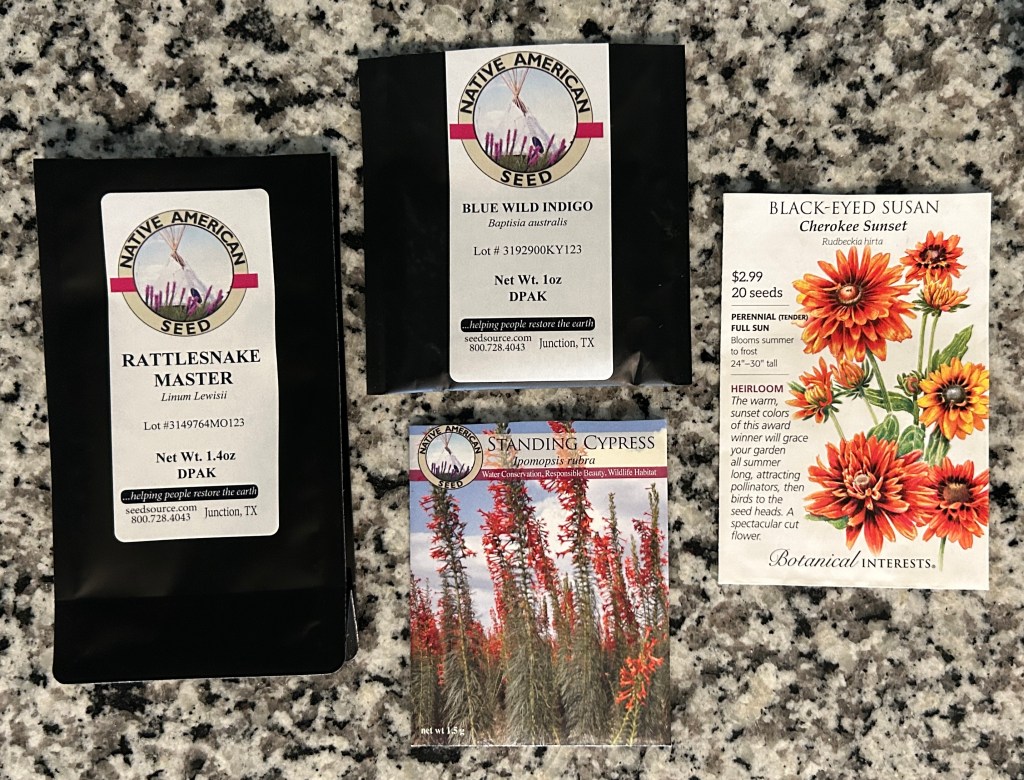
I’ve bought six different kinds of seed for the back yard and divided them into two groups according to estimated height. In addition, over the past couple of years I’ve accumulated other seeds as gifts, and they’ll be added to the mixes as well to see what grows. In each area, I want a variety of colors to attract different wildlife visitors (and be visually interesting).
I am defining the center area at the back of the garden as the “tall” area (3-6 ft) and here’s what’s going there:
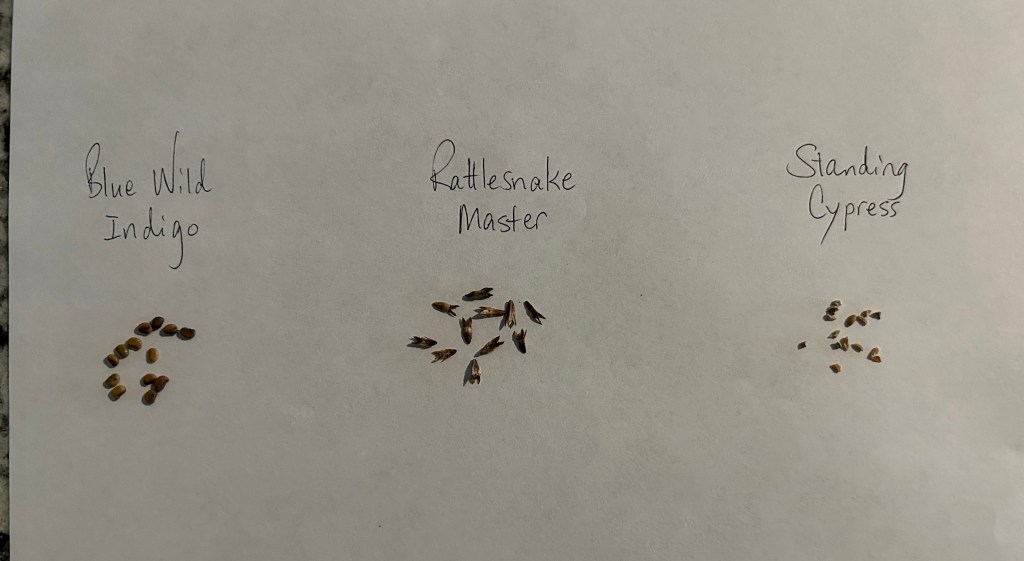
- Blue Wild Indigo (Baptisia australis). Nitrogen-fixing. Perennial. Purple, although there may not be flowers the first year.
- Rattlesnake Master (Eryngium yuccifolium). Perennial. White.
- Standing Cypress (Ipomopsis rubra). Biennial. Red, blooming in the second year. If I want to have these flowering every year, then I will need to do a repeat seeding next year as well.
- (GIFT) Black-Eyed Susan (Rudbeckia hirta). Annual or Perennial. Orange.
I followed my usual strategy for seeding, which was to mix the seeds together with soil from a bag, scatter the seed mix by hand, then scatter more soil, stomp it all in, and leave to nature.
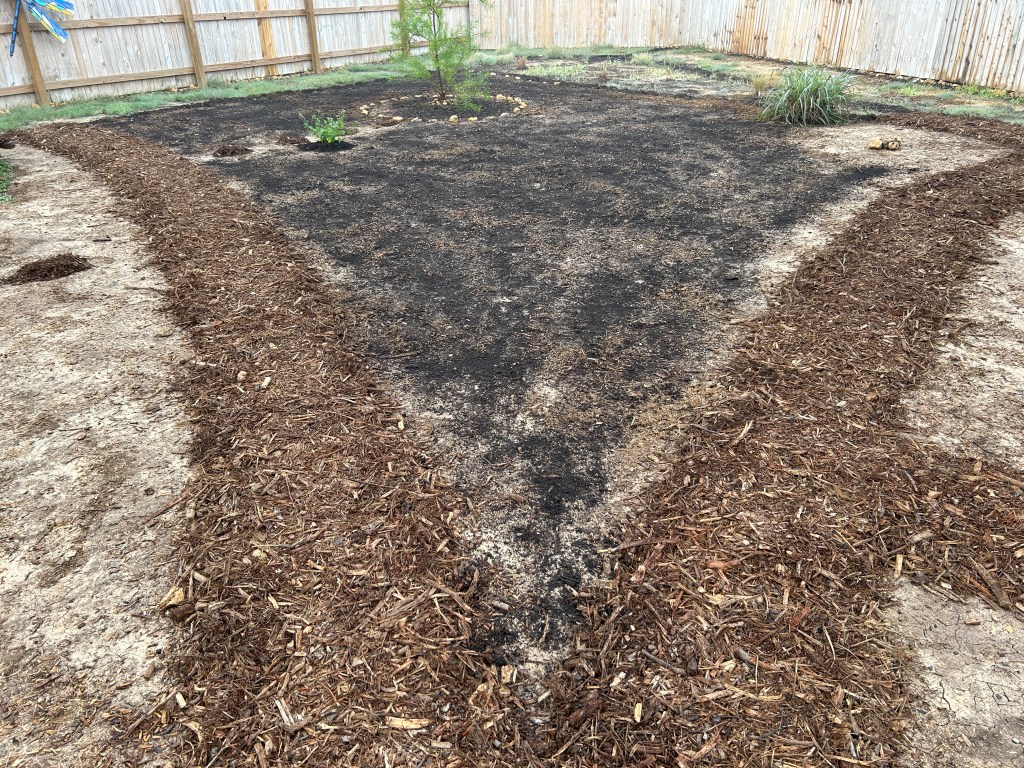
Once seeded, I plan to leave this area pretty much alone, except to pull out anything that is obviously a grass, or a weed that I recognize.


 Rewilding My Lot
Leave a comment