Previous posts for reference:
- Why am I rewilding my lot?
- The starting point
- State of the garden after 6 months
- Preparing for fall
- Plant list as of November 2023 (with information links)
We moved to Seguin, TX in February 2023 to a newly built house on a developer lot that was effectively sterile from a nature point of view. My goal is eventually to convert this little piece of land into a balanced ecosystem that minimizes water use, encourages wildlife visitors, and is also appealing to humans.
So what has happened so far?
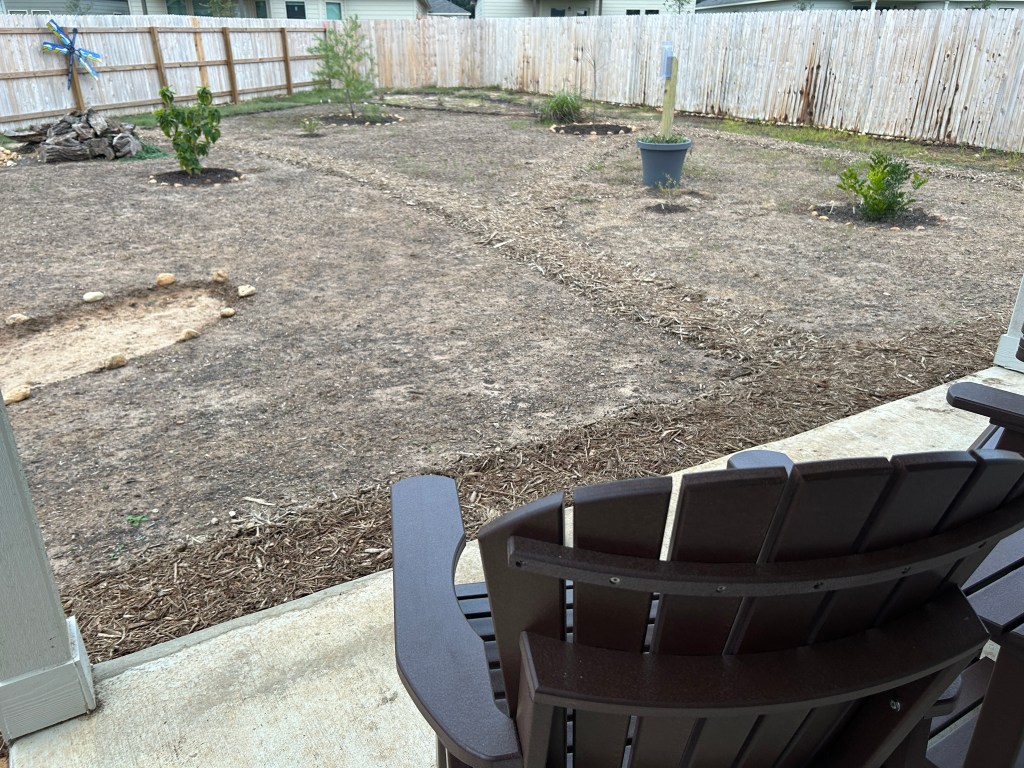
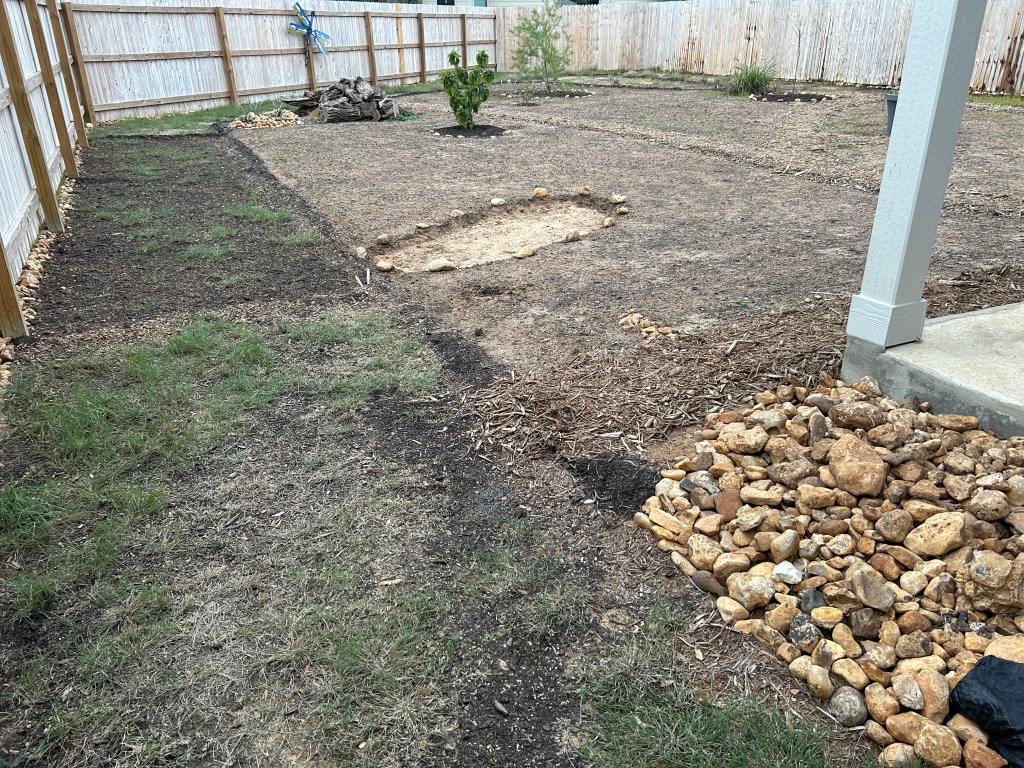
- All the Bermudagrass sod in the back yard has been removed or killed. I realize that I will still need to fight remnants and new invasions from neighboring lots, but I hope that this will be manageable.
- Several cubic yards of better quality soil, compost, and mulch have been added to the back yard.
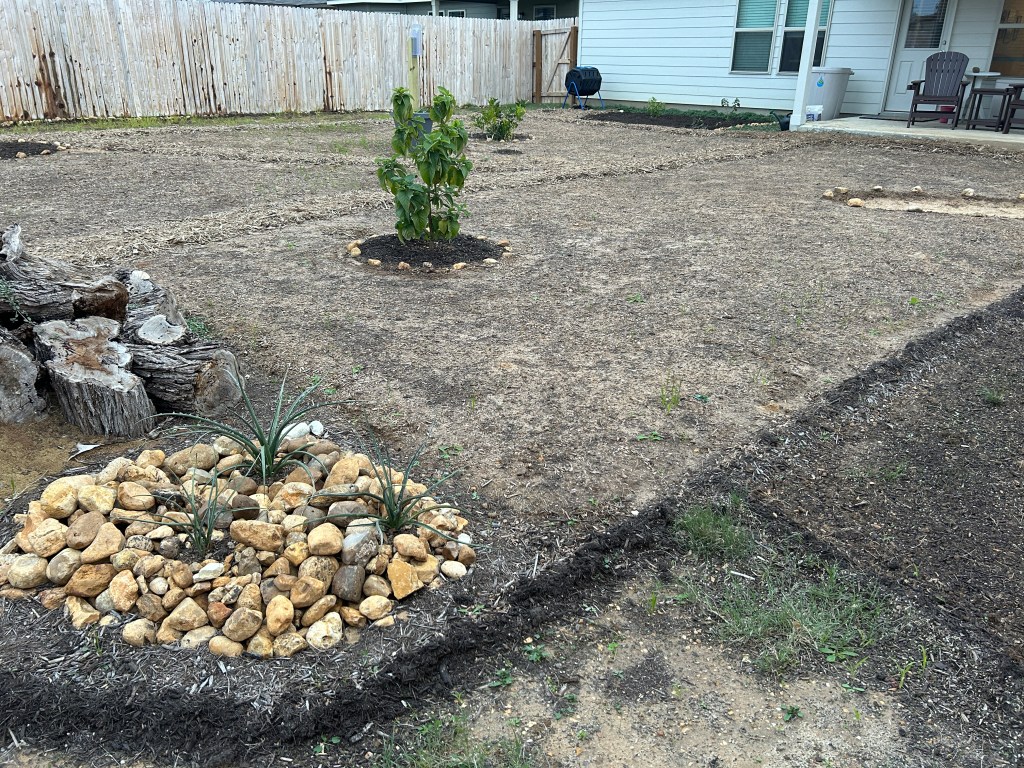
- There are defined separate areas in the back yard for (1) native grasses (short and mid-height) and (2) trees, shrubs, and forbs (a forb is a herbaceous flowering plant that is not a grass). I have a little more reseeding of the native grasses to do, but that particular area will have to wait until the ground is warmer in spring.
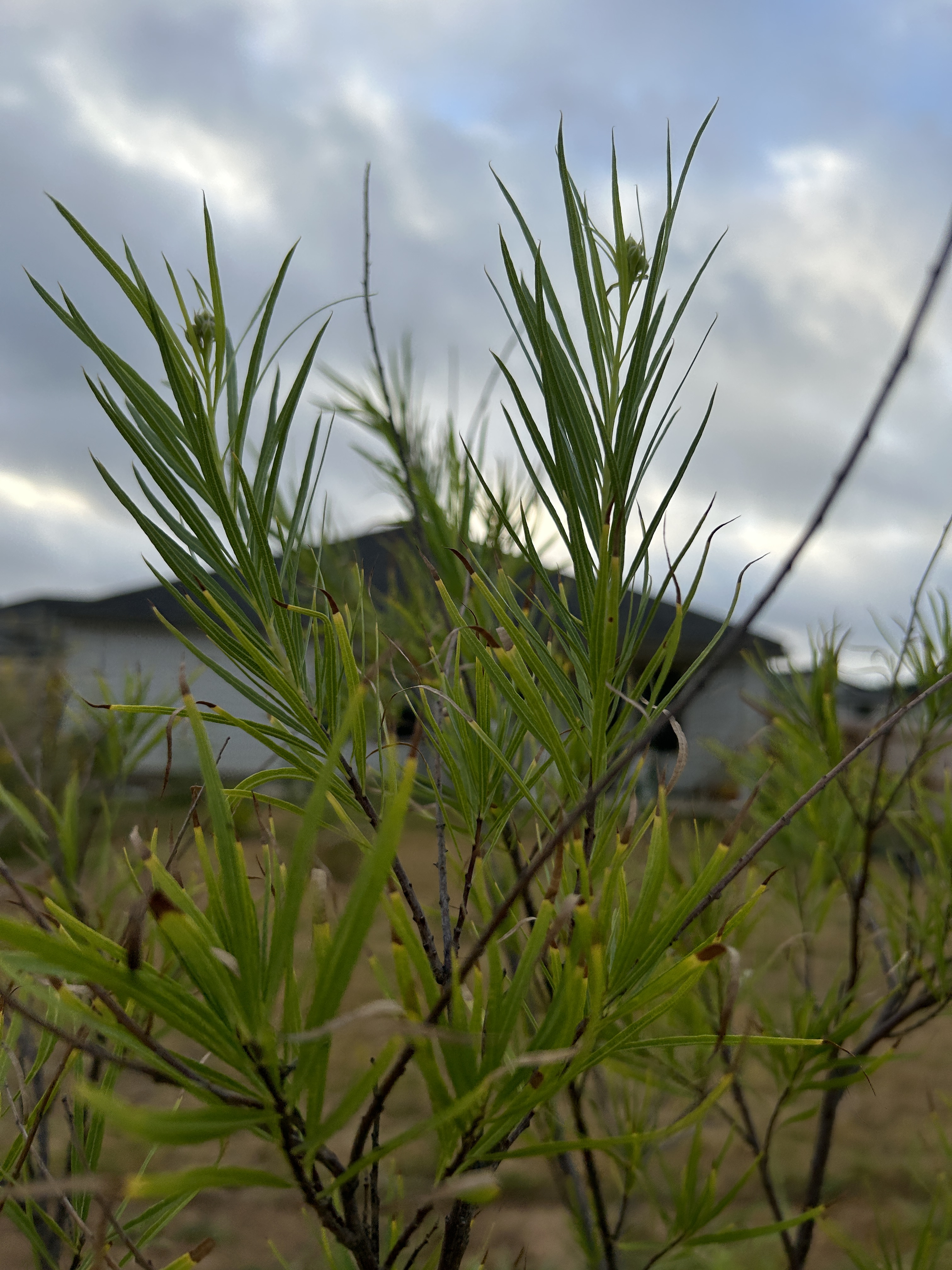
- The inventory of plants in the back yard transplanted from pots is: Desert Willow (“Bubba” variety), Mexican Plum, Mexican Olive, Texas Mountain Laurel, Barbados Cherry (dwarf), Rock Rose, Flame Acanthus, Turk’s Cap, American Beautyberry, Red Yucca, Lanceleaf Coreopsis, Lyreleaf Sage, Frogfruit, Little Bluestem, Gulf Muhly, and Lemongrass (non-native transplant from Houston).
- Forb seeds have been sown in the back yard for Standing Cypress, Rattlesnake Master, Blue Wild Indigo, Firewheel aka Indian Blanket, Mealy Blue Sage, White Prairie Clover, and other Texas wildflowers.
- Grass seeds have been sown in the back yard for Buffalograss, Blue Grama, Curly Mesquite, Little Bluestem, and Waco Indiangrass.
- The front lawn area will remain as Bermudagrass. I have had one attempt at levelling it with extra soil, but lost some of that soil to rain. I’ll have another attempt next year.
- In the central part of the front lawn, interspersed with the grass, there are now some wildflower seeds (Bluebonnet, Firewheel aka Indian Blanket, Spotted Beebalm), which hopefully will give a pleasing show next spring.
- At the edges of the front lawn there are some additions of Frogfruit and Rain Lilies inserted within the grass.
- The pollinator garden in front of the house is largely complete, and over time should fill out. Plants there include: Texas Barometer Bush aka Texas Sage, Texas Lantana, Chili Pequin, Flame Acanthus, Skeleton-Leaf Goldeneye, Threelobe False Mallow (not native), Fall Aster, Tropical Sage, Black & Blue Sage (not native), Bluebonnet, Lyreleaf Sage, Silver Ponyfoot, Horseherb aka Straggler Daisy, Moss Verbena, Amaryllis (non-native transplant from Houston), and Yucca (non-native transplant from Houston).
- Infrastructure installations include a tumbling composter, two 55-gallon rain barrels, a rain gauge, mulch pathways, a shallow swale, a patio storage box, and new seating that is sturdy enough to withstand the Seguin wind.
So at this point I am winding down work in the garden for the winter. There will be some weeding, and a lot of watching and thinking. My task now is to be patient to see how the garden wakes up in the spring. This is a time for roots to grow strong, for seeds to quietly germinate, and for me to not interfere.
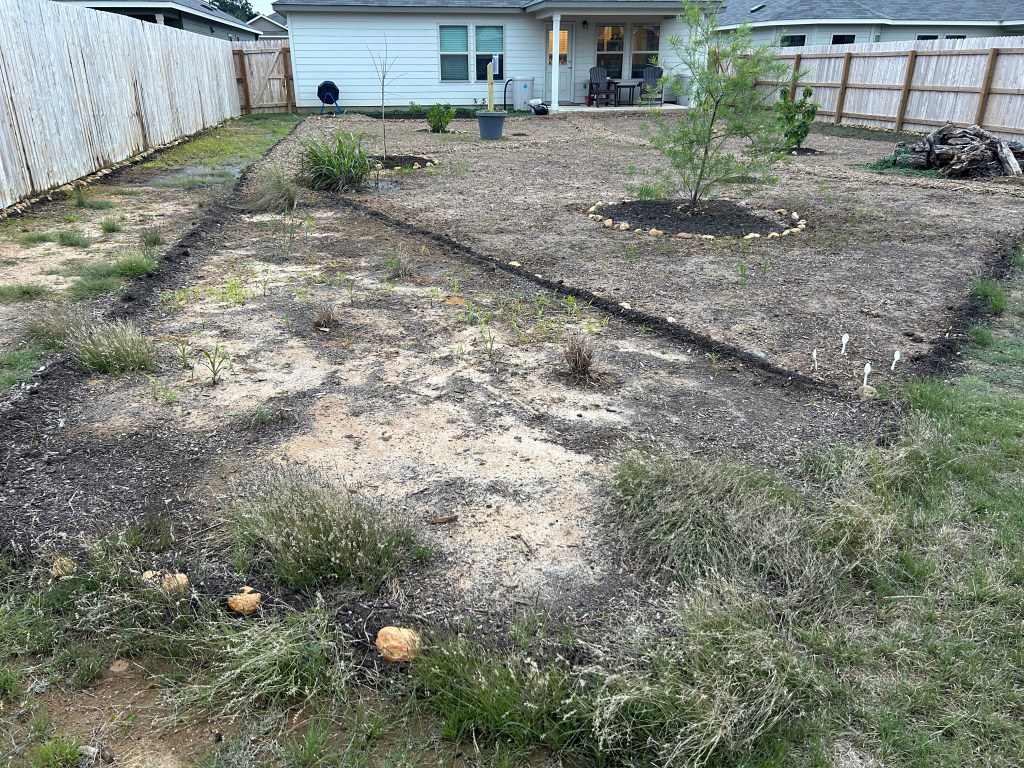
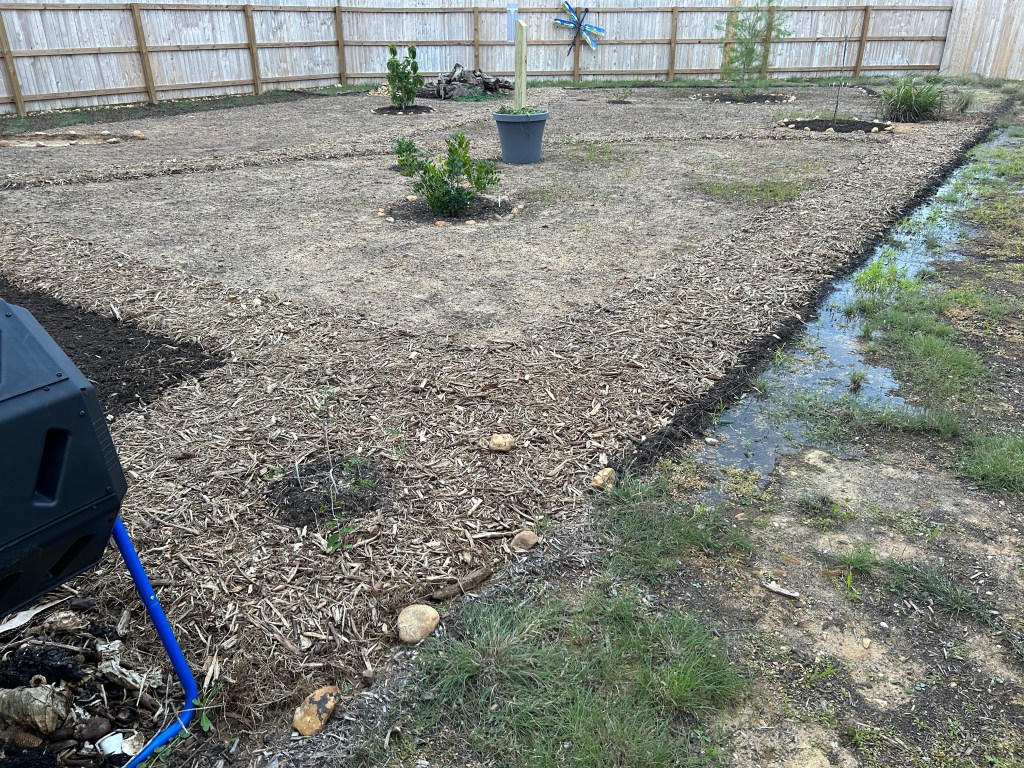
Here are some photos of the back yard taken from various vantage points. (The last one shows the daily flooding from over-watering by the builder next-door. It’s such an unnecessary waste!)


 Rewilding My Lot
Leave a comment