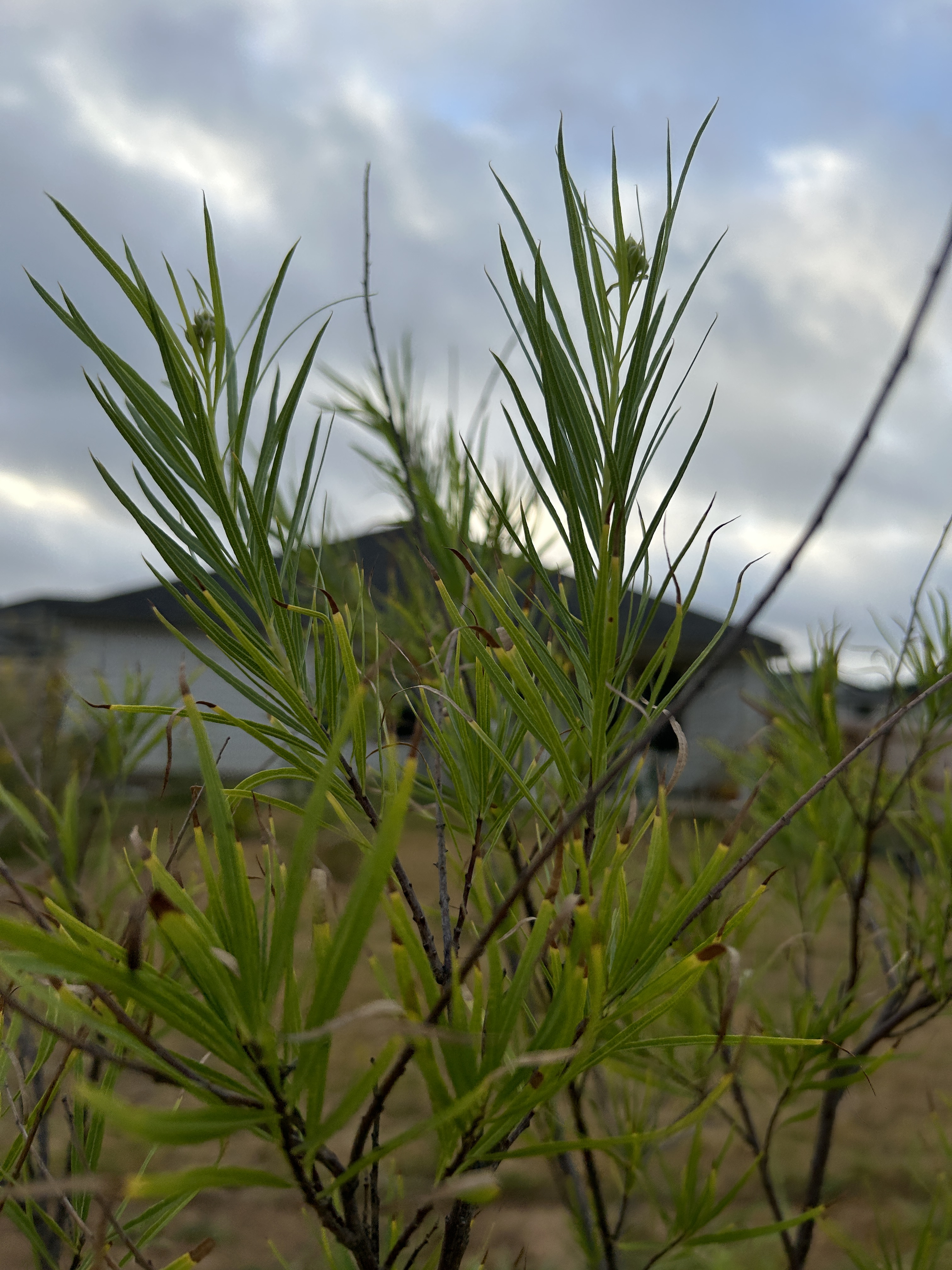

In my desire to create a little nature reserve in my urban lot, I could have spent a lot of money to get everything designed and installed in the first year. However, I prefer to take the longer strategy of doing things in stages, learning as I go. I think that when I look back at this project, I will find examples of decisions that turned out to be wiser because I waited to make them. Examples: rainwater management, choosing where to plant native grasses. Conversely, at times I acted too quickly and then had to change things later or live with the consequences. Examples: removing a Huisache tree I had planted, moving a Turk’s Cap, planting a American Beautyberry where it doesn’t get enough shade.
In the first year here (2023), my priority plantings were trees, native grasses, and a pollinator garden in front of the house. I did plant a few other shrubs as well, but the majority of the area behind the house is currently unassigned. Since I also removed all of the Bermudagrass turf last year (a major project that took months!), that left quite an expanse of bare ground which would be at risk for erosion.
For that undeveloped area in my back yard, I thought the best approach would be immediately to cover it with plants at low cost (seed or volunteer) to give me more time to consider options for future years. My task will be to remove invasive weeds as they appear and give the remaining space to the native plants that I have seeded and any volunteer wildflowers that I consider useful for this environment.
So this is my “green mulch” — a back yard filled with healthy plants that should enrich the soil, support wildlife visitors, capture water, and protect the soil from damage. In time, I can choose to keep these plants, or remove them to make way for other projects. As the plants grow and die, their decomposition will further feed the soil.
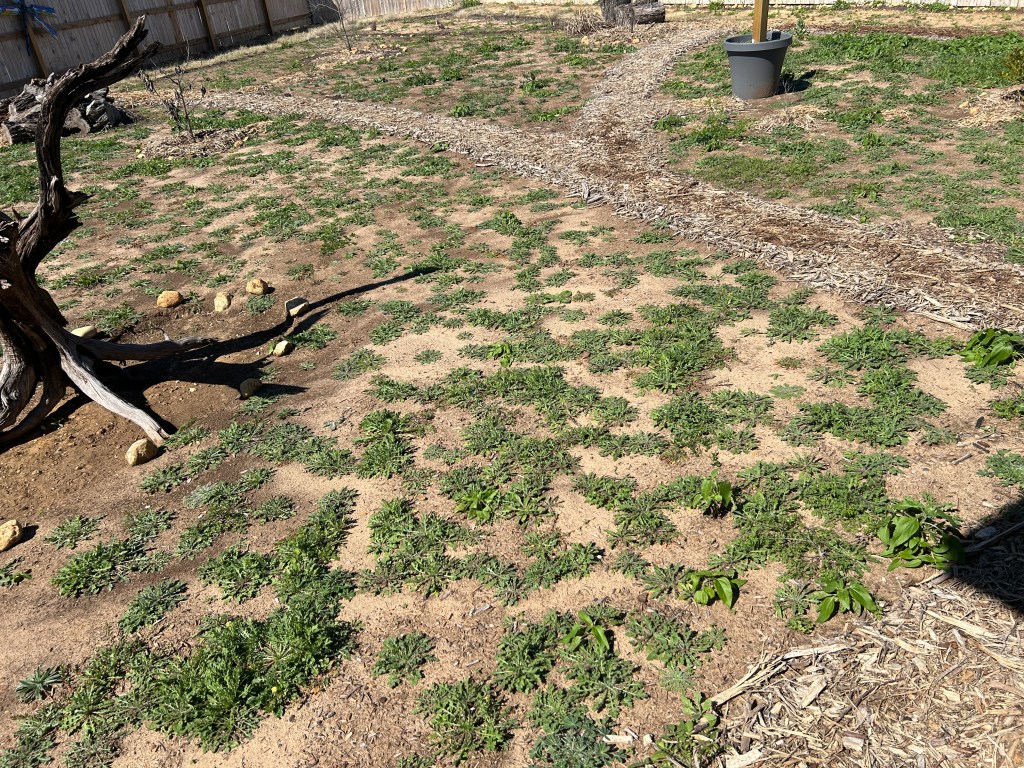
Last fall I planted seeds in two groups. The two areas closer to the house have my “short seeds” and towards the back are my “tall seeds”. Volunteers, of course, are everywhere. This is an exciting time for me as I watch things emerge and identify them to decide if they stay or go. Already some of the volunteer plants are flowering and being visited by insects, which is a good thing because there is so little food for pollinators yet.
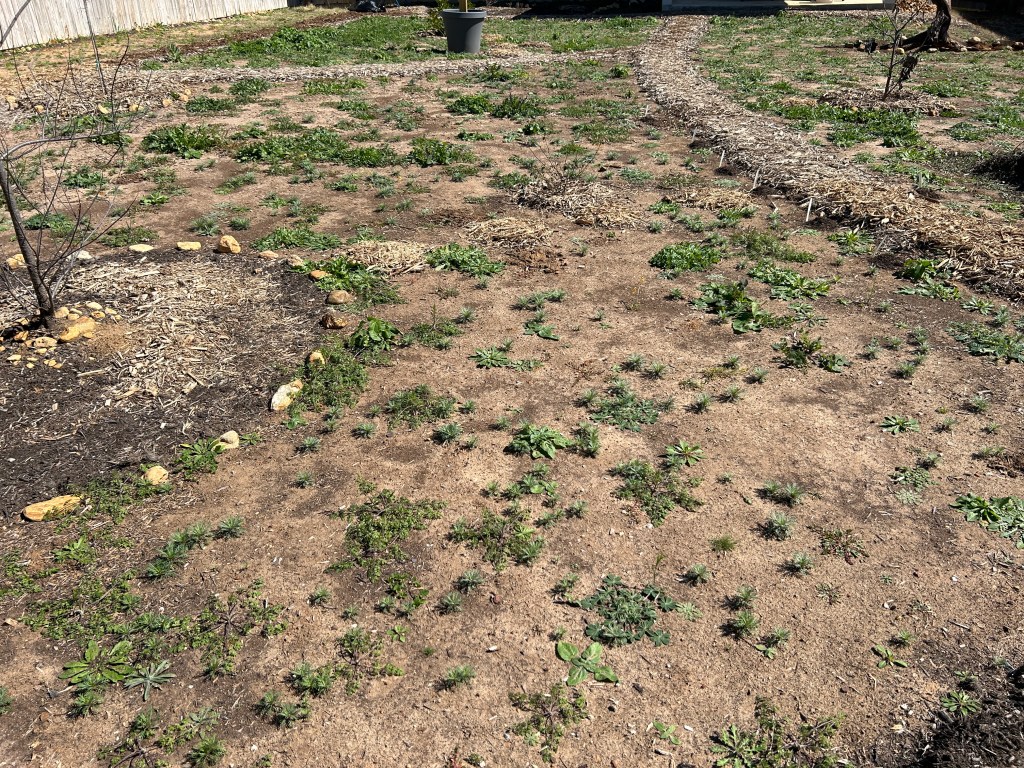
It is of course possible that the back yard will stay as primarily a wildflower meadow in my long-term plans. But even if it doesn’t, I am looking forward to what this year will bring by way of nature and inspiration.


 Rewilding My Lot
Leave a reply to Clearing A Back Corner – Rewilding My Lot Cancel reply