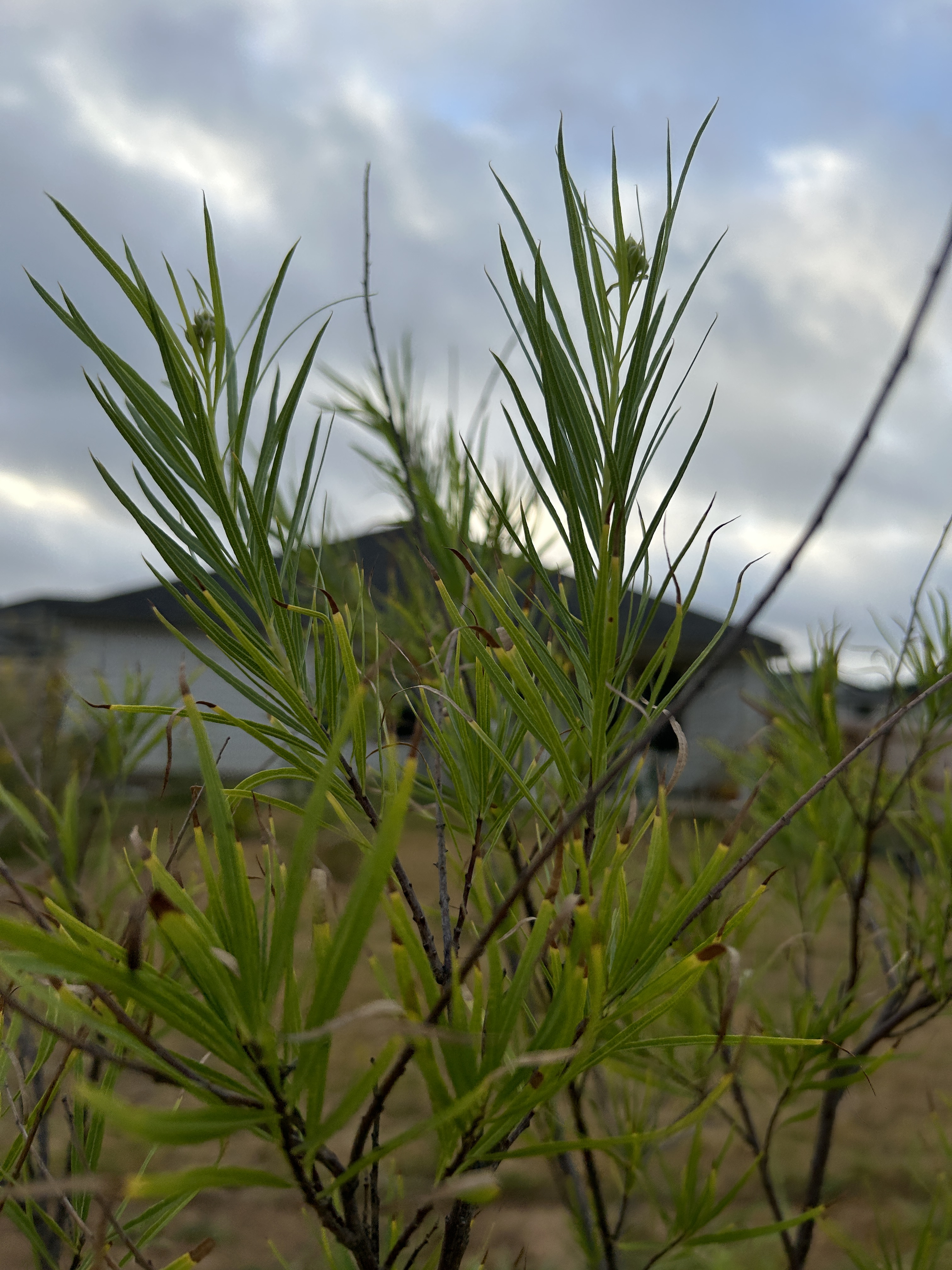
Milkweeds are the only plant that Monarch butterflies will use to lay their eggs and host their caterpillar larvae. I intentionally did not plant any Milkweeds last year — I was more focused on initially building a more generally wildlife-friendly environment. However, I knew that eventually I would want to include Milkweed plants here.
There are several varieties of Milkweed that grow in different conditions. The most commonly found in Central Texas nurseries and gardens is the non-native Tropical Milkweed (Asclepias curassavica), but this is not the best choice because of its risk of migration disruption and/or disease for Monarch butterflies. Read more about the problems with Tropical Milkweed here and here.
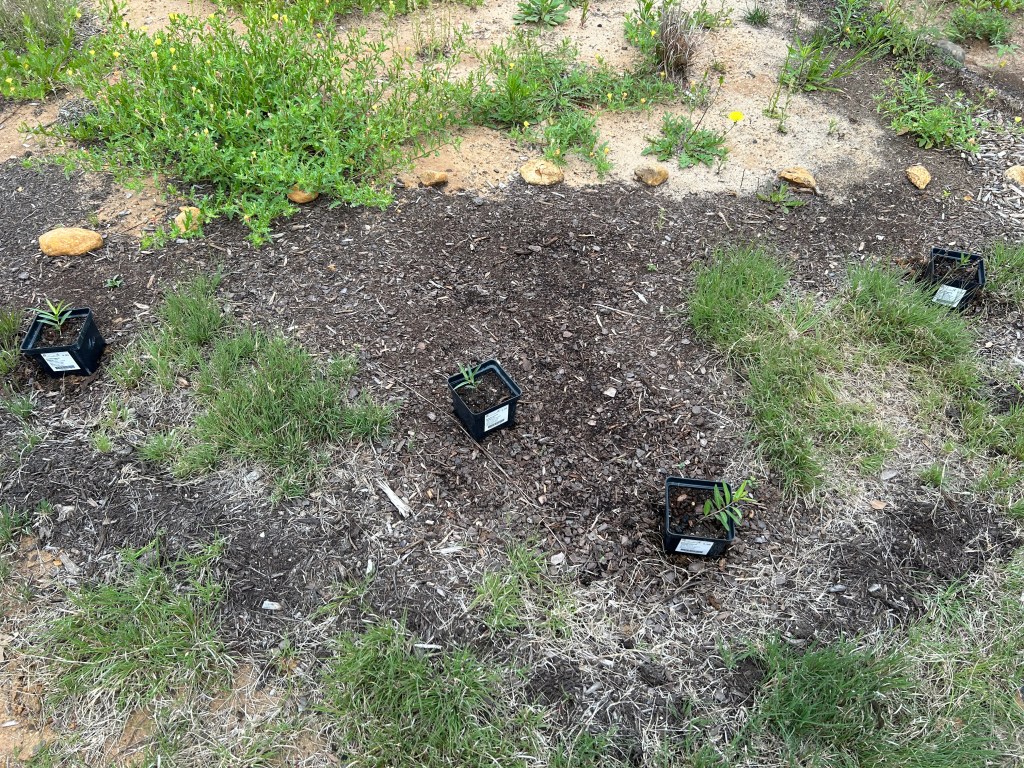
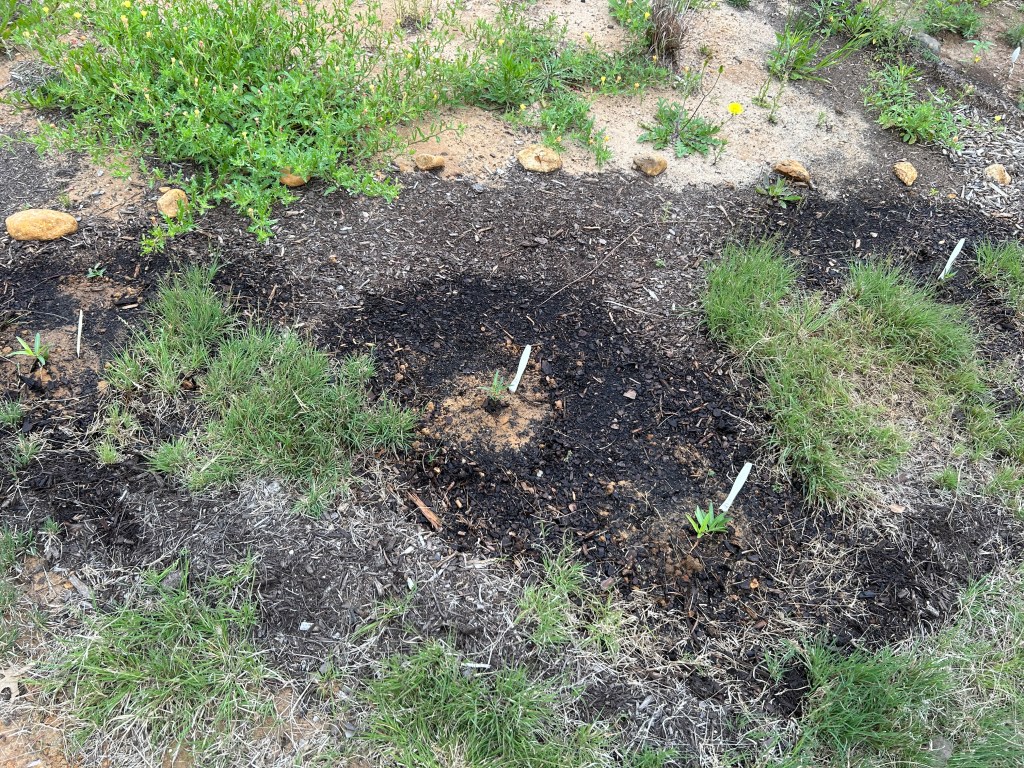
Therefore, I want native varieties of Milkweed here although these are usually harder to find, hence a recent trip to the PolliNatives native plant nursery in Converse. The best Milkweed varieties for my location, soil, and climate are Antelope-Horns (Asclepias asperula), Zizotes (Asclepias oenotheroides), and Green (Asclepias hirtella). It’s possible that I might have some Zizotes here already because I have scattered seed in the back yard, but if it’s growing I don’t recognize it yet. So my goal for the nursery trip was to get a few Antelope-Horns Milkweeds, and I managed to snag four baby plants.
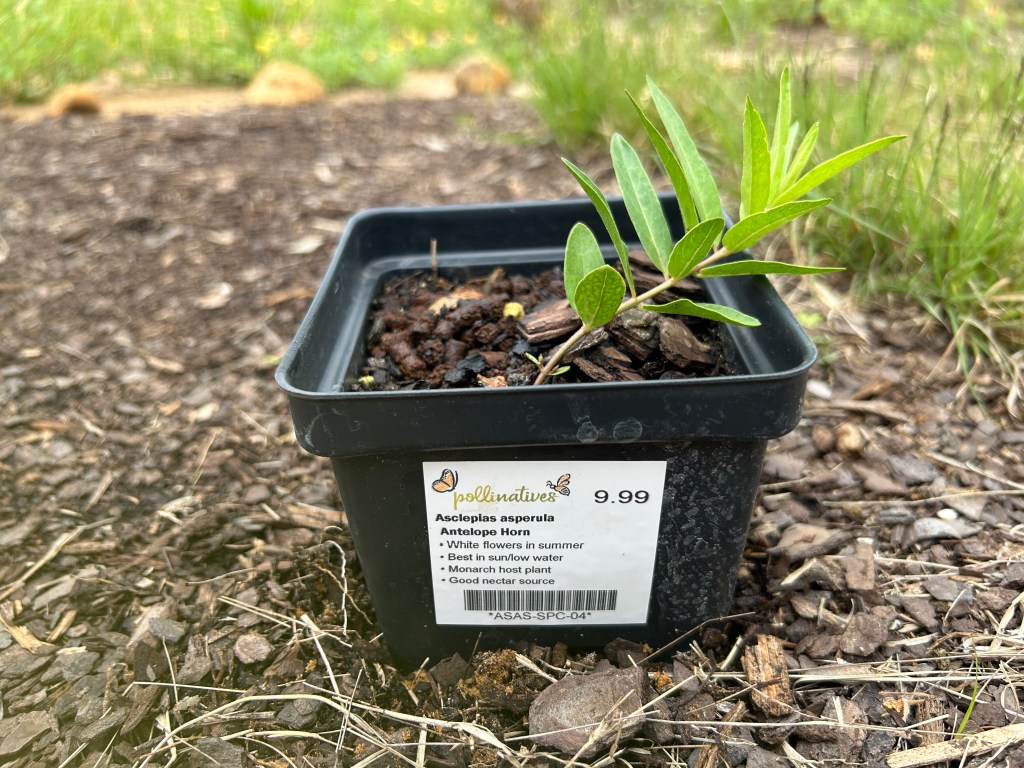
Ironically, these plants are so small that in the beginning I want to actually prevent Monarch butterflies from breeding here until the plants are bigger. They are so small right now that even a single egg would hatch a caterpillar that could eat the entire plant in a couple of days. Then the caterpillar would starve and the plant would be gone.
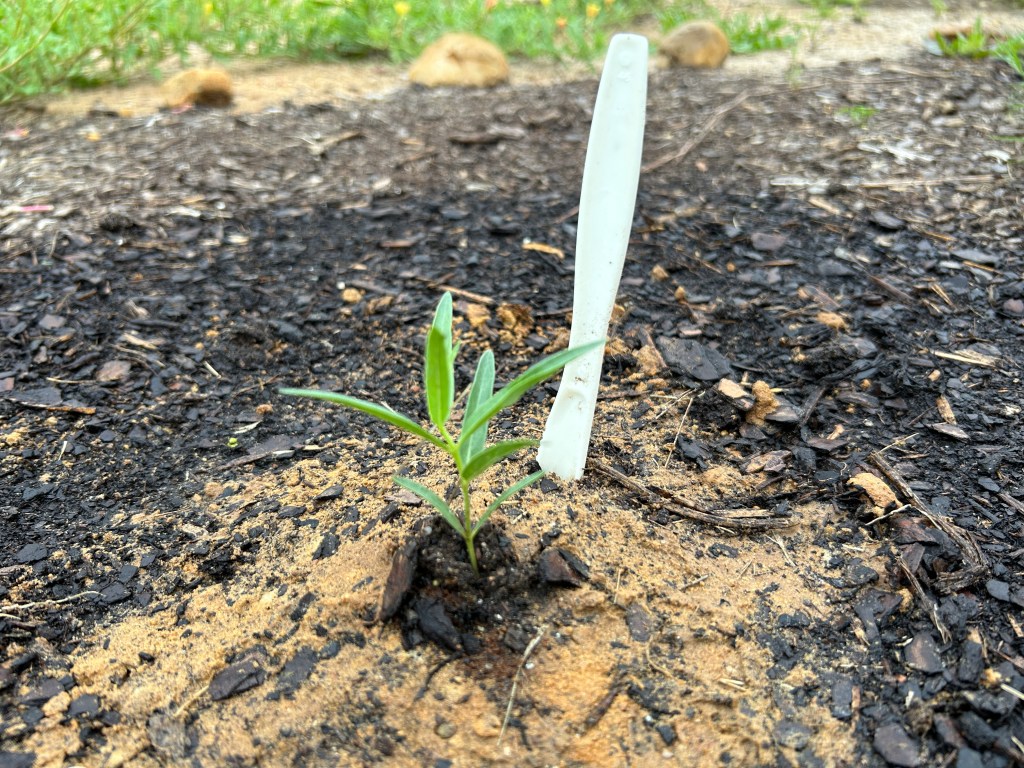
So I have to take a longer approach and remove any caterpillars that I see (Monarch or otherwise) for potentially weeks or months. That will be a shame, of course, but if I want to provide adequate food for Monarch larvae, then I need to have plants big enough to feed them until they pupate.
Antelope-Horns Milkweeds are perennial plants that grow 8-24 inches tall and can spread into clumps.


 Rewilding My Lot
Leave a reply to Butterflyweed – Rewilding My Lot Cancel reply