If you want to skip the preamble, I have a list of plants further down this post.
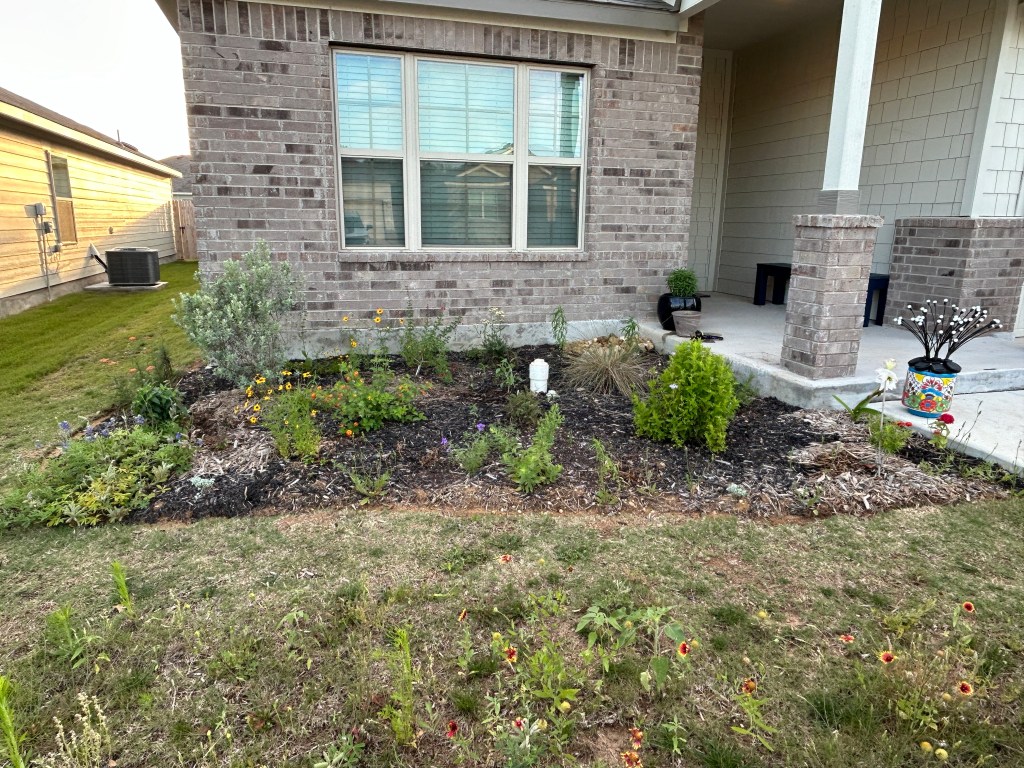
Last year I planted several native plants in the flower bed in front of the house to make a small pollinator garden (replacing builder-installed plants that were not wildlife-friendly). I was pleased with the growth of the plants and the insects that visited, and particularly grateful for the plants that endured the hot summer and/or flowered late in the season. Fall-blooming nectar plants are an important food source for insects and birds that are migrating south, and we are in the pathway for several of those (e.g., hummingbirds and Monarch butterflies).
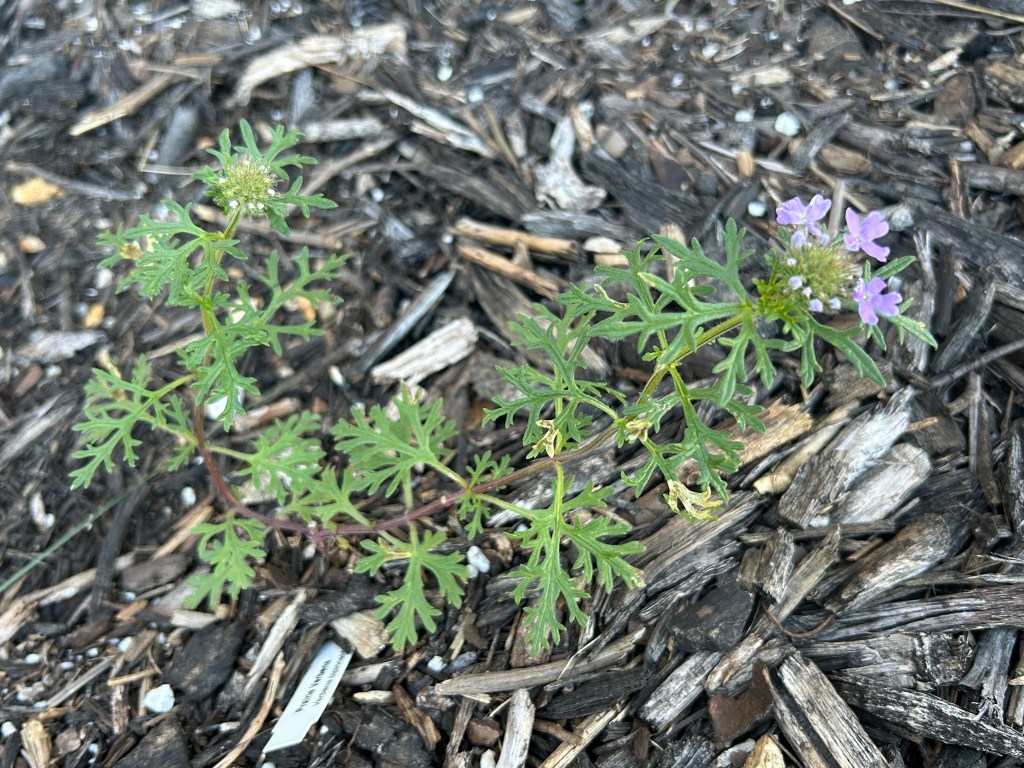
However, I noticed that in February and March this year, even though the front yard wildflower meadow was in full bloom, I didn’t really have early spring flowers in the pollinator garden except for Bluebonnets and a few volunteer dandelions. So I’ve added a couple of plants that should help to extend the availability of food during the year in that location: Prairie Verbena (Verbena bipinnatifida) and Pink Evening Primrose (Oenothera speciosa) both bloom early in the spring. They are both easy to grow and readily volunteer (in fact I already have Prairie Verbena coming up in other places behind the house), so these are just two small plants to get colonies started here. The Prairie Verbena was purchased (PolliNatives), and the Pink Evening Primrose was transplanted from the park where I volunteer, which had too much of it.
I’ve also recently added Mealy Blue Sage (Salvia farinacea) and a pink variety of Beebalm (Monarda didyma), purchased from Buchanan’s Native Plants in Houston.
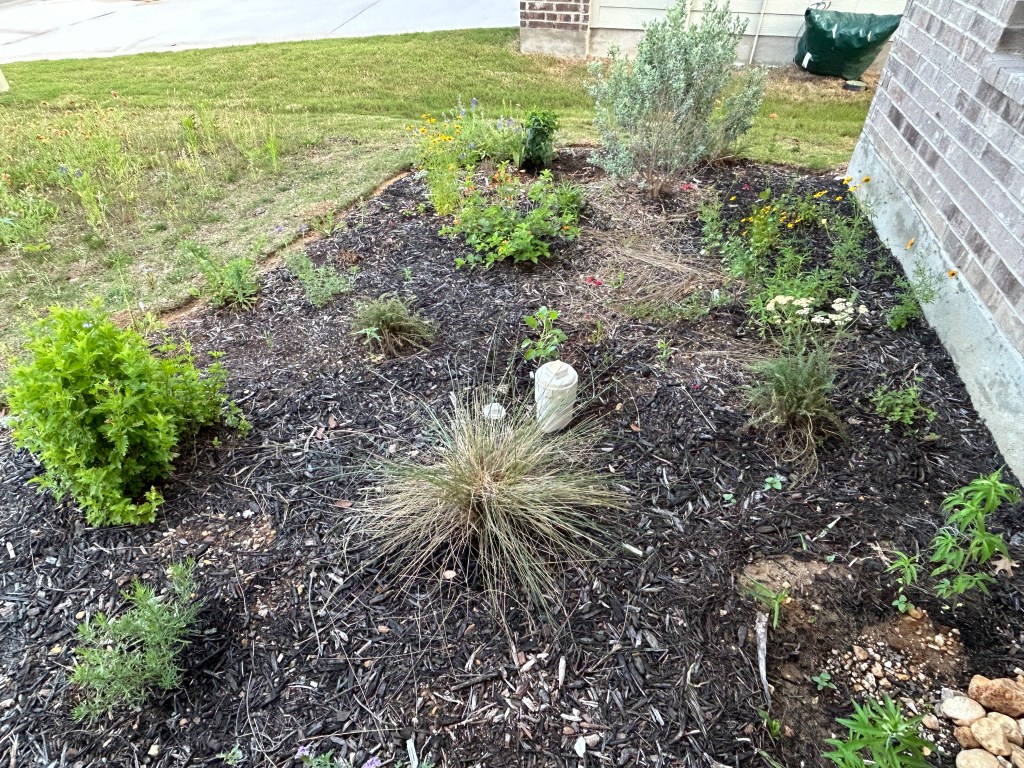
As of April 2024, this is what is in my pollinator garden in front of the house:
Planted 2023:
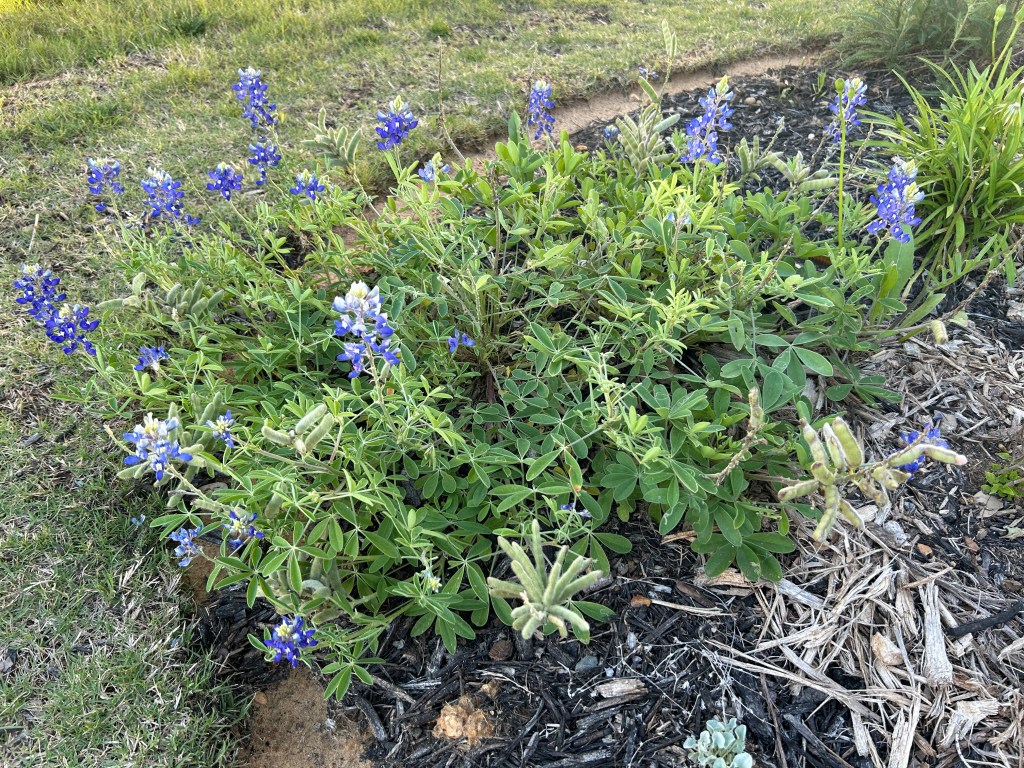
- Bluebonnet (Lupinus texensis) – annual, beginning to seed
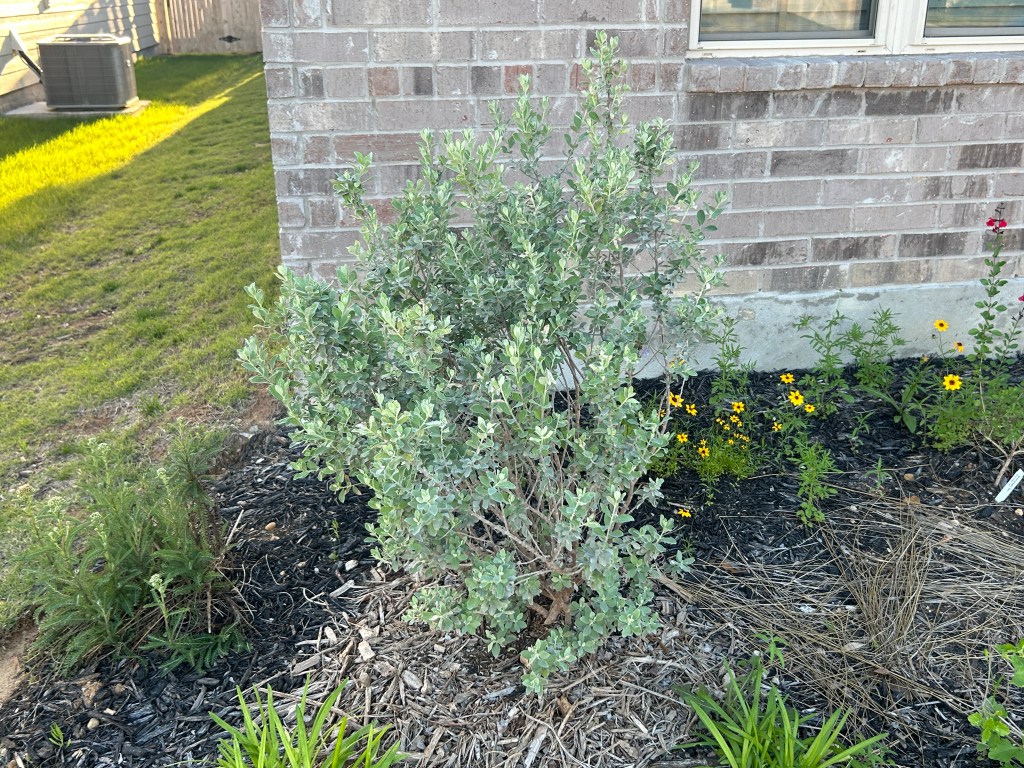
- Cenizo aka Texas Sage aka Barometer Bush (Leucophyllum frutescens) – perennial shrub, doing well
- Chili Pequin (Capsicum annuum) – perennial shrub, growing back after having frozen in January

- Fall Aster (Symphyotrichum oblongifolium) – perennial, doing well

- Flame Acanthus (Anisacanthus quadrifidus var. wrightii) – perennial shrub, doing well
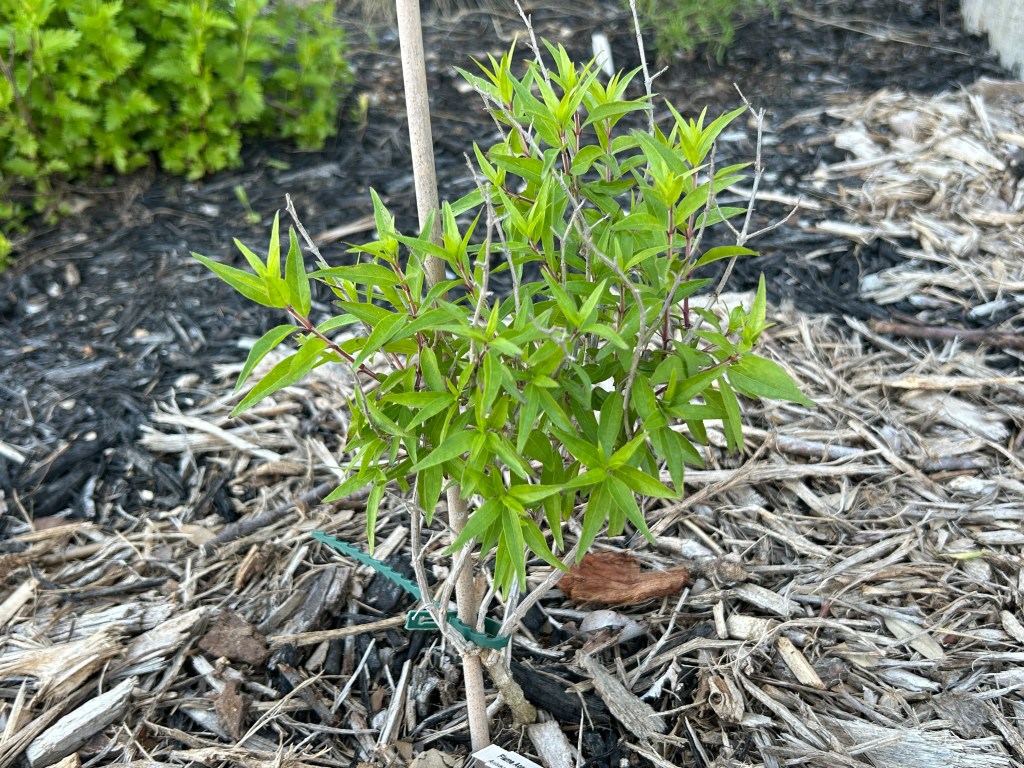
- Gregg’s Mistflower (Conoclinium greggii) – perennial, just beginning to bloom
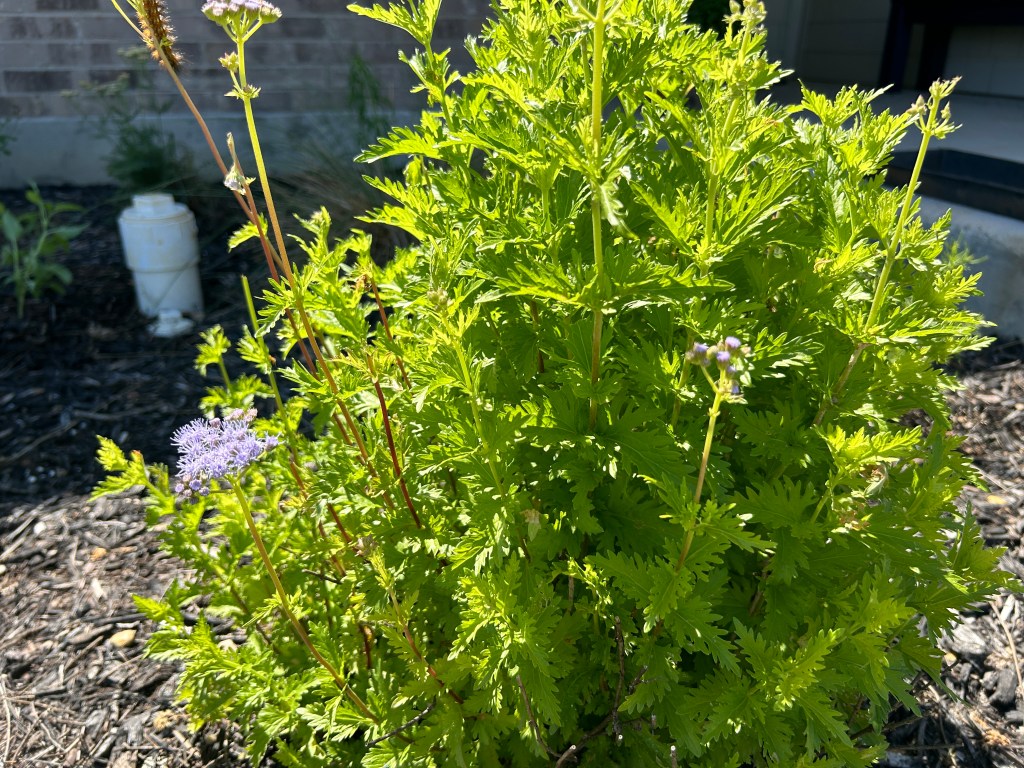
- Gulf Muhly (Muhlenbergia capillaris) – perennial, I will need to water this more if I want more blooms than last year

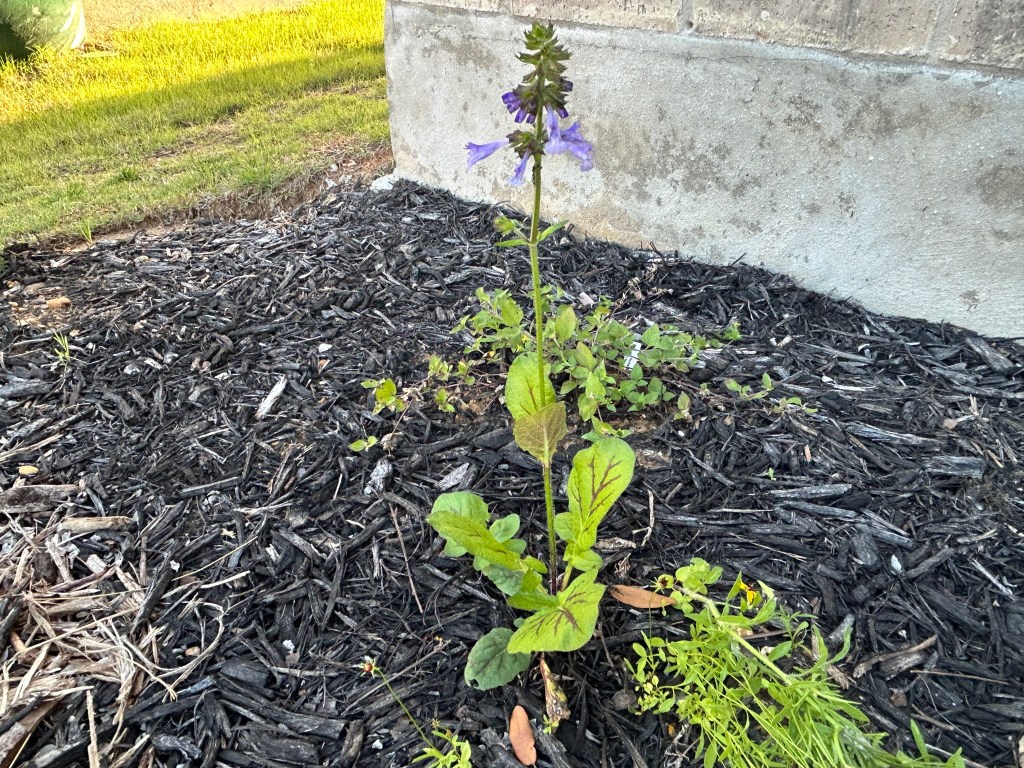
- Lyreleaf Sage (Salvia lyrata) – perennial, blooming now
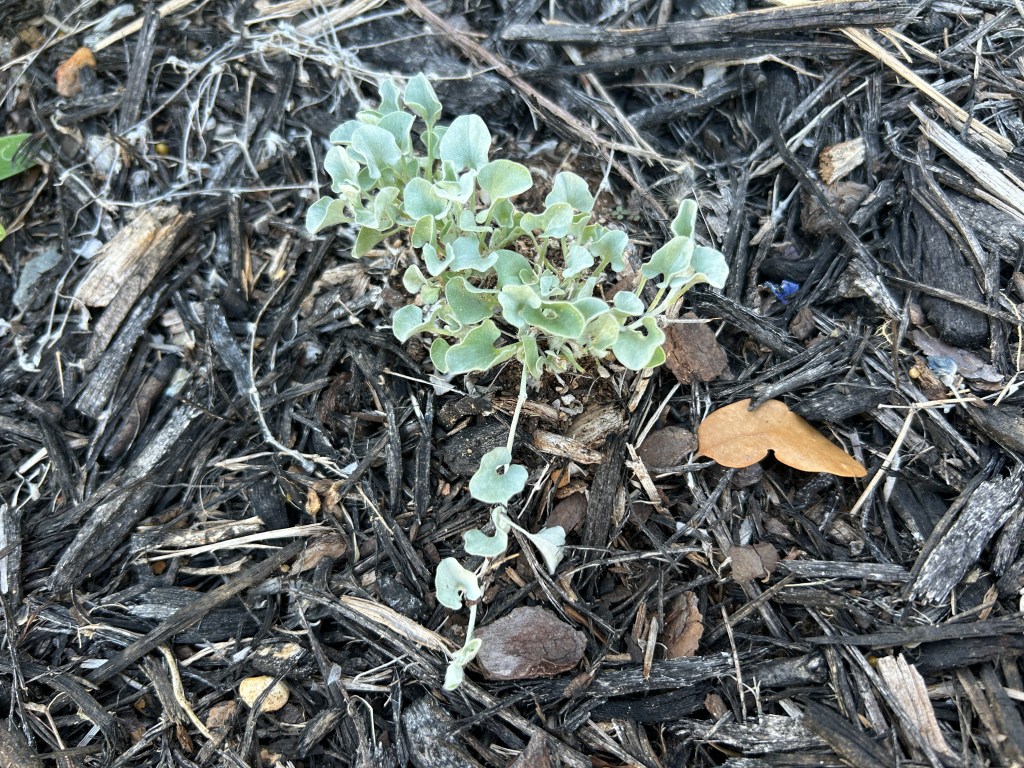
- Silver Ponyfoot (Dichondra argentea) – perennial ground cover, growing back after having frozen in January
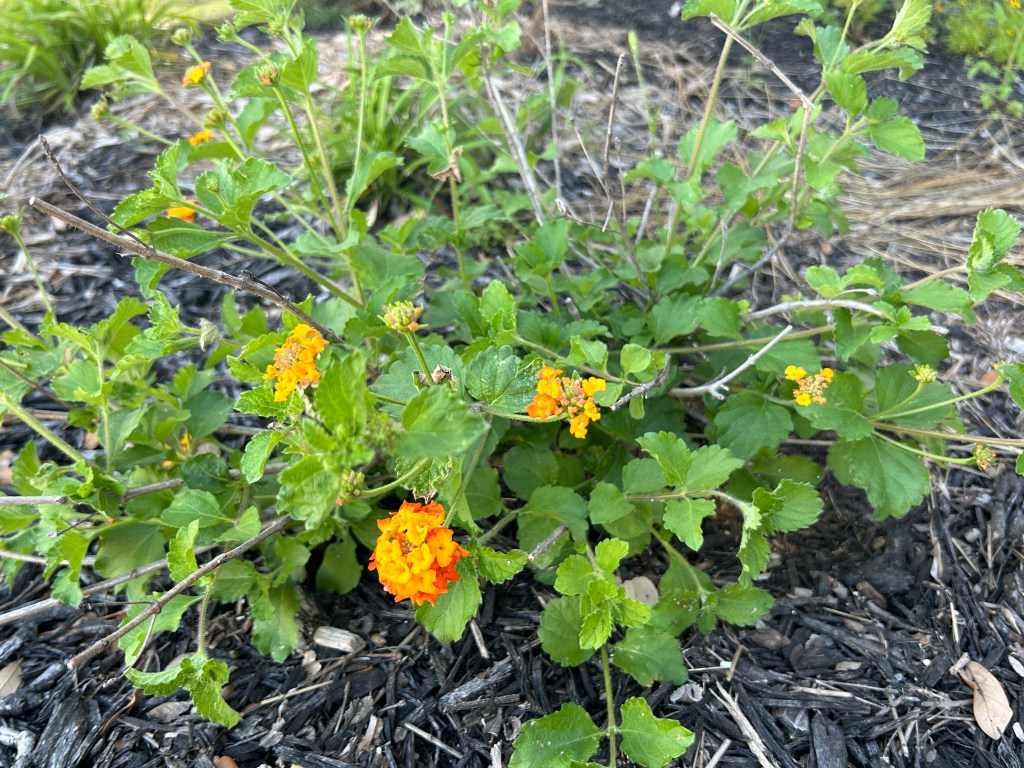
- Texas Lantana (Lantana urticoides) – perennial shrub, blooming now
Planted 2024:
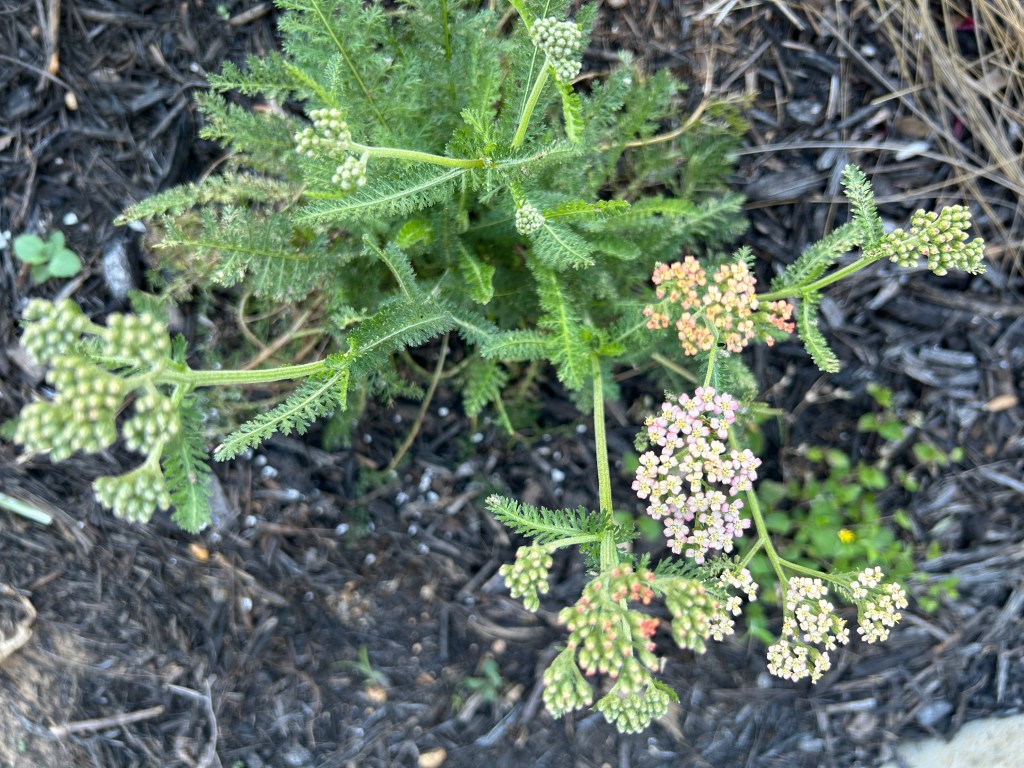
- Common Yarrow (Achillea millefolium) – perennial, only the white is truly native but I have other colors as well (a gift)
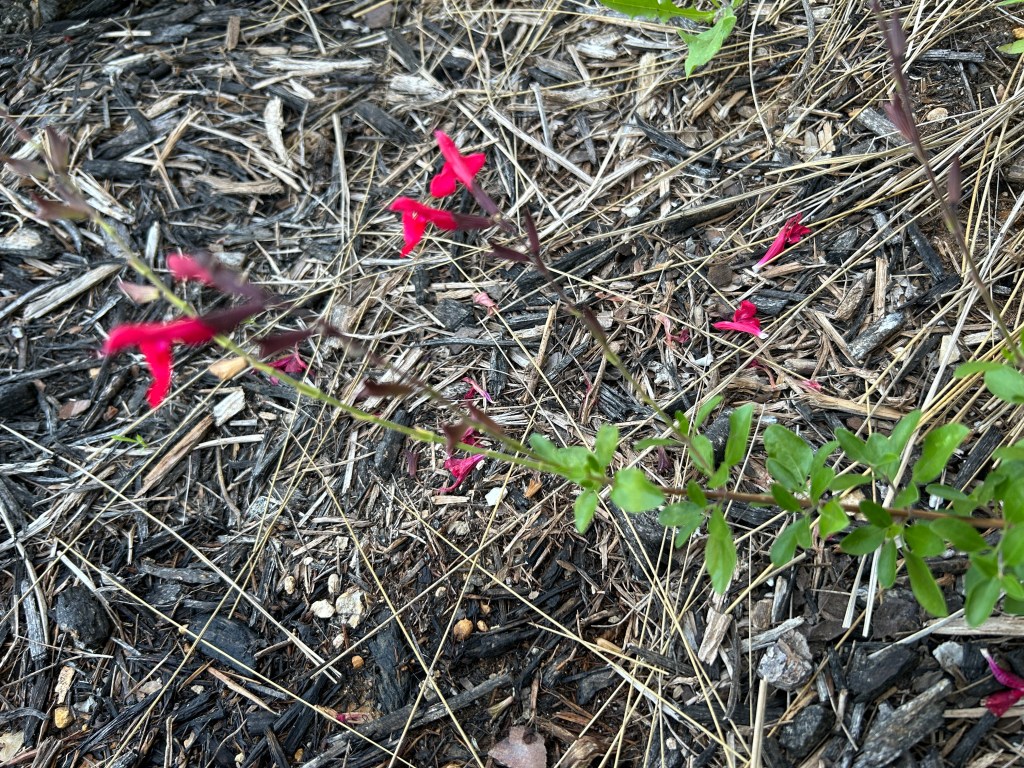
- Gregg Salvia (Salvia greggii) – perennial shrub, blooming now
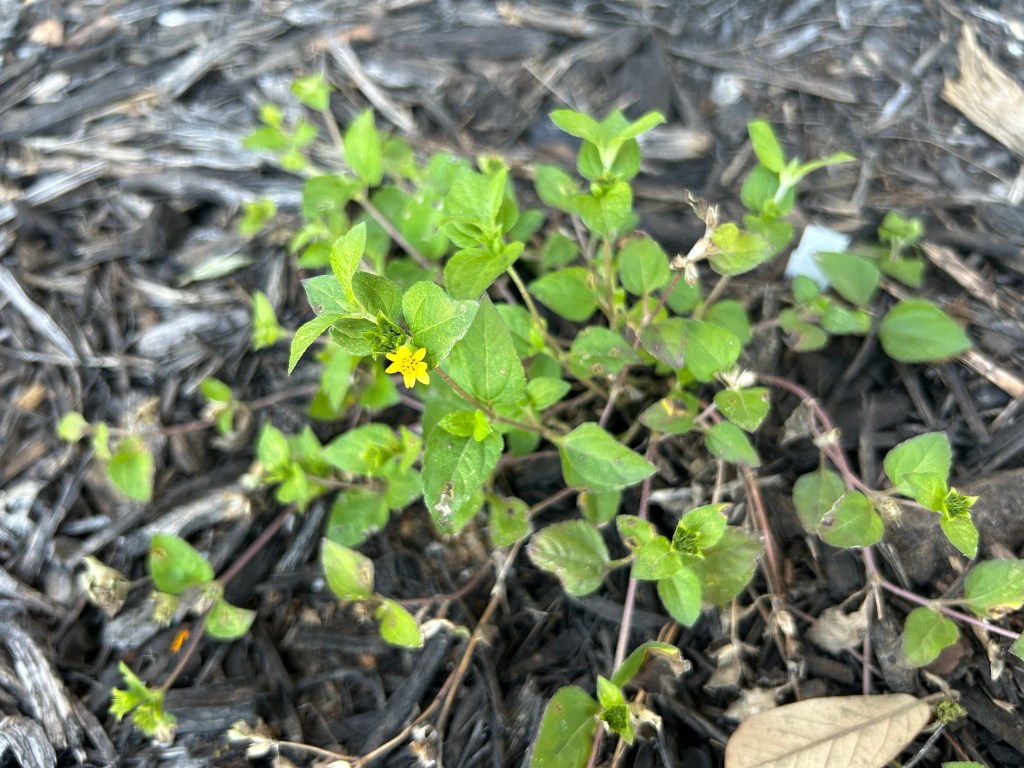
- Horseherb aka Straggler Daisy (Calyptocarpus vialis) – perennial ground cover, blooming now
- Pink Evening Primrose (Oenothera speciosa) – perennial, recovering from transplant
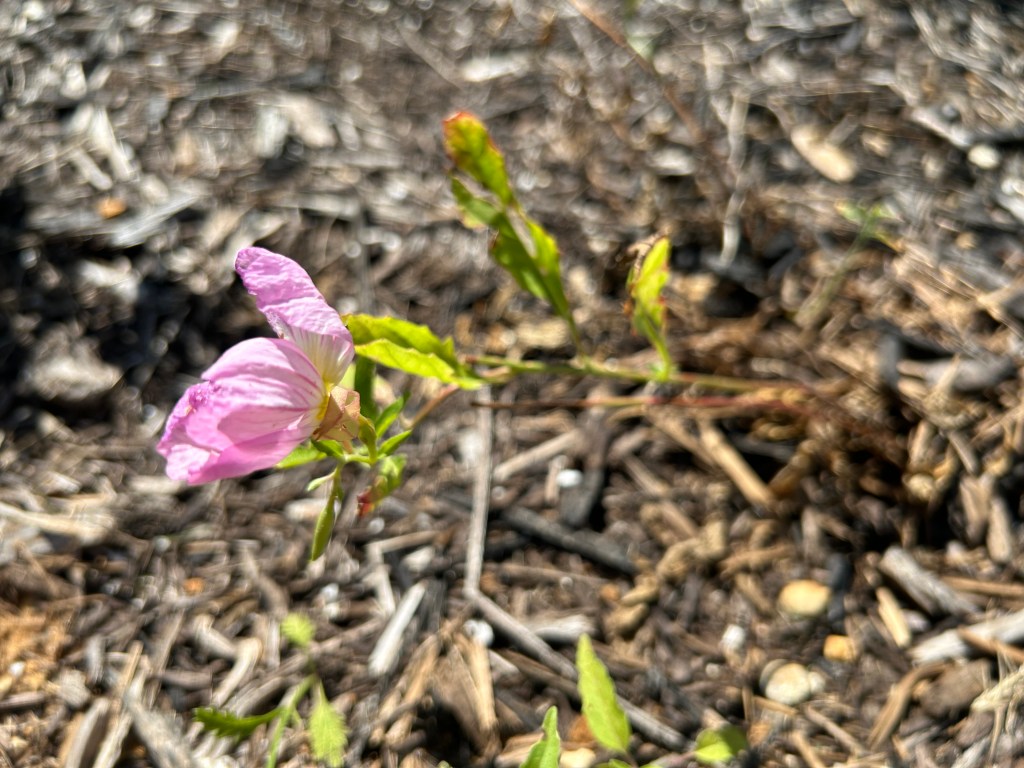
- Prairie Verbena (Verbena bipinnatifida) – perennial, blooming now
- Skeleton-Leaf Goldeneye (Viguiera stenoloba) – perennial shrub, replacing last year’s that didn’t survive the January freeze

- Beebalm (Monarda didyma) – perennial, just planted
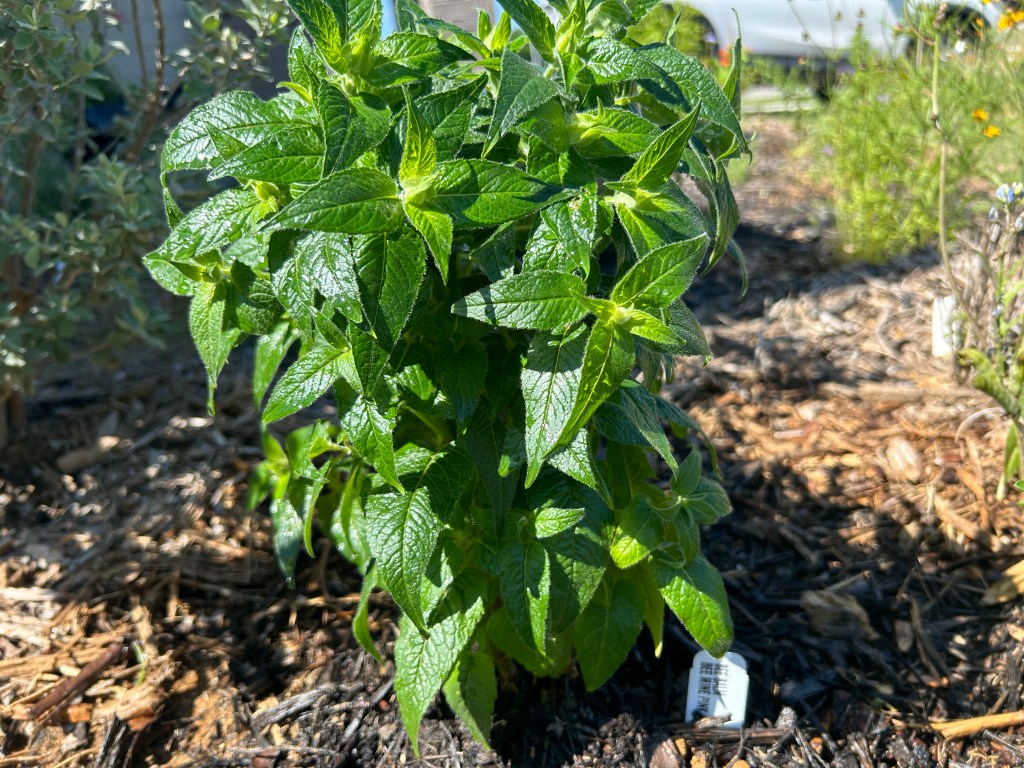
- Mealy Blue Sage (Salvia farinacea) – perennial, just planted

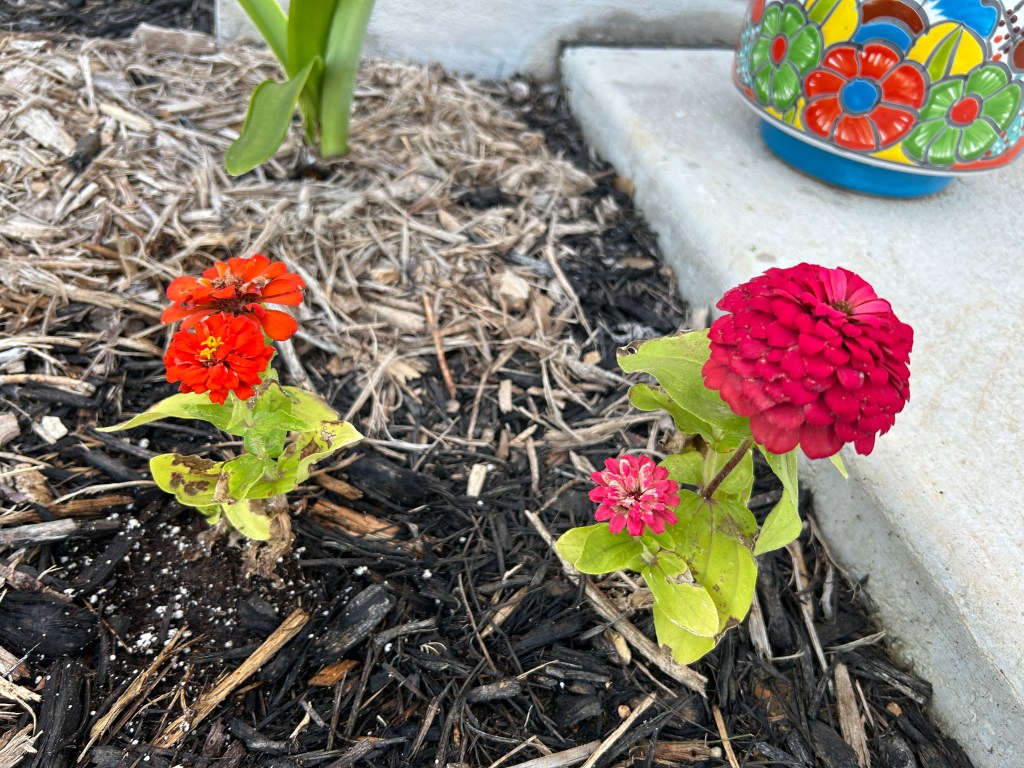
- Zinnia – annual, two different unknown varieties
Volunteers:
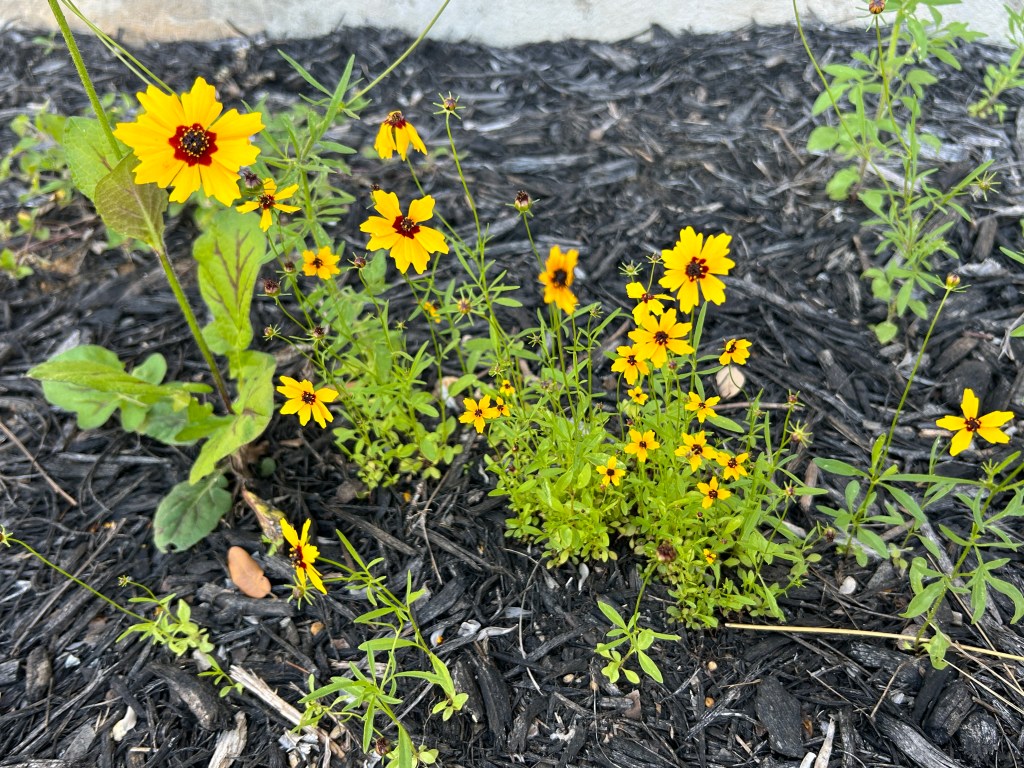
- Scarlet Sage (Salvia coccinea) – annual or perennial, small seedlings from the mother plant that died in the January freeze
- Smallflower Desert-Chicory (Pyrrhopappus pauciflorus) aka Texas Dandelion – annual
- Texas Toadflax (Nuttallanthus texanus) – annual
- Others yet to be identified
In addition to the native plants, which are my preference, I do have a couple of other plants that were transplanted from my previous Houston garden as souvenirs. There is also one of the original builder-installed plants that I have left for now, but I’ll remove it when I need the space.


 Rewilding My Lot
Leave a reply to “State Of The Garden” After 15 Months – Rewilding My Lot Cancel reply