The “green mulch” approach of growing annual plants to fill my space this year means that I am generating quite a bit of biomass when it comes time to cut those plants down. In the short term, I have been able to lay cut stems on the ground as pathways but I will eventually run out of space for that.
The plant waste I have would be more quickly broken down (via composting or being used as mulch) if it could be cut into smaller pieces. At first I thought that I could do the cutting with hand tools, but the task is too monumental for my arthritis- and tendonitis-prone hands.

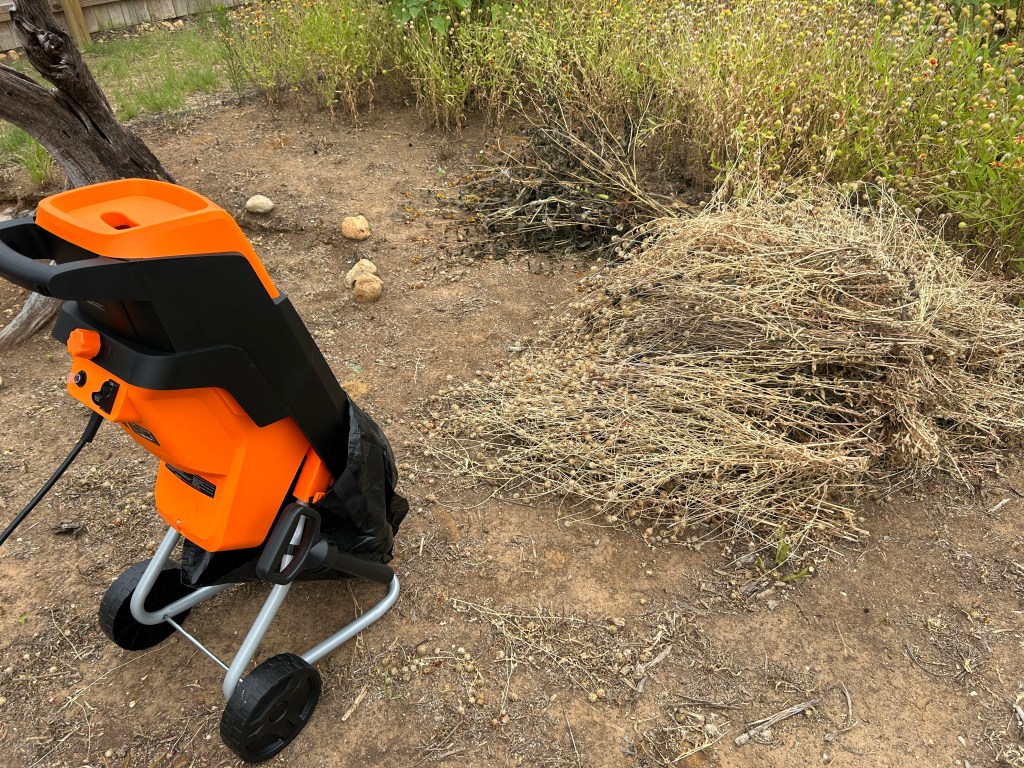
So I have purchased a garden shredder to process the stems that I generate. It is best suited for dry stems and twigs that are no more than 1.5 inches diameter, and it’s a corded electrical machine on wheels with a collection bag (see first photo in this post).
My first two sessions have taught me that yes, this machine will be very helpful in converting plant stems to a fine mulch that can either go directly on the ground or into the composter. Here are some extra details that I learned:
- I knew to wear eye protection and sturdy gloves. I quickly realized after a sneezing fit that I should wear a mask as well.

- The provided bag didn’t attach very well to the hopper, so I switched to using an old cat litter bucket as my collection receptacle.

- Dry stems are cut more quickly than ones that are still a little damp. So once I clear the backlog that is stashed in various places here, I will store freshly cut stems to be mulched for several days before shredding them.
- Plants that have soft stems don’t do so well in the shredder, unless they are fed into the machine with some stiffer companions. But those softer plants could be more easily composted anyway without shredding.
- Stuffing the machine with a big handful of stems ends up taking more time than if I put smaller bundles in. When the machine is running smoothly, the next bundle can be used to push down the current one toward the blade. If I insert too many at once, then I need to use the plunger to push them in.
- Sunflower stems are quite sturdy. When the bucket is nearly full and it’s time to turn off the shredder, sunflower stems are handy to push through as the last stem of the load. They function as plungers themselves.
- The process covered me in chaff from head to toe. I had to sweep the bathroom floor after disrobing for my shower!
It took me a total of about three hours over two days to shred the stems that I had collected so far in the trimming of annual plants that were in the way. I left the ones that are making a pathway beside the Three Sisters mounds, because I need that walkway.
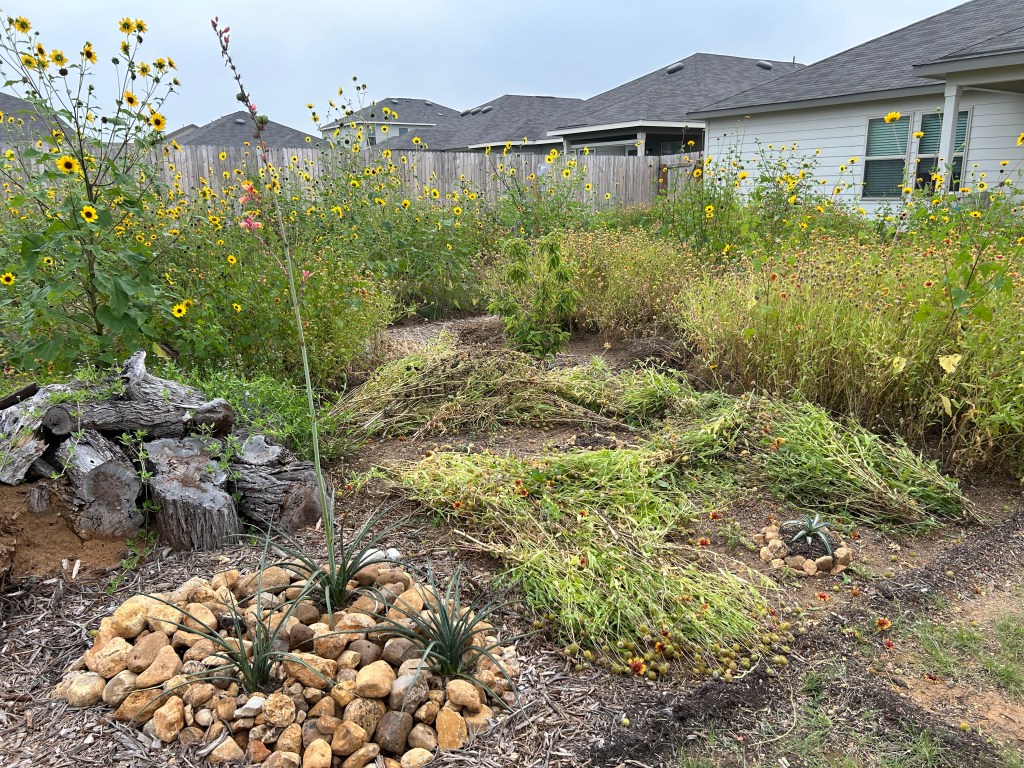
The final product resembles a mixture of straw from the plant stems, and a powder from the dried leaves. In the area that I had recently cleared near my baby Agave plants, the shredded material does a much better job of covering the ground than the whole stems, and I hope that it will break down more quickly to feed the soil. The photos below are first with cut stems (on the day they were cut), and then with shredded stems a week later.
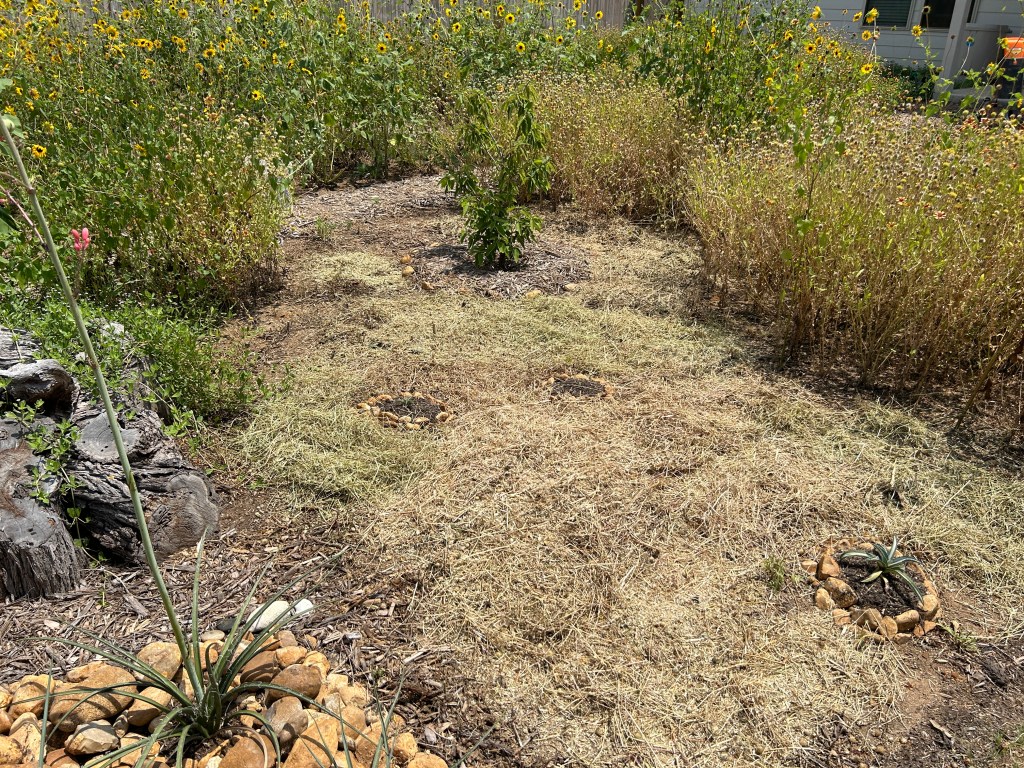
I am aware that there is a risk of this lightweight mulch blowing away before it’s had a chance to break down where I put it. However, I’m hoping that most of it will at least remain in my garden, where it can still be useful wherever it lands. Encouragingly, after this particular area was covered, the mulch was still there after 0.3 inches of rain that night.


 Rewilding My Lot
Leave a reply to Close Call With A Wasp Nest – Rewilding My Lot Cancel reply