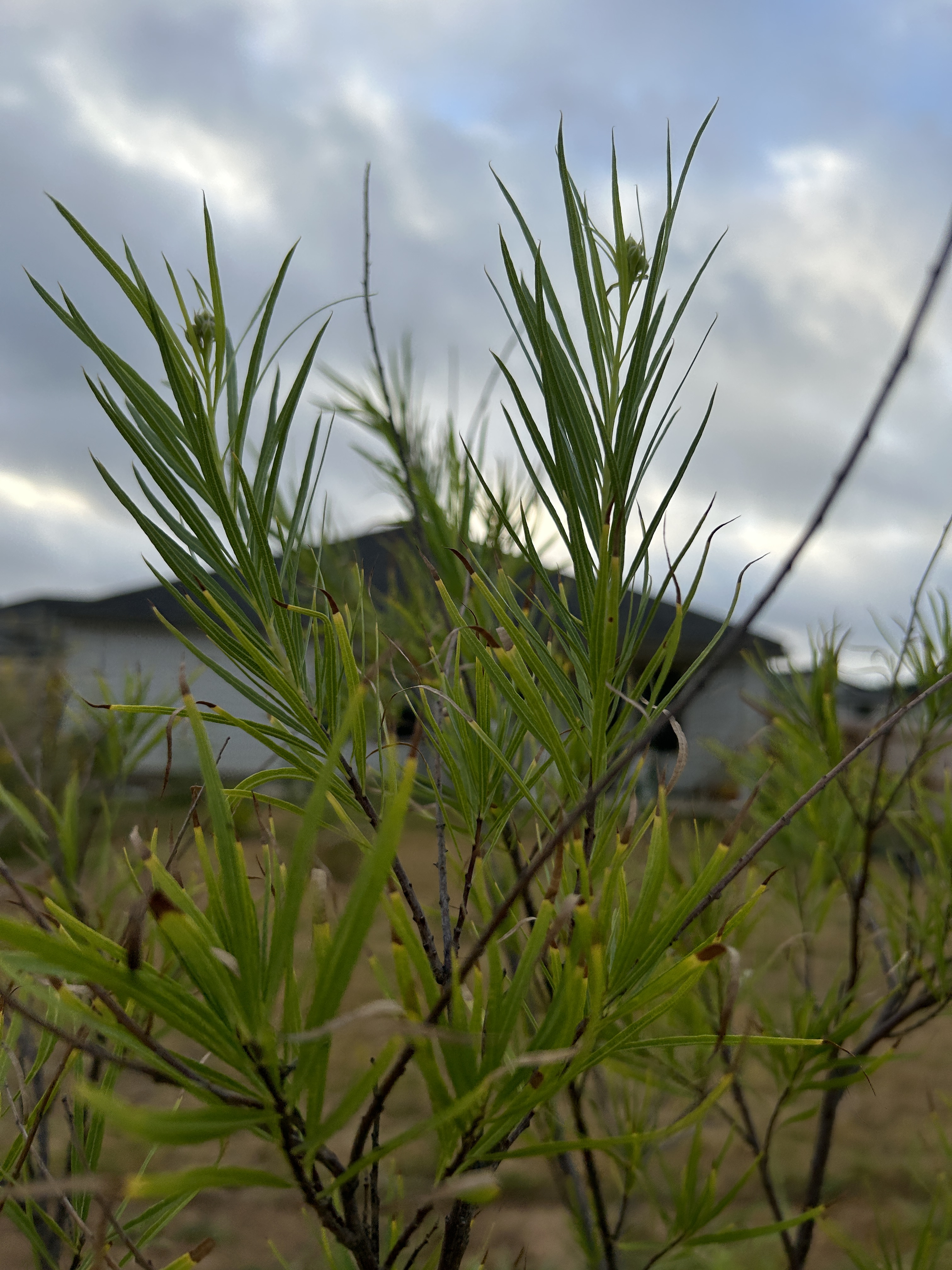

This year I filled almost all unused space in the back yard with annual wildflowers, some seeded by me and some volunteers. This “green mulch” approach is intended to capture water, improve soil health, and support wildlife visitors. Since these plants are not permanent fixtures, I am free to remove any of them to make way for other projects, and/or when they have finished their lifecycle. This strategy gives me another year to plan the overall layout of the garden around the framework pieces that I placed last year (e.g., trees).
Last fall I spread several different kinds of seeds in two different groupings based on size. Nature, of course, had her own plan. The outcome was still good, just not exactly what I was expecting!
The majority of what has grown in the seeded areas are:
- Standing Cypress (Ipomopsis rubra) in the “tall” area. These are biennials, so almost all of them are still small leaf rosettes just a few inches tall (photos). However, next year there should be a significant display assuming these all bloom.
- Firewheel aka Indian Blanket (Gaillardia pulchella) in the “short” area. These were so plentiful that they probably crowded out other things. The flower display was incredible (photos), and they are now seeding.
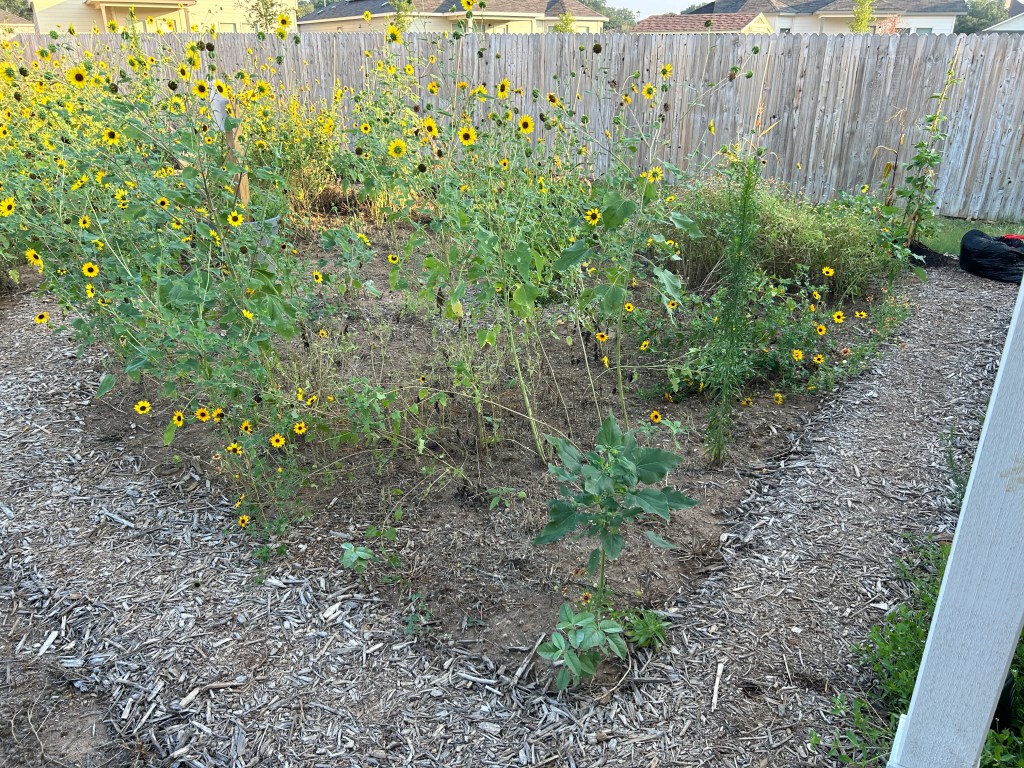
- Beach Sunflower (Helianthus debilis) and Common Sunflower (Helianthus annuus), everywhere. I expected these volunteers to return since I had them last year. They are currently magnificent and attracting many insect and bird visitors (photos).
If I were truly mimicking nature, then I would let the spent Firewheel plants stay until they fall down themselves. There might be insects sheltering or pupating there, and removal of the stems might disrupt that.
However, there are several reasons why I have chosen to cut them down now.
- The roots are left in the ground to feed the soil.
- The stems are shredded to be used as mulch throughout the garden.
- Removing the Firewheels reveals smaller plants that were underneath and/or allows new things to germinate.
- I can see and remove any lingering Bermudagrass from the area.
- Nearby trees and shrubs can get more light.
- Clearing space around the blooming sunflowers allows me to get closer and see more of the bird and insect activity that is happening there.
- Clearing the Firewheels now makes it easier to visualize and plan the location of the two major structures to be added later this year: an ecosystem pond and a trellis.
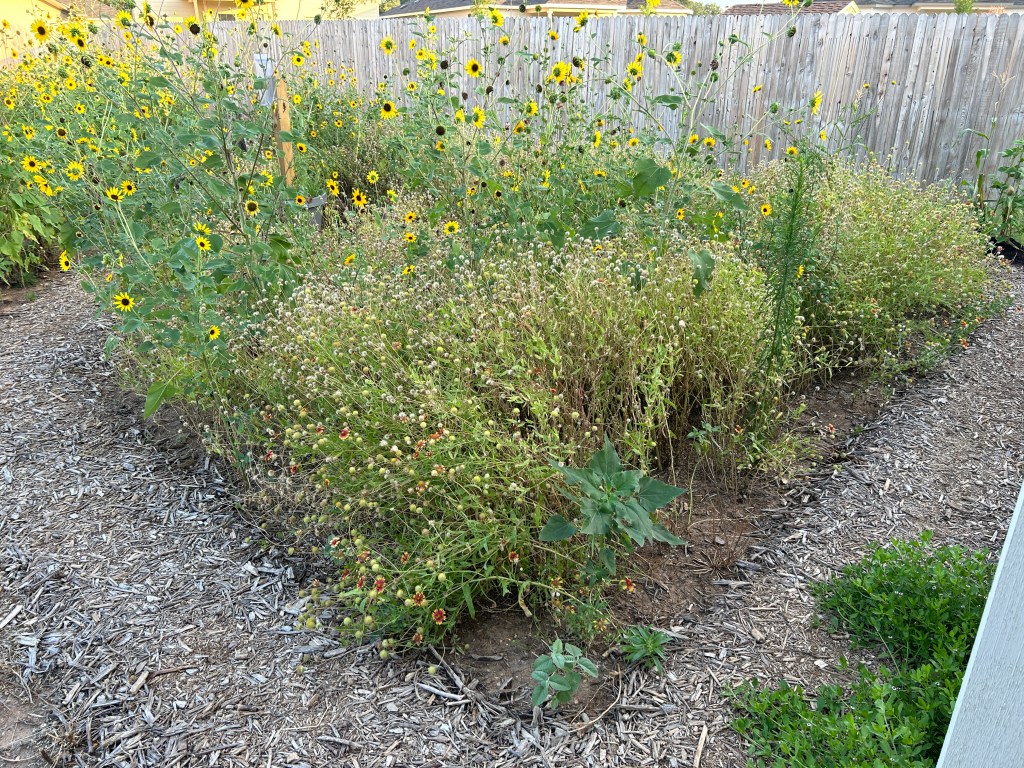
Here are some “before” photos. The pile of stems already cut came from the front wildflower meadow that was recently trimmed.
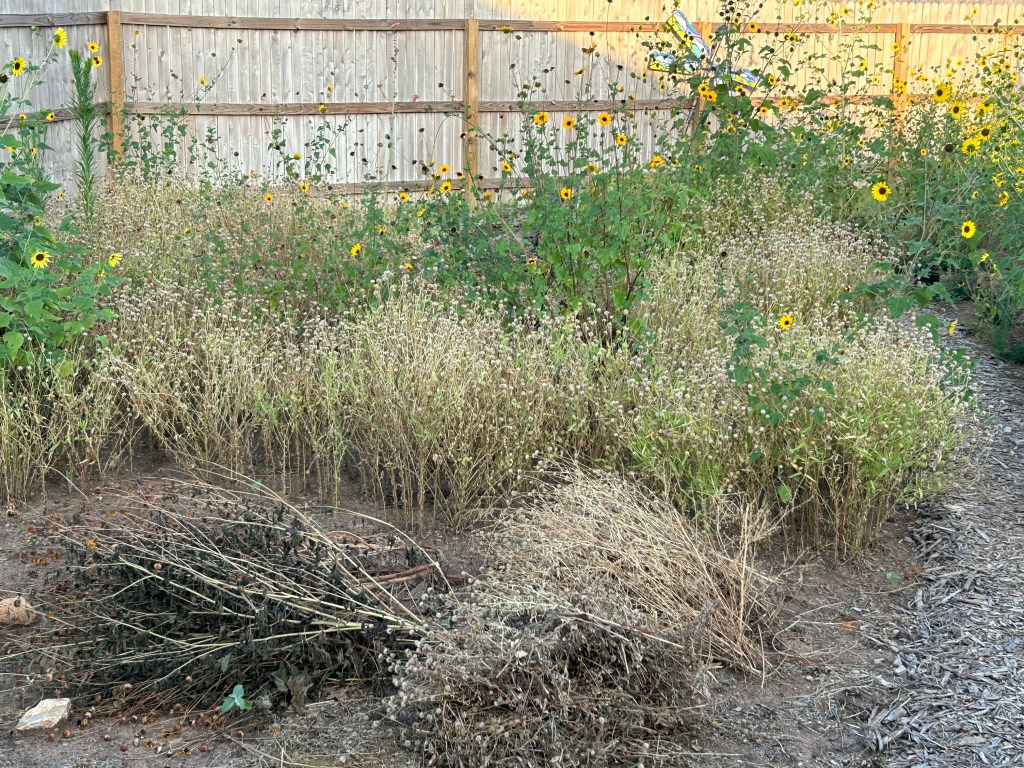
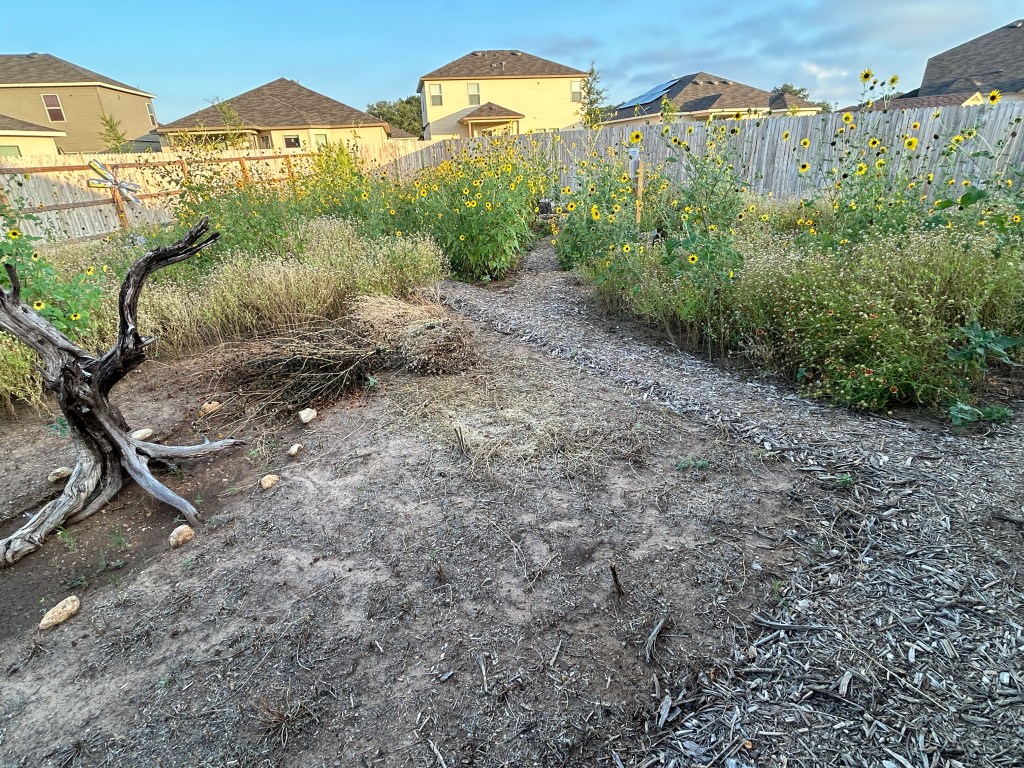
And after several work sessions over a few days, here are some “after” photos (including the first photo in this post). The next step will be a lot of shredding to make mulch.


 Rewilding My Lot
Leave a reply to Clearing This Year’s Bumper Crop Of Sunflowers – Rewilding My Lot Cancel reply