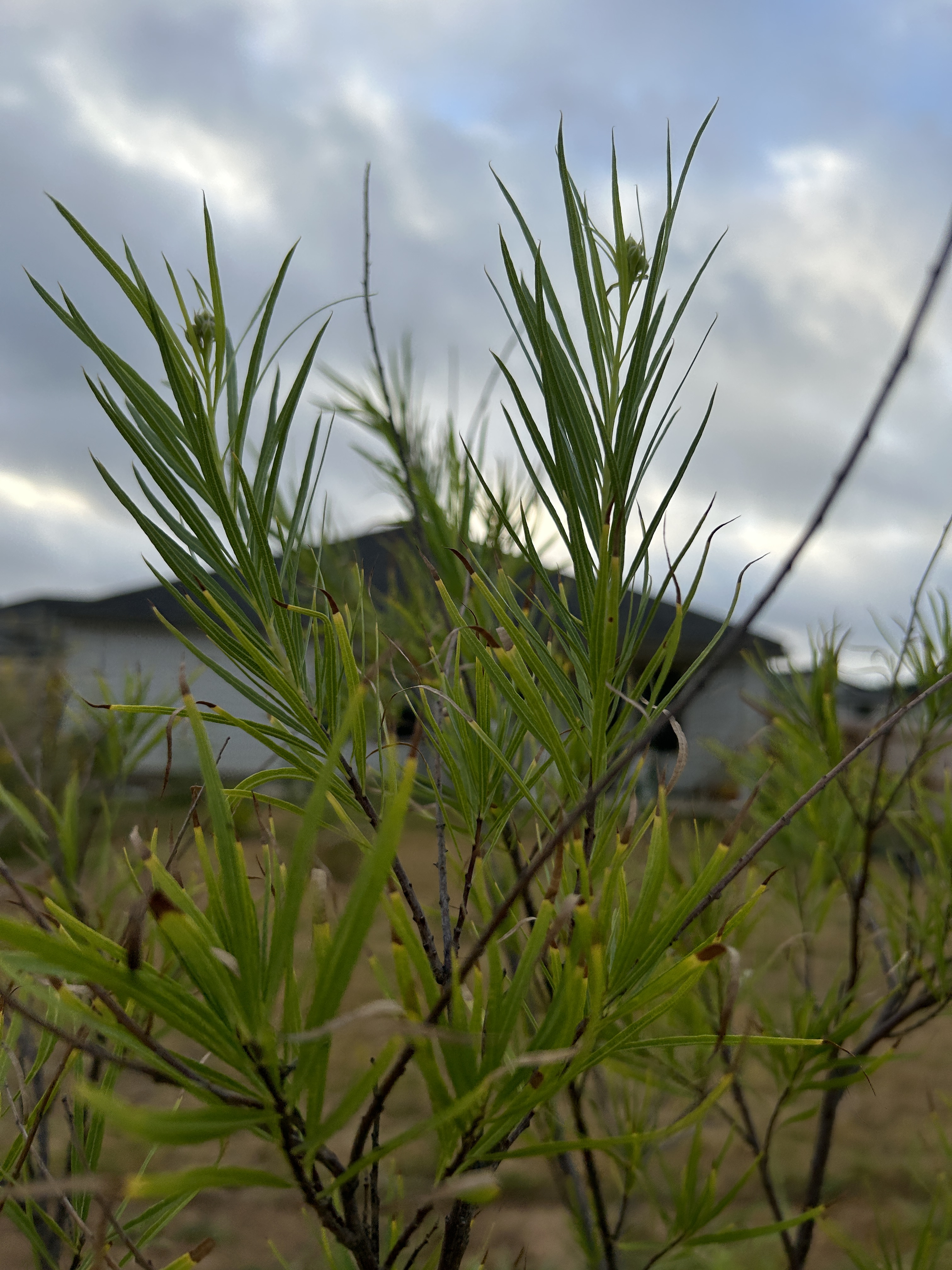
Back in February 2024, I created five mounds of soil and compost in which to grow Three Sisters Gardens, a cooperative planting technique for corn, beans, and squash developed by Native Americans.
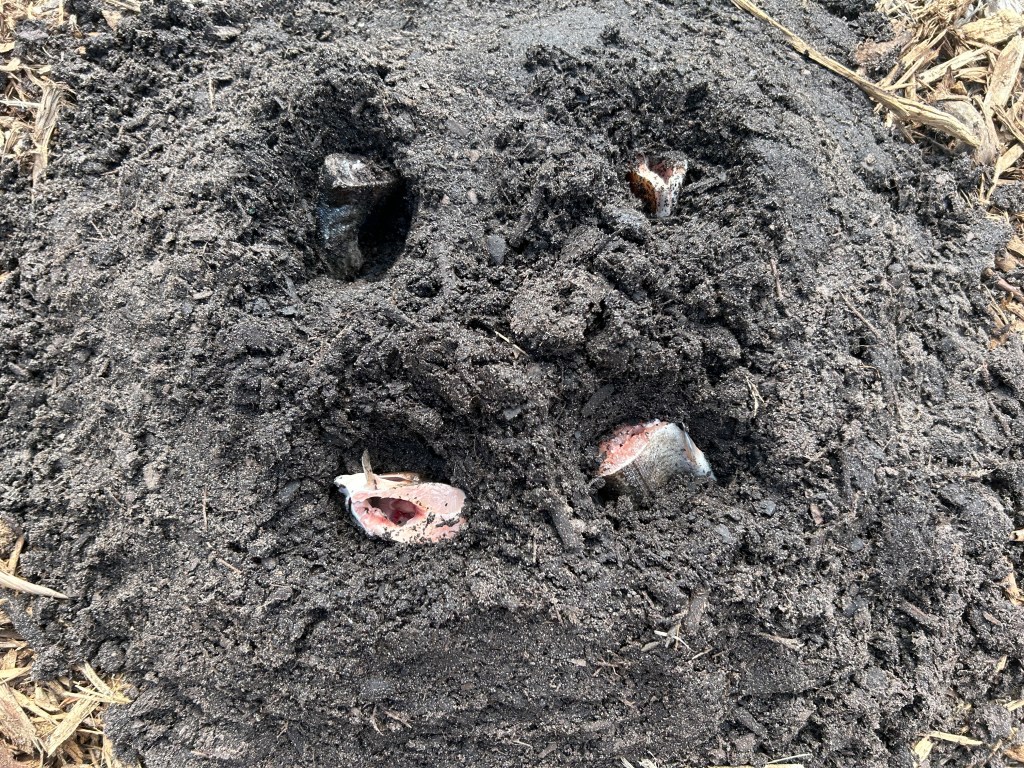
Indigenous peoples would often bury fish in their soil as fertilizer, so by way of experiment, I buried an uncooked trout in two of my five mounds (see photo above). I was curious to know if that would have a beneficial effect on my harvest — it did not.
I have decided not to continue with Three Sisters beyond this year, and three of my mounds are ready to be dismantled so that I can use the soil elsewhere. So this is the time to find out what happened to the fish inside!
The first mound that I dug into (non-fish) turned out to be occupied by a large ant colony, so I abandoned that for the day. It will take several kettles of boiling water and a few days to inactivate the nest so that I can move the soil.
The second mound (non-fish) was made up of soil, undigested compost, and tiny roots.
I combed through the third mound (FISH) more thoroughly but found absolutely nothing that I recognized as coming from a fish. At the bottom of each mound I had placed a pile of undigested compost, and those things I could still identify — corn cobs, avocado stones & peels, peach pits, etc.
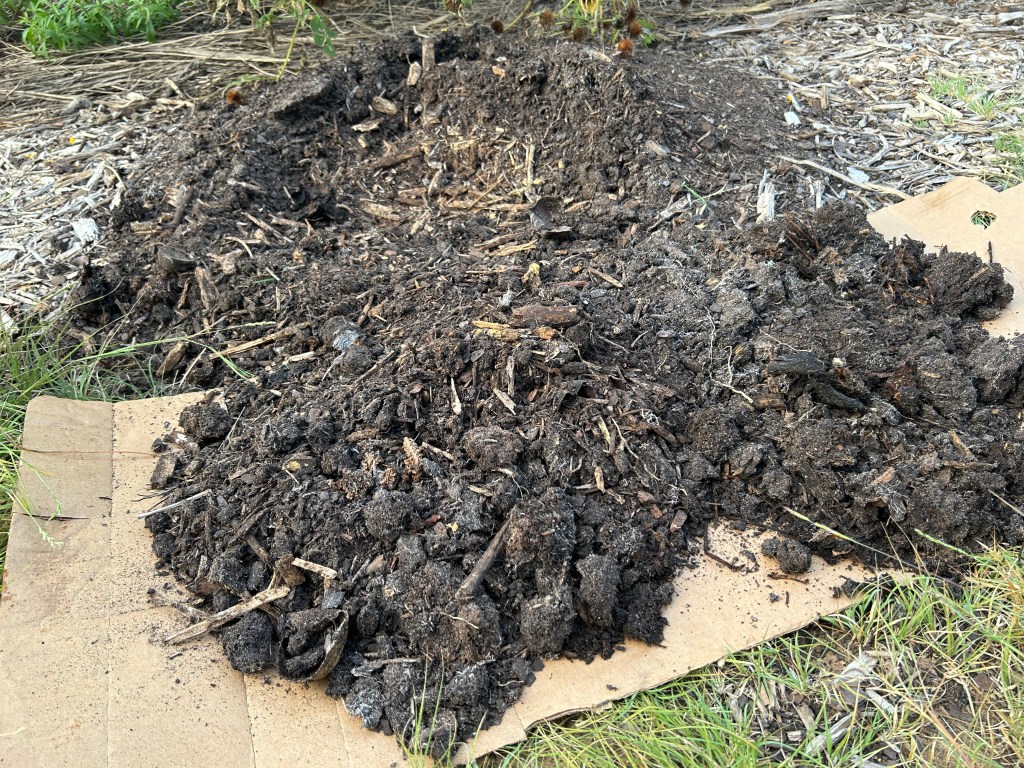
So despite the poor health of my soil, a situation that will take years to rectify, whatever is in there can make a trout disappear in 6 months!
Soil from the dismantled Three Sisters mounds was repurposed in the tall grass area of the garden.


 Rewilding My Lot
Leave a reply to Working On The Tall Grass Area – Rewilding My Lot Cancel reply