
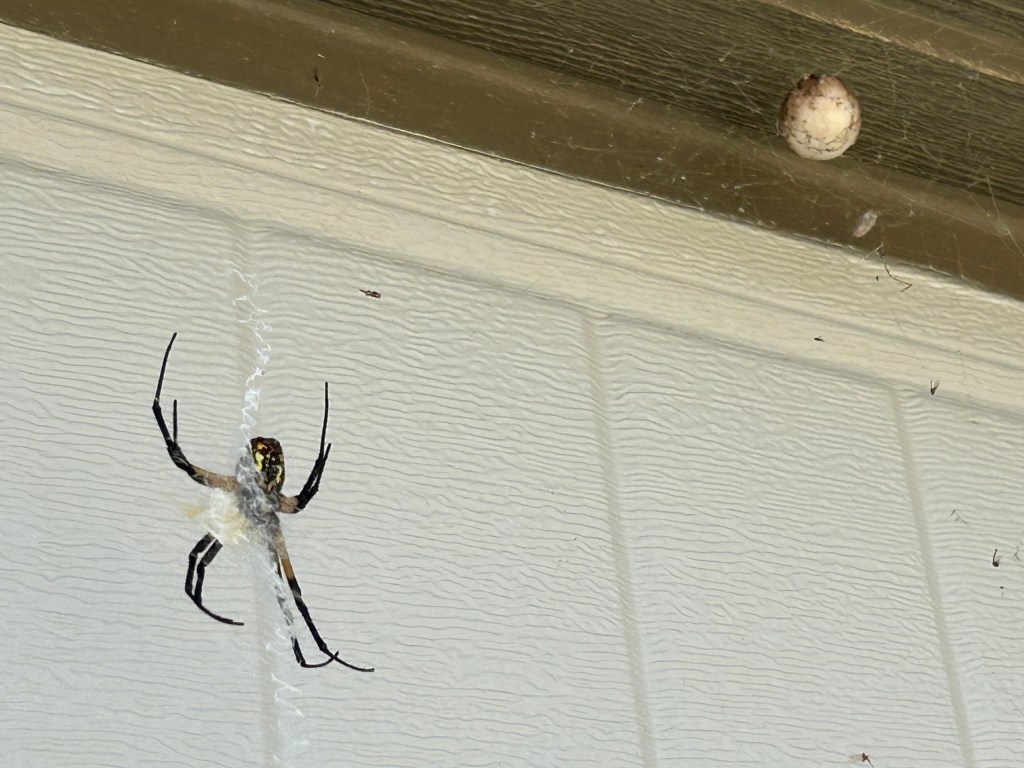
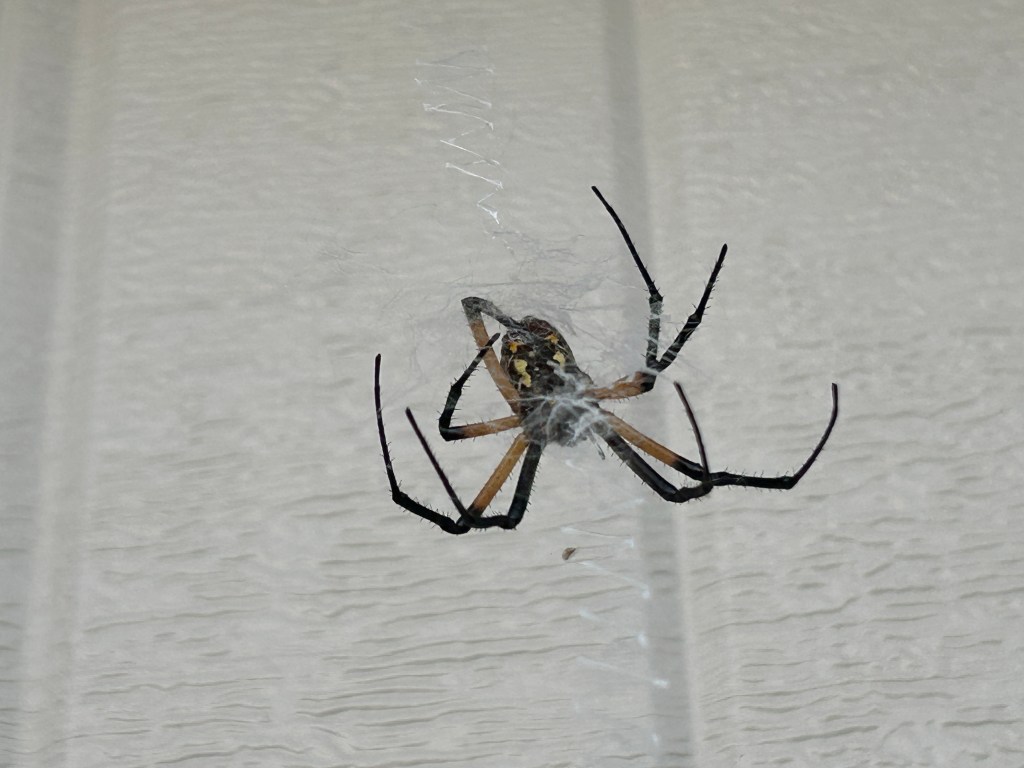
For weeks there has been a large Yellow Garden Spider (Argiope aurantia) living on a web that is at a corner of our garage opening. At some time in mid-September she made an egg sac and attached it to a corner of her web.
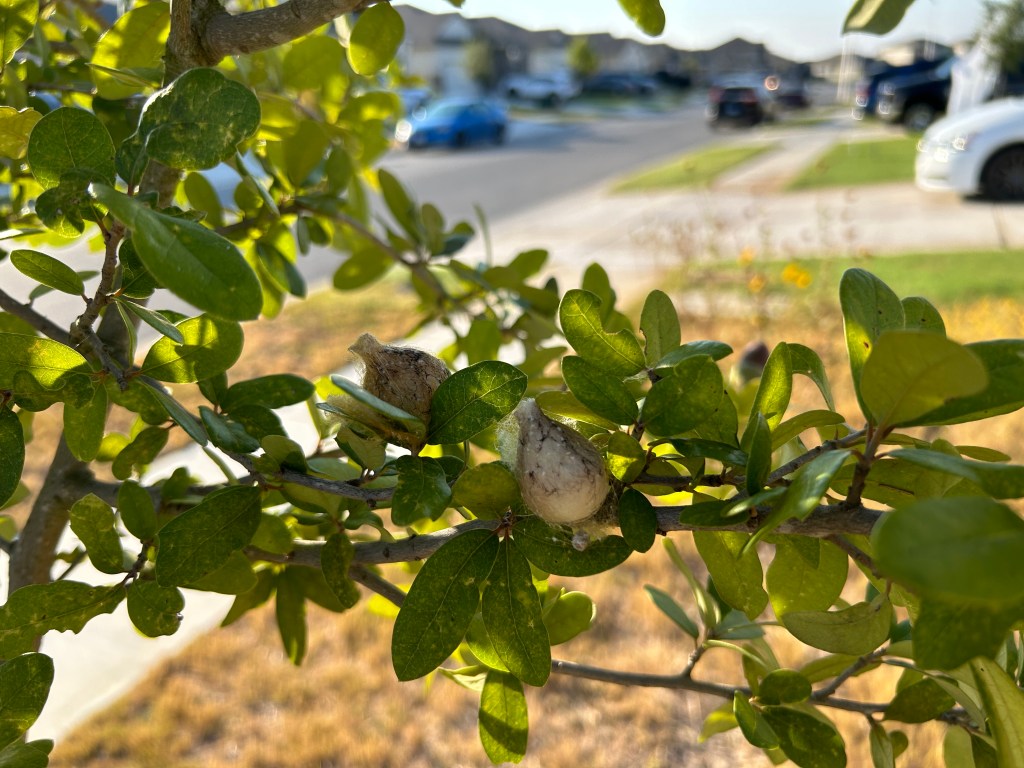
Spiders are useful residents in the garden, but I didn’t relish the idea of hundreds of spiderlings finding their way into the garage. So I took her egg sac and attached it to a nearby oak tree. (As far as I know, when spiderlings hatch, they are independent.)
Just two weeks after finding the last egg sac, she made another one! The day before, I had gone to look at her — there was no sac and she was fat. The next day, the sac had appeared and she was slimmer.
I can’t tell if spiderlings have already left the first egg sac that I moved to the oak tree. It’s still attached so I’m just going to leave it there, and I placed the second one beside it.
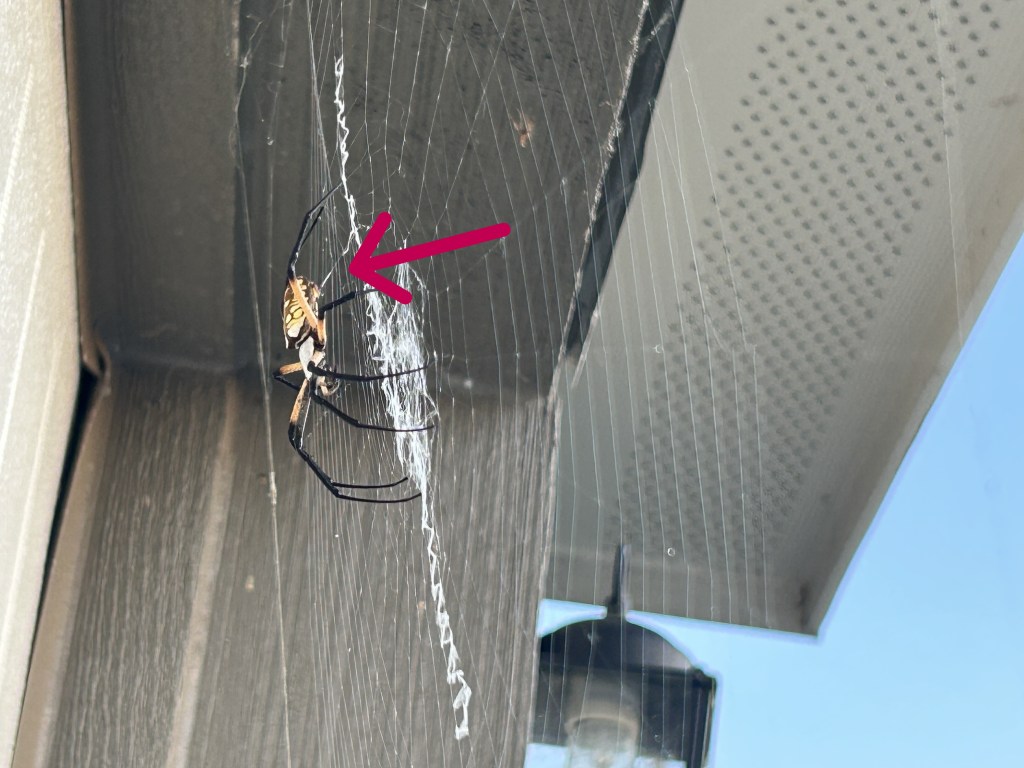
On another day when I was watching this spider, I caught her in the act of repairing the zigzag of heavier silk that is in the middle of her large web. This is called a stabilimentum, which functions to stabilize the web and also as defense: “Yellow garden spiders construct stabilimenta, a thicker opaque silk, in their webs defensively. When provoked, the spider may flex the stabilimentum to threaten the intruder (Tolbert 1975) or eject itself from its web and onto nearby vegetation or the ground, making them difficult to catch by predators or humans (Enders 1973).”
It’s not very easy to see in these photographs, but silk was emerging from the spinneret at the end of her body (she is positioned head downwards) and she used some of her back legs to manipulate the silk into place. Occasionally she would put the ends of those same back legs near her short mouth parts (like licking her fingers?).
Here’s someone else’s video of a spider’s web-building process.


 Rewilding My Lot
Leave a comment