This post leans heavily on information from this page about bluebonnet history from the Texas A&M AgriLife Extension.
Texas actually has at least five state flowers and they are all bluebonnets. In 1901, the state flower was officially defined by the Texas Legislature as Lupinus subcarnosus (“generally known as buffalo clover or bluebonnet,” according to the resolution).
Lupinus subcarnosus is a dainty little plant which grows best in sandy soil. However, some thought it was the least attractive of the Texas bluebonnets and instead they wanted to honor Lupinus texensis, the showier, bolder blue variety that covers most of Texas and the one that is best known today.
For 70 years there were arguments about this issue until in 1971 a diplomatic solution was reached. The Texas Legislature added the two species together, plus “any other variety of bluebonnet not heretofore recorded,” and combined them all into one state flower.
Since the big state of Texas with its variety of ecosystems is actually home to at least five different kinds of bluebonnet, the umbrella clause makes them all the state flower. And if any additional bluebonnets are discovered or developed in the future, they will be included as well.
Therefore, the five current state flowers of Texas are (quoting from the earlier referenced page):
- Lupinus subcarnosus, the original champion and still co-holder of the title, grows naturally in deep sandy loams from Leon County southwest to LaSalle County and down to the northern part of Hidalgo County in the Valley. It is often referred to as the sandy land bluebonnet. The plant’s leaflets are blunt, sometimes notched with silky undersides. This species, which reaches peak bloom in late March, is not easy to maintain in clay soils.
- Lupinus texensis, the favorite of tourists and artists, provides the blue spring carpet of Central Texas. It is widely known as THE Texas bluebonnet. It has pointed leaflets, the flowering stalk is tipped with white (like a bunny’s tail) and hits its peak bloom in late March and early April. It is the easiest of all the species to grow.
- Lupinus havardii, also known as the Big Bend or Chisos Bluebonnet, is the most majestic of the Texas bluebonnet tribe with flowering spikes up to three feet. It is found on the flats of the Big Bend country in early spring, usually has seven leaflets and is difficult to cultivate outside its natural habitat.
- Lupinus concinnus is an inconspicuous little lupine, from 2 to 7 inches, with flowers which combine elements of white, rosy purple and lavender. Commonly known as the annual lupine, it is found sparingly in the Trans-Pecos region, blooming in early spring.
- Lupinus plattensis sneaks down from the north into the Texas Panhandle’s sandy dunes. It is the only perennial species in the state and grows to about two feet tall. It normally blooms in mid to late spring and is also known as the dune bluebonnet, the plains bluebonnet and the Nebraska Lupine.
You may be wondering what is the status of the maroon “Aggie” bluebonnets that are now available? They originated from Lupinus texensis with selective breeding and have been named the ‘Texas Maroon’ variant. An article telling some of that story is here.
On to what is happening here in Seguin…
The bluebonnets that grew so well here last year, and look to be even more numerous next spring, are the common Lupinus texensis.
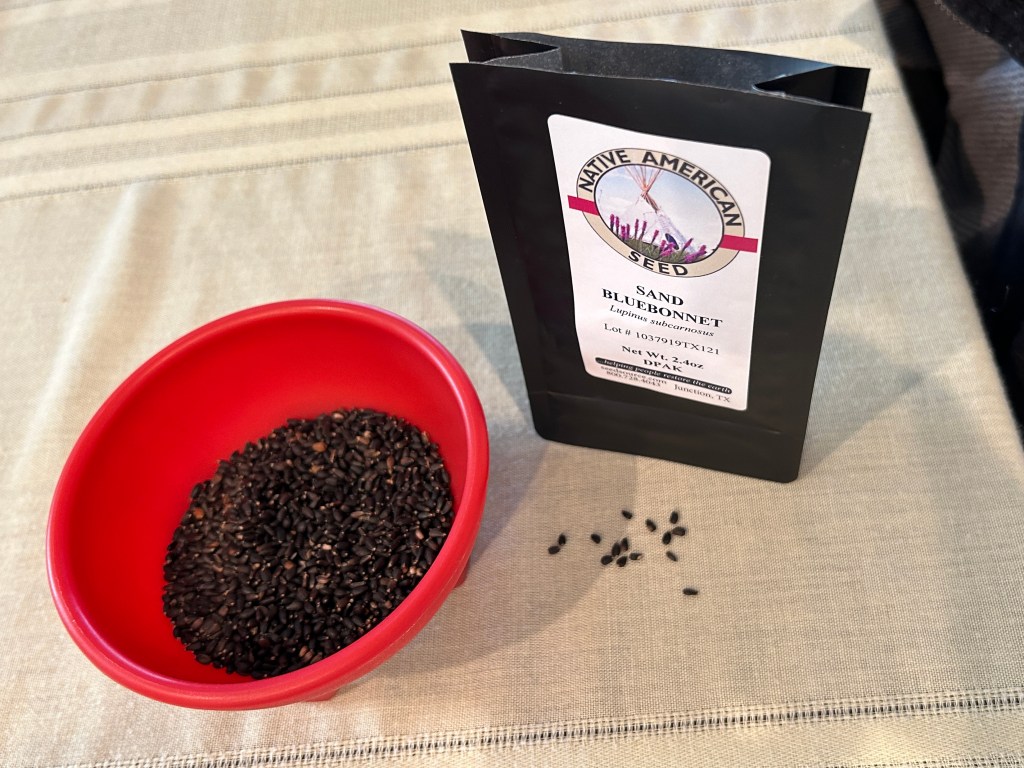
However, I have sandy soil here, and so as an experiment I have seeded some of the original Lupinus subcarnosus (Sandyland Bluebonnet). I have intentionally sown them at fairly high density in a defined area of the back yard so that if they grow, I can distinguish them from the others here.
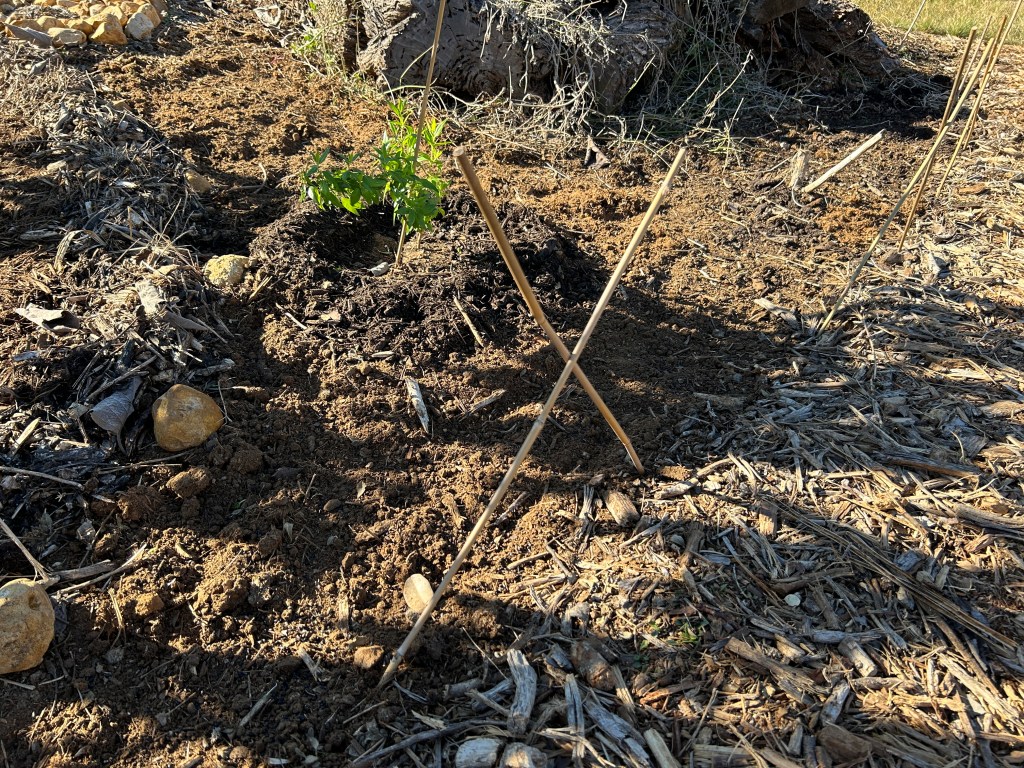
The area I chose to plant these special bluebonnets is near the wood pile and the newest Flame Acanthus, where I recently cleared excess growth of Frogfruit. In one part of this area I will supply supplemental water until the seeds germinate, and in the other I will just leave the seeds on the ground without a forced germination to see if there is an overall difference next year.


 Rewilding My Lot
Leave a reply to Spring Evaluation Of The Left Side Of The Garden – Rewilding My Lot Cancel reply