My garden “rewilding” project is now almost two years old, and this time of year (December) is a good time to reflect on progress achieved and lessons learned. Planting for the year is finished and projects now largely involve tidying, trimming, or fixing things here and there, and waiting for spring when the garden will wake up again.
My overall goals are the same:
- to capture and conserve water,
- to improve soil health,
- to prioritize native plants,
- to encourage and support wildlife visitors,
- and to be an ambassador for nature in my community.
The timeline so far has looked like this:
- YEAR 1 (2023)
- Removed all Bermudagrass in back yard
- Brought in a few cubic yards of enriched topsoil
- Added organic matter to the soil whenever possible (ongoing)
- Planted trees, native grasses, and a couple of perennials
- Replaced landscaper plants in the bed in front of the house with pollinator-attracting natives
- Laid mulch pathways
- Installed rain barrels and compost system
- Created wildlife refuge places, e.g., log pile, rock pile
- Dug a swale for water capture
- Seeded annual plants
- Watched and thought a lot
- Learned from others who know more than I
- YEAR 2 (2024)
- Learned from experiences in Year One, e.g., use a pickaxe to dig holes in this stony ground; do as much planting as possible in fall, not spring
- First year of the annual wildflower meadow in front of the house (March-October) went better than expected
- Identified volunteer plants and kept some of the ones that are helpful natives, e.g., sunflowers
- Planted a few more perennials
- Seeded a few more annuals
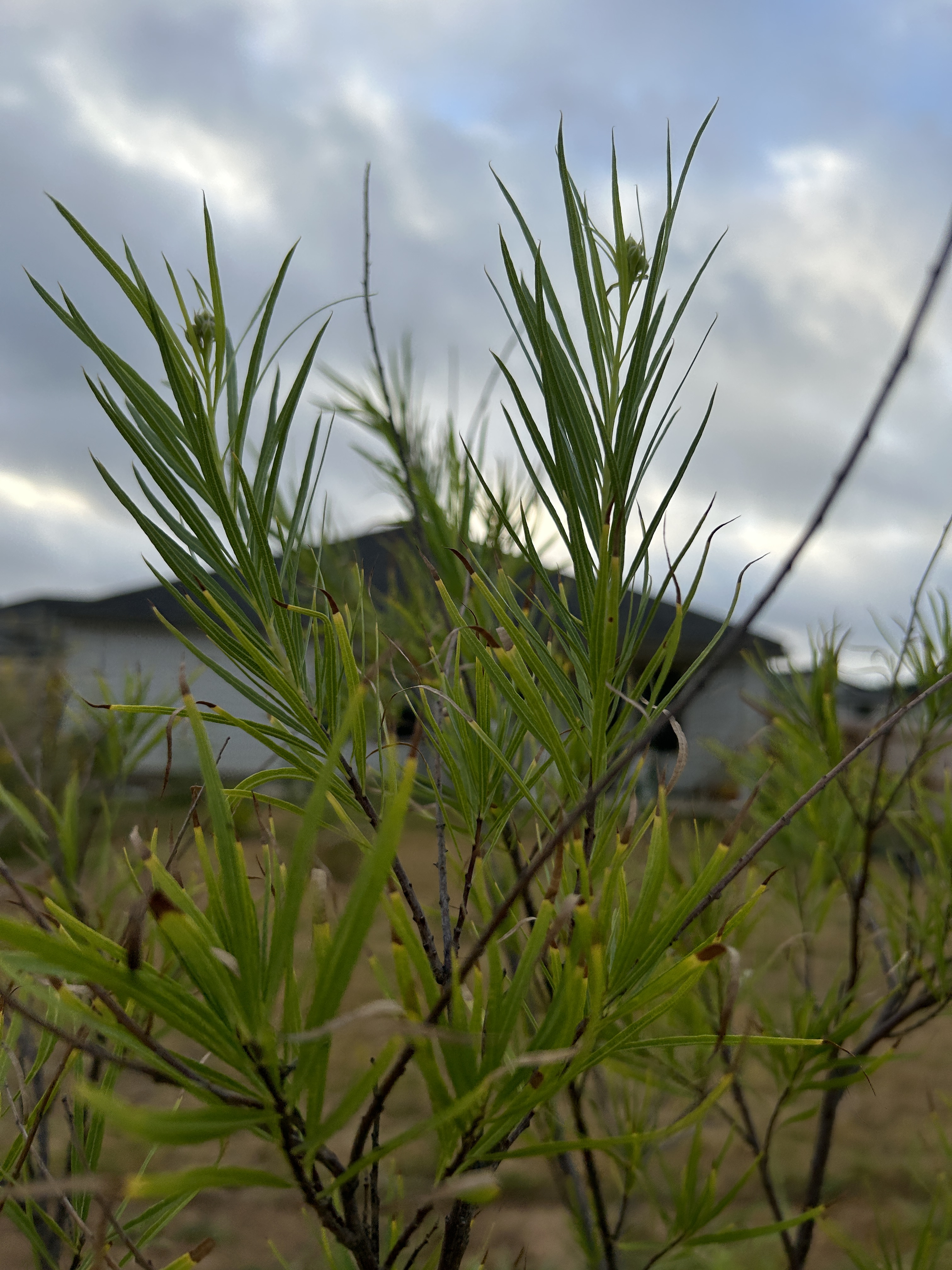
- Started a native milkweed patch
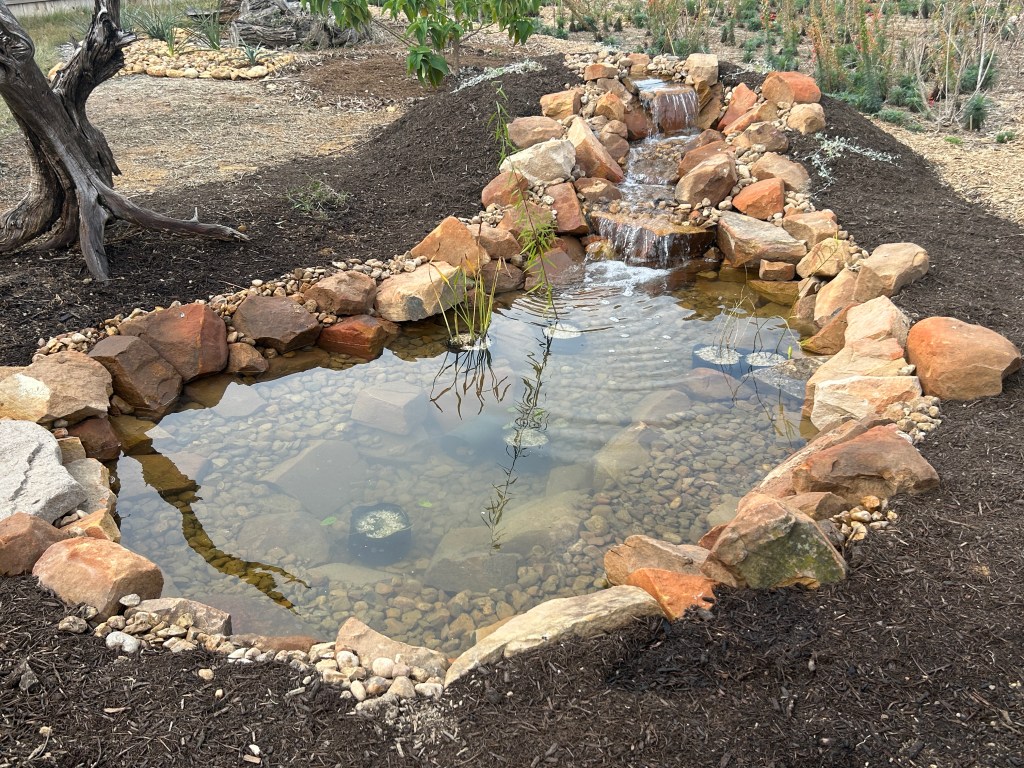
- Installed an ecosystem pond (which replaces the swale)
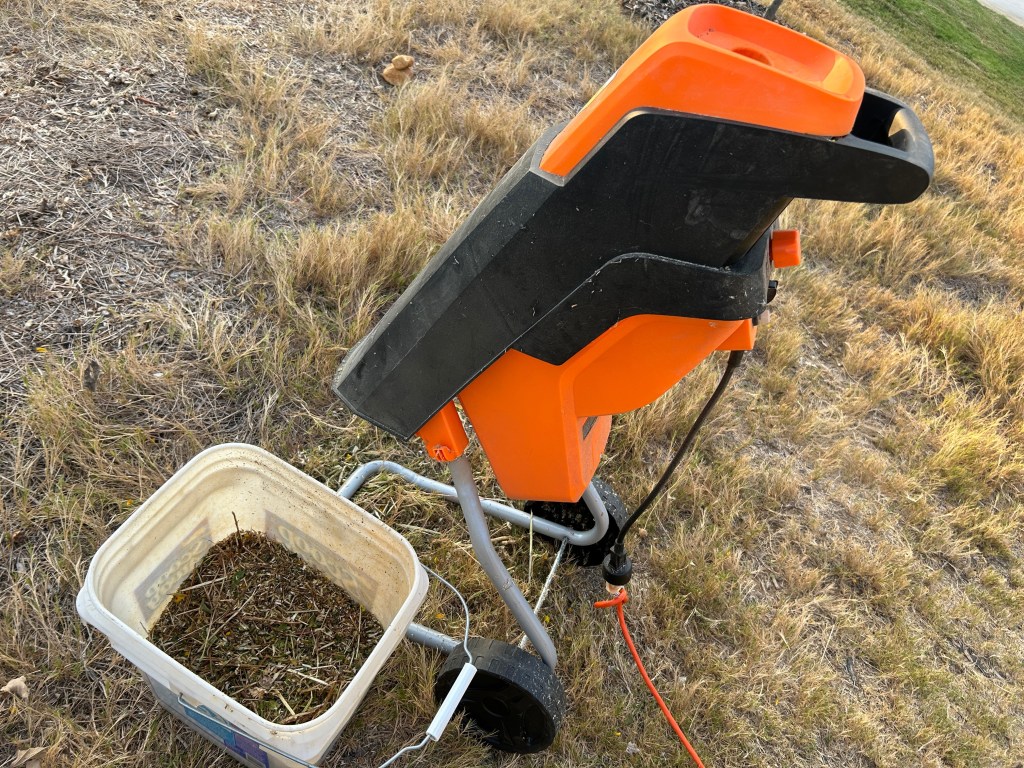
- Shredded annual plants to be given back to the ground (ongoing)
- More watching, thinking, and learning
Unpacking the overall goals in more detail:
- Capture and conserve water. By prioritizing the use of native plants, I am developing a garden that has low water needs and with deep rooted plants that can help to retain water underground. Two 50-gallon rain barrels collect rainwater from the roof and are the primary source for supplemental water if needed (for new plants that are still being established, and in times of drought). If there should be surface water in heavy rain, a secondary capture system used to be a drainage swale but that has been removed to make way for the pond. Since the pond was installed, we haven’t had any hard rainfall so I’ll need to study future rain events to see how excess water moves across this lot. It is possible that I might create some additional feature to minimize run-off, but that is to be determined.
- Improve soil health. As a new developer lot, the soil here originally was extremely poor quality and it will take years to restore its health. I try to avoid having bare soil, using mulch or woodchip on places where there are no plants. Organic matter is added to the ground at every possible opportunity. Deep roots and insect activity help to aerate the soil. I compost as much as possible, some quickly in the composter and other things more slowly on the ground. When an annual plant has served its purpose for the season, it is given back to the ground in the form of shredded mulch or compost. Some plants have been chosen because of their feature of fixing atmospheric nitrogen into the soil, e.g., bluebonnets, clovers, legumes. Fungal and bacterial activities that enhance soil health are encouraged, and I add extra mycorrhizae when I plant new plants.
- Prioritize native plants. Plants that are native to this region, or well adapted without being invasive, will be key to this project. In particular, their role in conserving water means that the garden is resilient and even in times of extreme drought, my supplemental water needs are minimal. Some of the plants here I have planted or seeded, but others have arrived as volunteers. Once I have identified a volunteer plant, I decide if it stays or goes. If something other than Bermudagrass grows in my front lawn, if it is not a weed to me, and if it will tolerate mowing, it is generally welcome to stay. I have learned a great deal from my local chapters of (and the delightful people within) the Native Plant Society of Texas and Texas Master Naturalist.
- Encourage and support wildlife visitors. Wildlife in the context of this urban environment at the moment is generally going to mean birds, insects, reptiles, and amphibians. We don’t even have squirrels yet, because there are no mature trees in the development, but they and other small mammals may eventually arrive. I wrote more about what I am doing to provide wildlife habitat in a recent post, but in summary this means providing food, shelter, places to raise young, and water. Particularly in the back yard, which is not visible to the public, my gardening strategies include things that might be thought to make a garden “untidy,” like leaving annual plants in place through the winter before cutting them back or leaving leaf litter on the ground. However, it is exactly this untidiness that can support the small creatures that are part of what makes a healthy ecosystem.
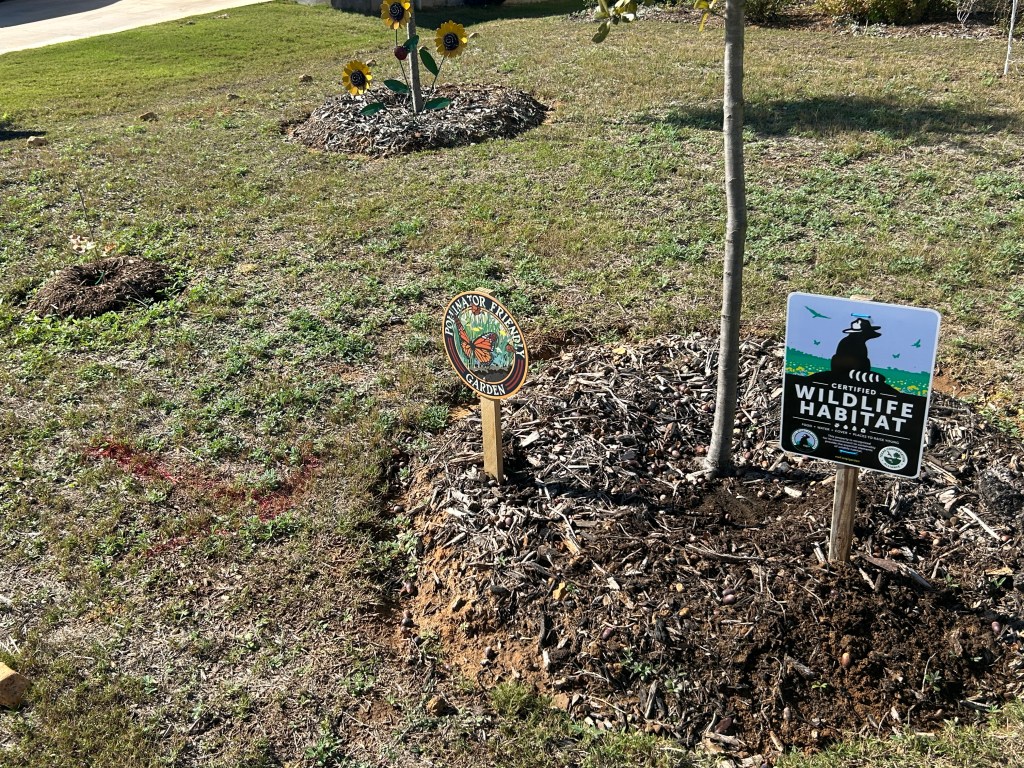
- Be an ambassador for nature in my community. I live in an urban area alongside properties that are often maintained in the “traditional” way — i.e., manicured lawns, sprinkler systems, and plants that do not provide food or shelter for wildlife. I want to create a healthy ecosystem on my own property to counteract those traditions, support nature, and encourage others to try some of the things that I’m doing. So for instance, I have “Pollinator Friendly Garden” and “Certified Wildlife Habitat” signs in my front yard, and have made it known in my neighborhood that I am pursuing a native gardening approach. I’m happy to share knowledge (and plants!) with those who are interested.
Following are photographs that illustrate some of the projects described above.
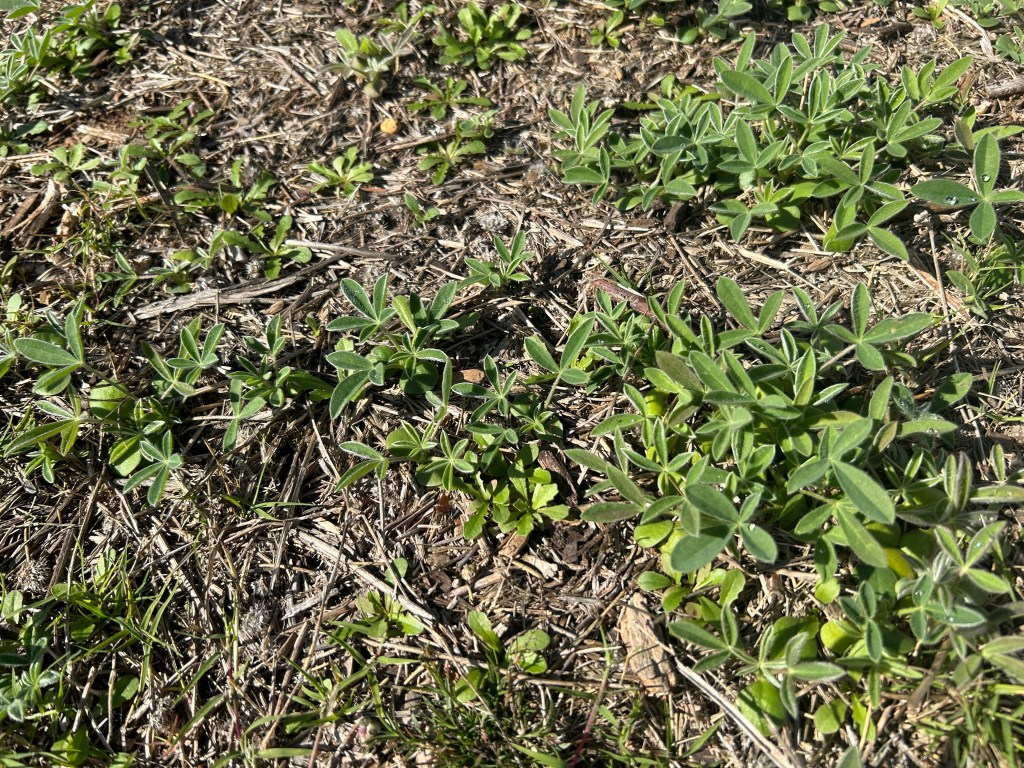
Wildflowers are already beginning to grow in preparation for next year’s meadow in front of the house
The “ecosystem” pond that had been planned for months finally arrived in November
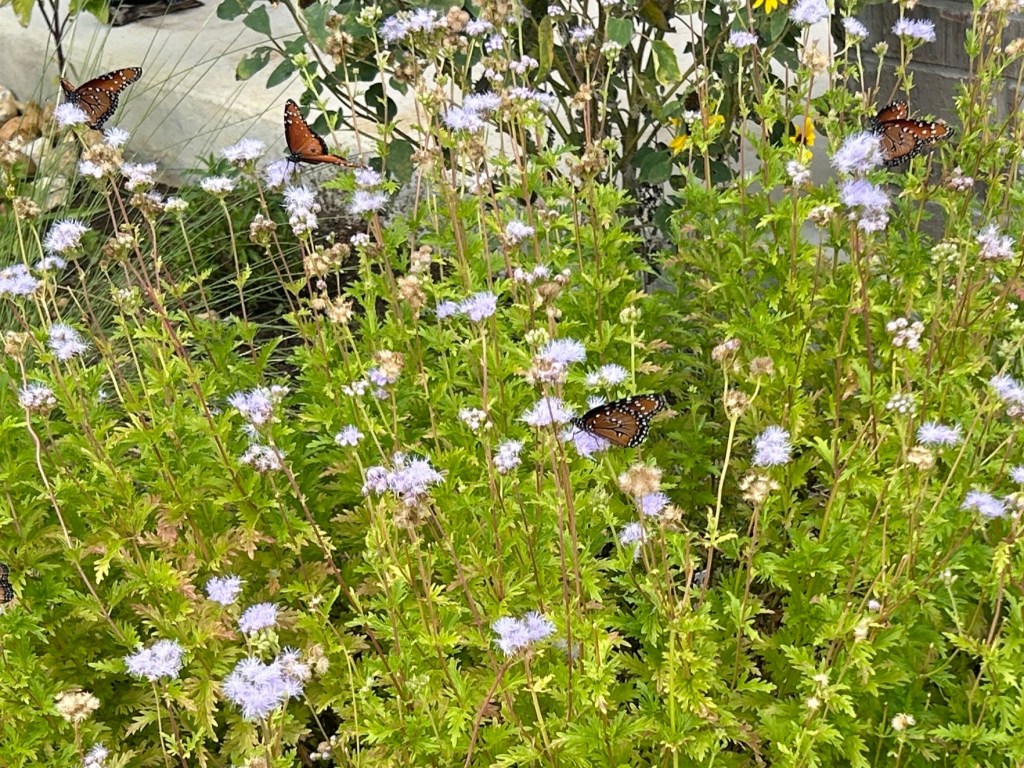
There were plenty of pollinator visitors to the native plants this year (these are Queen butterflies on Gregg’s Mistflower)
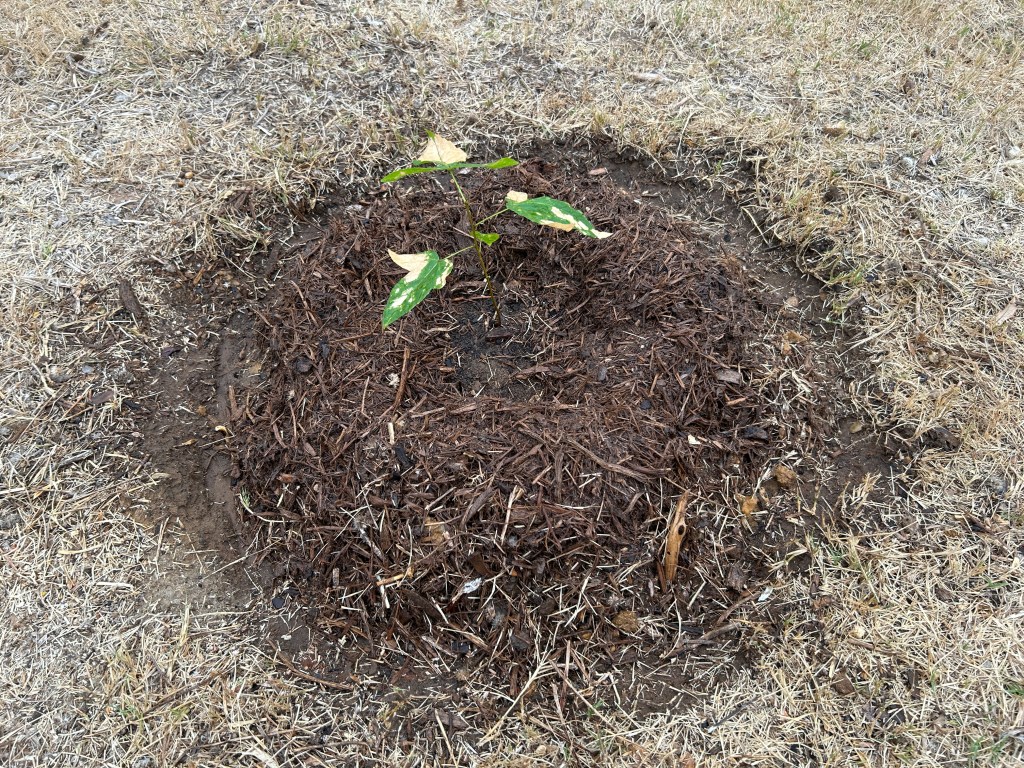
The newest tree to be planted here, a baby Mexican Buckeye, was grown from seed earlier in the year
A shredder allows me to recycle annual plants that have finished into mulch to feed the soil
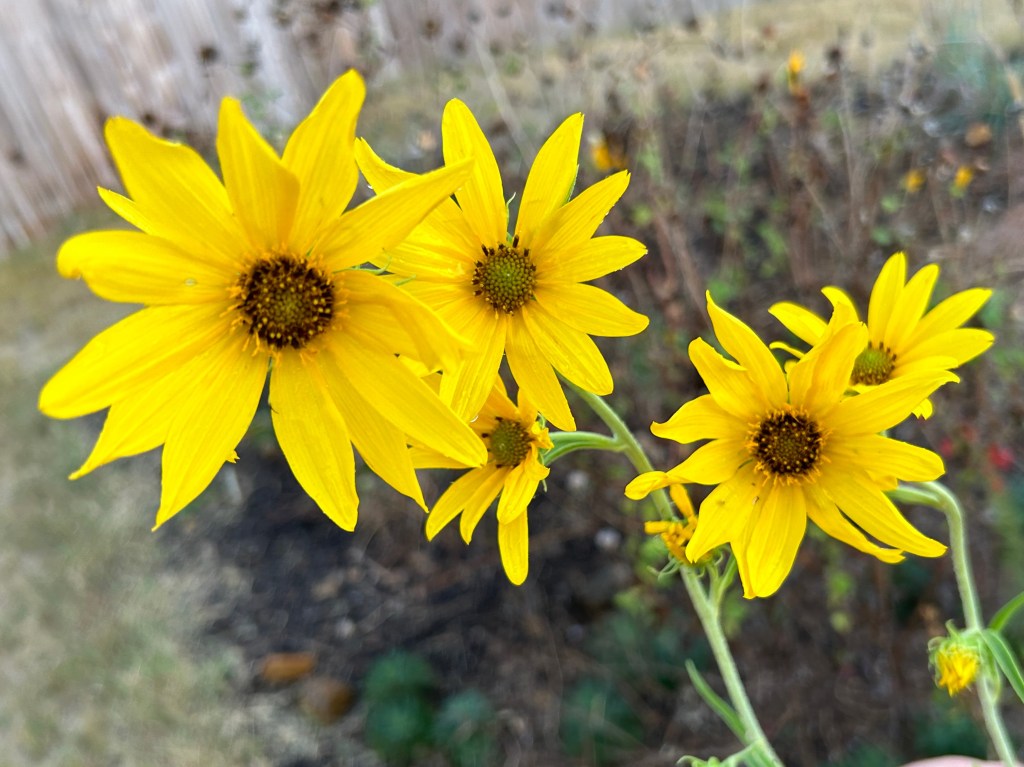
Most of the sunflowers here are volunteers (Common and Beach varieties), but these Maximilian Sunflowers were planted by me
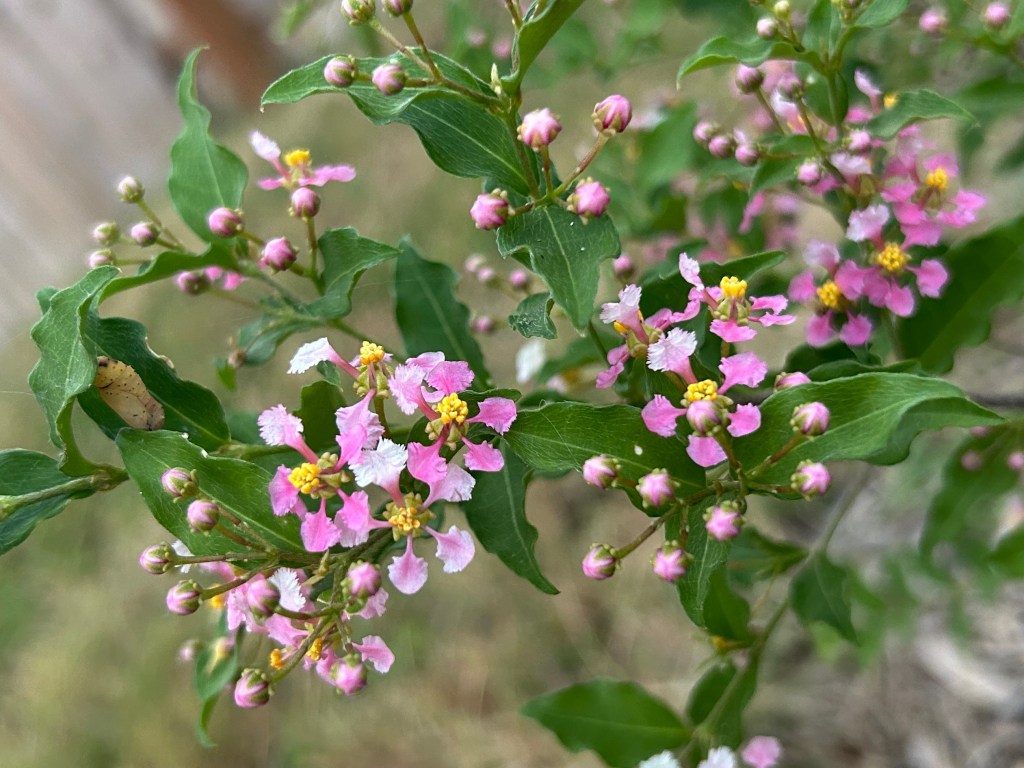
Several plants that were introduced in 2023 bloomed for the first time in 2024, like this Barbados Cherry
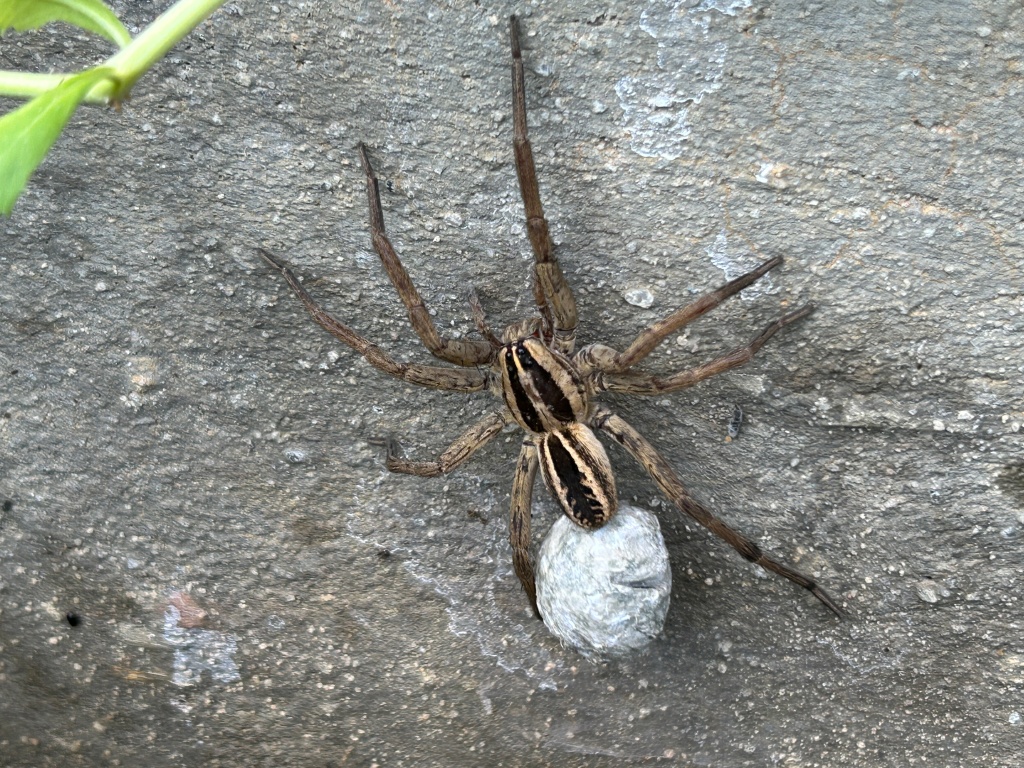
This year I saw a spider egg sac for the first time. This was being carried by a Wolf Spider
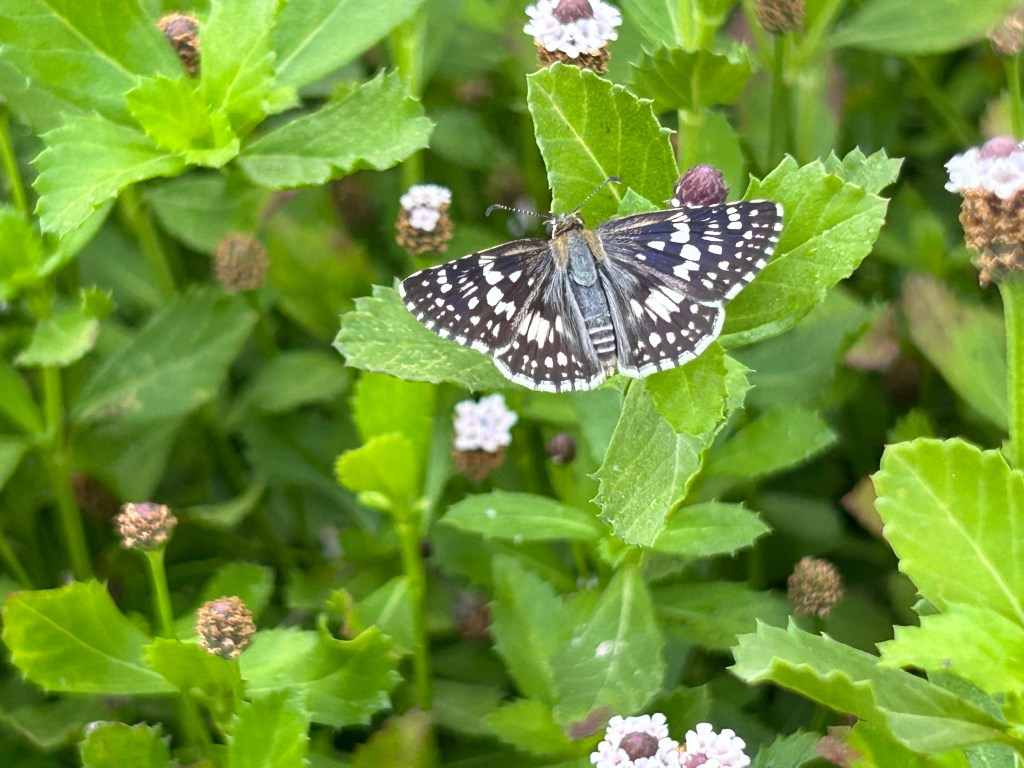
Frogfruit is beginning to occupy more of the “lawn” space in front of the house, and its tiny flowers feed a variety of small butterflies and bees like this Common Checkered-Skipper


 Rewilding My Lot
Leave a comment