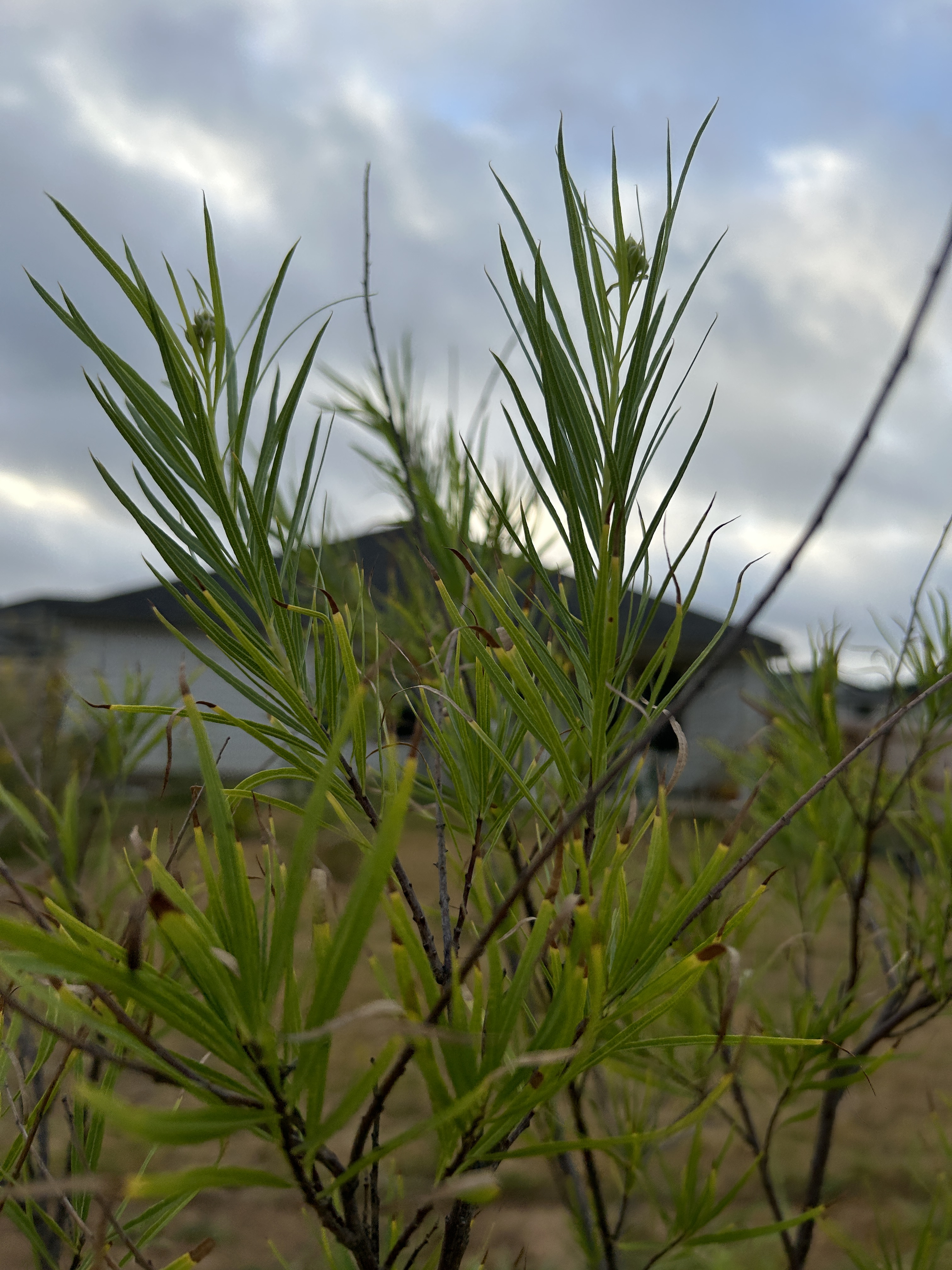
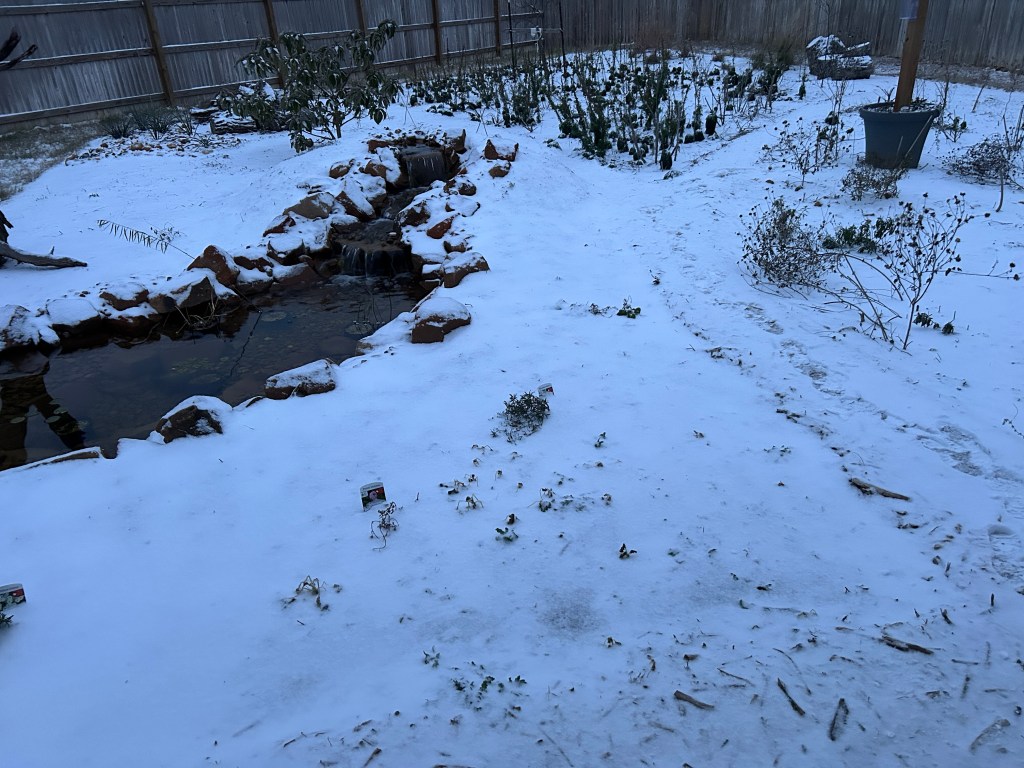
One of the many advantages of gardening with native plants is that they generally don’t need special protection during our Central Texas winters, where freeze events are occasional and mild. In some cases, the above-ground parts might turn brown and die back but that’s just part of the normal lifecycle of these plants and if that happens, new growth occurs the following spring.
As of the end of January 2025, we have had eight nights that dipped below freezing (the lowest temperature I recorded was 20.3F). In most cases, those cold nights were followed by days that rose above freezing, and except for one day we had no precipitation. (The first photo in this post was taken after a rare snowfall.)
I did do some preparation before freeze events, however:
- I watered well most of the trees and perennials.
- The garden is already pretty well mulched, so this year I didn’t add any more.
- Most of my seedlings in pots were brought into the garage, with the exception of Texas Mountain Laurel (Sophora secundiflora), which stayed outside.
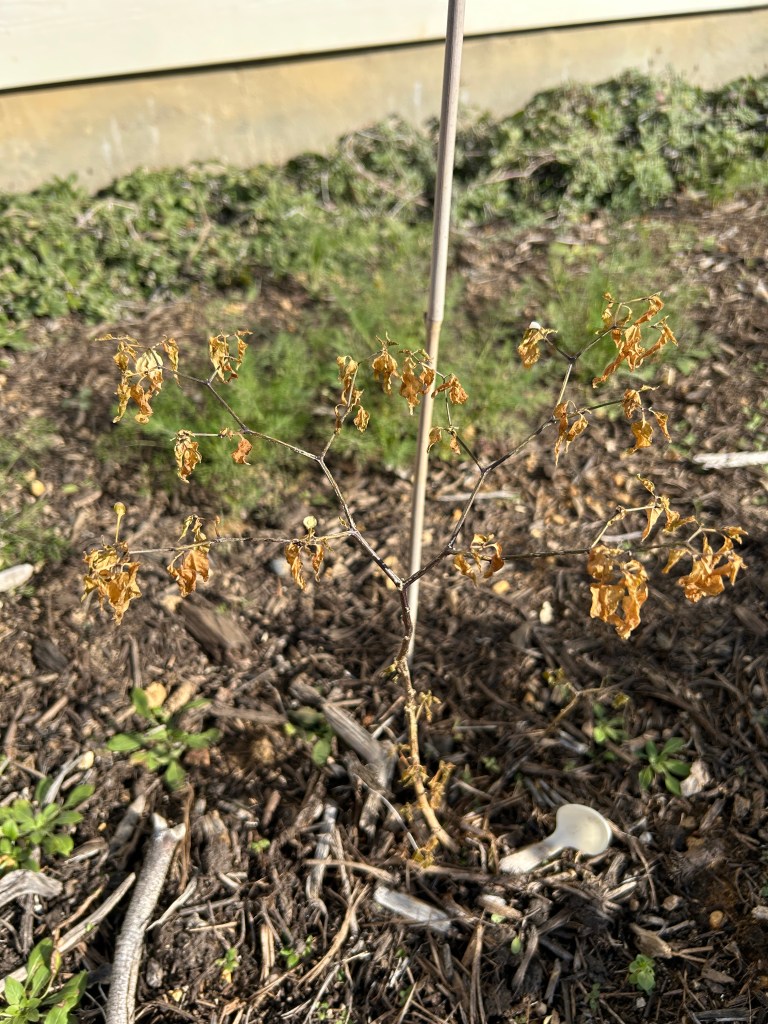
- I chose to cover overnight just two of the plants that are in the ground for extra protection — a Mexican Buckeye (Ungnadia speciosa) seedling, and a cluster of Scarletfruit Passionflower (Passiflora lanuginosa) seedlings.
So now, after these freeze events, what do I see?
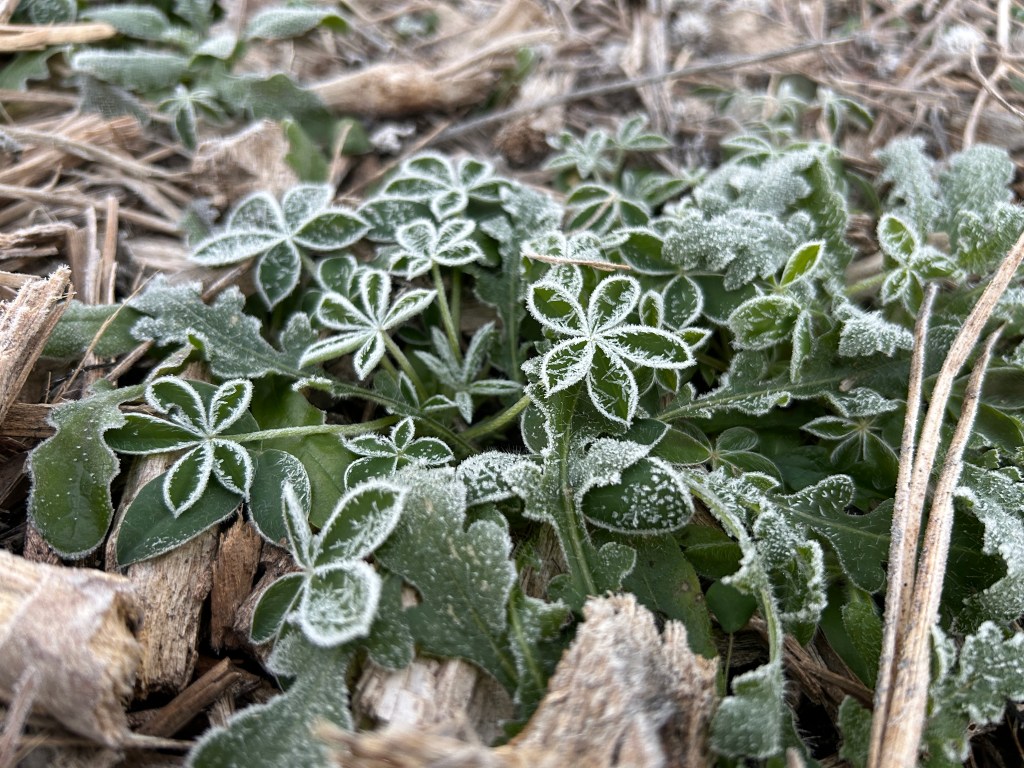
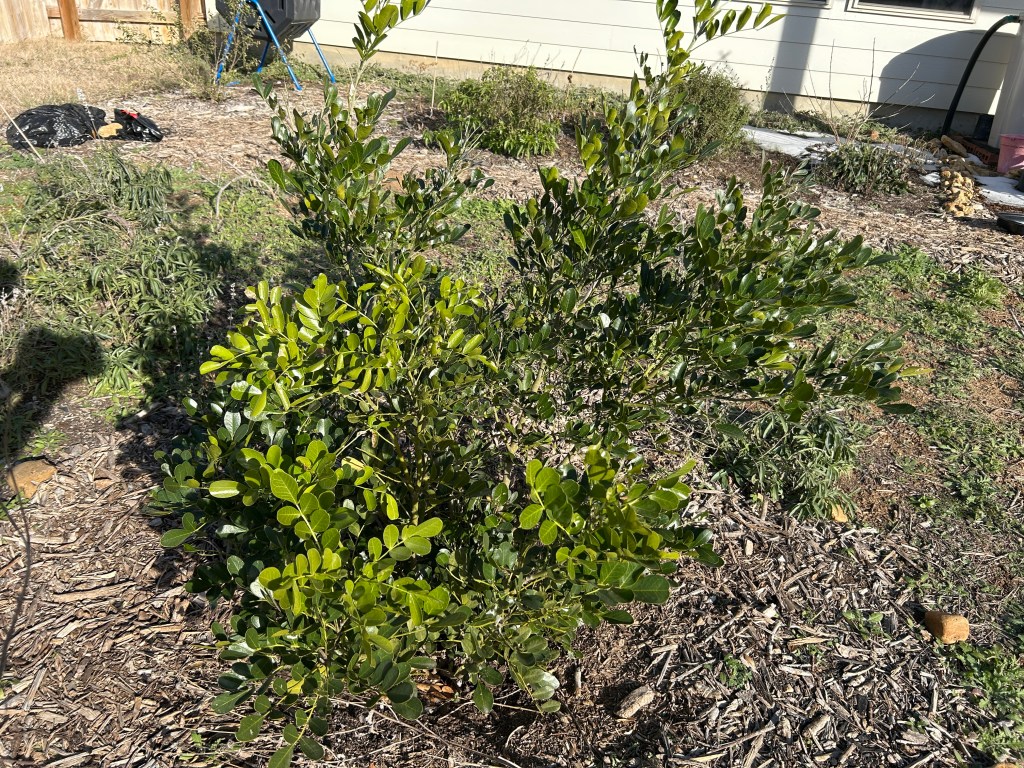
Some plants showed absolutely no ill effect from being frozen, such as Texas Bluebonnet (Lupinus texensis) seedlings and the Texas Mountain Laurel tree.
Some deciduous plants had already started losing or completely lost their leaves before the freeze, and so the lower temperatures made no visual difference. Examples of these include American Beautyberry (Callicarpa americana) and Mexican Plum (Prunus mexicana).

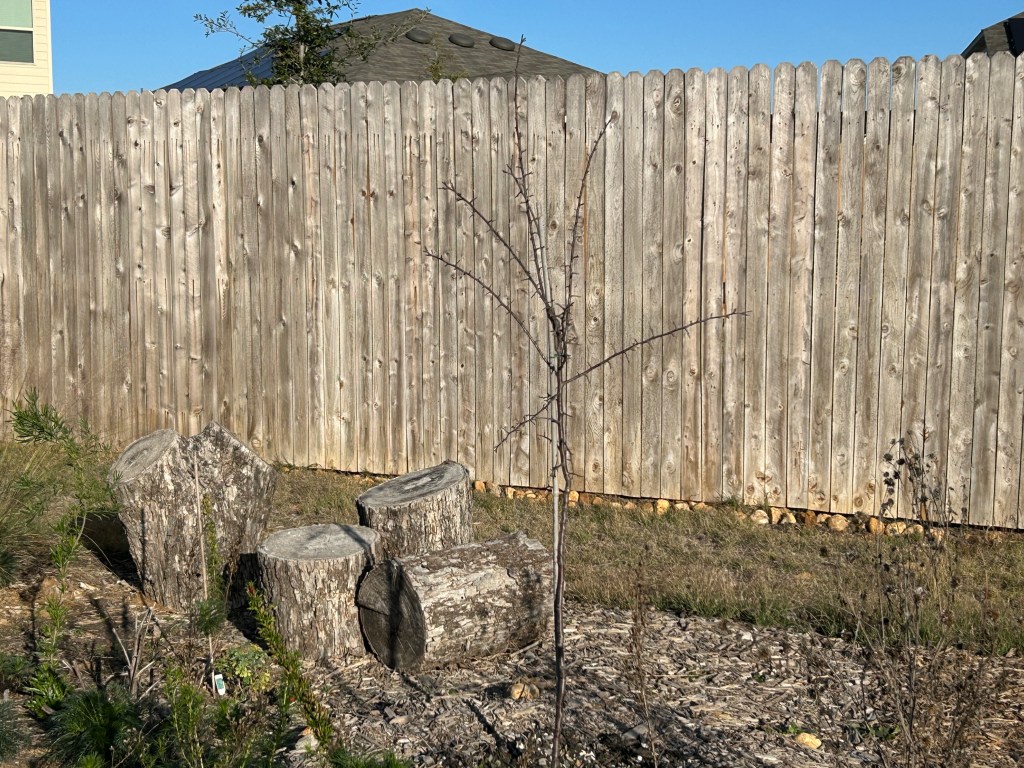
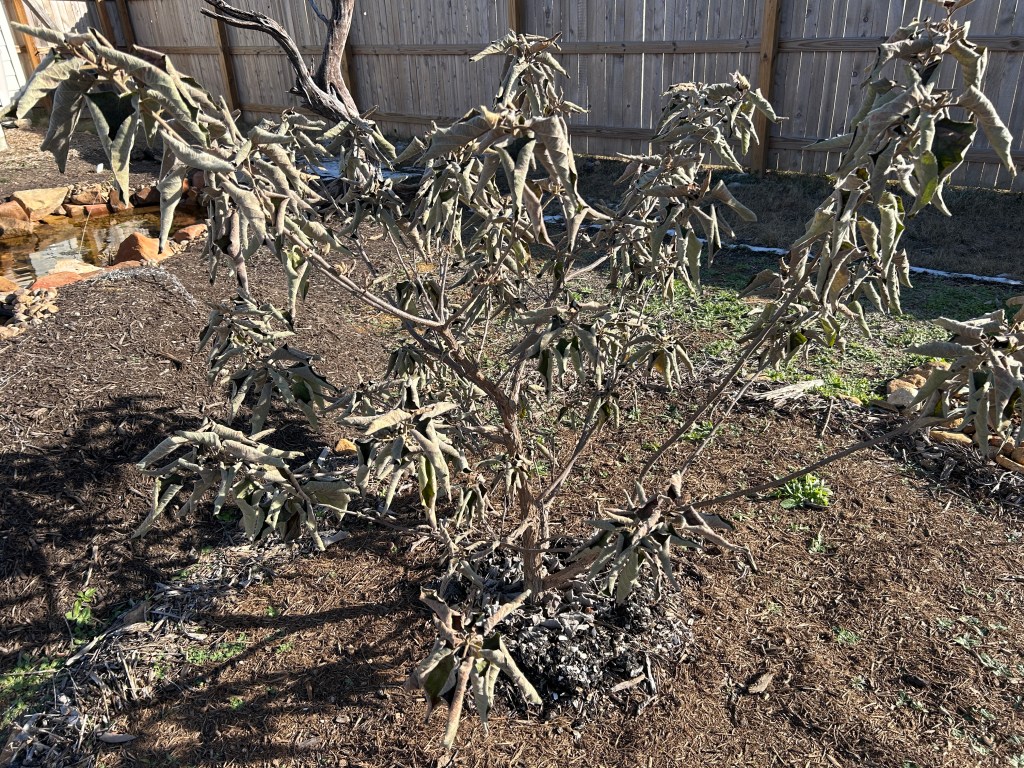
Several other plants previously had green leaves, but once the temperatures dropped below freezing point, then the leaves quickly turned brown and started to fall off . This is all perfectly normal and simply indicates that a plant would rather discard damaged leaves when it’s cold and grow new leaves when it’s warmer. Examples of this include Chili Pequin (Capsicum annuum), and the Desert Willow (Chilopsis linearis) and Mexican Olive (Cordia boissieri) trees.



 Rewilding My Lot
Leave a reply to Starting The Spring Clean Up – Rewilding My Lot Cancel reply