
We have new residents in the front porch — Barn Swallows (Hirundo rustica). At the beginning of March 2025, a single swallow began to spend nights in the front porch perched on a high ledge. A few days later there were two, occupying opposite ledges, and a few days after that they decided to share the same corner.
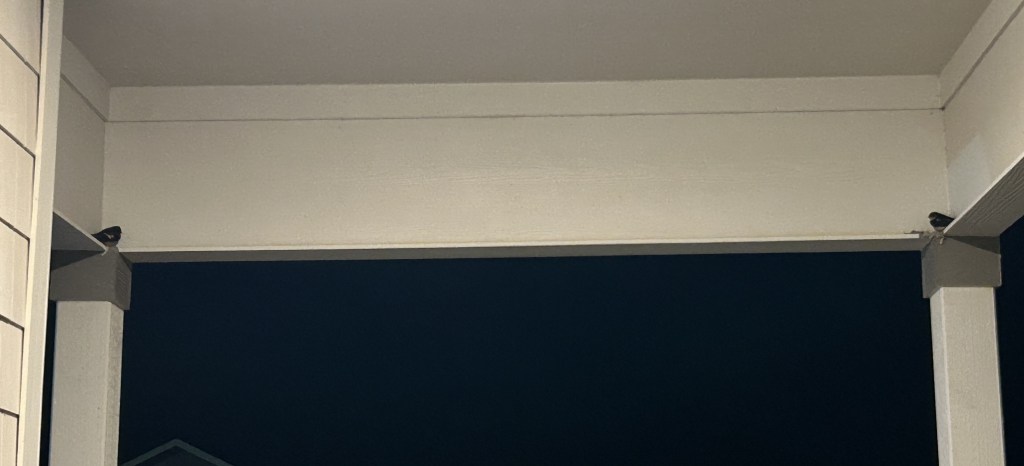
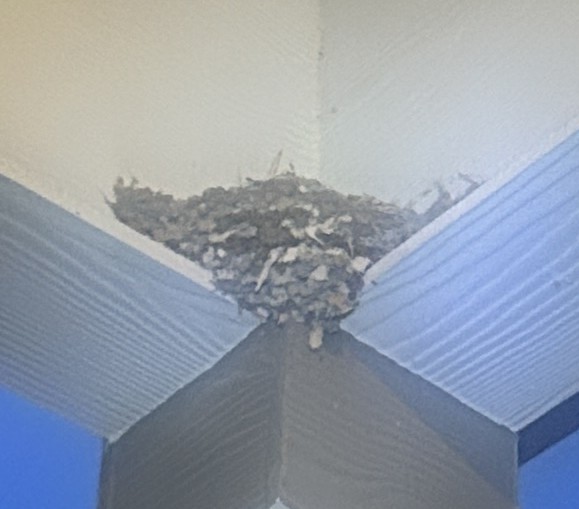
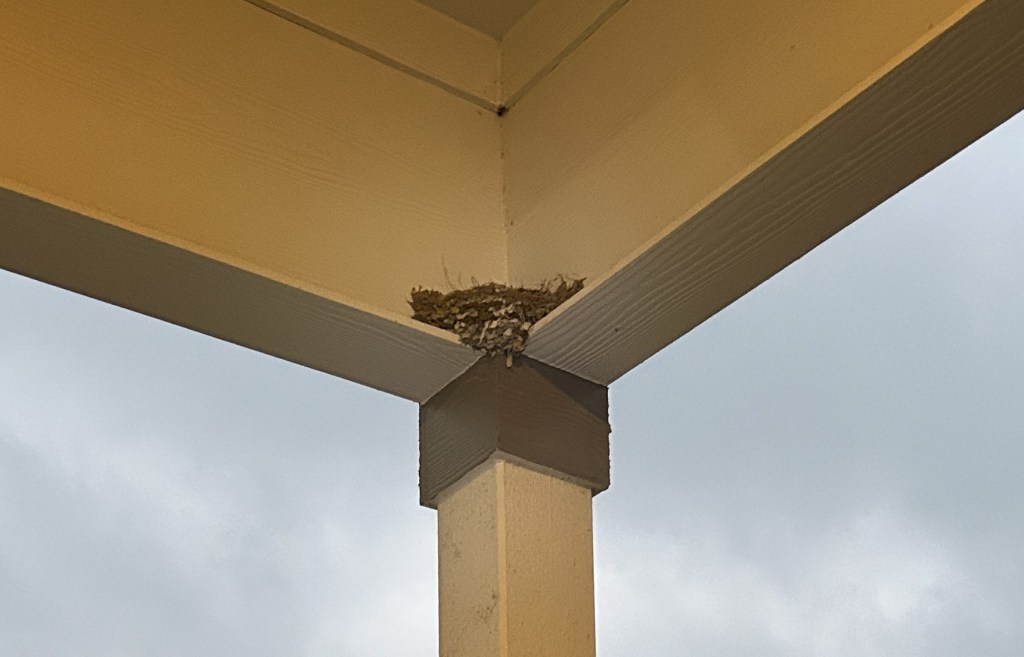
Then they became nightly visitors, sometimes together, sometimes in separate corners, and after about a week of that they began to build a nest. Compared to the doves in a tree next door who slapped together a twig nest in a day or two, building a swallow nest is a much more committed activity. Here’s an extract from CornellLab’s All About Birds:
Both male and female build the nest cup using mud. They collect mud in their bills and often mix it with grass stems to make pellets. They first construct a small shelf to sit on, then build up the nest’s sides. If built against a wall or other vertical surface the result is a semicircular, half-cup shape. Nests built on top of a beam or other horizontal surface form a complete cup about 3 inches across at the rim and 2 inches deep. The birds line the cup first with grass, then feathers, and in colonies may steal nest-lining materials from neighboring nests. When reusing nests, Barn Swallows clean out old feathers and add new mud to the nest’s rim.
I don’t know where they are getting the mud for their nest — from the direction of flight it seems to be outside of the subdivision.

Both swallows have similar markings, but the one with darker red face and chest I presume to be the male. When they’re up in the porch eaves the lighting isn’t good enough for me to tell them apart, so when it comes to night time I can’t tell who gets to sleep in the nest and who gets the opposite corner shelf!

Here are some other things I’ve learned about Barn Swallows:
- Barn Swallows are migratory, spending the winter in Central and South America.
- On a legal note, once this nest is complete, I am prohibited by Federal law (the Migratory Bird Treaty Act of 1918) from removing the nest until it is vacated.
- Given the effort taken to build a nest, it is likely to be reused from year to year.
- Flies of all types make up the majority of the Barn Swallow’s diet, along with beetles, bees, wasps, ants, butterflies, moths, and other flying insects.
- They drink in flight by skimming over water with their mouths open. I wonder if they drink from our pond.
- Once established, a Barn Swallow pair will breed together for life, although extra-pair copulation is common.
- Barn Swallows will typically raise one or two broods in a year, reusing the same nest, and with 3-7 eggs in a clutch.
I am happy that Barn Swallows have decided to share our home, although cleaning bird poop off the porch brick work will be a regular task for now!


 Rewilding My Lot
Leave a reply to mannhelen Cancel reply