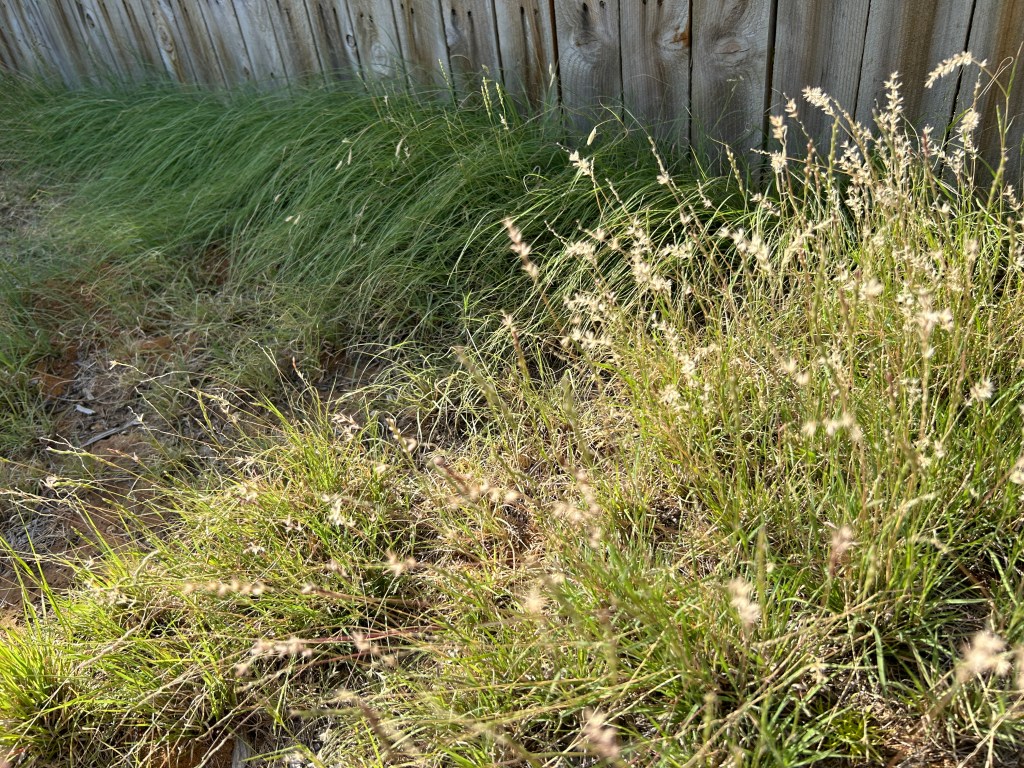
Around the perimeter of the back yard is a strip of Thunder Turf, which is a mixture of three short prairie grasses: Buffalograss, Blue Grama, and Curly Mesquite.
After two years here, I think I am finally becoming able to recognize the components of Thunder Turf, at least when flower/seed heads are visible. My photos are not great, so if you want to see better representations, follow the links on the grass names for photos from the seed supplier.
Buffalograss (Bouteloua dactyloides). This has male (staminate) and female (pistillate) flowers on separate stems, usually present on different plants (dioecious) but sometimes on the same plant (monecious). For a long time, I thought these two different flower heads represented different grasses, instead of being male and female versions of the same one.
The first photo below is male; the second photo is female.
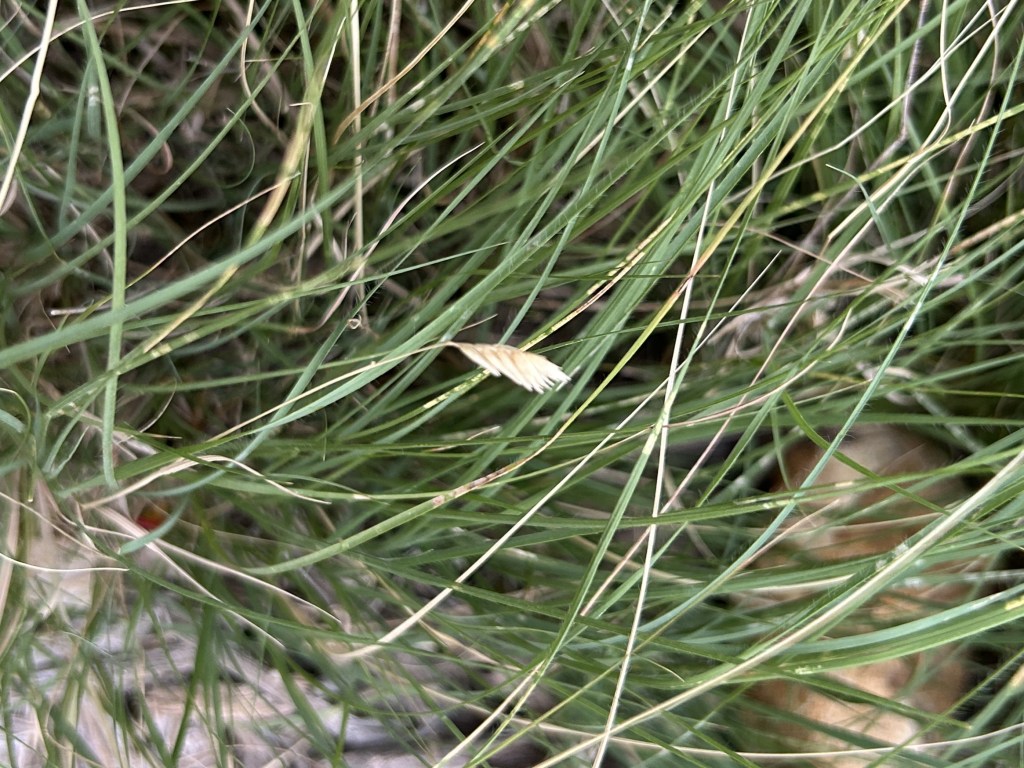

Blue Grama (Bouteloua gracilis). The easiest way I know how to distinguish these seed heads in my turf area is that all the seeds are aligned the same way on the stem — rather like eyelashes. They somewhat resemble the male Buffalograss heads (see above), but these ones are longer and finer.

Curly Mesquite (Hilaria belangeri). This grass of the three in Thunder Turf seems to be the predominant one on my property. Certainly I see more of these seed heads compared to the others.
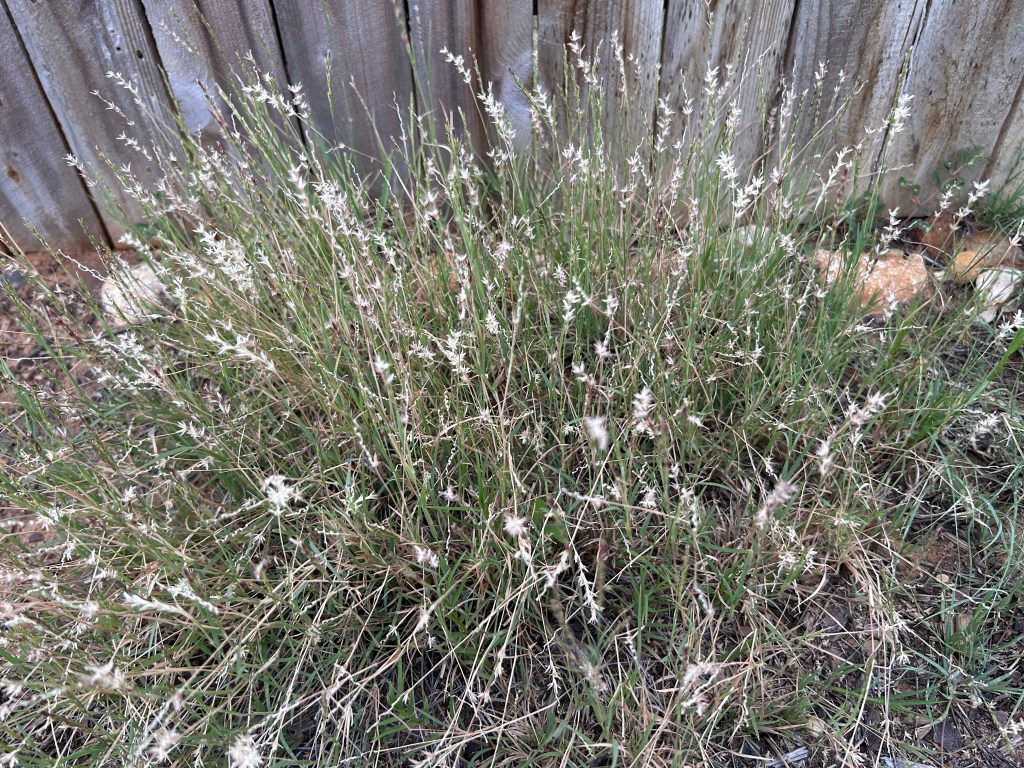
In addition to Thunder Turf, there are volunteer grasses that grow in this area. Some are welcome and one in particular is not.
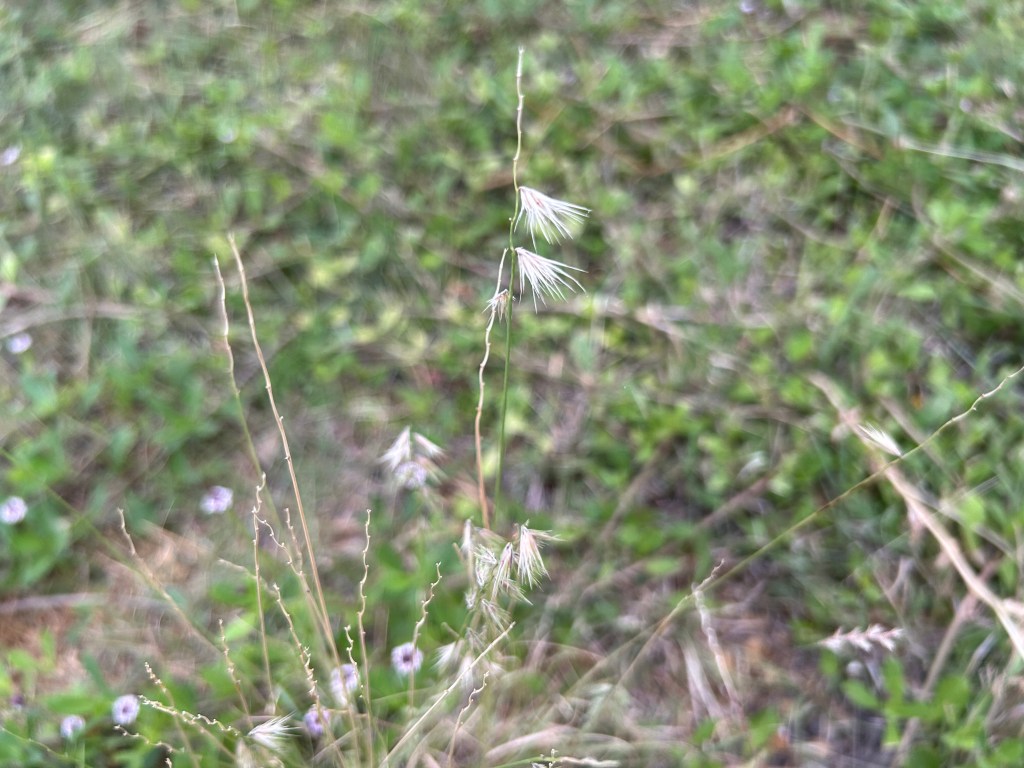
Texas Grama (Bouteloua rigidiseta). I spotted this grass recently because the seed heads looked different from its neighbors and the stems are stiffer. It’s a welcome addition, though, as its seeds and leaves can be food for wildlife.
Bermudagrass (Cynodon dactylon). This is a highly invasive non-native grass that is not welcome here and I have invested a great deal of time and effort removing it from the back yard. However, all of my neighbors have it and I can’t really prevent it creeping back in. I am, however, getting better at distinguishing Bermudagrass from my native grasses and I pull it out when I find it. At this point, the Thunder Turf has the stronger hold in the area, but I know that I can’t let my guard down!
This is what Bermudagrass seed heads look like (in a neighbor’s lawn!).

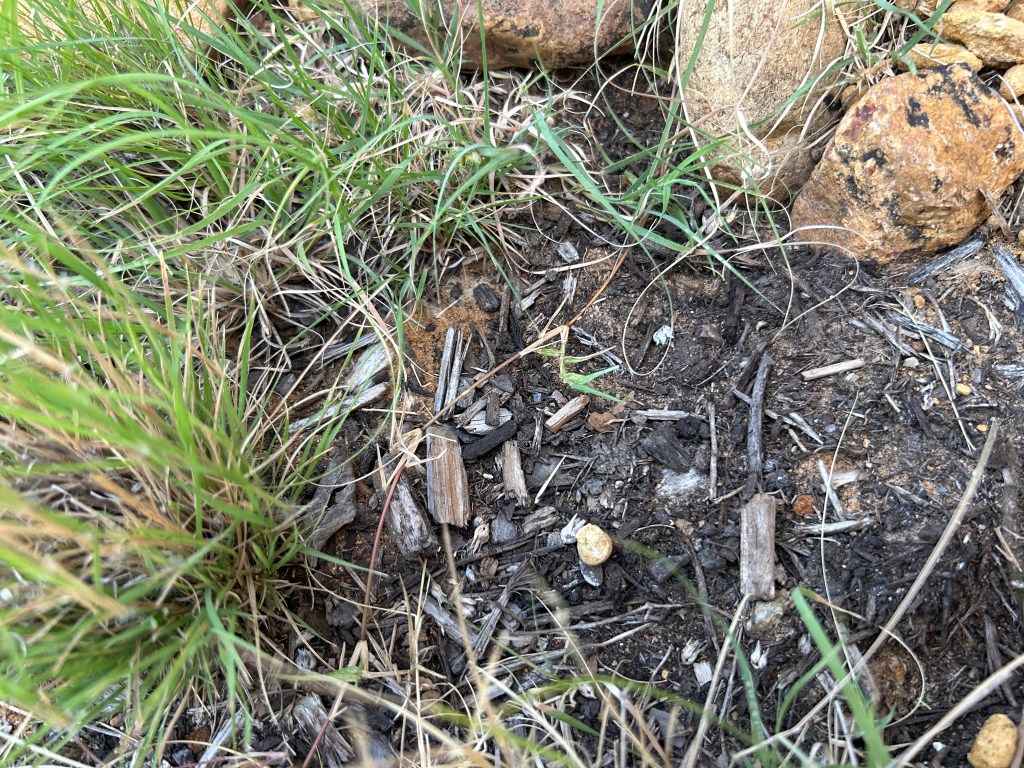
And in the center of the photo below, there is a red-brown Bermudagrass stolon (runner, horizontal stem), which is one of the ways that this grass can sneak in. It also has an invasive root system.


 Rewilding My Lot
Leave a reply to rewildingmylot Cancel reply