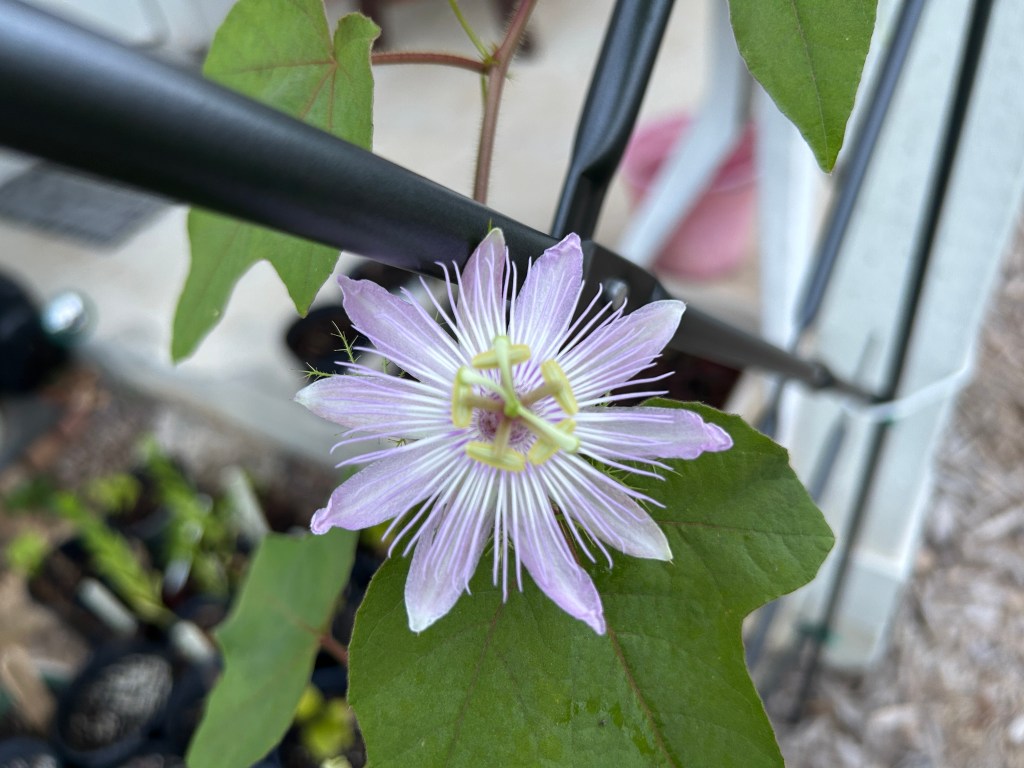
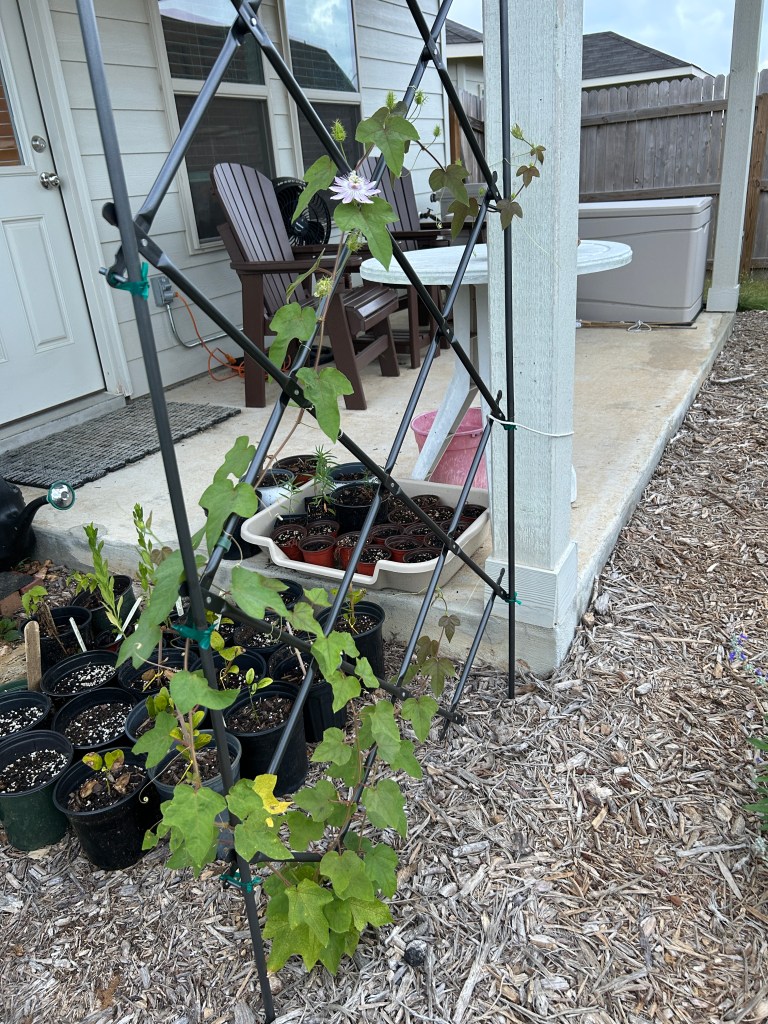
Last fall I was gifted a seedling of Scarletfruit Passionflower (Passiflora lanuginosa). It froze back completely during the winter, but survived and is now growing strongly. I am aware that this plant can grow aggressively and I only have a small trellis for it, so I will have to watch it and keep it contained (i.e., keep it trimmed and remove suckers as soon as they appear).
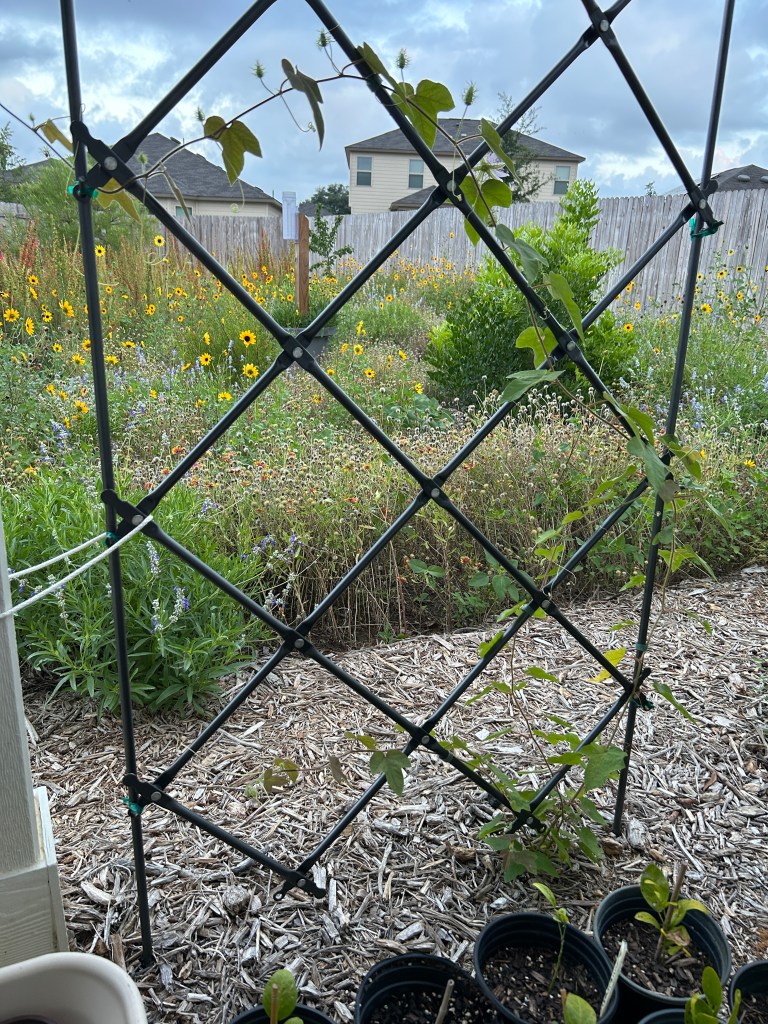
On June 28, I saw my first bloom. It was wide open in the early morning and then curled up a few hours later.
I did some searching online and found that indeed the blooms only last a day (here’s a time-lapse video). If they are pollinated during the time they are open, then a fruit will form. If not, then the spent flower will just fall off the plant.
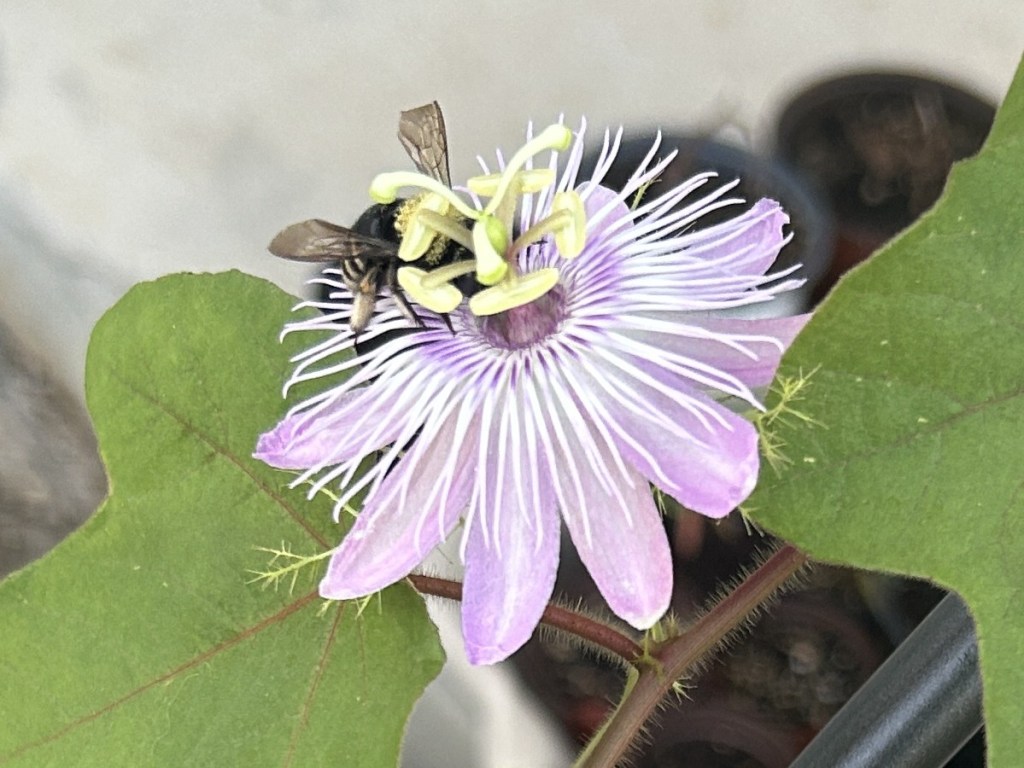
A couple of days later there was another bloom. This time I watched a bee feeding from it, although I was standing on the wrong side of the plant to get a good picture.
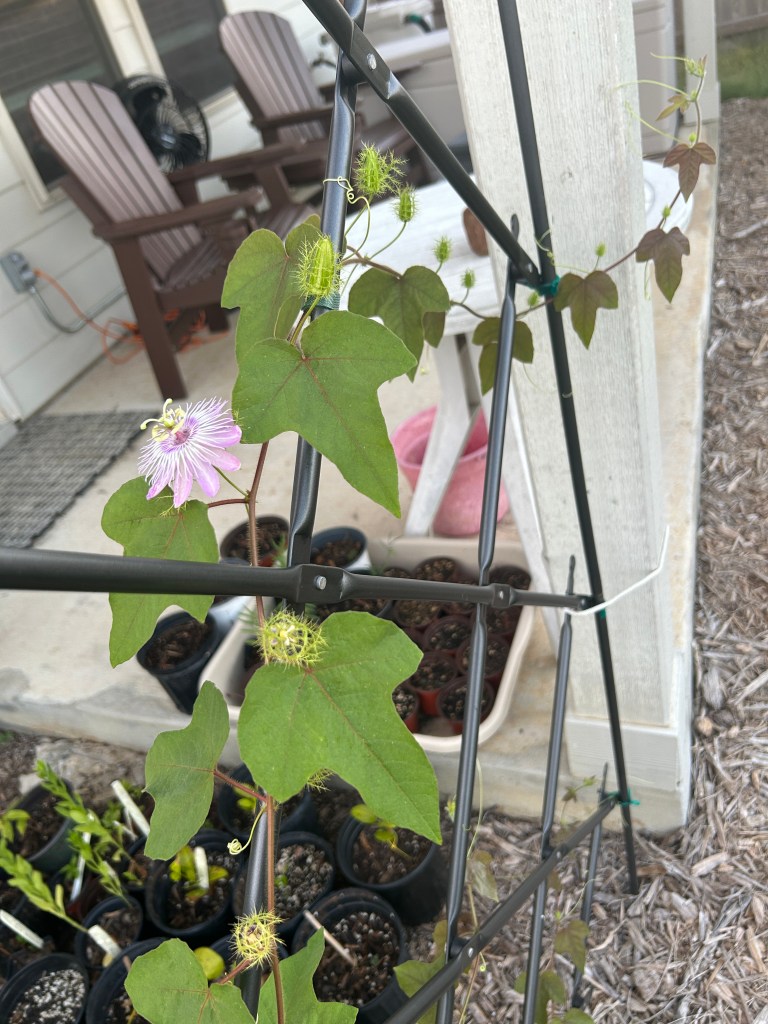
If I look along the branch where these blooms have appeared, it looks like others will be opening soon, 1-2 days apart. They seem to be progressing along the branch in order, and in fact the first one that I saw was the second to open and I must have missed the first one entirely. In the photo below, the two structures at the bottom are the spent flowers one and two, the open one is three, and there are several more buds beyond.
Passionflowers are host plants for Gulf Fritillary, Variegated Fritillary, Zebra Longwing, Crimson-patch Longwing, Red-banded Hairstreak, Julia, and Mexican butterflies. I haven’t seen any of these yet, but I am expecting at least to be visited by Gulf Fritillaries — they are quite common here and according to iNaturalist they were observed in Seguin last year from July until fall.
I was aware that some Passionflower plants produce fruits and some do not. (I had one in Houston that was non-fruiting.) Starting a new garden here, I particularly wanted a fruiting one. It turns out that I was under the mistaken impression that Texas native Passionflower fruits (Passiflora incarnata) are the same as Passion Fruits (Passiflora edulis). They are not. The delicious fruit that I had heard so much about is native to some South American countries and commercially grown in tropical and sub-tropical areas. Fruits from the plant I have are also edible, but perhaps not so delicious. I will report on that if I ever get the chance to try them!


 Rewilding My Lot
Leave a comment