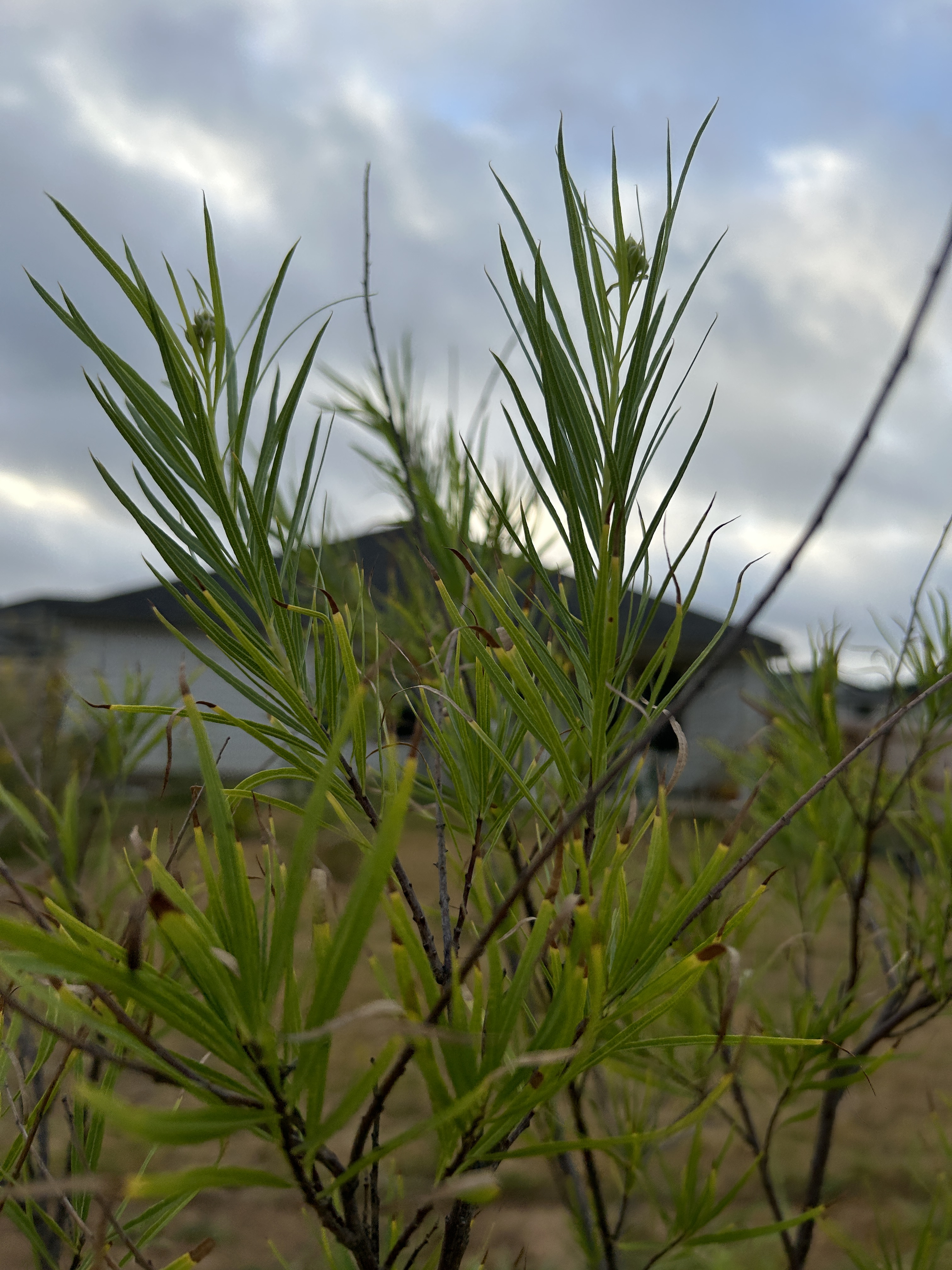

In the spring of this year I built a shade structure for a new tree out of bamboo poles and a pillowcase. That was prone to blowing down so I’m trying a new idea to protect one of my new Frostweed (Verbesina virginica) plants while it gets established.
I’ve known about “dead hedges” for a while, but hadn’t found a way to use them here yet. The basic structure is a channel between two rows of vertical posts, which is filled with branches, twigs, and stems. It’s a great way to use woody “waste” pieces, and can act as wildlife habitat, windbreak, and visual screen. As the contents of the dead hedge decay over time, more material is added into the channel.
By way of experiment, I decided to build a temporary mini dead hedge using materials that I had on hand. Using a dead hedge to provide shade is unconventional, but I thought it was worth a try and less likely to blow down than a pillowcase pegged to poorly anchored sticks. In this particular instance (to protect a newly planted Frostweed), I would expect to keep it in place until the end of next summer.
Traditionally, the vertical posts in a dead hedge would be wood but I chose to use metal posts for a couple of reasons. One is that I already had three of them. The other reason is because the ground here is so full of stones (what the builder used to grade the land) that driving in wooden stakes would be difficult — I would have to dig holes with a pickax, pry out the stones, place the posts, and then fill in the holes. So with a borrowed post driver, I hammered my leftover metal posts into the ground (in reality, I did have to use the pickax to clear a way for one of the posts). Because I only had three posts, two of them marked the ends of the hedge and the third went in the middle, slightly offset, to form the channel.

I happened to have some annual plant stems that were waiting to be shredded, so I used those pieces to form the hedge.
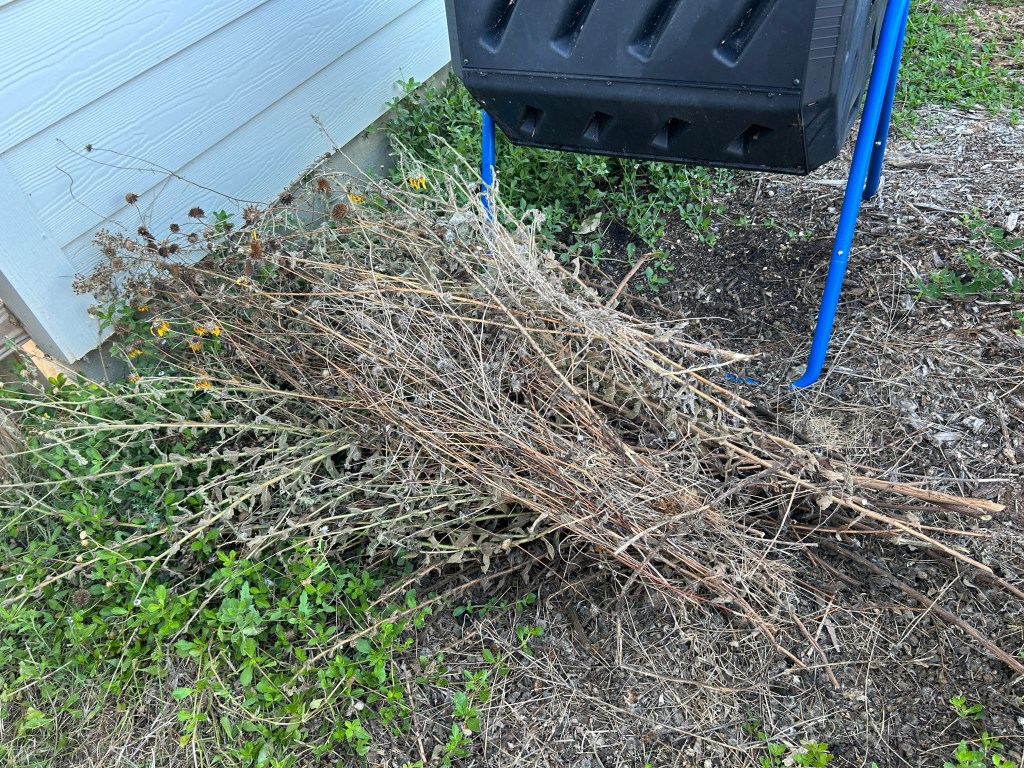
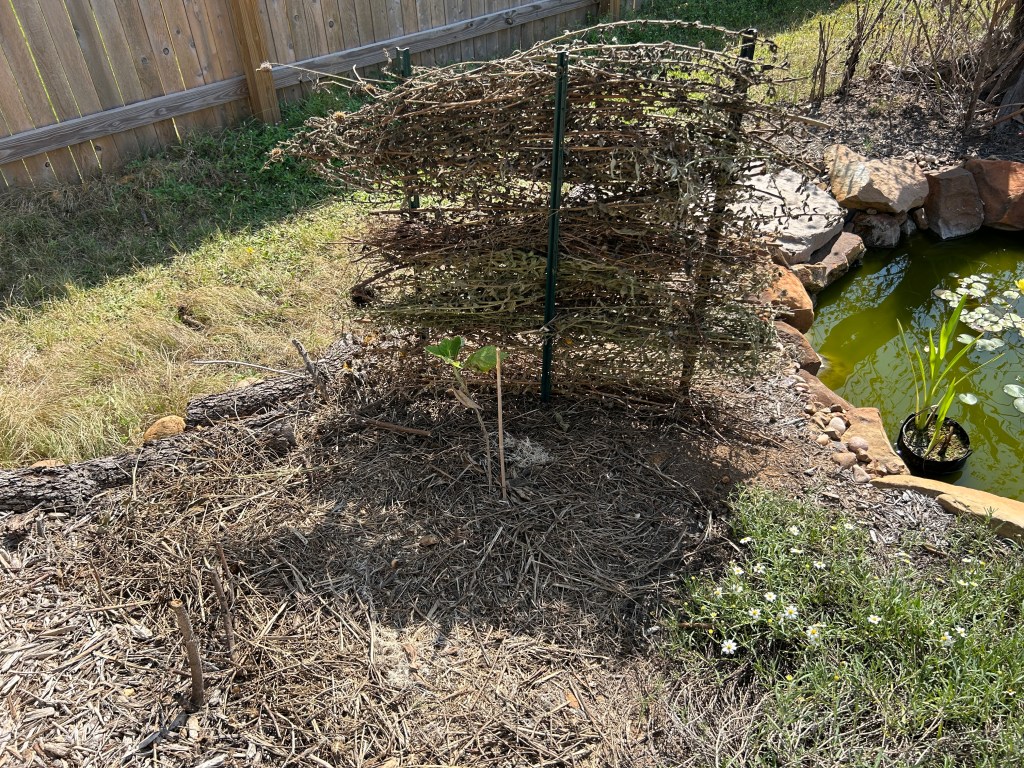
Then I wove the plant stems between the posts. Here are photos of front and back of the screen, which is placed southwest of the plant.
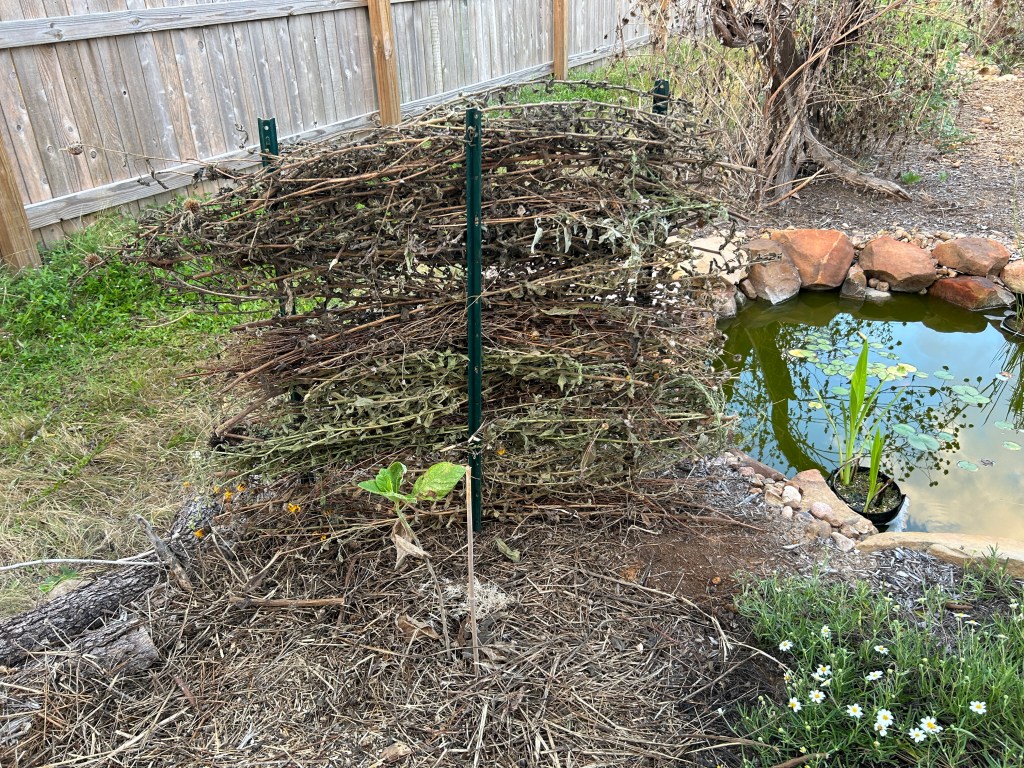
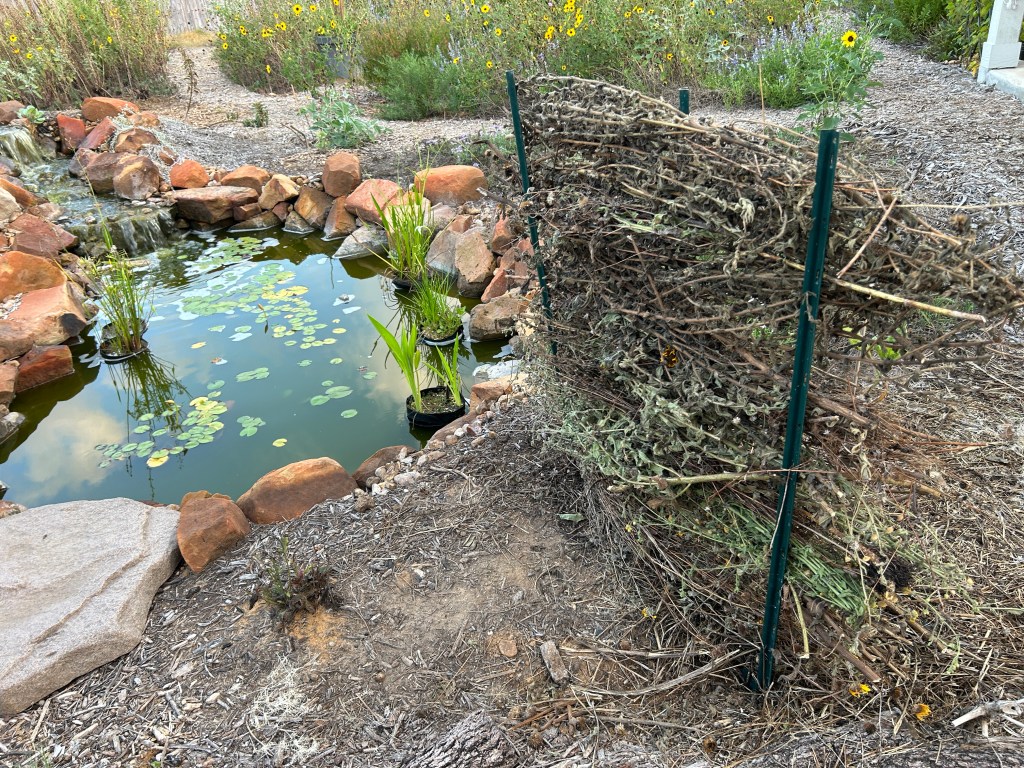
The final product is rather crude, and time will tell whether it can withstand wind and rain. However, it has been a useful experiment to determine how I might use dead hedges here. Even if not needed for screening purposes, a structure a few feet long with a channel a foot or so wide would accommodate a great deal of waste woody material without the need for shredding, and keep it contained while it decays. Here is the new screen in action at mid-afternoon.
Soon after the screen was constructed and while the area was still sunny, a male Roseate Skimmer (Orthemis ferruginea) perched on a nearby bamboo stick. As usual with my dragonfly pictures, the photo is poorly focused, but the bright pink body is very visible.
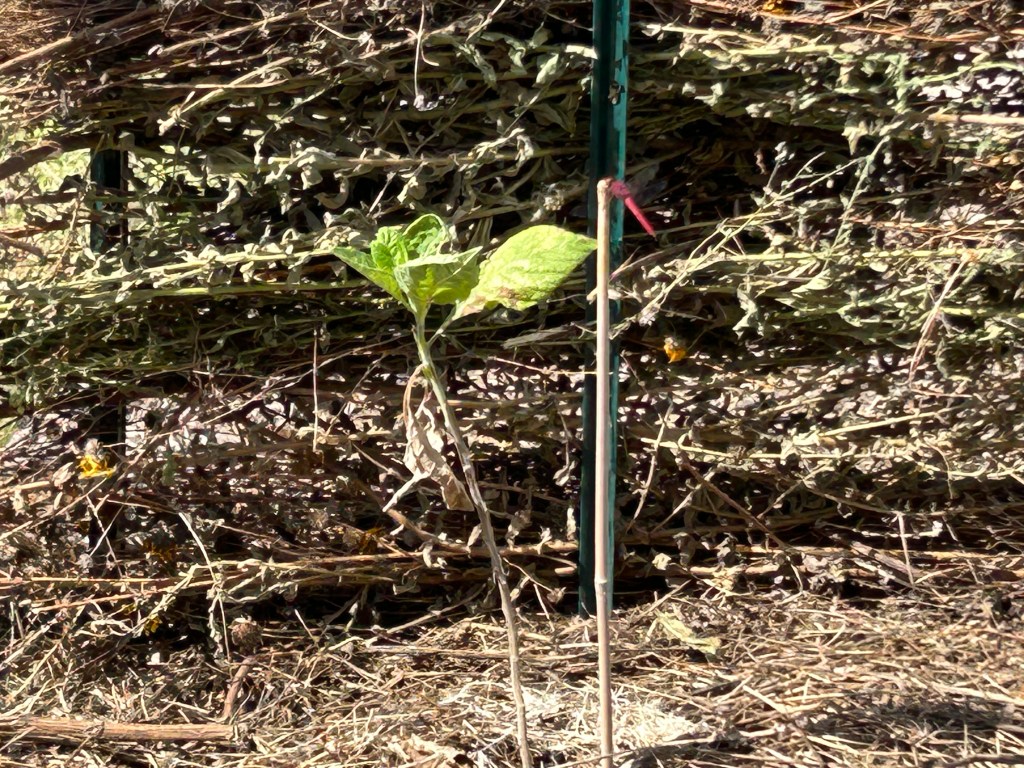
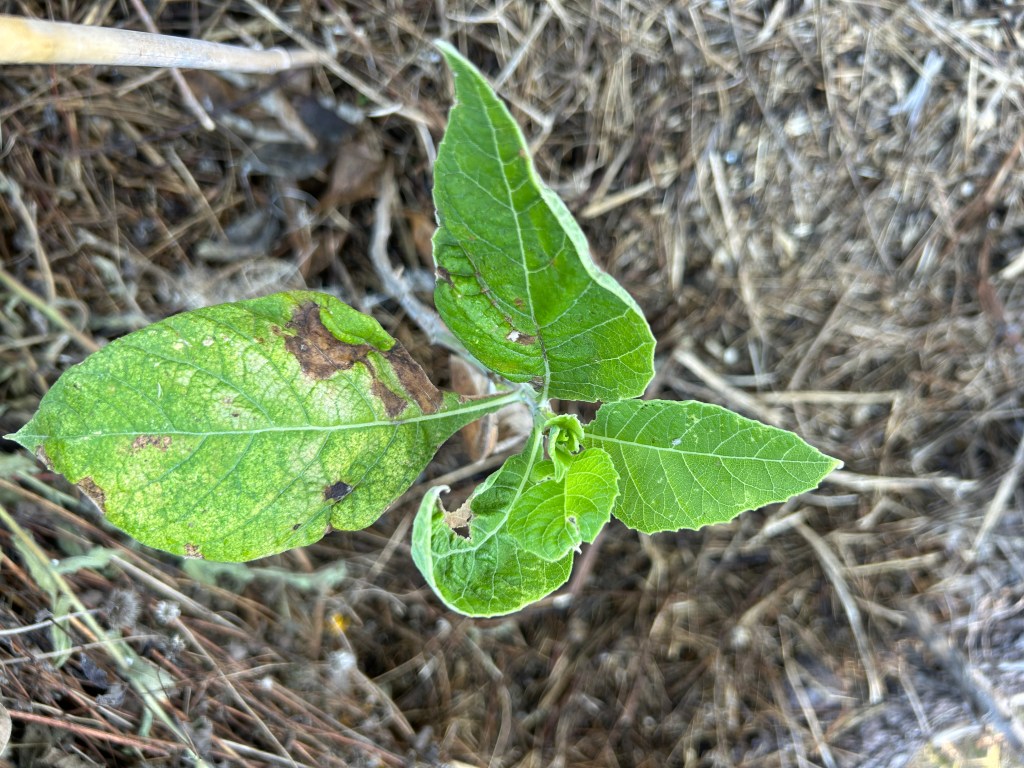
In its early days here, the Frostweed has lost a few leaves with transplant shock, but it has a good growing point at the top.


 Rewilding My Lot
Leave a reply to New Frostweeds Doing VERY Well! – Rewilding My Lot Cancel reply