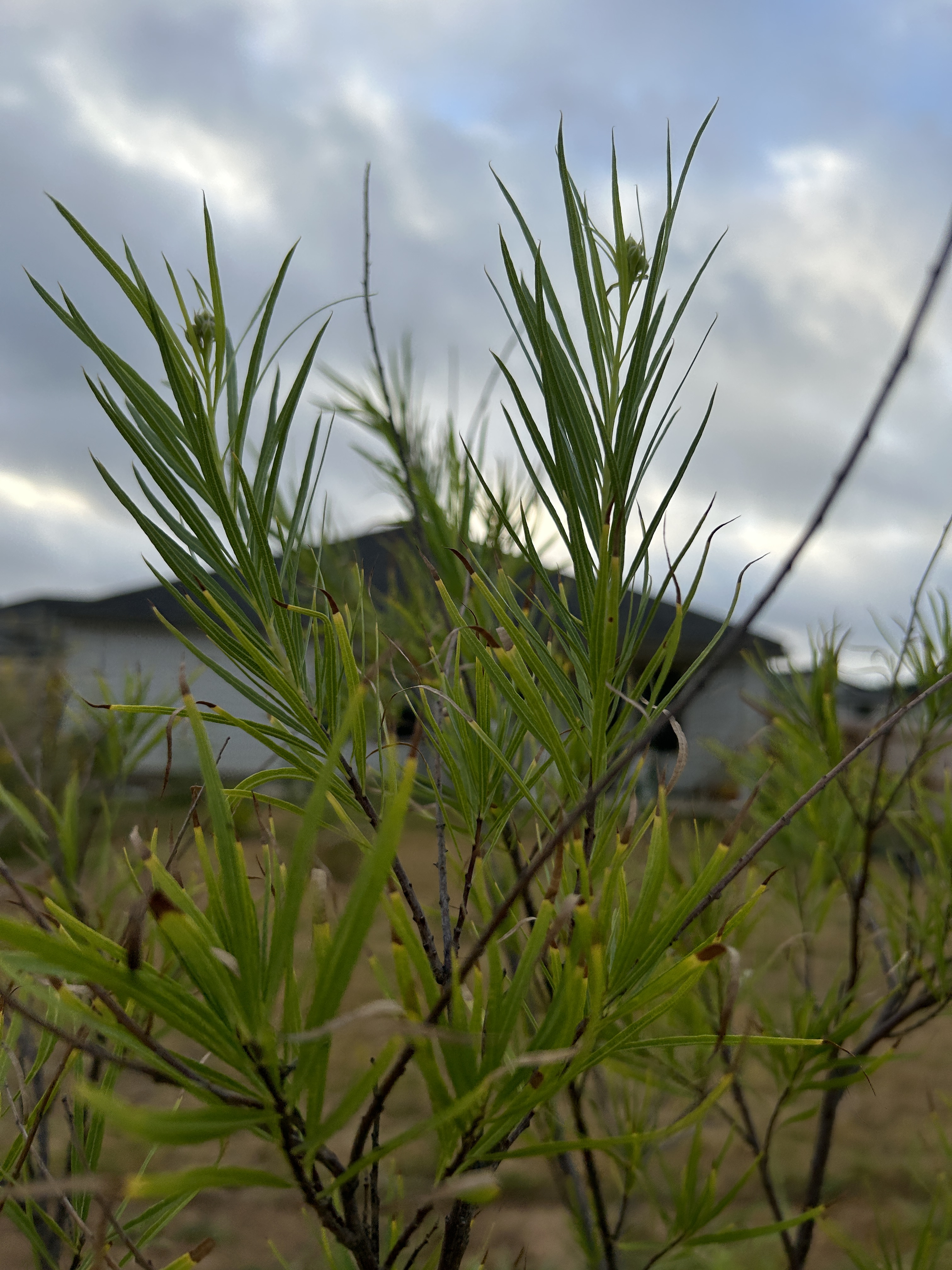
I use the groundcover Frogfruit (Phyla nodiflora) in several ways here. It serves as a lawn substitute in the sunny front yard, it occupies shady places beside the house or fence where grass is less eager to grow, and it rambles over my woodpile. Frogfruit tolerates traffic and mowing, and attracts a wide assortment of tiny wildlife visitors. Here’s a brief video of typical activity on a sunny day.
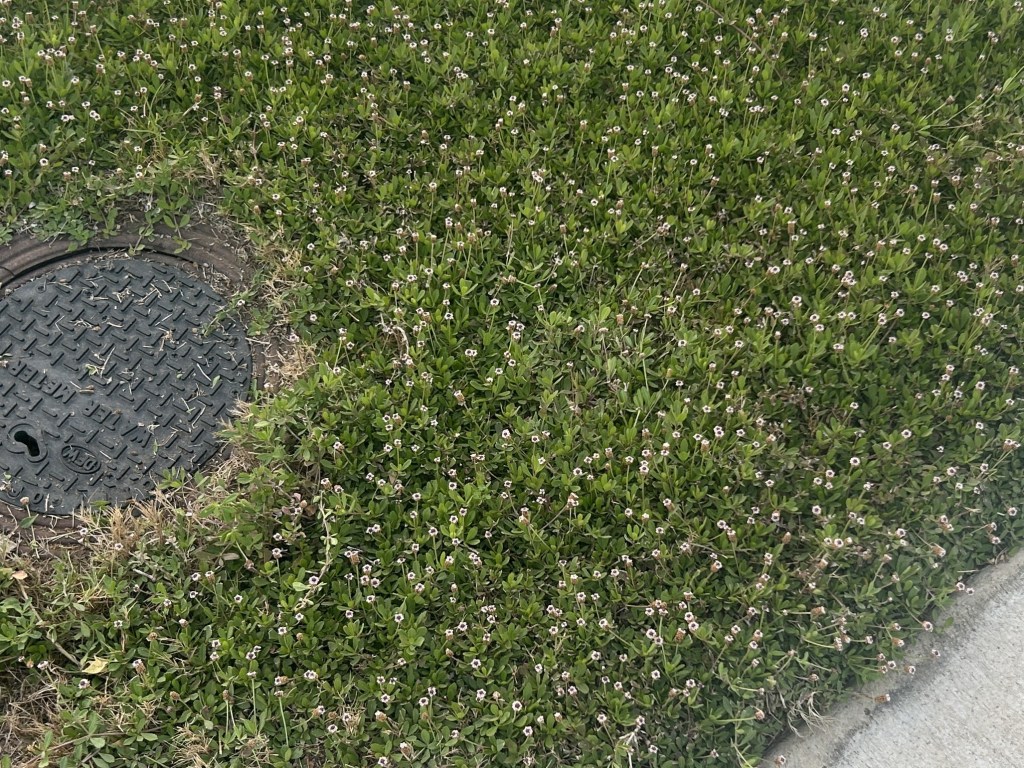
Below are some examples of Frogfruit here. And bear in mind that this is how it looks when the last rainfall was just 0.6 inches a month ago, and with daytime temperatures still over 90 degrees F. It grows strongly in sun or shade and tolerates drought conditions very well. Some of the Frogfruit areas are never mown; others are mown on a high setting every 2-6 months.
In the front yard there is a corner near the street containing the water meter that was in very poor condition after the next door lot was turfed (photo from September 2023).
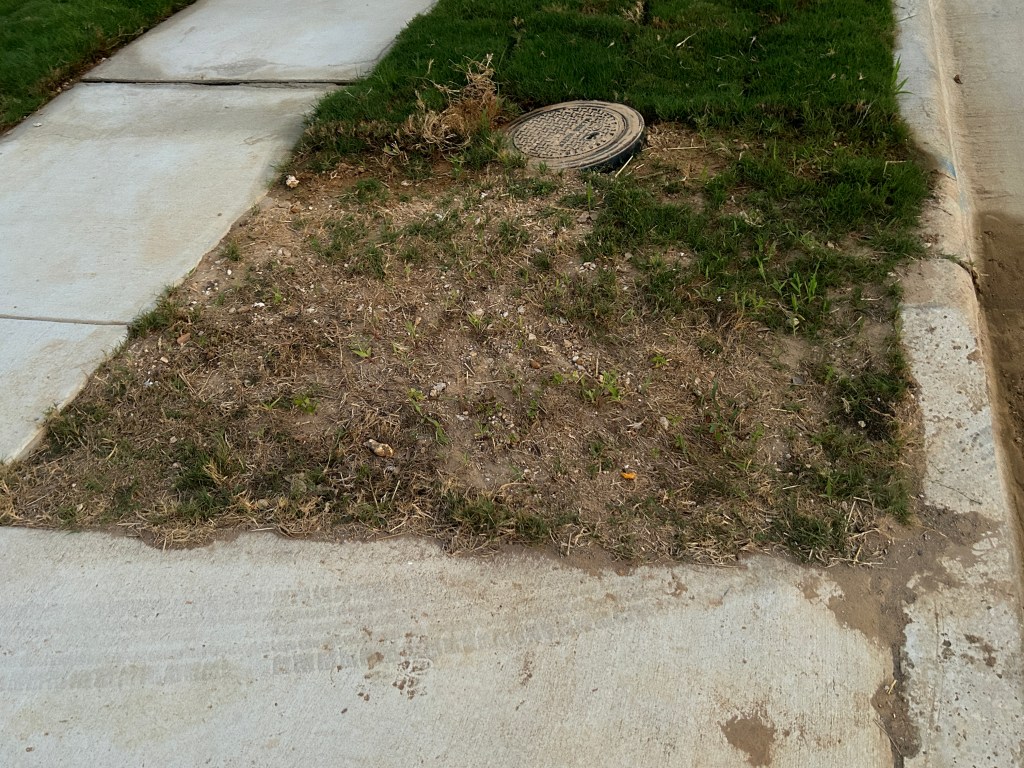
Look at the same area now! (September 2025)

On the other side of the driveway, the “hell strip” is filling in nicely with Frogfruit. (I also see some bluebonnets and native grasses growing there.)
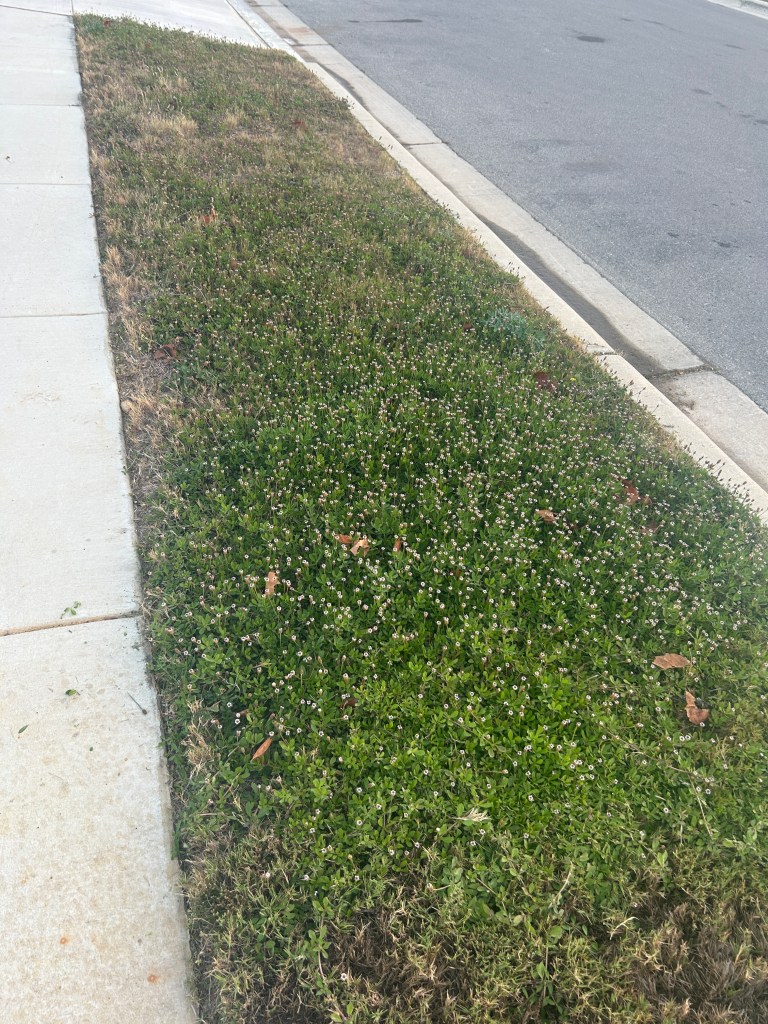
There is also Frogfruit beside the driveway. This particular patch grew from just one piece brought from a plant I had in Houston. It has now spread almost to the sidewalk and is beginning to creep into the shady area between our house and the neighboring one. (I used to prevent the Frogfruit from migrating onto the neighbor’s property, but he has told me that he doesn’t mind it wandering over.)
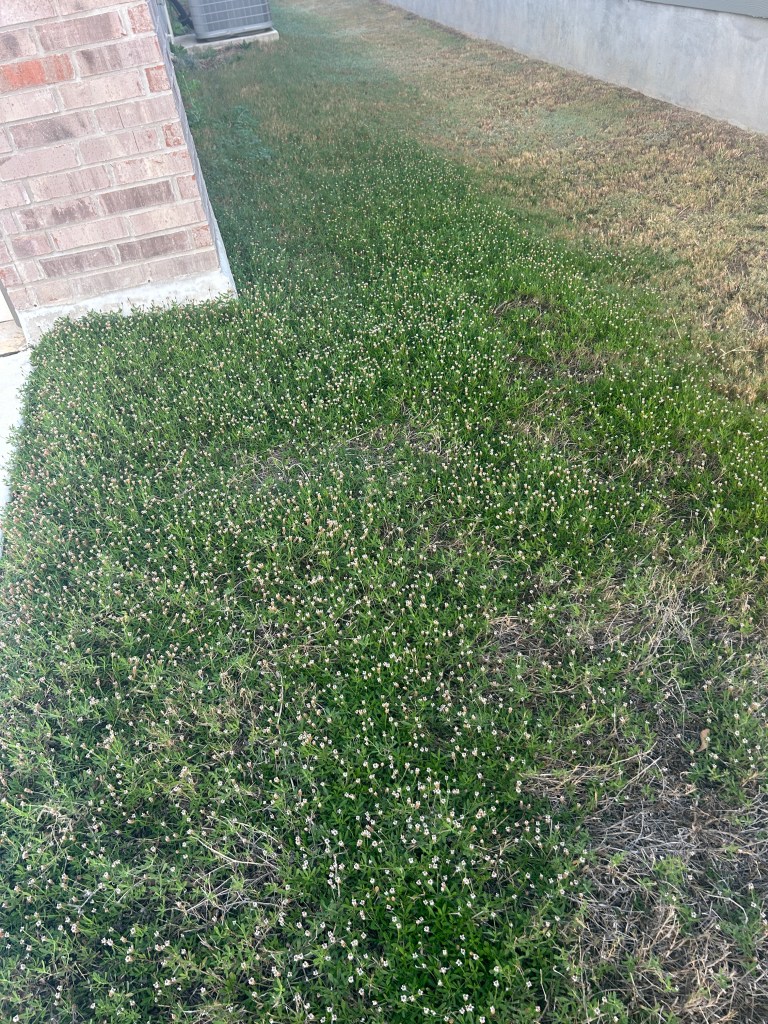
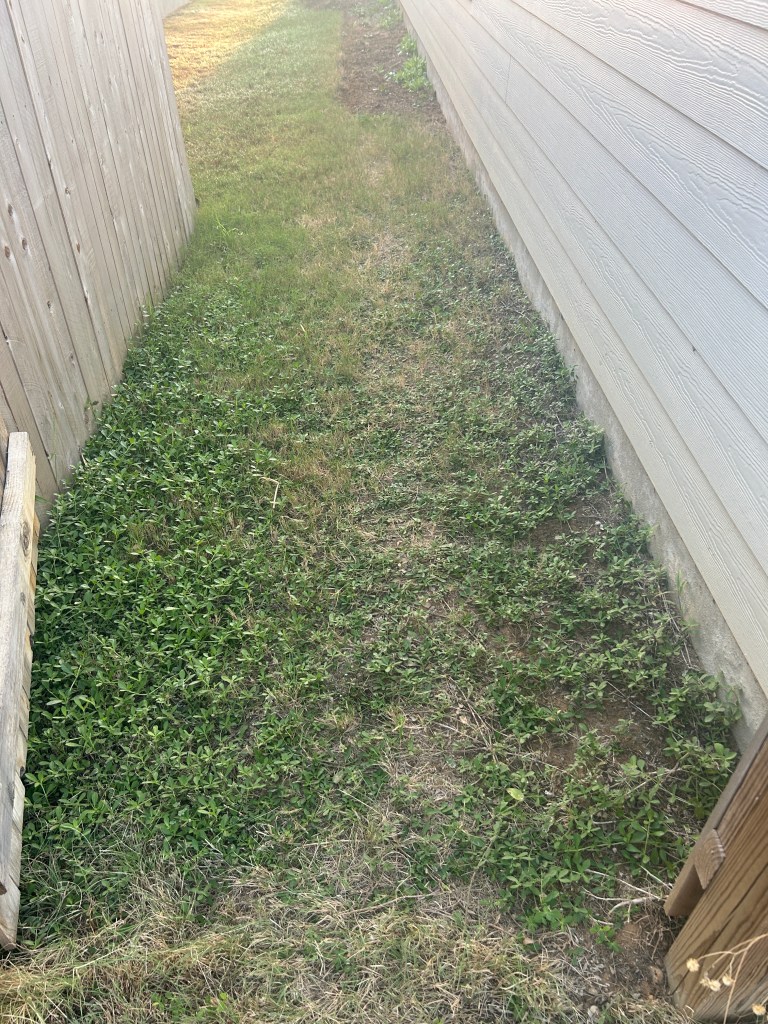
At the other end of that shady strip on the north side of the house, Frogfruit is spreading from the back yard into places where grass struggles to grow.
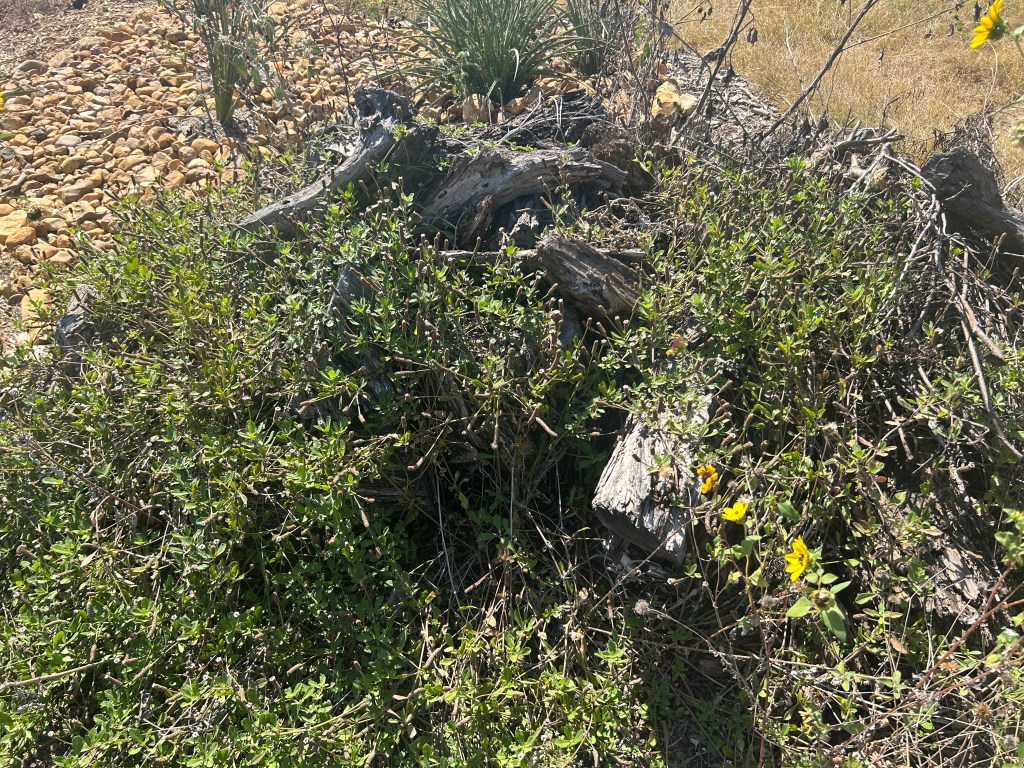
Here is Frogfruit rambling over a pile of decaying logs, which provides a multitude of habitat options.
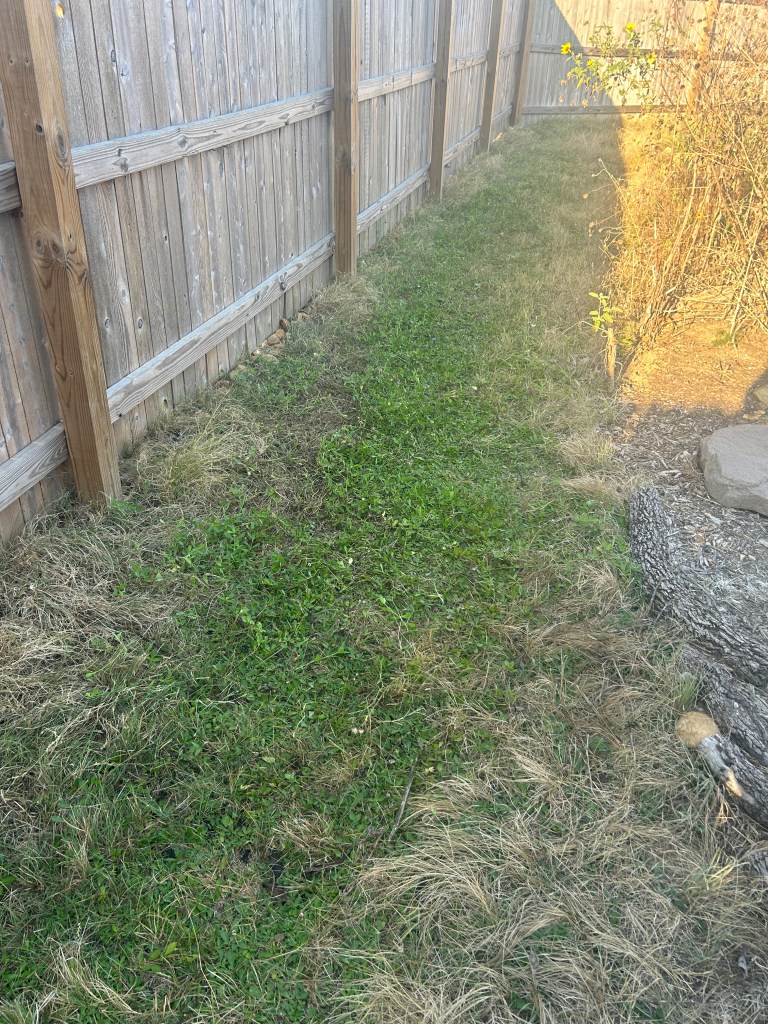
You can have too much of a good thing, though, and Frogfruit is one of those things that I have to watch. It grows so well that in some areas I need periodically to reduce its spread before it gets out of hand. That removal is easily done, however– the strands pull up without much of a fight. Here are a couple of examples.
The strip that grows behind the house is my primary source of rooted stem pieces that are easily transplanted elsewhere. Anything in excess of what I need is composted or discarded.

I mixed Frogfruit in with the Thunder Turf native grasses on the south side of the garden where shading from the fence was hindering growth of the grasses a little. I thought that I would let Frogfruit and the grasses sort themselves out, but in reality the Frogfruit has been more dominant than I’d like so I’ve pulled some of it up in that area to give the grasses more of a fighting chance. I may take out more over the fall/winter.
I am happy to give away baby Frogfruit plants from my excess. If I’m not doing an immediate transplant from ground to ground, then this is my process of propagation (developed after two years of trial and error!).
When a strand of Frogfruit is pulled out of the ground, often there are roots growing from leaf nodes. I choose a root cluster that looks strong, trim the stem to an inch or so on either side, and stick the piece into a small pot of soil. Then I just have to keep the pots moist until the recipient is ready to plant them. With this method I have 100% success, and here’s how the little plants look after about two weeks in pots.


 Rewilding My Lot
Leave a reply to Fall Mowing Of The Wildflower Meadow – Rewilding My Lot Cancel reply