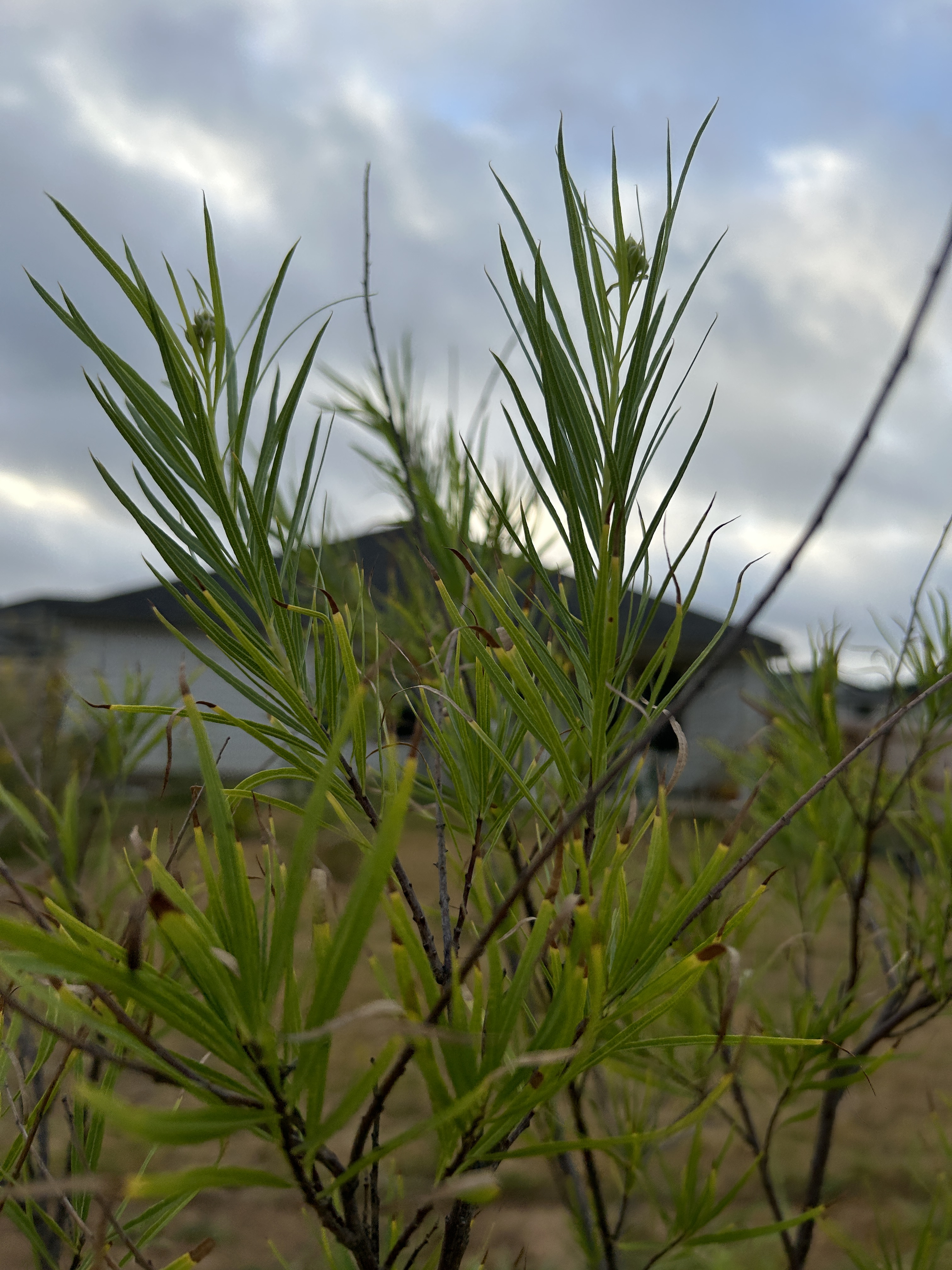

This year my cluster of Maximilian Sunflowers (Helianthus maximiliani) plants grew from one plant that I transplanted last year.
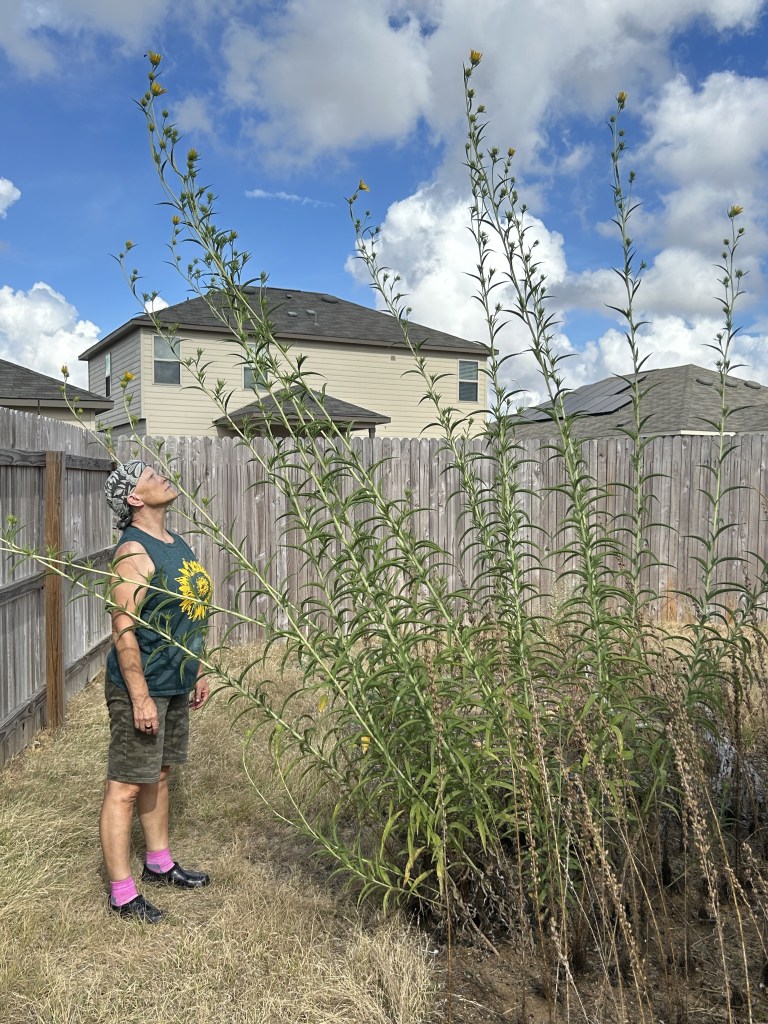
By the time this year’s plants began to bloom, they had already reached a height of 9-10 feet. Here’s a picture from that time.
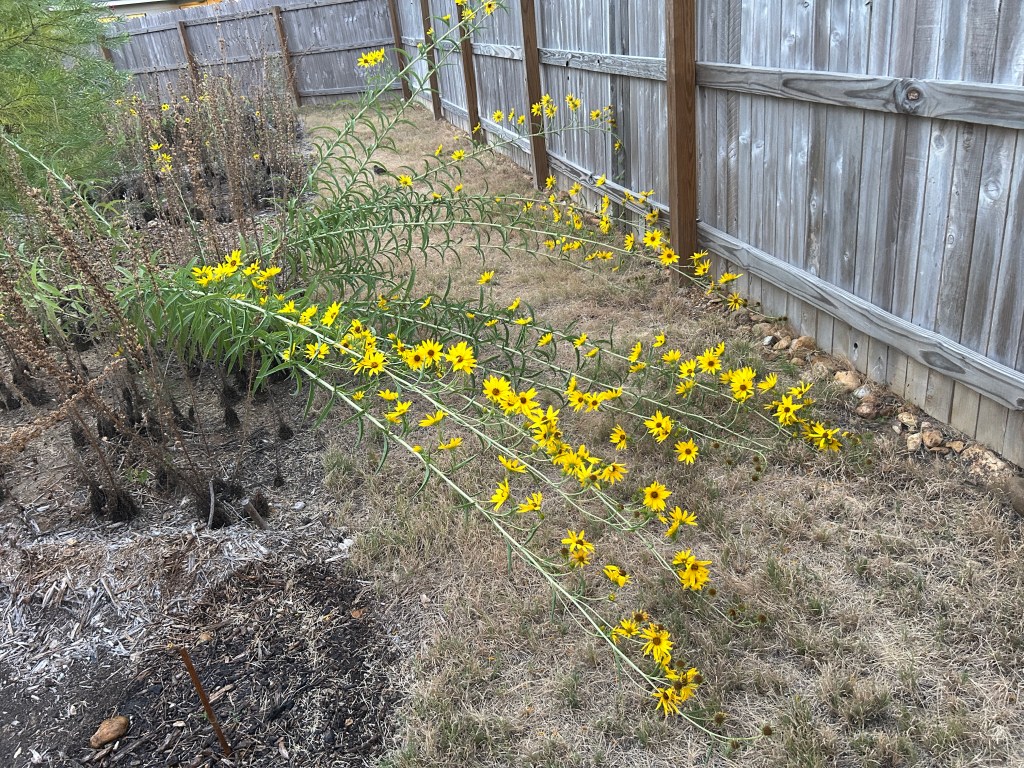
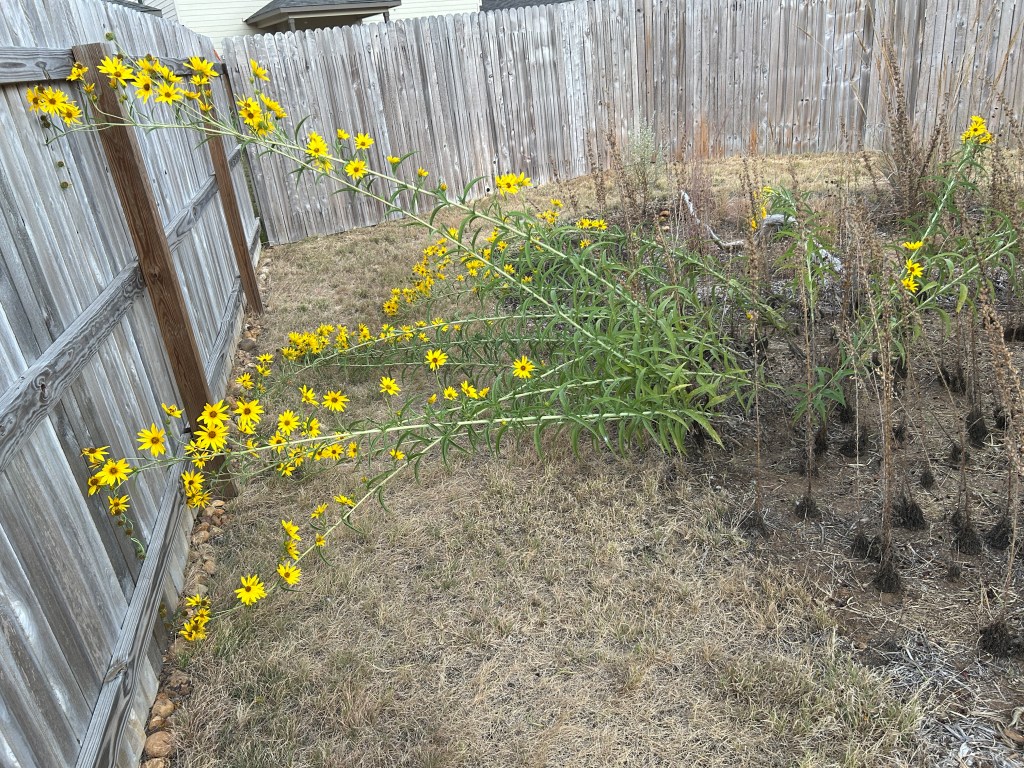
As the blooms developed further, the tall stems splayed out in a way that was, in truth, rather inconvenient.
So what to do? These are hardy, food-bearing, cheerful plants that I’d like to keep but they will get in the way in this small garden. I could build a fence around them this year to prop them back up, but I have decided not to go to that trouble. Rather, I will try something new next year to make them more manageable, taking cues from what I have seen in nature.
Recently I had the opportunity to visit and examine a native prairie near Brenham that is recovering after having been cleared of Huisache trees. There were an abundance of prairie grasses and Maximilian Sunflowers growing together.

Two things about this situation have led to the sunflowers staying upright. One is that they are being propped up by the tall grasses (e.g., Indiangrass), and the other is that deer have fed on these plants to keep the stems shorter.
I can’t support Maximilian Sunflowers in my garden without some sort of man-made structure, but I can mimic the browsing of deer. So what I will do next year is wait until the plants reach 4-6 feet in height, and then cut them down to about 2 feet tall. They should grow back, but with more and shorter stems.
I am not the first to suggest cutting Maximilian Sunflowers in half before they bloom. In fact, there’s even a name for this technique: the Chelsea Chop! What has brought this to mind for me is seeing this plant in a prairie situation and noting the beneficial effect of having deer cut them down earlier in their season.
So this strategy will be an experiment, to be refined in future years as I learn when to cut them back and how far. And in the meantime I will just have to navigate the obstacle course that this year’s plants have created.


 Rewilding My Lot
Leave a reply to mannhelen Cancel reply