After weeks of drought and high temperatures, we finally got 1.54 inches of rain over two days (October 24-25, 2025). And instead of temperatures high/low of 90s/70s F, we are now expecting a more normal 70s/50s to arrive in a day or two. (Although, as I write this on the afternoon of October 27, the temperature is currently 87 F!)
Here are some things that happened in the garden as the result of the long-awaited rain.
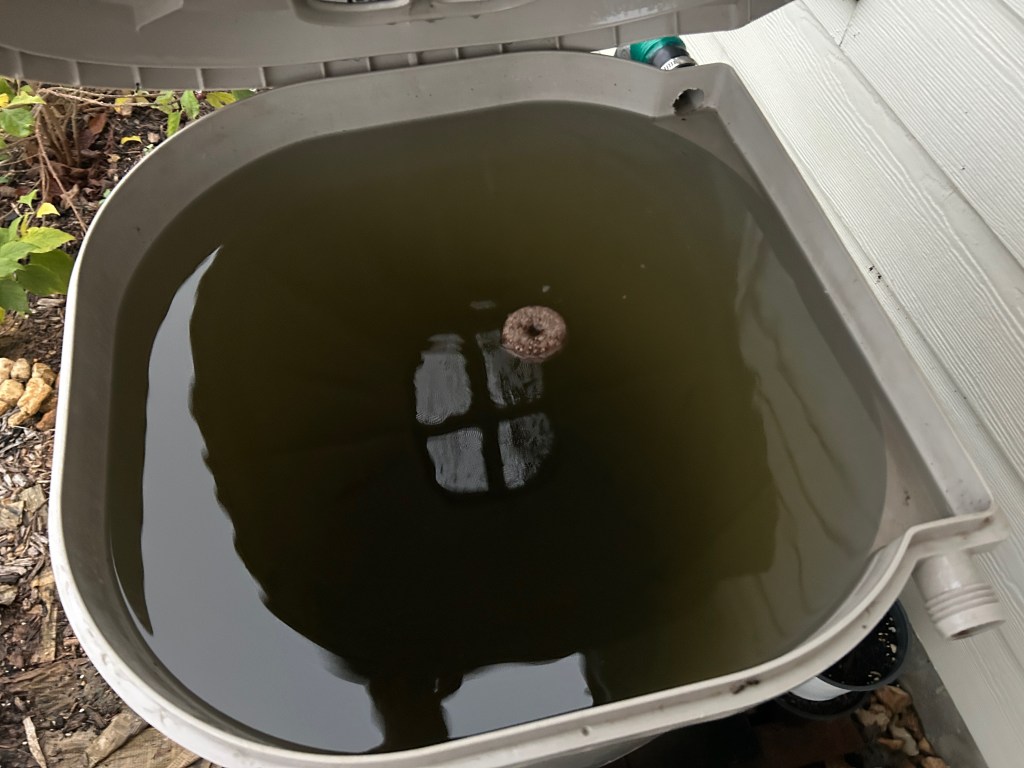
The rain barrels had been empty for a month, but they’re full again now. I use Mosquito Dunks to prevent the development of mosquito larvae, although the Dunks may not be necessary since there’s a screen in the lids to prevent adults entering. (This photo is with the lid lifted up.)
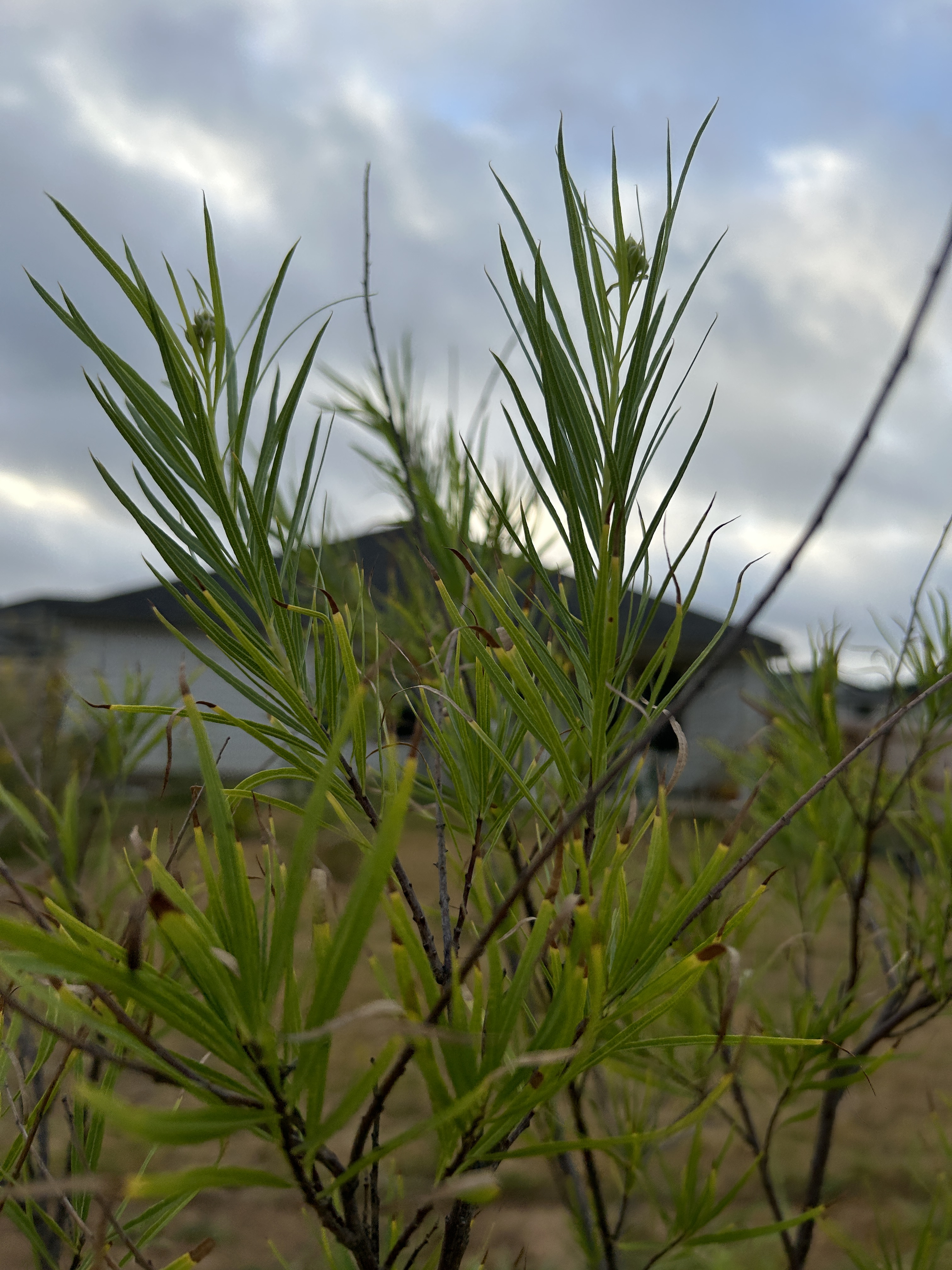
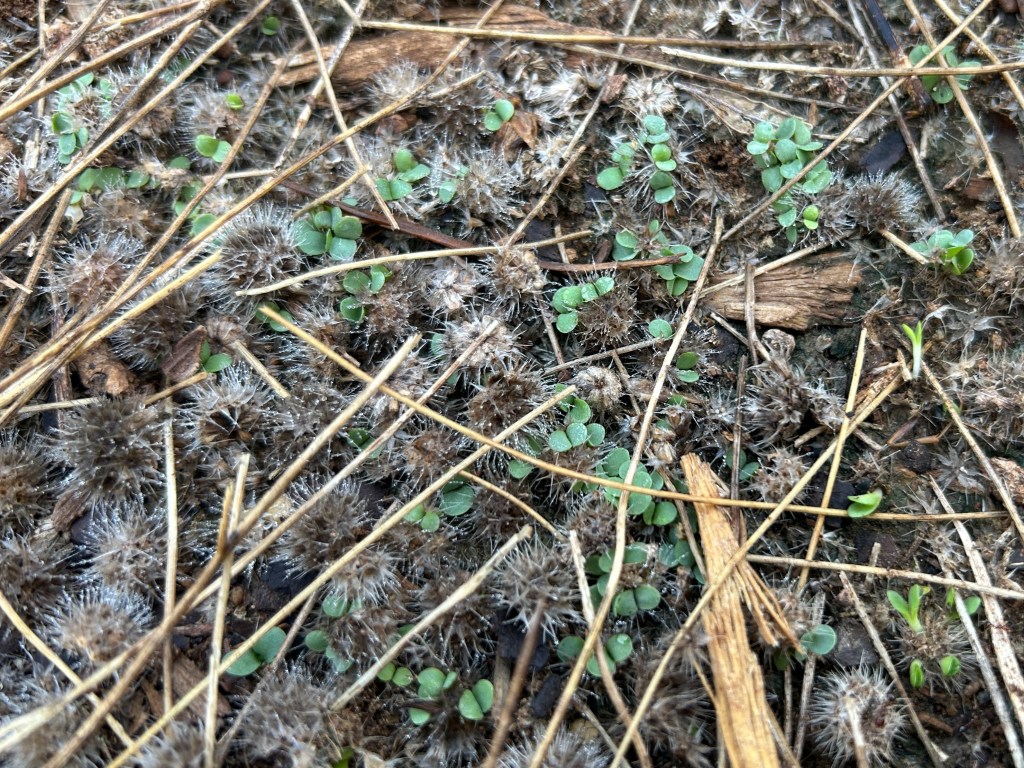
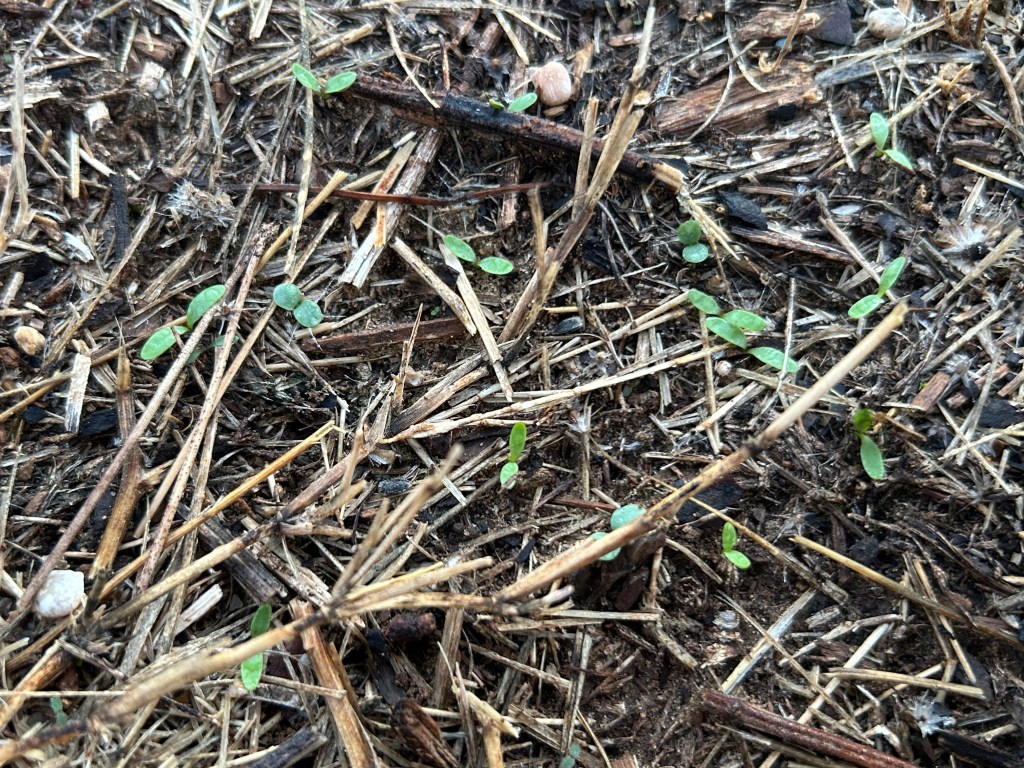
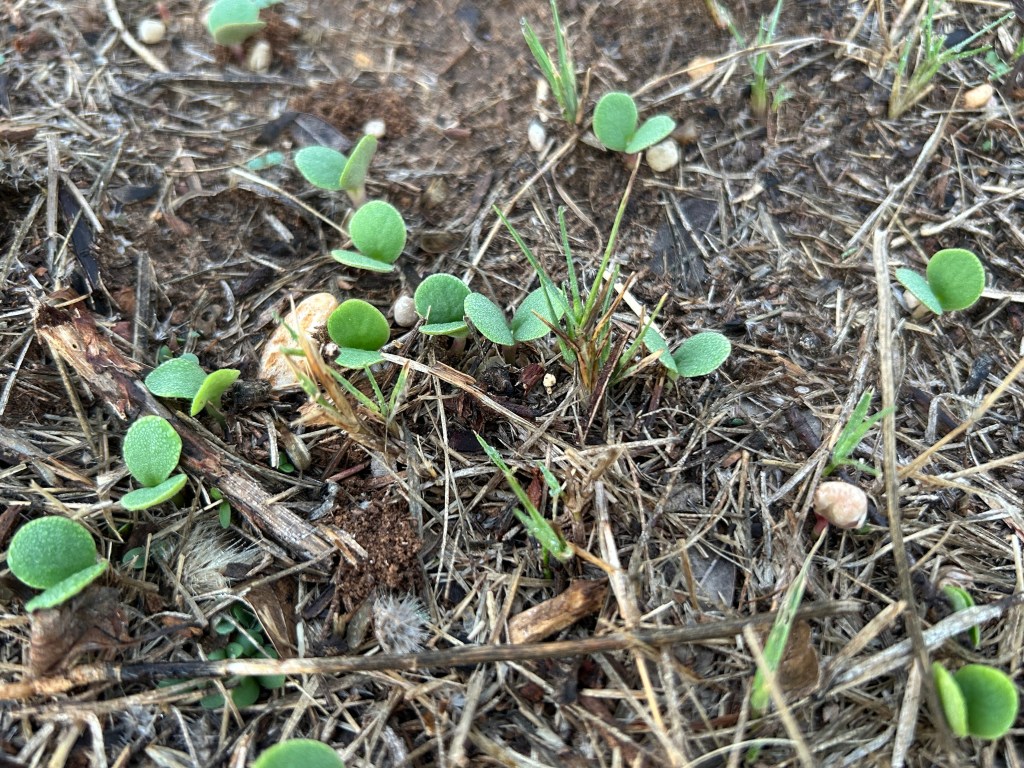
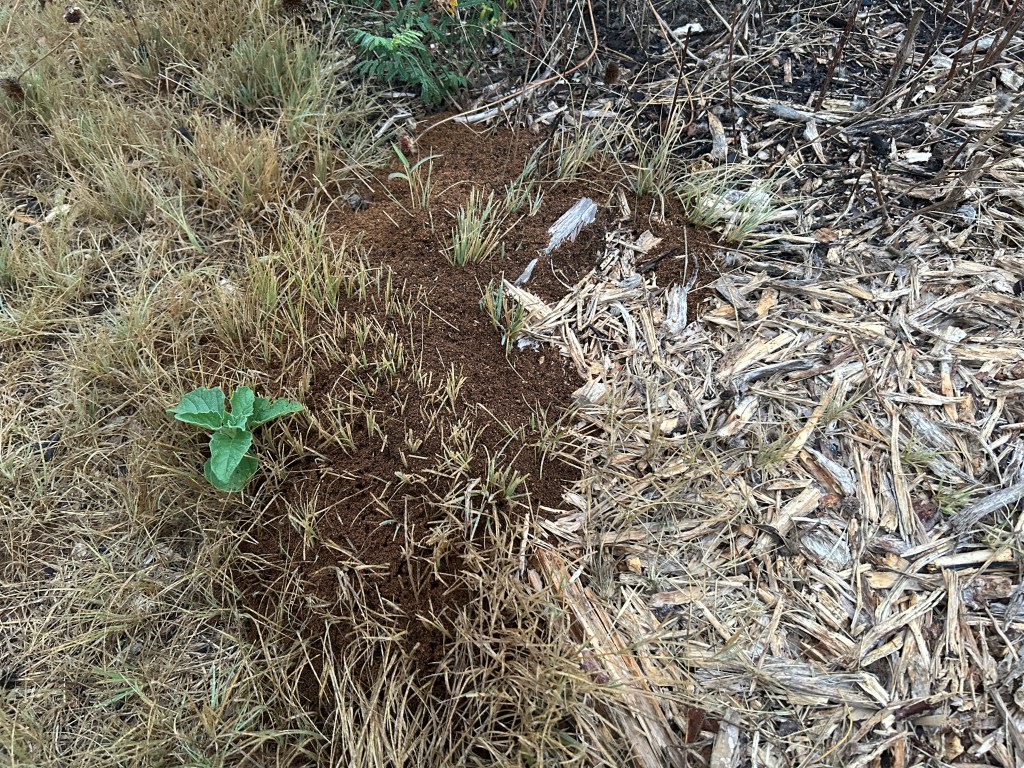
It’s always exciting after a major rainfall to see what germinates in response. Sure enough, after just two days I started to see new seedlings emerging. These photos were taken in the wildflower meadow in front of the house — the larger pairs of round leaves in the second photo below are bluebonnets. The photo at the beginning of this post is of seedlings in the back yard.
It is not unusual after rain to see fungi growing out of the mulch pathways, and here is a cute pair of mushrooms that I found this time. Fungal activity is good for the organic decay process, which is important for building healthy soil. That’s a high priority for me in this new housing development that has very poor quality soil, so I’m always happy to see mushrooms.

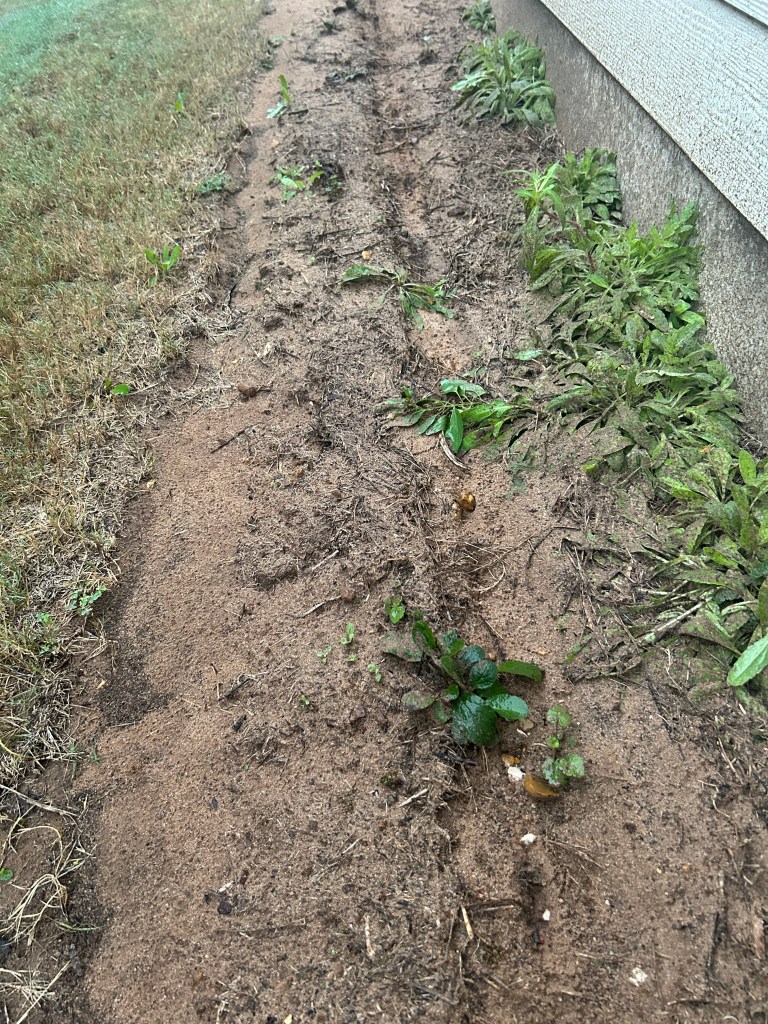
Beside the house, the ground is prone to erosion when water falls heavily off the roof (there are no gutters here). This was more noticeable than usual on the north side, where I have recently removed some of the Bermudagrass to make a bed for shade-loving plants. In time, the new plants there should help to hold the soil in place, but in this particular rain event I saw some movement of soil away from the house. This is an area where I will be adding more organic material to help to build back the eroded soil, in addition to the soil stabilizing work that the plants will do.
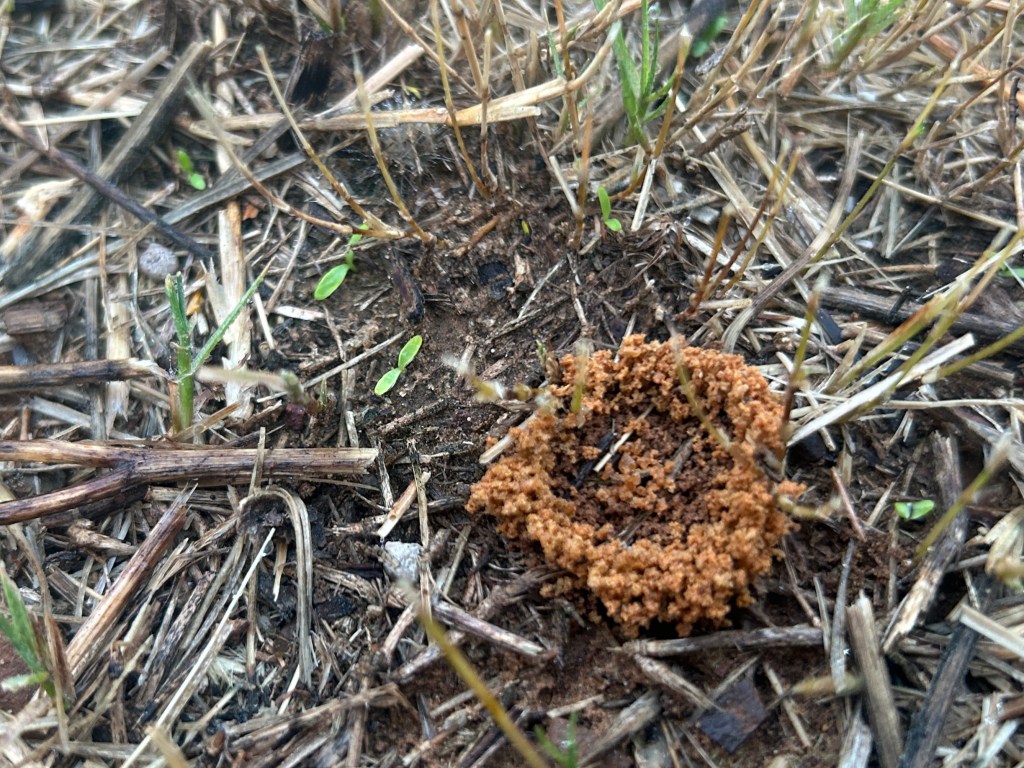
After rain, there is usually significant ant activity, and this time was no exception. I saw new big mounds and small tunnels. Unfortunately, most of the ants that I encounter here are invasive Fire Ants (Solenopsis invicta). They do serve a role in aerating soil, but on the other hand they out-compete native ants and their stings (of me) are painful. So far, I have only used non-chemical means to tackle particular mounds (e.g., disturbance or boiling water), but I don’t enjoy coexisting with these creatures and at some point I may have to escalate my approach to them. In the second photo below of the new ant tunnel, note the new little seedlings nearby (this is in the wildflower meadow area).
I was waiting for this rainfall as a signal for me to get on with some more fall projects. So as time permits, these are some things that I’ll tackle next:
- weeding, now that the ground is a little softer,
- putting new seed on the ground in a variety of locations,
- finishing installing new plants in the ground,
- building new berms to reduce soil erosion in certain areas,
- aerating the soil in compacted areas, and
- adding mulch.


 Rewilding My Lot
Leave a comment