When I first arrived in Seguin, I saw Indian Paintbrush (Castilleja indivisa) in large groups beside roadways, often alongside bluebonnets. After that first year there has been a marked reduction in roadside wildflowers, perhaps because of our extended drought, or changes in mowing practices that have prevented reseeding.
I was very pleased in 2024 to have two of these plants volunteer in front of the house. However, instead of volunteering into the wildflower meadow area, which would have been ideal, they chose to grow on the other side of the driveway.
I had hoped that they would appear in the meadow the following year, but instead I got another couple of plants on the “wrong” side of the driveway again. That time, I waited until the plants produced what I assumed to be mature seed pods and crushed them in the meadow area.
I was hopeful this spring (2026), but again there were no paintbrushes in the meadow, with about seven plants on the wrong side of the driveway. So now I’m trying even harder to get a population growing in the meadow. The challenge is on!
Several sources have reported that transplanting an Indian Paintbrush may kill it. Certainly, when I tried that with one of my plants, it died. I don’t know if this is because this plant is hemiparasitic, in that when its roots encounter the roots of other plants, such as grasses or bluebonnets, the Paintbrush roots will penetrate the “host” roots and take nutrients (the host is not killed).
I have tried to buy Indian Paintbrush seeds, but they are either not available from my usual suppliers or when I see them for sale, they are five times the price of other plants.
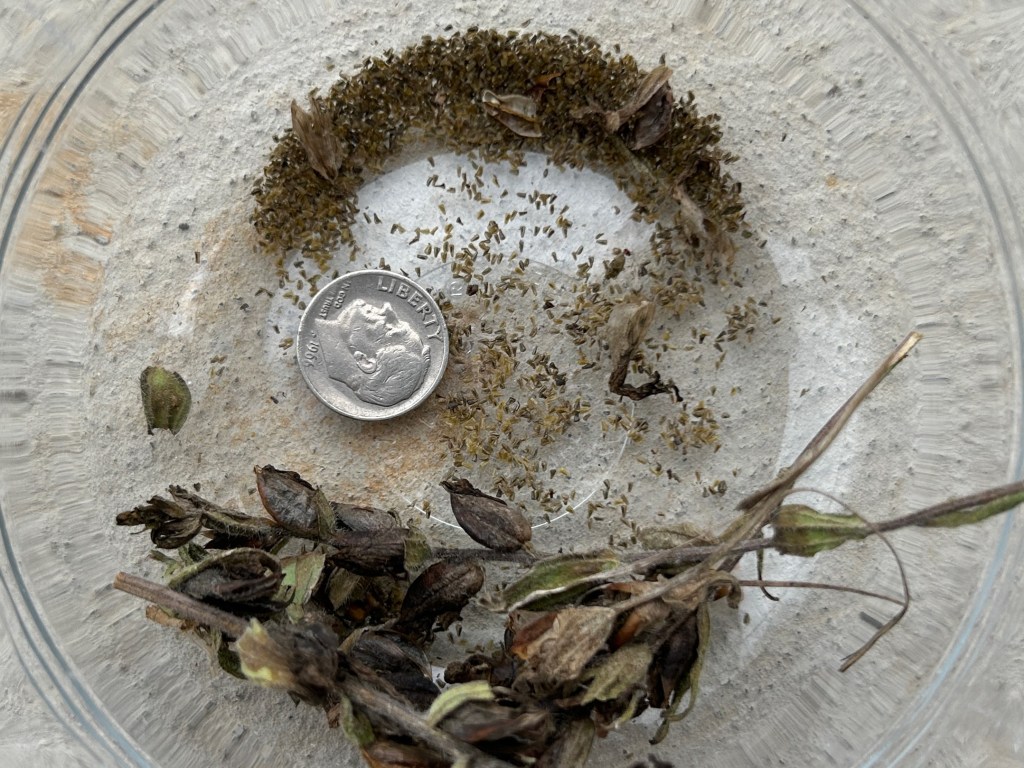
I have a friend who lives near where Indian Paintbrush grows wild, and she very kindly went to the trouble of collecting some dead plants for me. When the seeds are extracted, they are just about the smallest seeds that I have ever seen. No wonder commercial suppliers don’t want to deal with them. In this photo the coin is a US dime with a diameter of 0.7 inches or 18 mm.
I scattered my friend’s seeds into the meadow here, along with fragments of the dead plants. I intentionally did that a day before a rainfall, so that the seeds would be pushed into good contact with the ground.
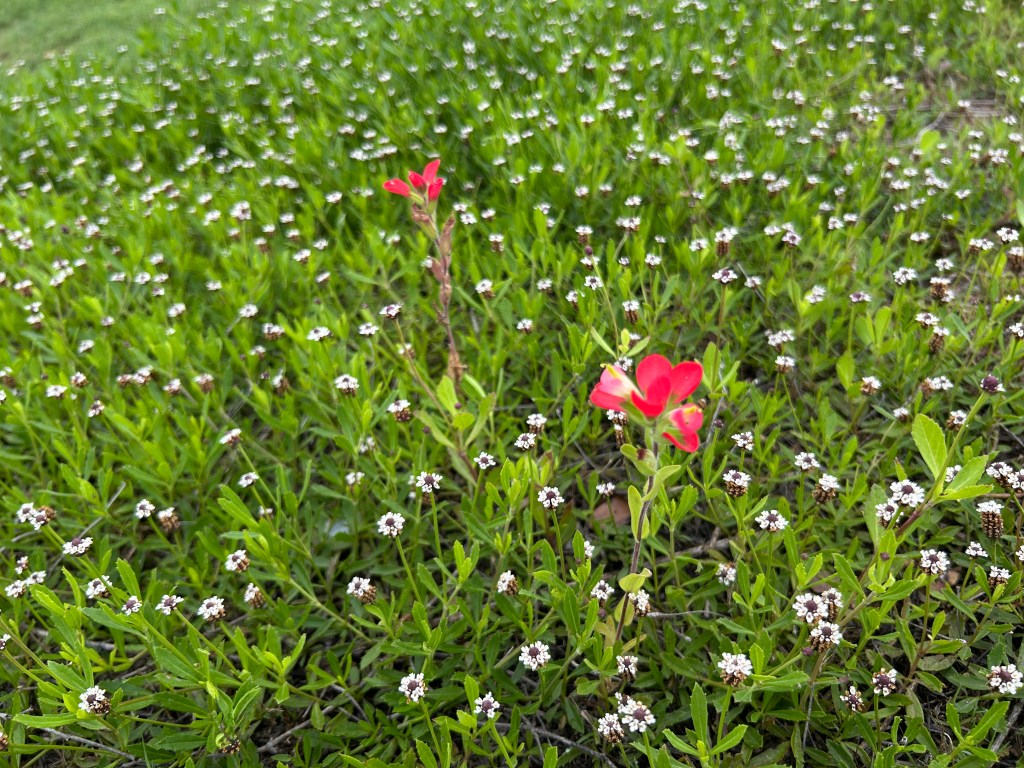
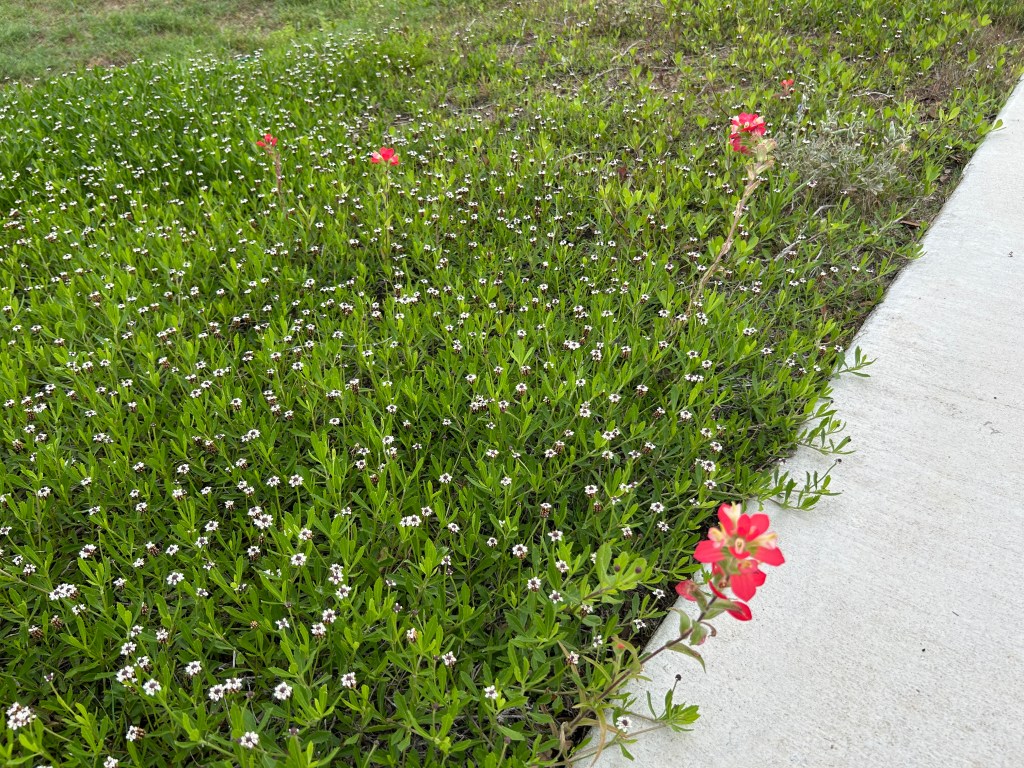
My own plants here are still colorful and nowhere near seeding yet, but I will repeat the seeding process with my own once the plants are ready for that. In the photo below there are four of them, growing among Frogfruit.
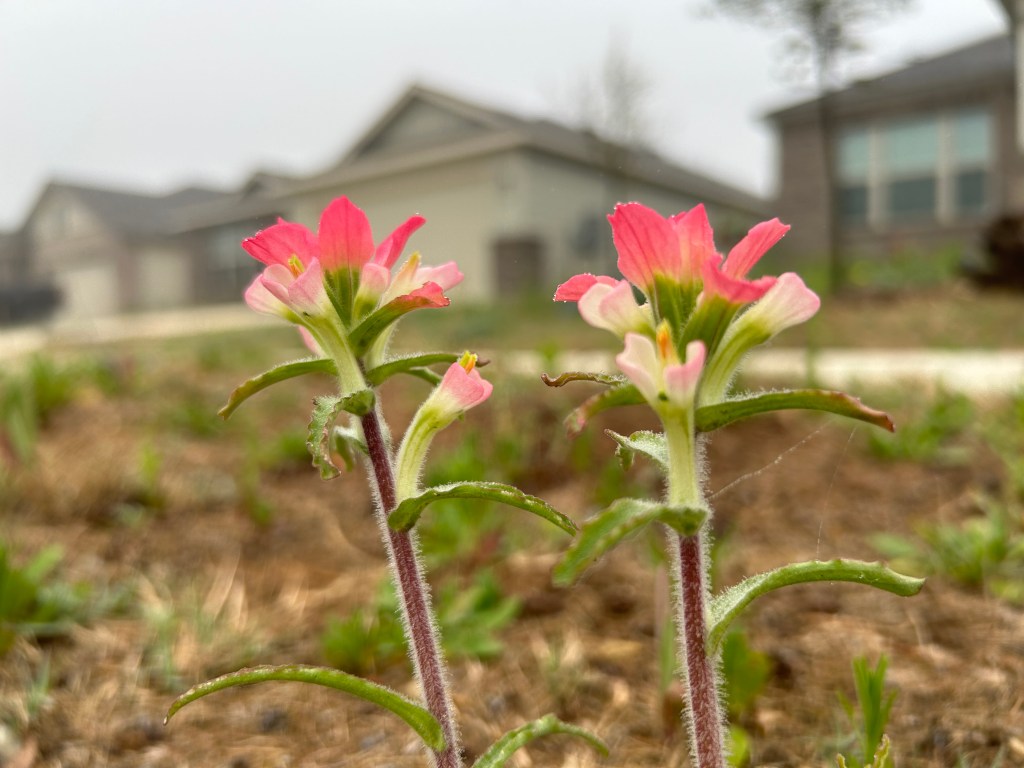
Another interesting fact about Indian Paintbrush is that the colored structures are actually bracts (a type of modified leaf, not a petal), and the true flowers are paler and less conspicuous. In the photo below (taken in 2024), the darker pink structures at the top of the stems are bracts and the pale pink structures below are flowers.


 Rewilding My Lot
Leave a reply to inspiringwombat88d7f9b231 Cancel reply