Phyla nodiflora
Lady Bird Johnson Wildflower Center database entry
Frogfruit is a great plant to have if you want something to spread quickly, grow in a variety of soil and sun conditions, encourage tiny pollinators, and tolerate being mown as part of your lawn. However, if you don’t want something to grow so freely, maybe it’s not for you.
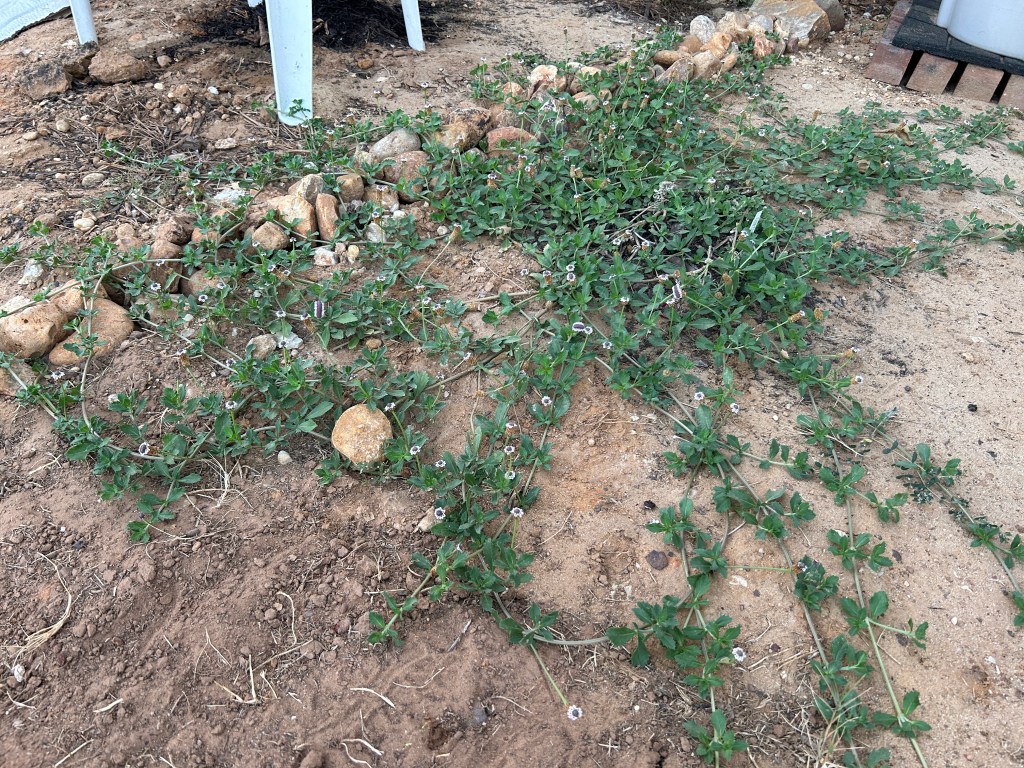
I only bought two Frogfruit plants originally, and I’ll never need to buy it again. It’s very easy to propagate because the stems self-root. This is how I’ve been generating new plants…
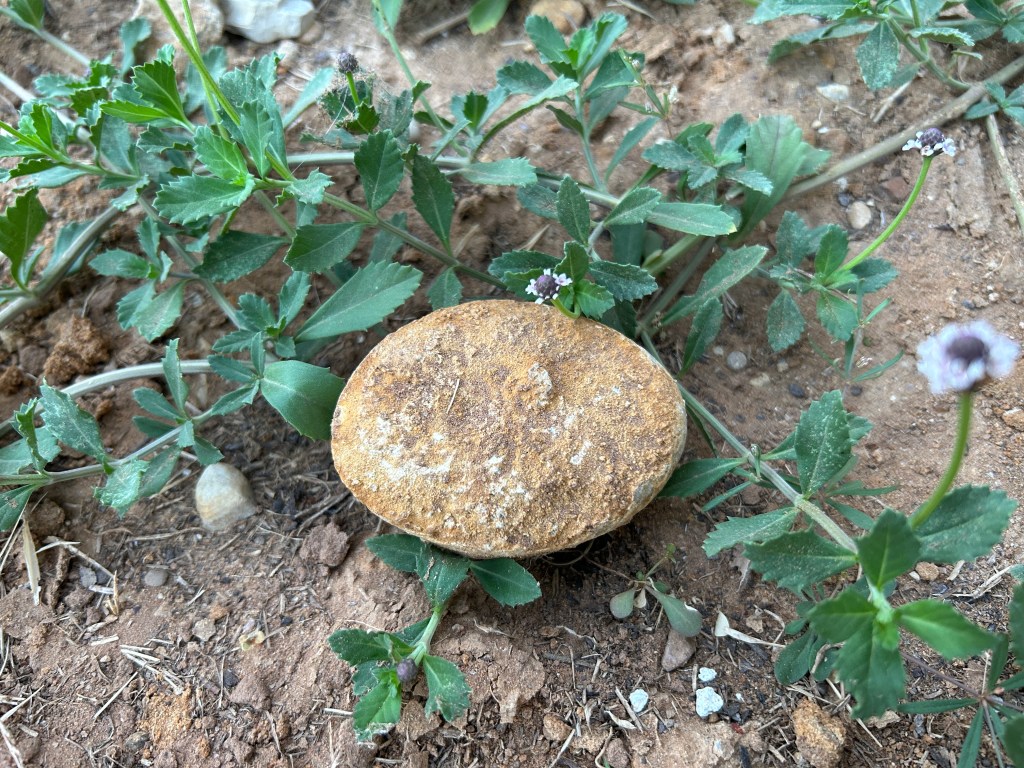
If I want to take a Frogfruit cutting, I can either search the plant for places where a stem has chosen to root already, or I can speed that process along by resting a stone on a stem for a few days. Here’s a place where I had a stone, and under it some roots have formed.
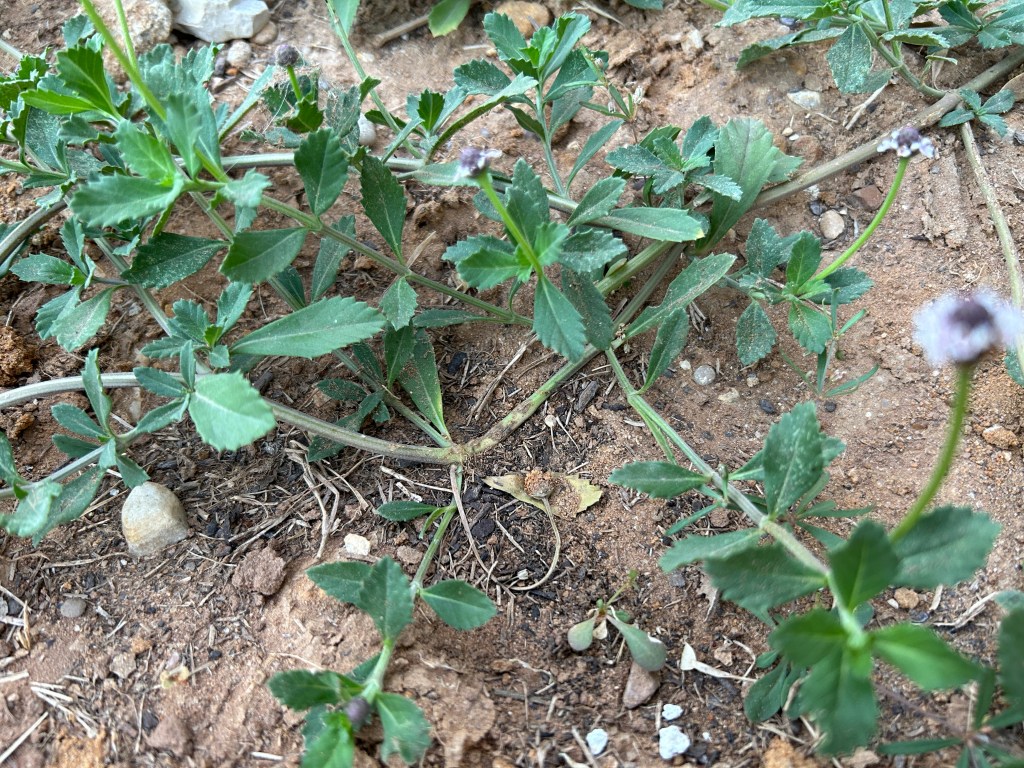
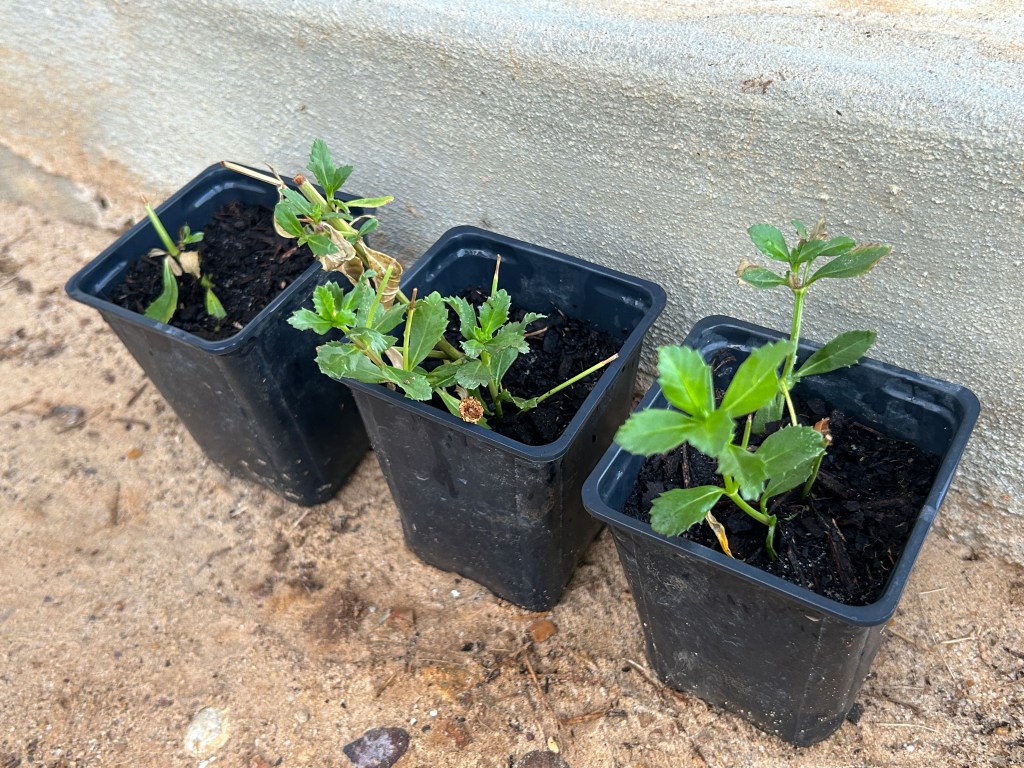
I snip the stems to just a few inches from the rooted part and put that either in a new ground location or a pot. At the moment I only own three small pots, so for now there is usually a rotation of three baby Frogfruits waiting to find out where they are going next.
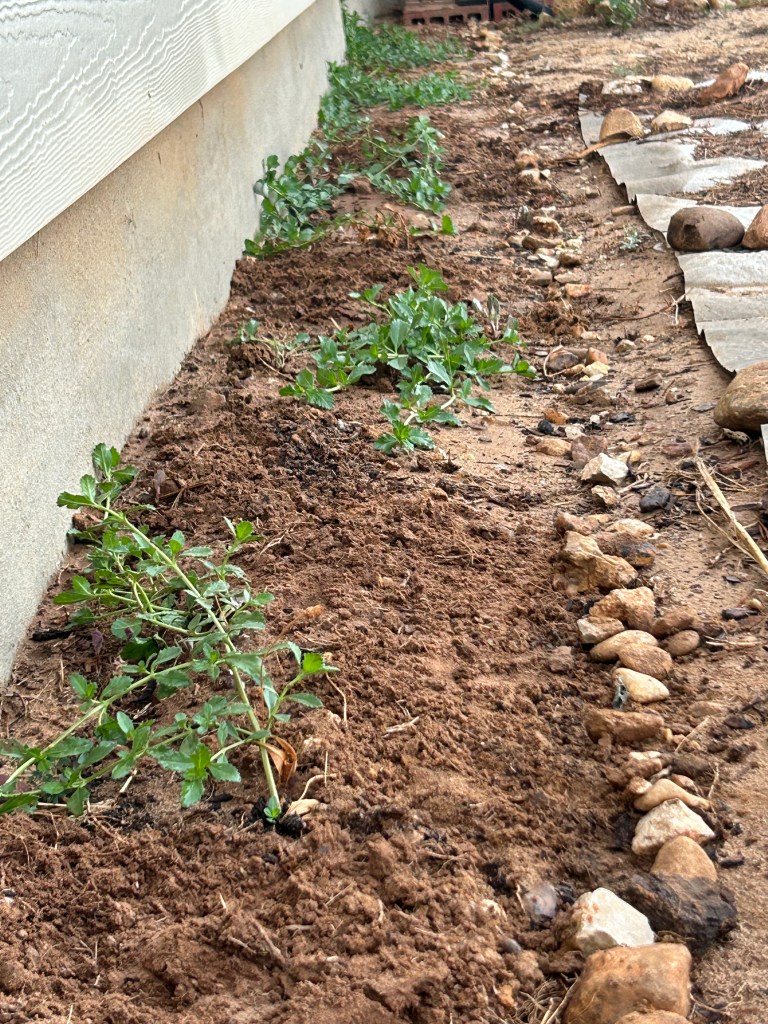
One of the places where I have transplanted Frogfruit is along the back wall of the house. We have no gutters here, so when it rains there is a deluge that comes off the roof, primarily hitting what has now formed into a line of stones. I’ve put Frogfruit between that drip line and the house, thinking that it will grow fine there in the part shade, not mind being pounded by rain once in a while, and if it ventures too far into the bed I should be able to trim it back easily. There have been seven transplants placed in this area and I think they’ll fill in nicely over time.


 Rewilding My Lot
Leave a reply to Uncovering The Back Bed – Rewilding My Lot Cancel reply