Previous posts: Planning, Preparation, Seeding
I wanted to plant native grasses in the first year here to get them established while I later worked on other projects. So this was almost the first project I started, although it took three months of work to prepare the ground for planting. I was happy with the seeding, and was looking forward to seeing little grass sprouts 2-3 weeks later.
However, on day six after the seeds were sown, there were several hours of torrential rain.
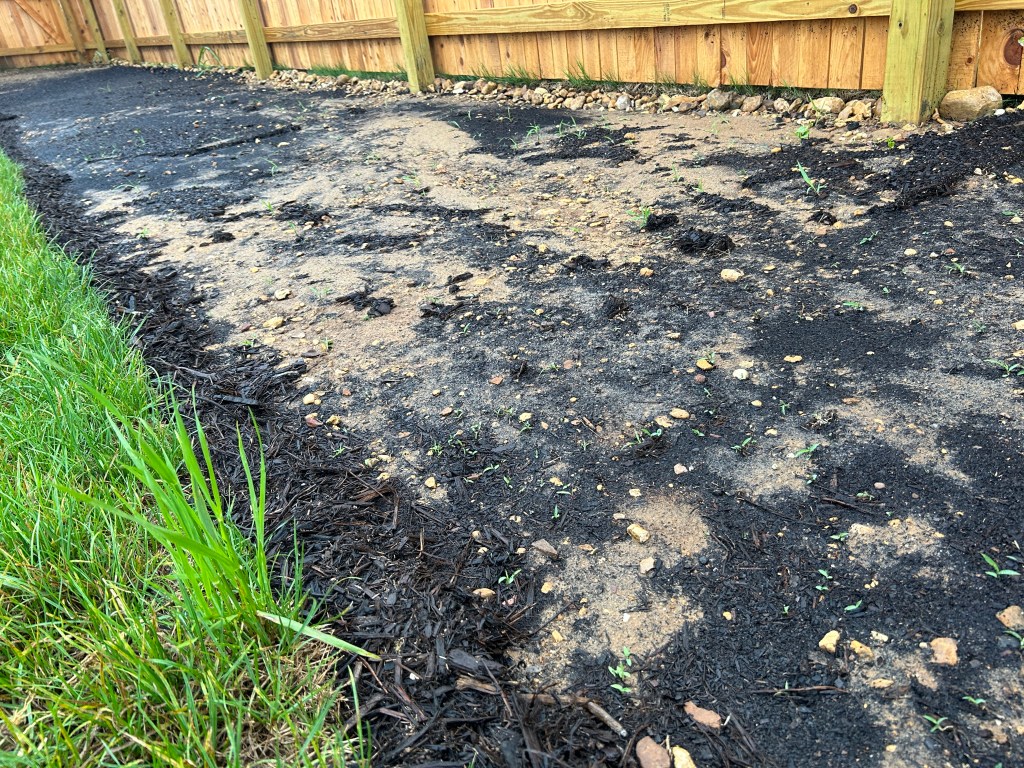
Because the original ground was sand-colored, and the seeds were spread in a dark soil mix, it was easy to see that everything had been moved around. Because of the unevenness of the ground here, there were a few places where dark soil and mulch had gathered and the rest of the area was the original sand color. I also had no idea whether seeds had been moved with the soil or had washed off the property altogether, nor whether they had been damaged by being moved during germination.
Here’s a photo I took at the time. You can see some little green shoots, but they are weeds growing back, not the newly seeded grass.
So then what was I to do? My first inclination was to cut my losses and immediately reseed the whole area. However, I reached out to Native American Seed to ask their advice, and they instead suggested waiting to see what grows first and then reseeding the gaps later.
So that’s what I’ve done. I will be planting other seeds in the fall anyway and I’ll add a second round of native grass seeding to that plan. In the meantime I’ll see what comes of this first round of seeds — what will grow and where will it be?


 Rewilding My Lot
Leave a reply to Native Grasses — Chapter Five: Growth – Rewilding My Lot Cancel reply