Rewilding My Lot

Converting a new developer lot into a nature ecosystem — my journey


Native Grasses — Chapter Four: Torrential Rain Disruption

Previous posts: Planning, Preparation, Seeding

I wanted to plant native grasses in the first year here to get them established while I later worked on other projects. So this was almost the first project I started, although it took three months of work to prepare the ground for planting. I was happy with the seeding, and was looking forward to seeing little grass sprouts 2-3 weeks later.

However, on day six after the seeds were sown, there were several hours of torrential rain.

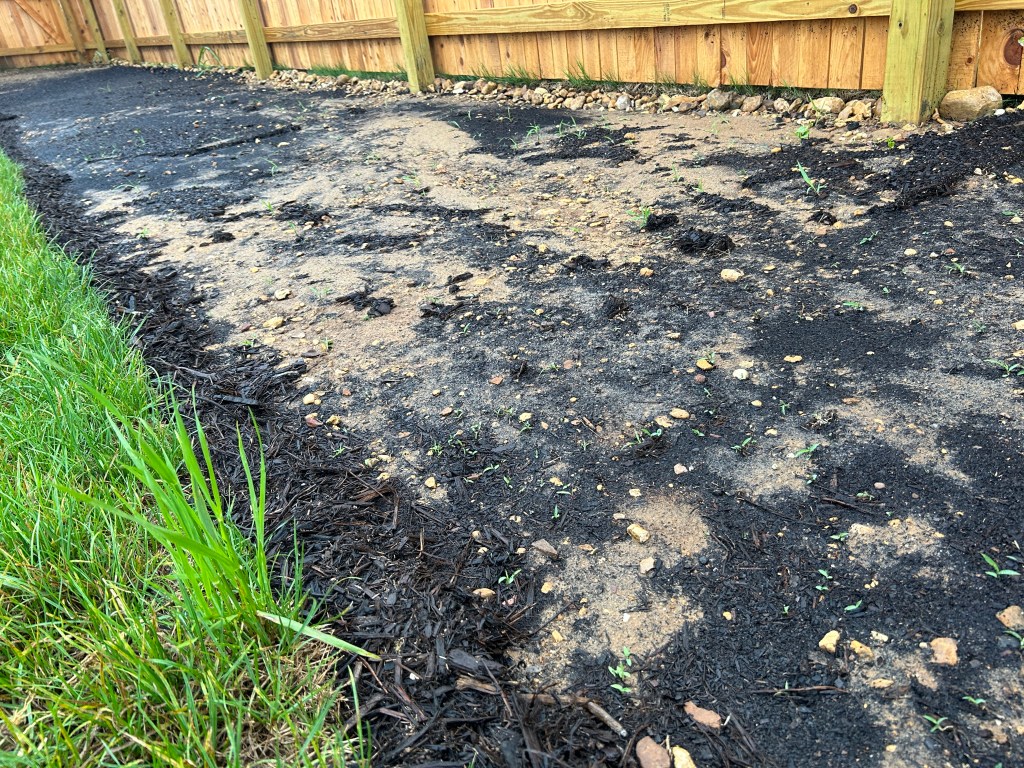
Because the original ground was sand-colored, and the seeds were spread in a dark soil mix, it was easy to see that everything had been moved around. Because of the unevenness of the ground here, there were a few places where dark soil and mulch had gathered and the rest of the area was the original sand color. I also had no idea whether seeds had been moved with the soil or had washed off the property altogether, nor whether they had been damaged by being moved during germination.

Here’s a photo I took at the time. You can see some little green shoots, but they are weeds growing back, not the newly seeded grass.
So then what was I to do? My first inclination was to cut my losses and immediately reseed the whole area. However, I reached out to Native American Seed to ask their advice, and they instead suggested waiting to see what grows first and then reseeding the gaps later.

So that’s what I’ve done. I will be planting other seeds in the fall anyway and I’ll add a second round of native grass seeding to that plan. In the meantime I’ll see what comes of this first round of seeds — what will grow and where will it be?


9 responses to “Native Grasses — Chapter Four: Torrential Rain Disruption”

  1. Meredith Clarage Avatar
    Meredith Clarage

    How does that area look now?

    Like

  2. […] Previous posts: Planning, Preparation, Seeding, Rain Crisis […]

    Like

  3. […] I’m going to have to think more about how to manage water flow on this property, especially as I am planning major seed planting projects in the fall. If this rain event had happened soon after planting seeds, then I would probably have lost them like I did the last time this happened. […]

    Like

  4. […] the area on the left side of the lot where I planted native grass seeds in the spring (and then had them washed away) I have recreated my original mulch dike and added more mulch to subdivide the area. That may not […]

    Like

  5. […] of the garden in the spring and sowed seed there. But nothing grew! That was around the time of The Great Deluge, which disrupted my other native grass seeding project, so who knows where those seeds are […]

    Like

  6. […] original sowing of the short grasses was only partly successful because many of the seeds were washed away soon after planting. However, some seeds did grow in that area. The native grass that grew has done well and I’ve […]

    Like

  7. […] are links to posts describing those events: Planning, Preparation, Seeding, Rain Crisis, […]

    Like

  8. […] I have a history of causing flooding rain events to occur just after I have sown seeds. It happened six days after I seeded native grasses in the spring, and this week the day after seeding wildflowers in my front lawn (which was also two days after […]

    Like

Leave a reply to Improving Erosion Control? – Rewilding My Lot Cancel reply

About Me

Nature Lover.
Inquisitive Observer.
Student Gardener.

I invite you to join me on my journey to convert my sterile (from a nature point of view) new house lot to a healthy and diverse ecosystem, as I make discoveries, mistakes, and hopefully progress. I am not an expert or professional. The project started in February 2023 and the location is Seguin, Texas, USA.