My education was in the biological/medical sciences, and even though I have long been out of the profession, that hasn’t taken away my interest and instincts.
“Citizen science” or “community science” is important in a number of fields, and one of my earliest experiences of that was using the app iNaturalist. The first step for me to identify a novel plant or creature is to upload a photo to iNaturalist, and immediately there will be computer-generated suggestions as to what it might be. However, an important second step is the crowdsourcing that then happens. My identifications can be confirmed, refined, or corrected by experts in the field, and they are included in a large database of observations to record what is appearing where and when. Scientists use these data for their research.
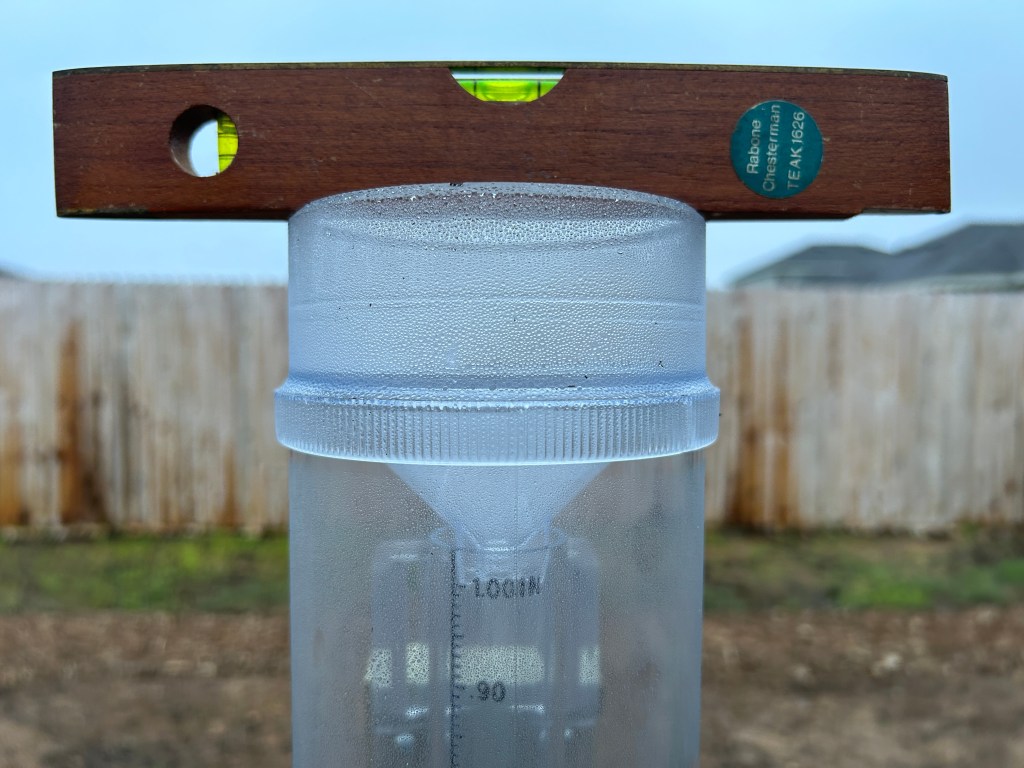
Another interesting community science project that I learned about recently is CoCoRaHS — the Community Collaborative Rain, Hail & Snow Network, and I have decided to enroll. Volunteers such as myself install accurate manual rain gauges that can be monitored each day and readings are submitted to a central database which is publicly available.
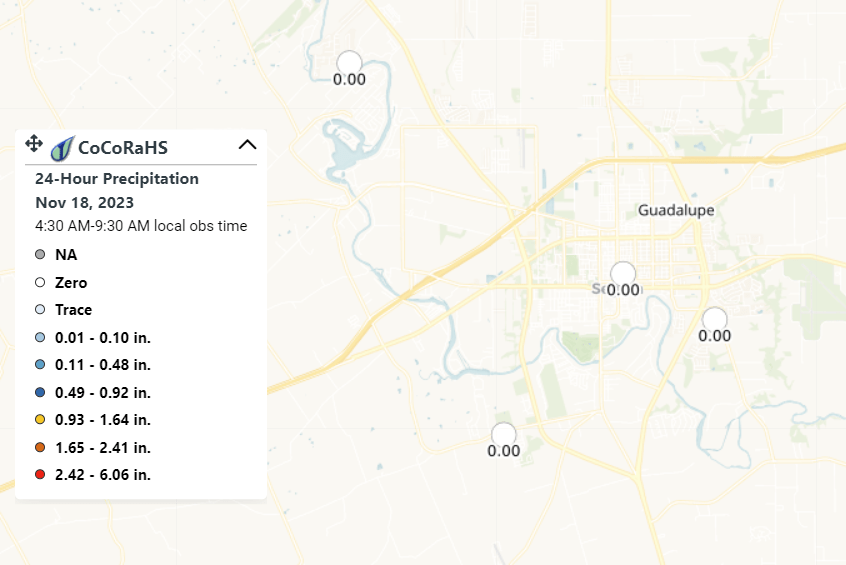
I am station number TX-GP-173. Mine is the right-most station on this map:
And I am one of over 10,000 people making daily reports.
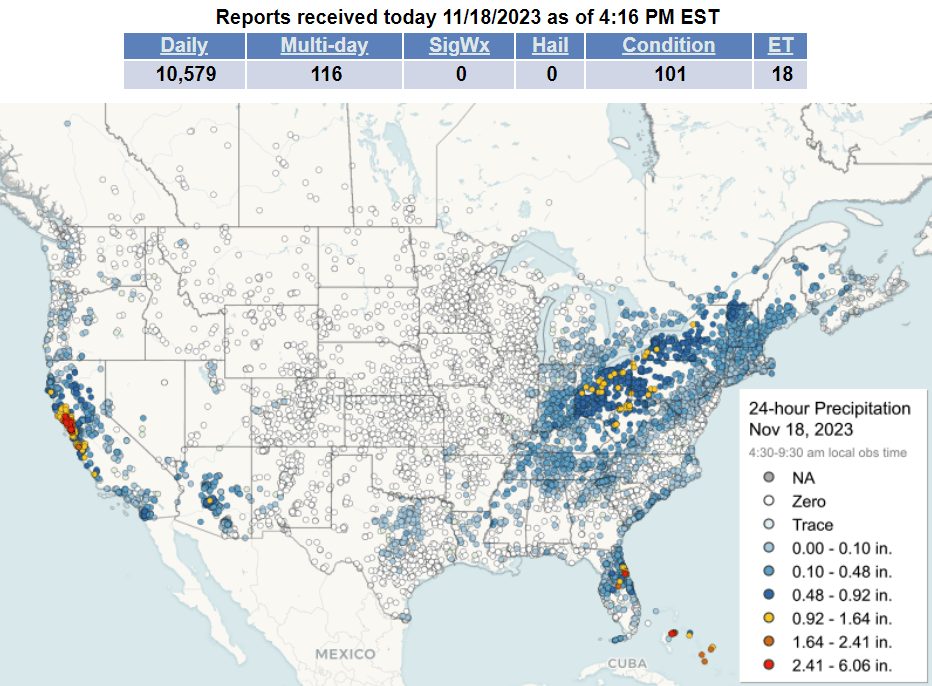
This suits me well, since I was planning anyway to install a rain gauge here, 7am is the perfect time for me to be recording data (this is the CoCoRaHS preferred time), and the precision and participation appeal to me.
To be as accurate and consistent as possible, CoCoRaHS wants their participants to use manual rain gauges, and for them to be placed 2-5ft off the ground on a beveled post and away from structures. So here’s how I built my set-up to make it stable and level. And if necessary, it could be moved to another location (vs. sinking the post into the ground).
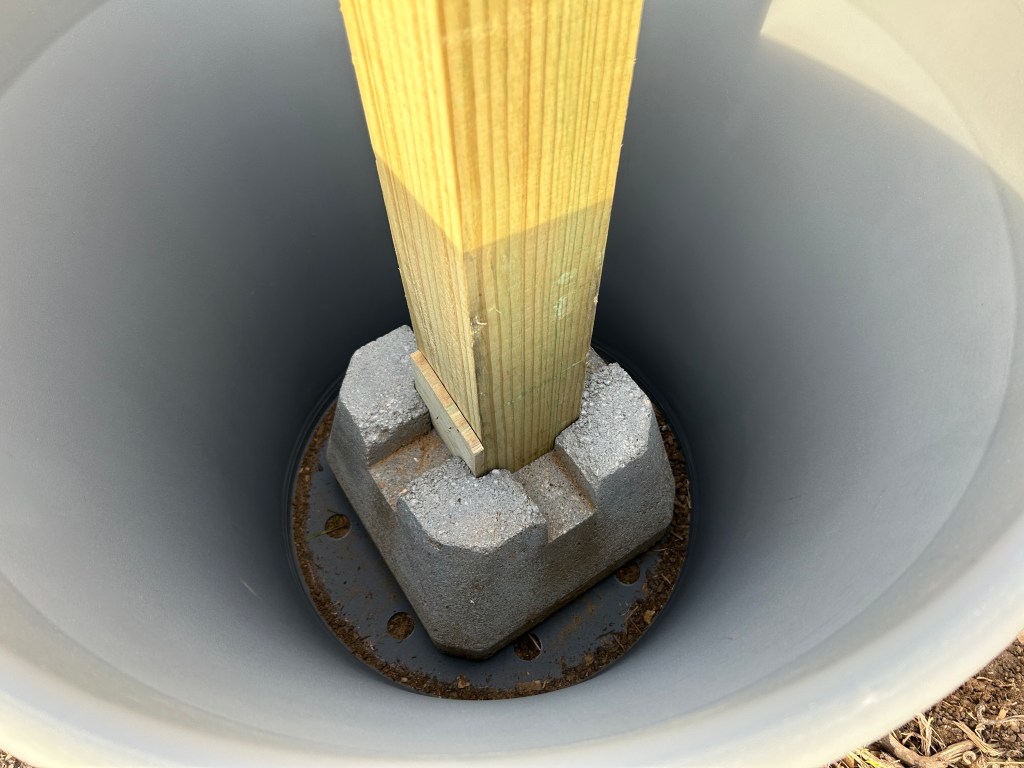
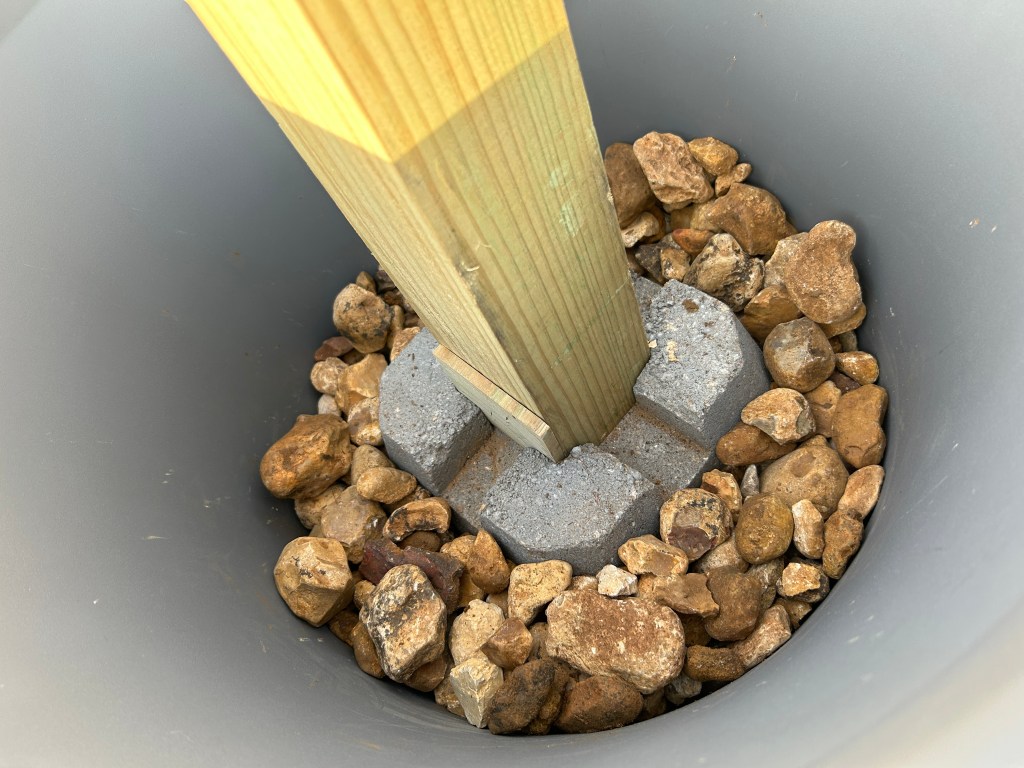

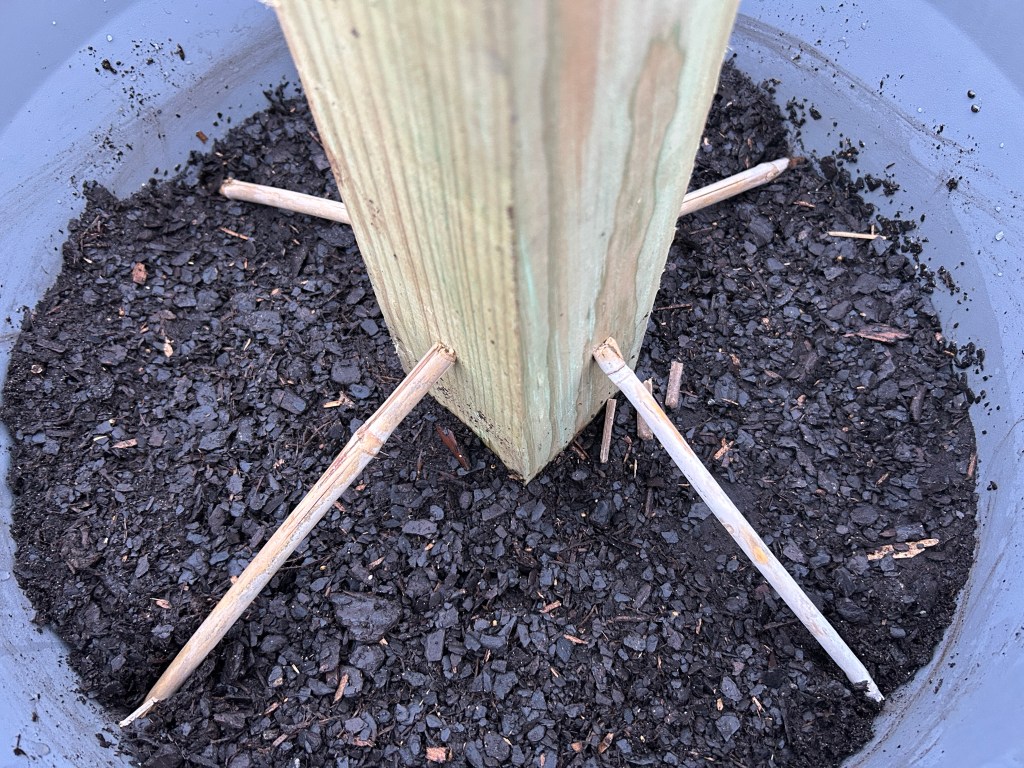
I elected to use the pot option after the concrete base I initially had wasn’t stable enough to hold the post vertically without swaying. So I just put the whole thing in an enormous pot that was filled with stones and soil. And since I had a pot, of course a plant should go there.
I bought one Lanceleaf Coreopsis (Coreopsis lanceolata) plant and then hacked it into four portions to fit around the post. I was more brutal with the dissection than I would have liked, so the plant may well look worse before it looks better, but I have faith that it will recover.

The rain gauge certainly appears as a rather prominent feature in the garden at the moment because so little else has grown here so far, but I don’t mind at all. It’s all part of what I’m doing here, and anyway over time it will become less obvious.


 Rewilding My Lot
Leave a reply to A Rain Gauge With Accuracy And Capacity – Rewilding My Lot Cancel reply