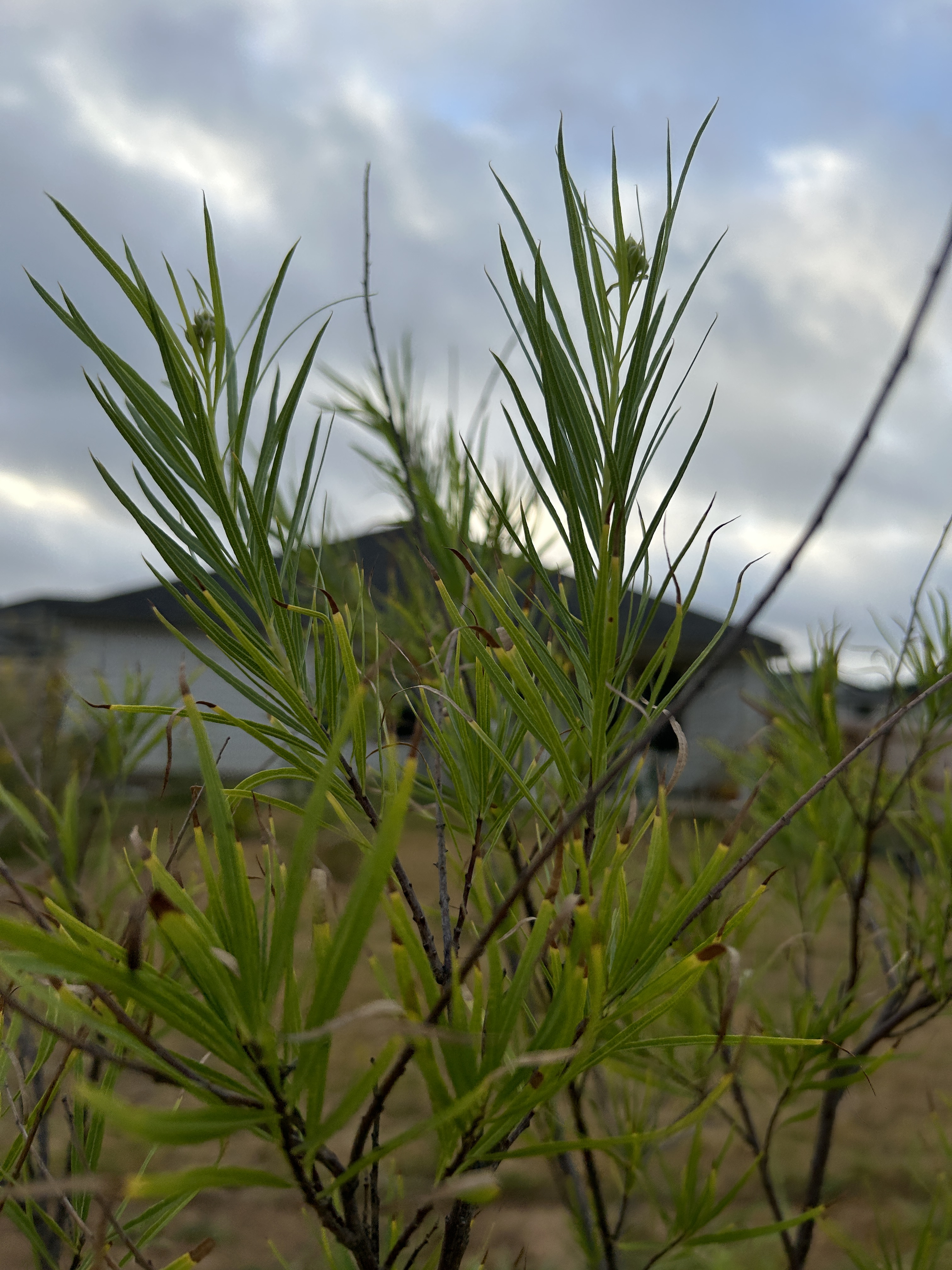
Sometime last year I heard of the concept of a “Three Sisters Garden” where three types of vegetable (corn, beans, squash) grow cooperatively together on mounds of soil. This particular gardening technique is based on centuries of Native American agricultural traditions and expertise.
Corn is planted first. After the corn stalks have begun to grow, then beans are planted and trained to grow up the corn stalks. After the beans have begun to grow, then squash is planted. The corn supports the beans, the beans fix nitrogen into the soil, and the squash leaves keep the soil shaded and covered.
I was intrigued and wanted to try this for myself. I have virtually no experience in vegetable gardening, and no plans to install raised beds here, so this seemed a simple thing that I could try and there’s not much investment lost if it doesn’t work. And if it does succeed, these are all vegetables that I like to eat.
I needed to do some significant research before devising a plan that was appropriate for here.
- SCHEDULE. A Three Sisters Garden should be planted early in spring but after the risk of frost. In Seguin, Texas, the earliest time for me to start would be the second week of March.
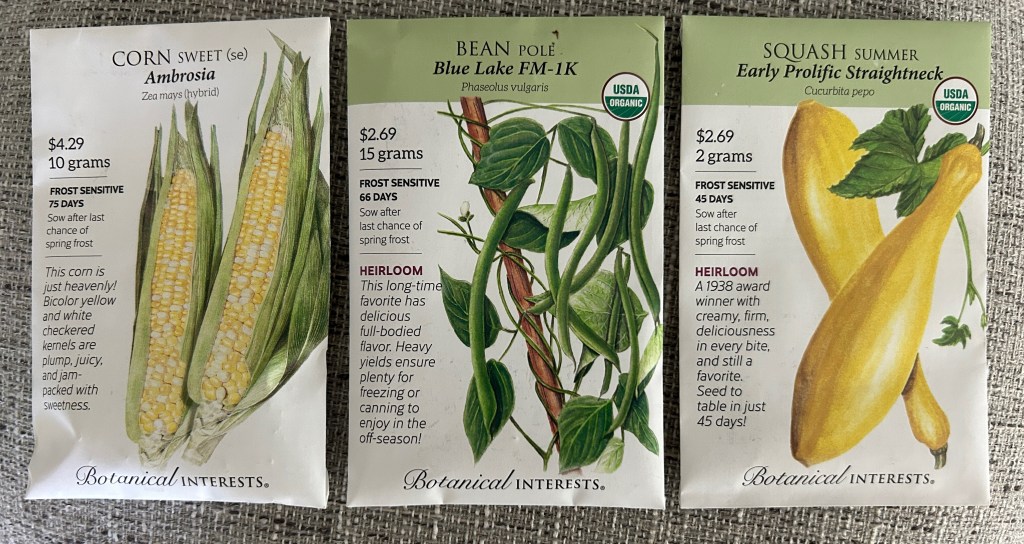
- VARIETIES. I needed to be sure that I planted the right kinds of vegetables for this area and climate. I consulted the Texas A&M AgriLife Extension Service website and Master Gardeners in Guadalupe County. The corn had to be a variety that would tolerate Texas heat, the beans had to be the kind that climb, and the squash had to be a summer variety. I settled on Ambrosia sweet corn, Blue Lake FM-1K pole beans, Early Prolific Straightneck summer squash, and I purchased seeds.
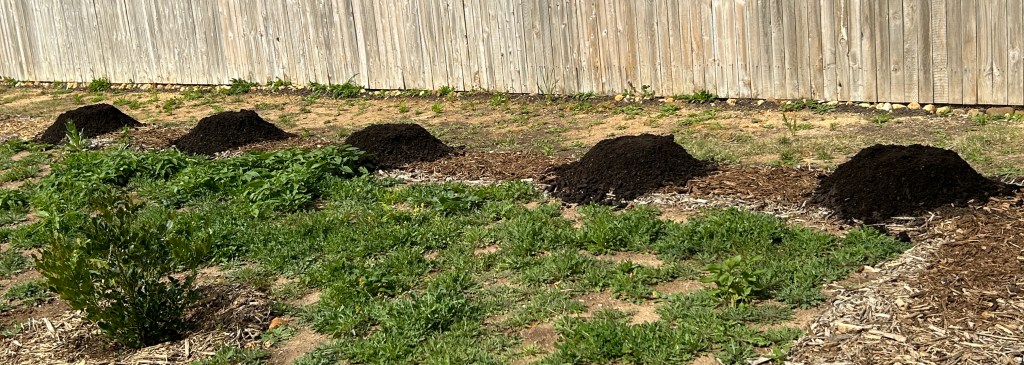
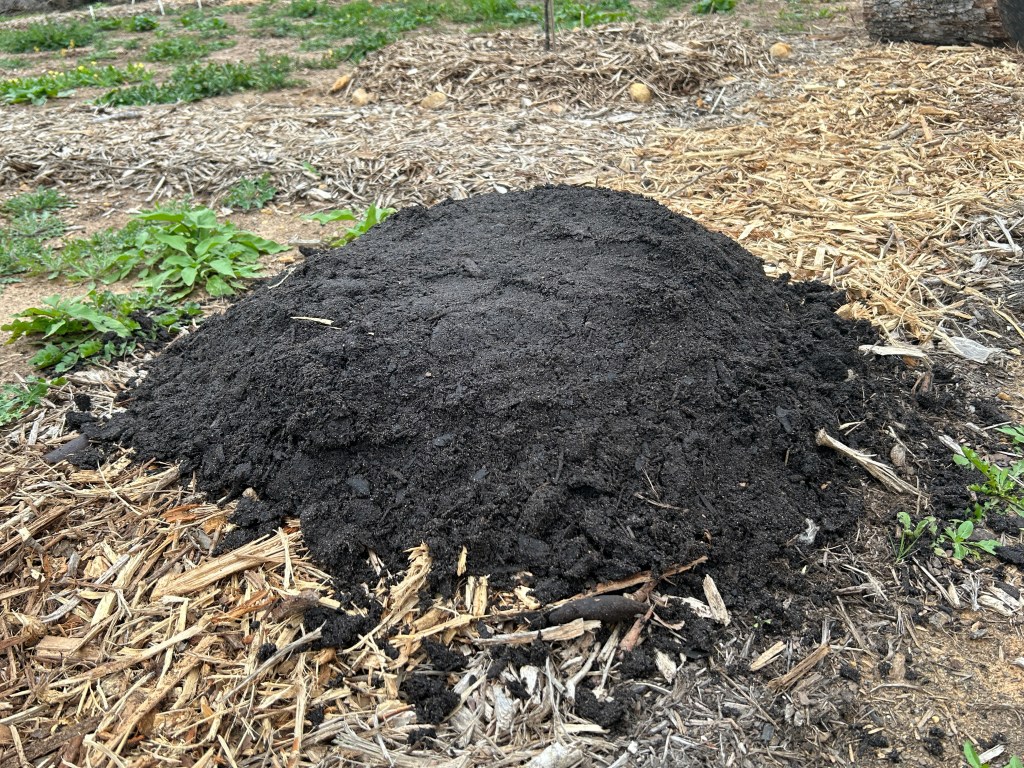
A couple of weeks before the time that I could start planting, I made five mounds.
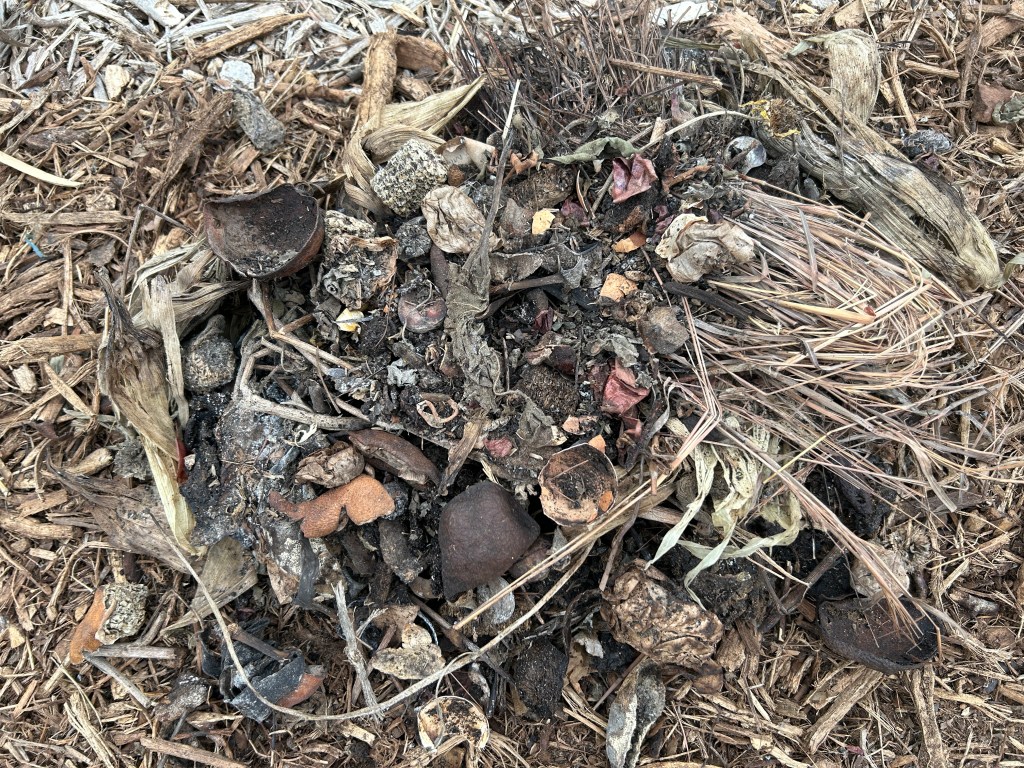
- In my early days here, composting did not go well and consequently I had a pile of garden waste that had dried out but not composted. I divided that into five portions to form the bottom of each mound.
- Then each mound got an entire 40-pound bag of planting mix soil.
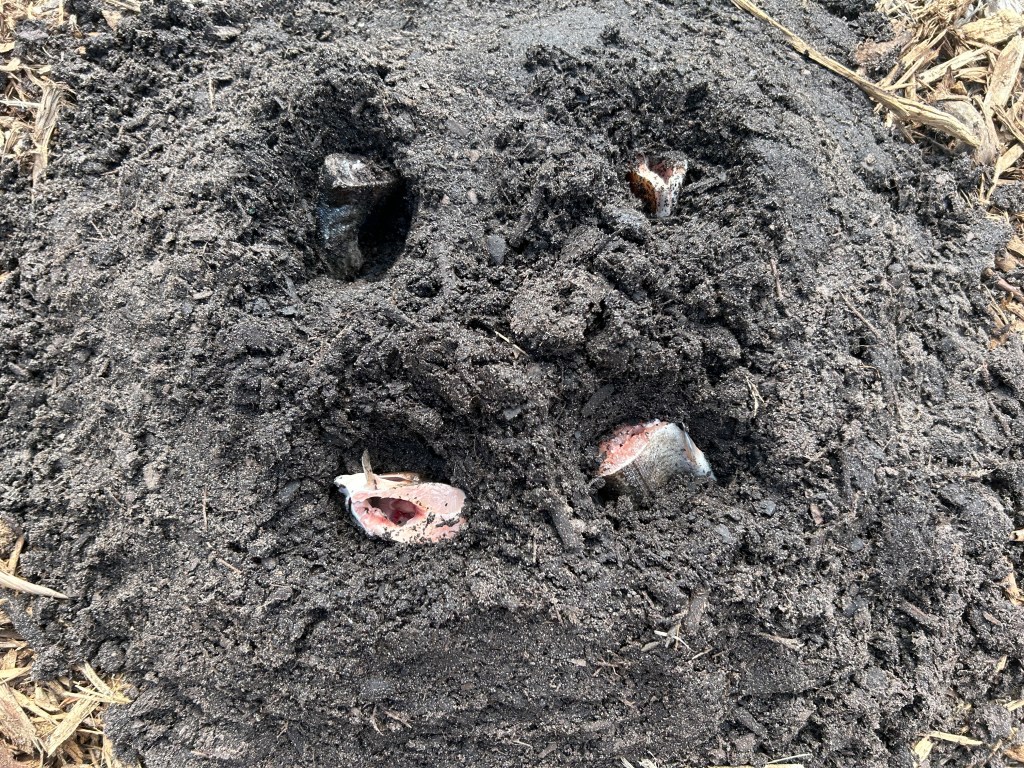
- Mounds 2 and 4 in the row then got the special addition of one whole trout cut into 4 pieces, pushed into holes, and covered with soil. Native Americans would often bury fish in their Three Sisters mounds as extra fertilizer, so I thought I would try the same with two of my five mounds as an experiment.
- Finally, each mound got approximately 20 pounds of mushroom compost.
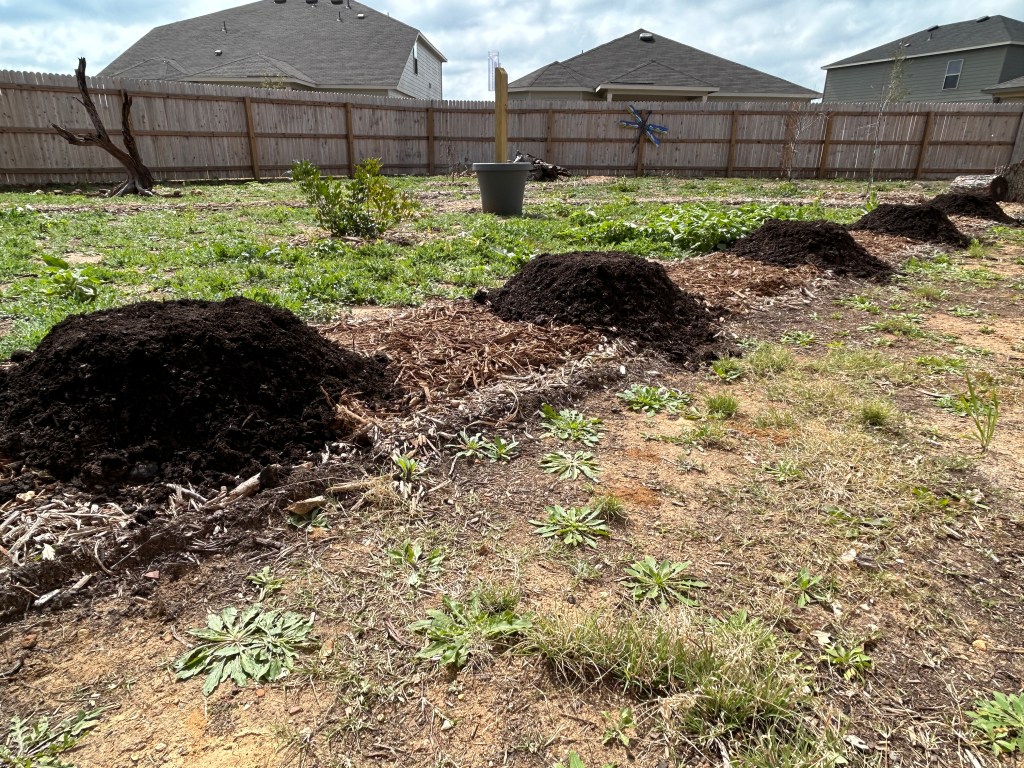
- The top of each mound was then flattened and a small well formed in the middle. I am letting them settle for a couple of weeks.


 Rewilding My Lot
Leave a reply to Three Sisters Garden #2: Corn – Rewilding My Lot Cancel reply