My time in Seguin, starting in 2023, has been the first experience for me to learn about choosing, planting, and managing trees. Thanks to some knowledgeable Master Naturalist colleagues, I have been receiving some good education in that department!
Until now, any pruning of trees here has been minimal, usually addressing some immediate problem (e.g., branches rubbing together). However, there are now six trees that have been here for approximately three years, and that is a good time for me to embark on some strategic pruning to guide their future growth for strength and health. I will probably write separate posts for each tree, since most of them have some particular issue to be addressed.
The Mexican Plum (Prunus mexicana) is no taller than when I planted it (about 6 ft). However, it has made new little side branches, and earlier this year it bloomed for the first time. Those are encouraging signs.
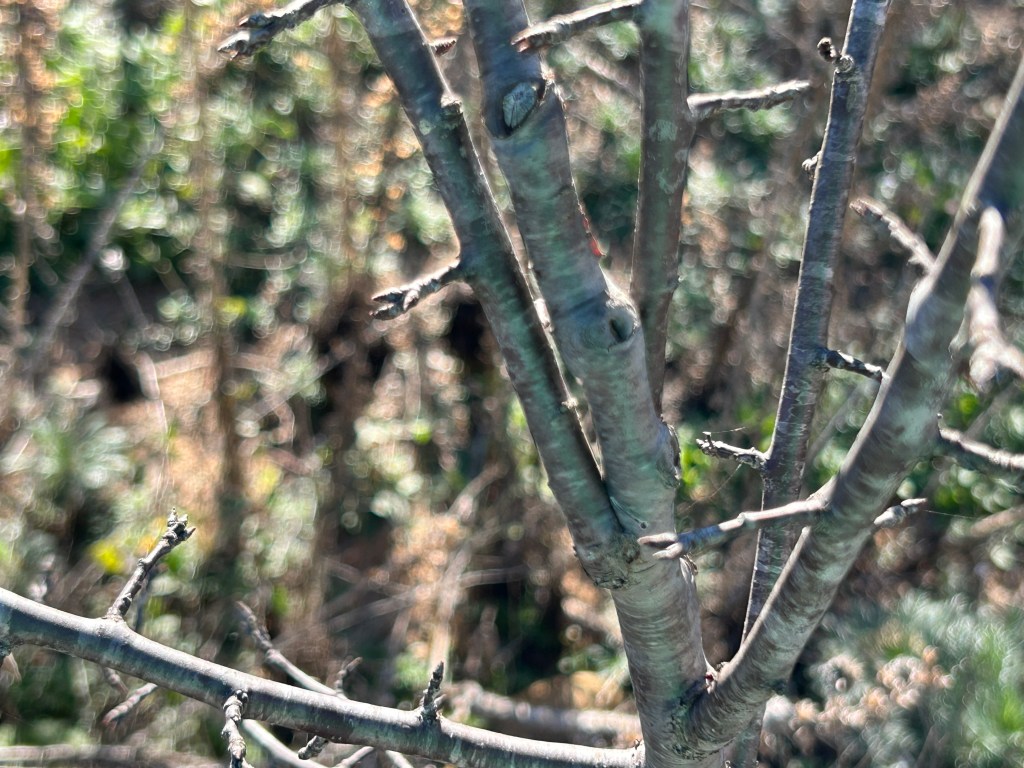
The issue with this tree is that it has two branches that are competing with the main leader (the thickest vertical branch in the photo below) in a way that creates narrow forks that might split later. The angles of attachment are so narrow that the competing branches are almost vertical themselves.
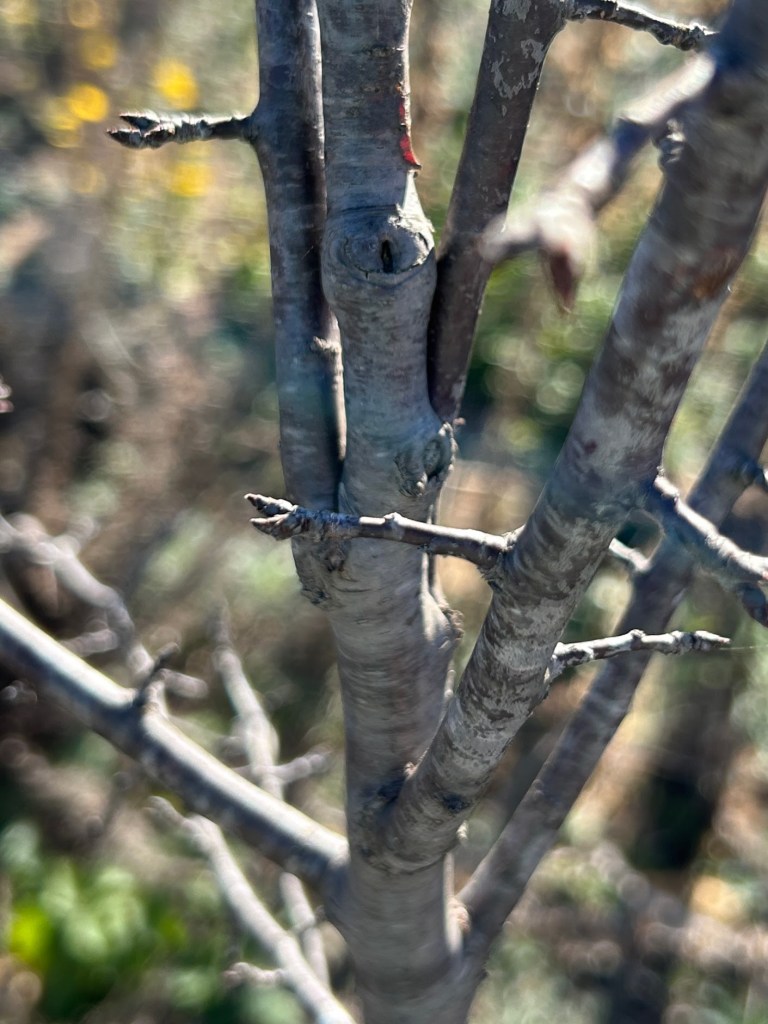
A good resource for tree management guidance is the Trees Are Good website, and for me in particular, this page about pruning young trees. A relevant quote for my Mexican Plum is this: “Narrow angles of attachment can enclose bark within a branch union. Such growth is called included bark, a condition that weakens the branch attachment and may lead to failure when the tree matures. Branches with weak attachments should be pruned when small.”
The solution to this is to cut off the two branches with narrow angles of attachment. They were growing so close to the leading branch that it wasn’t possible to get shears into place to make the cuts. So for this particular surgery I carefully used a pruning saw instead. My aim was to cut just outside the branch collar and at an angle perpendicular to the direction of the branch. If I had cut flush with the trunk instead, then I would have cut into the branch collar and impeded healing.
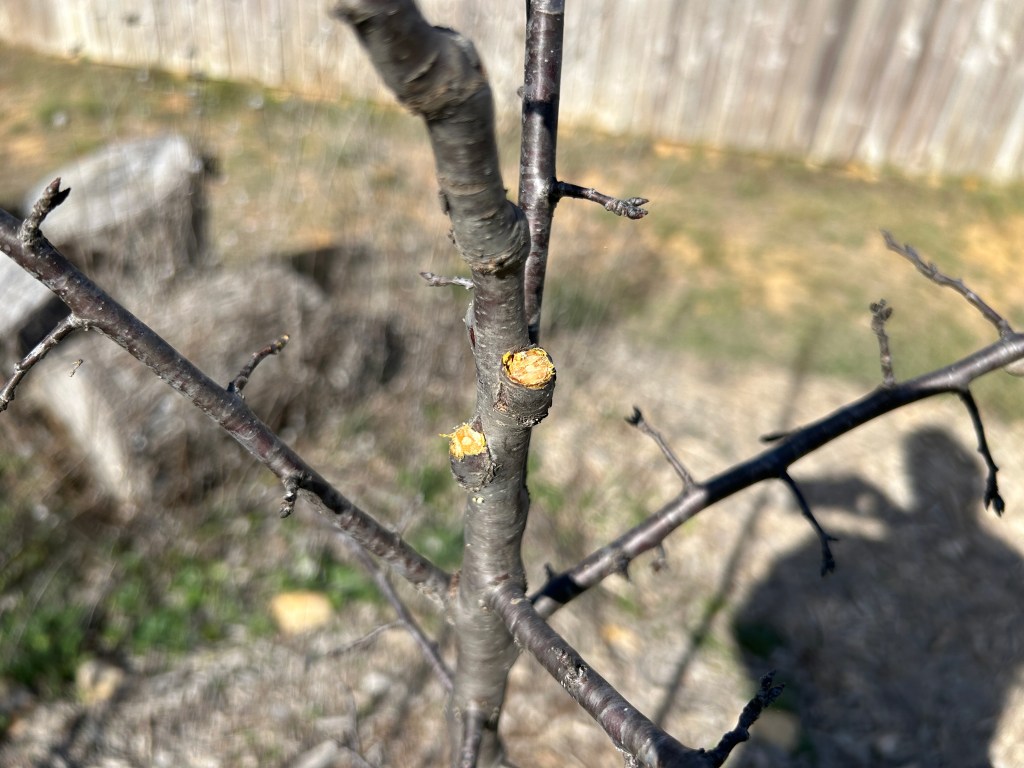
For anything other than oak trees, dressing of pruning wounds is generally not recommended (ref).
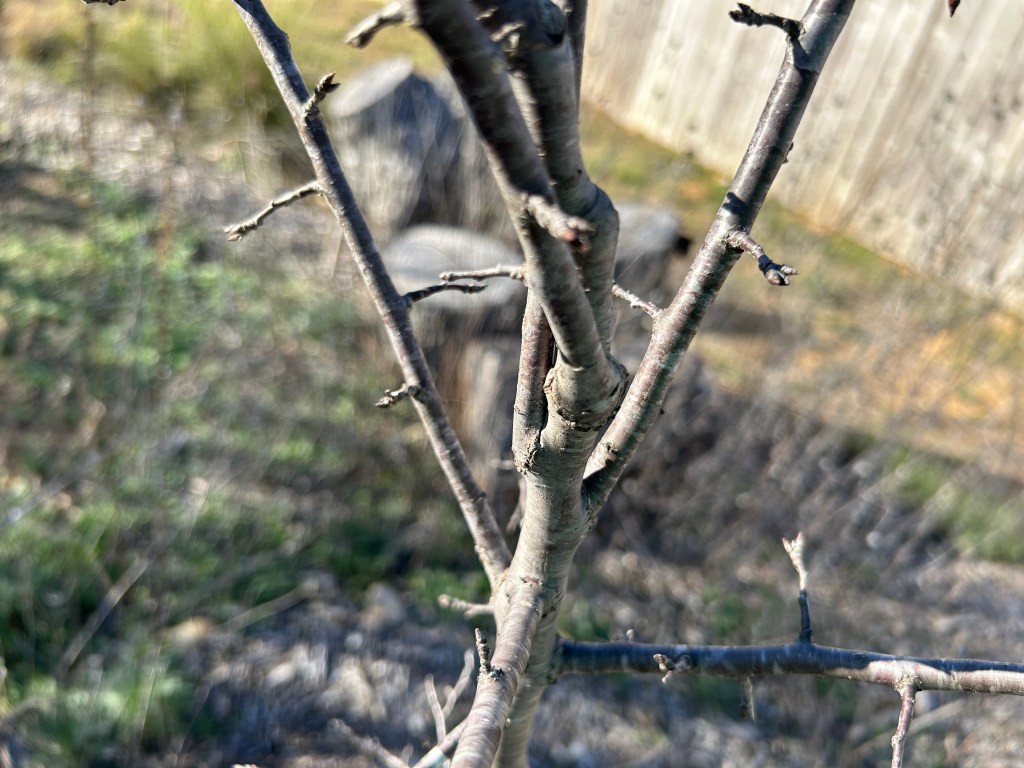
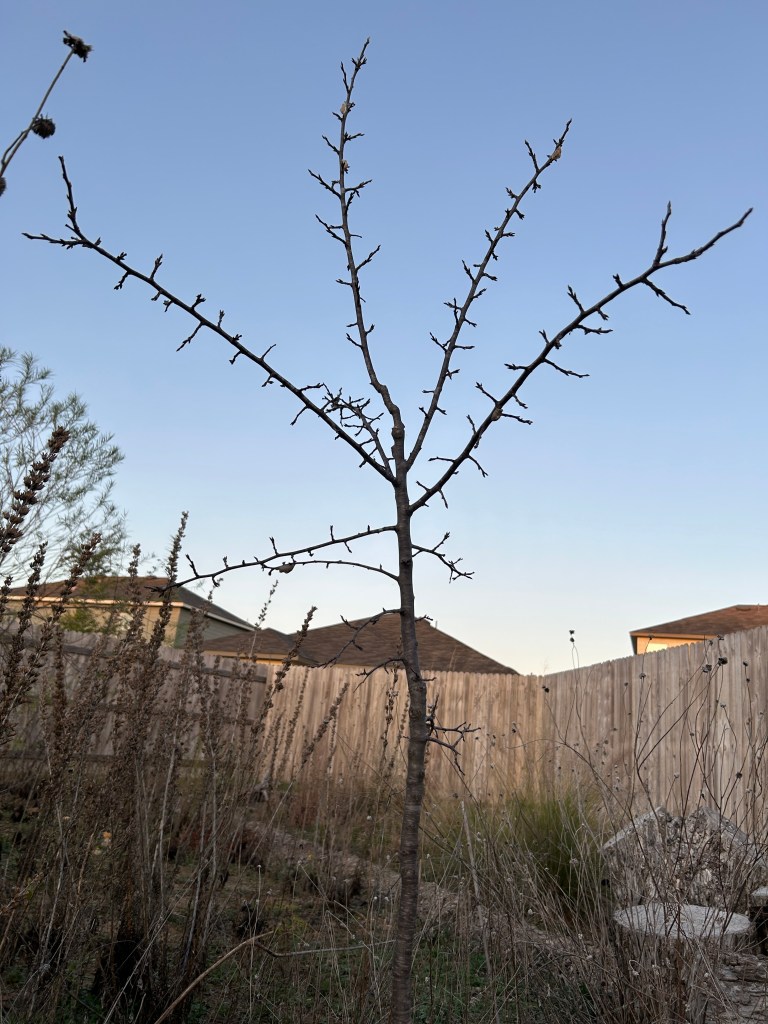
So here’s the newly trimmed tree, with now a single leader branch. Perhaps in the future when the tree is taller (years), some of the lower branches may be removed if they are in the way. However, for now they play an important role as sites of food production and storage, and should be kept.


Leave a Reply