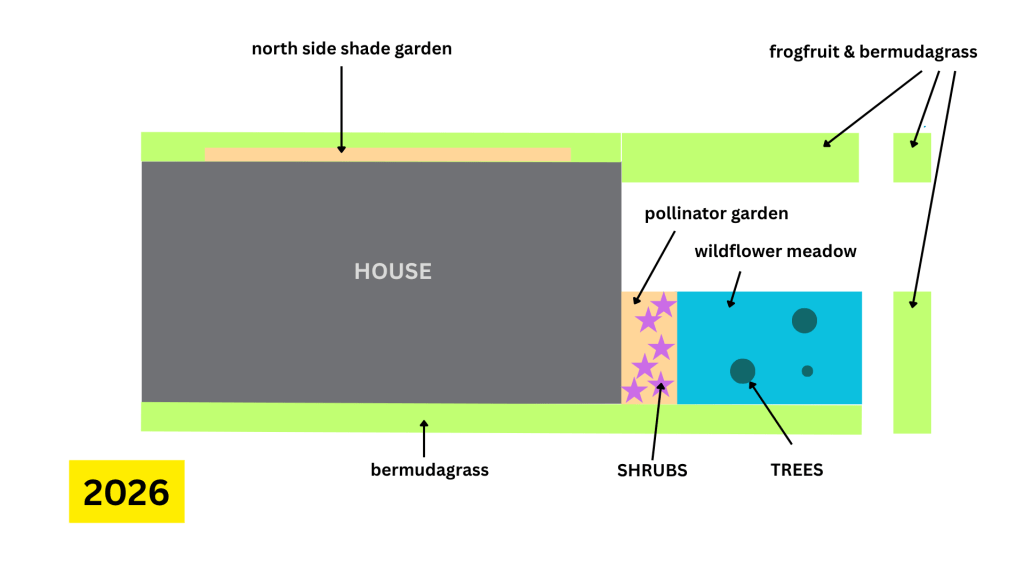
Something I’ve been meaning to do for ages is to create a plan of the garden layout. Finally I have made a couple of crude images.
The diagram above is a representation of the front yard. The pollinator garden immediately in front of the house is primarily filled with nectar-bearing shrubs and other perennial plants. The original landscaping plants that came with the house have been removed, except for one native that the builder installed, Gulf Muhly, and two Live Oak trees.
The “lawn” area (mostly now a wildflower meadow) is mown during the winter — from approximately October to February — but the rest of the time that area is occupied by wildflowers (most of them annuals). The meadow produces its own seed to grow the following year.
On the north side of the house I accidentally created a garden by putting down some shredded annual plants as mulch. Rather to my surprise, Bluebonnets and Firewheels grew from seeds in the mulch, which gave me the idea to plant a few shade-loving plants there as well. The original bermudagrass in that area isn’t happy because of the shade, and run-off from the roof (there are no gutters) can cut into the soil. I thought that more plants in the ground might reduce erosion.
The diagram below indicates the approximate locations of some key features in the back garden as of spring 2026. The back yard is such an odd shape because of the way the builder divided the lots — we actually have six “fence neighbors.”
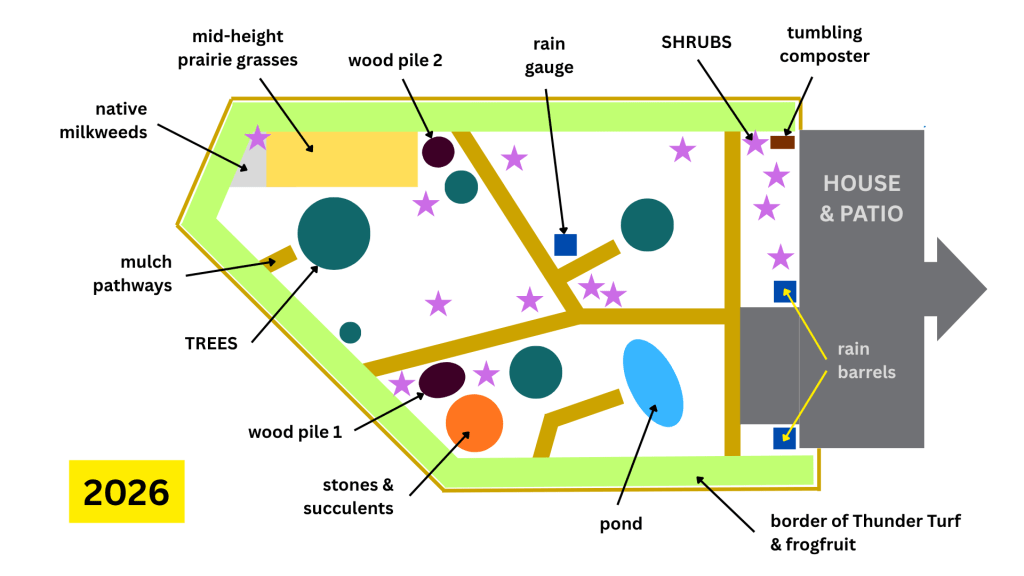
This layout represents the ongoing development of what used to be entirely bermudagrass (which was removed in 2023). White areas inside the fence on the diagram are mostly filled with native annual plants.
The garden progression somewhat mimics the natural process of secondary ecological succession, which occurs after land is disturbed in some way, in the sense that I am filling unplanned areas with native annual plants. While they are living, these native plants provide food and shelter for wildlife, and then when their life is ended, their decay feeds and aerates the soil. In addition, some plants (such as Bluebonnets and Clovers) can provide extra healing by (with the help of rhizobia bacteria on their roots) capturing atmospheric nitrogen and converting it to a soil nutrient.
Over time, I expect that there will be a greater area given over to perennial plants, and thus the area occupied by annual plants will be reduced. But in the meantime, those annual plants are doing good work.


Leave a Reply