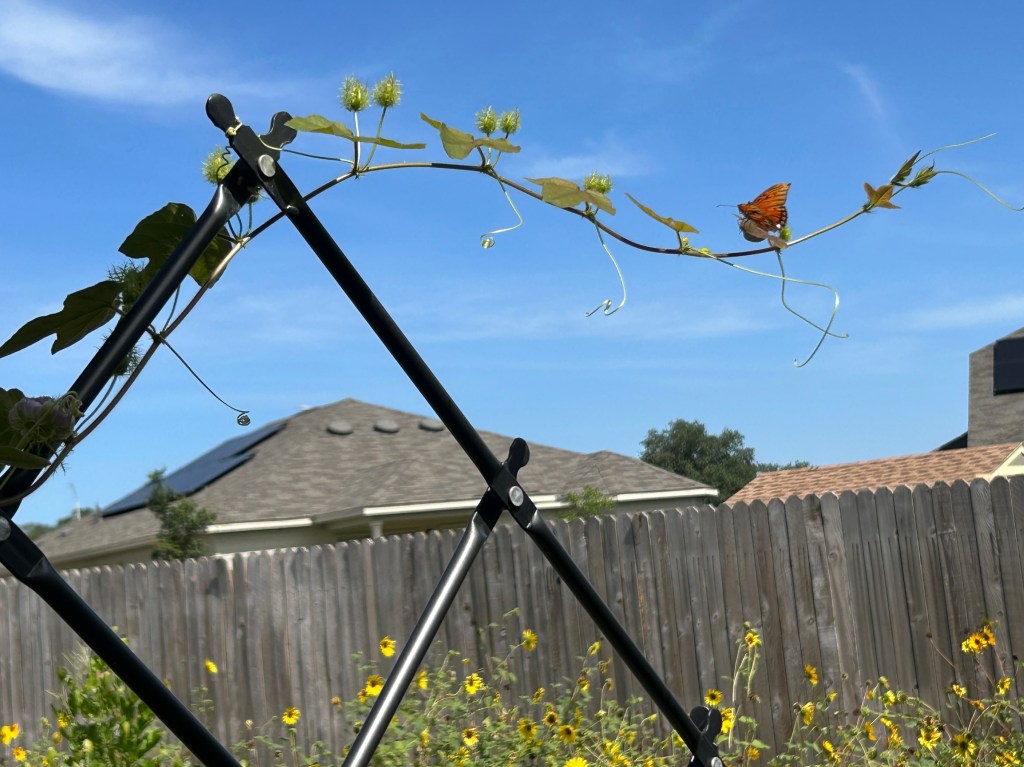
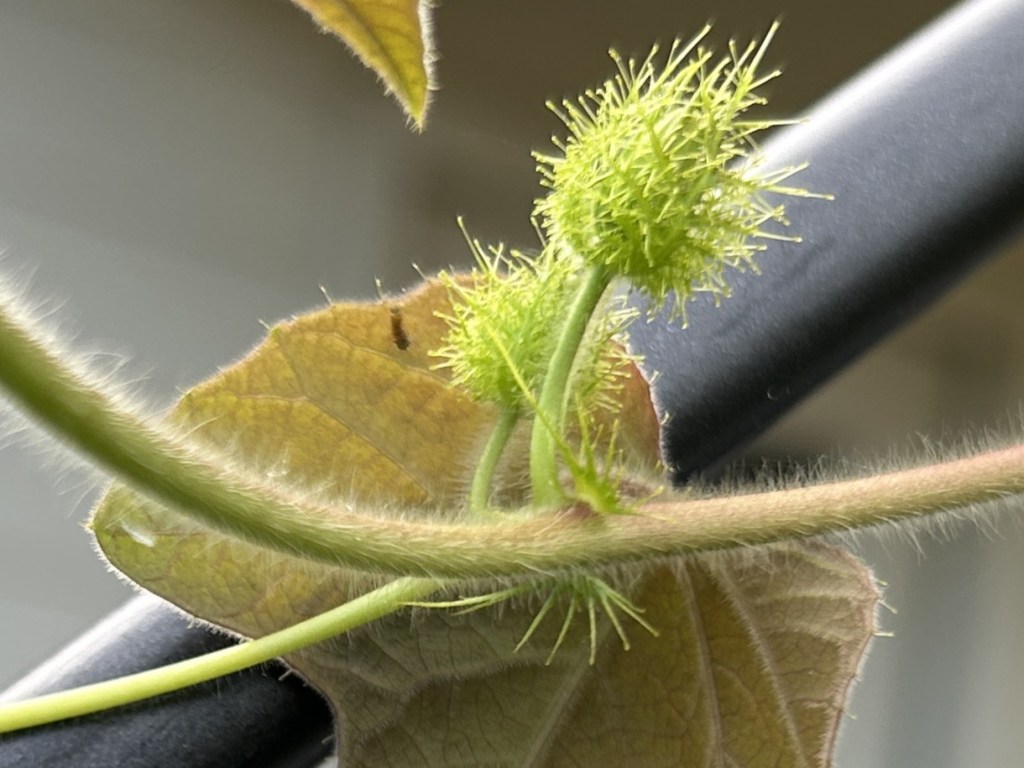
This is my second year to have a passionflower vine, which is specifically included in the garden to encourage and support Gulf Fritillary butterflies. The vine has grown vigorously this year, which has provided plenty of leaves to feed many hungry Gulf Fritillary caterpillars — this is one of their host plants. Adult females lay eggs on the underside of passionflower leaves, and both male and female adults feed from other plants in the garden.
This year I have seen just about every part of the Gulf Fritillary life cycle (I have not witnessed mating). Here are some photographs.
This female was flitting around the plant, laying eggs one at a time on different leaves.
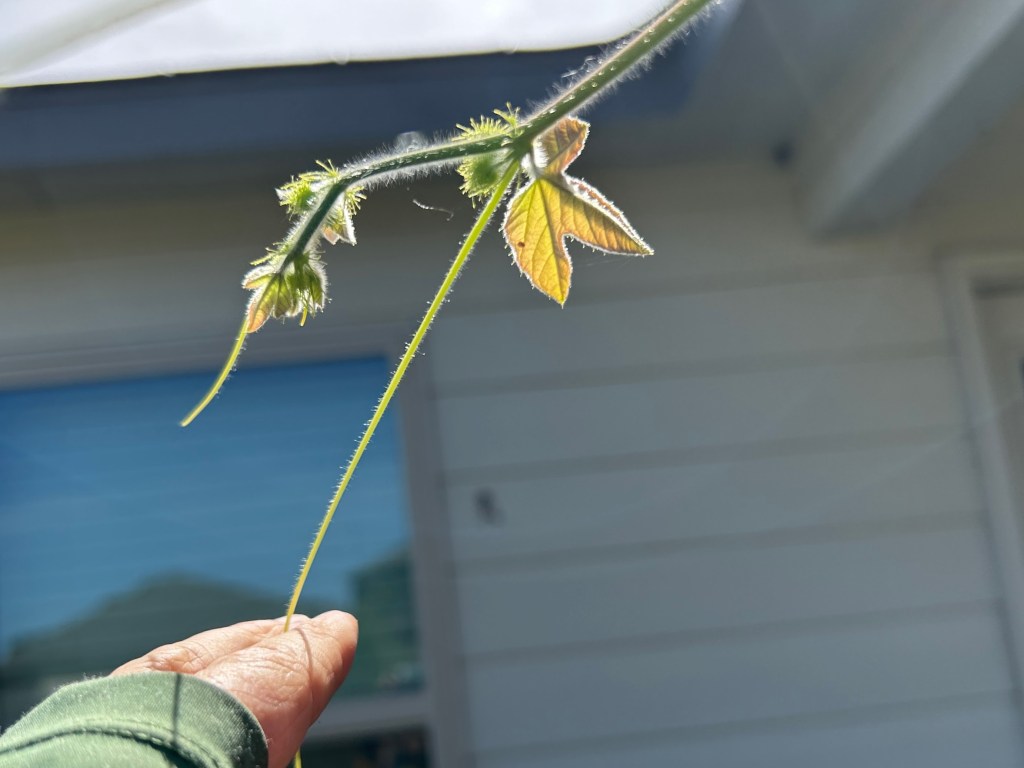
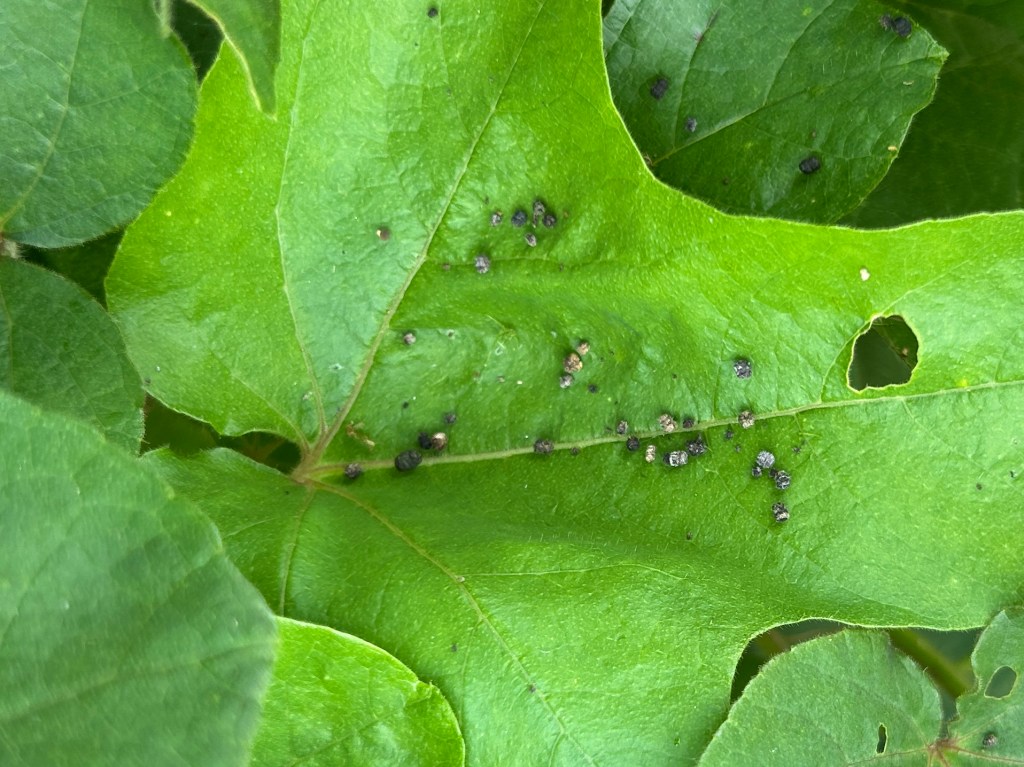
On the underside of this leaf there is a single tiny egg.
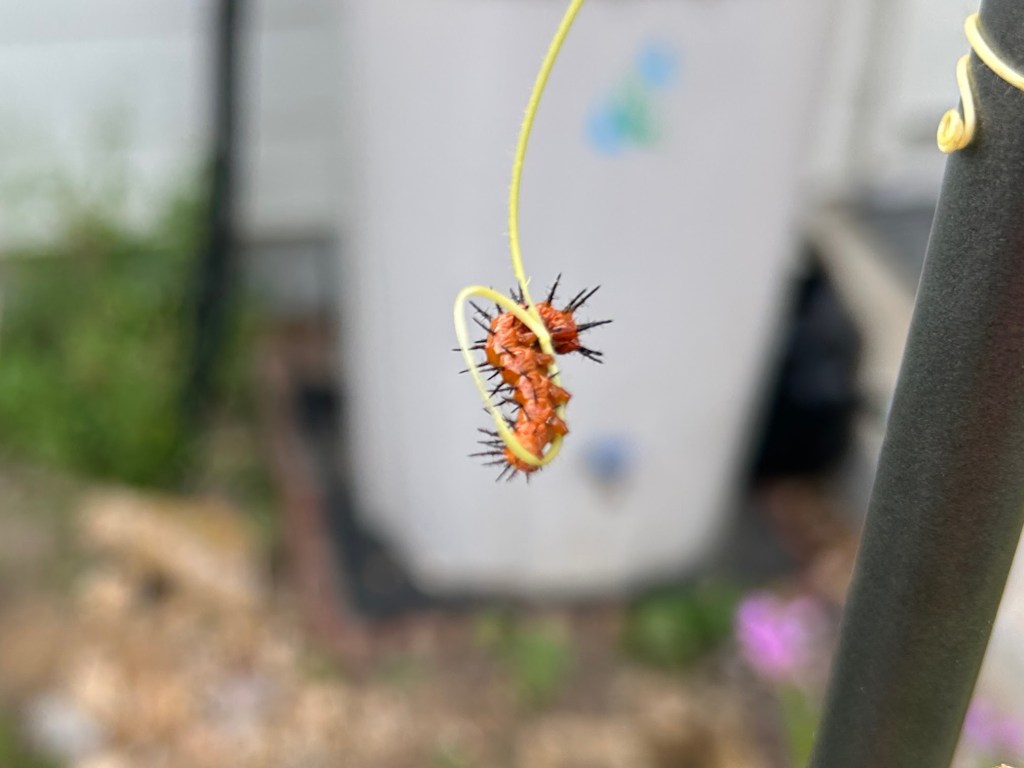
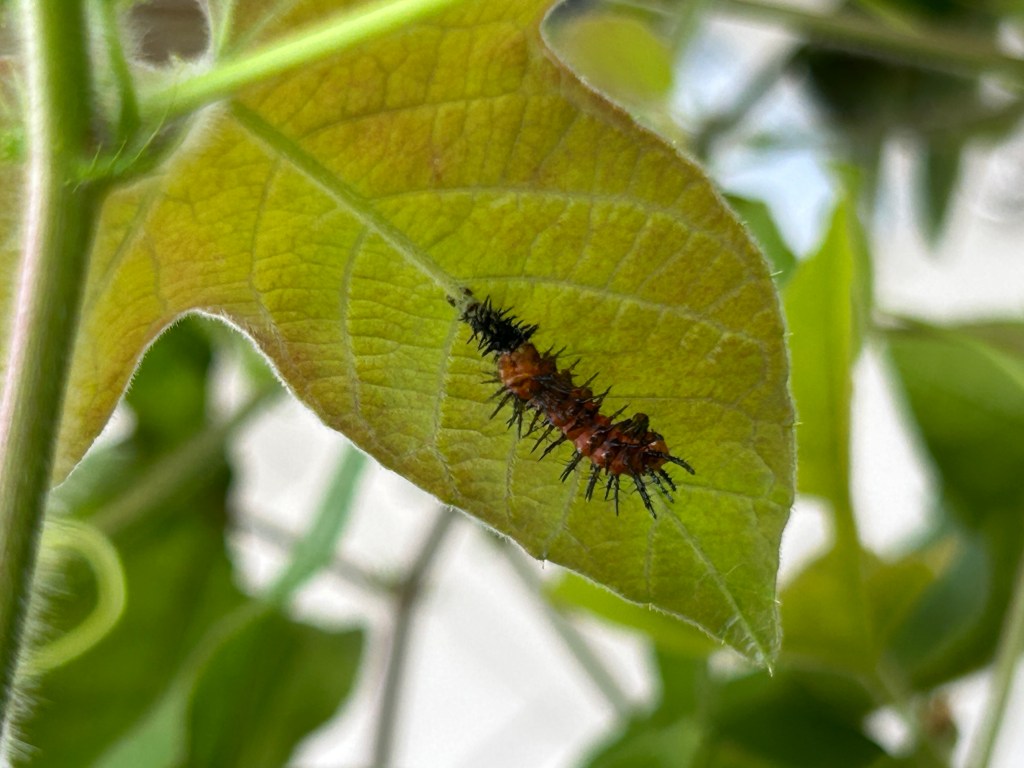
I have seen Gulf Fritillary caterpillars of all sizes, ranging from newly emerged to late instar.
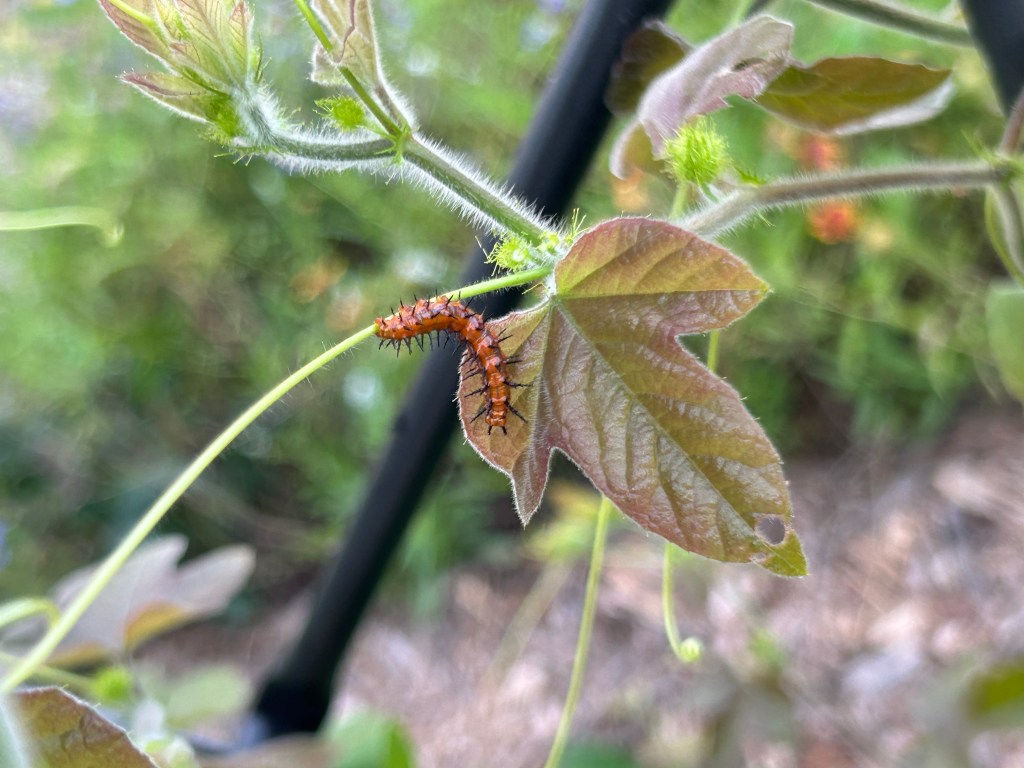
Here’s a small caterpillar that has just emerged as a new instar, and is eating its old skin. Nothing goes to waste!
Caterpillar frass (excrement) is free fertilizer once it has been blown or washed from leaves onto the ground!
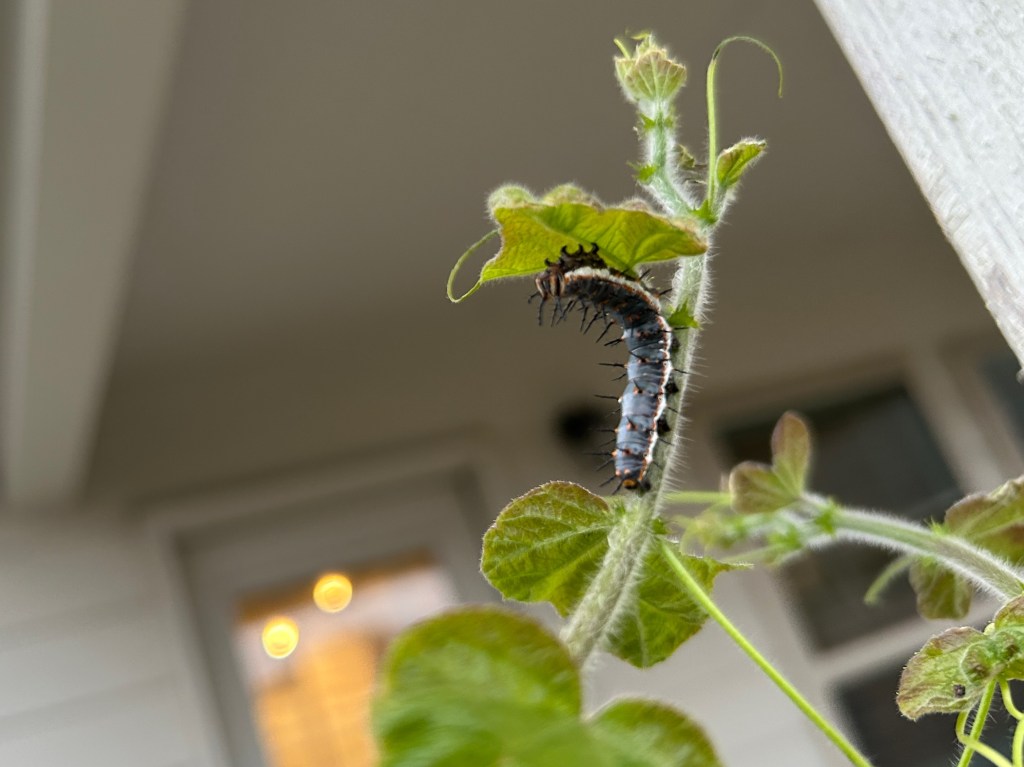
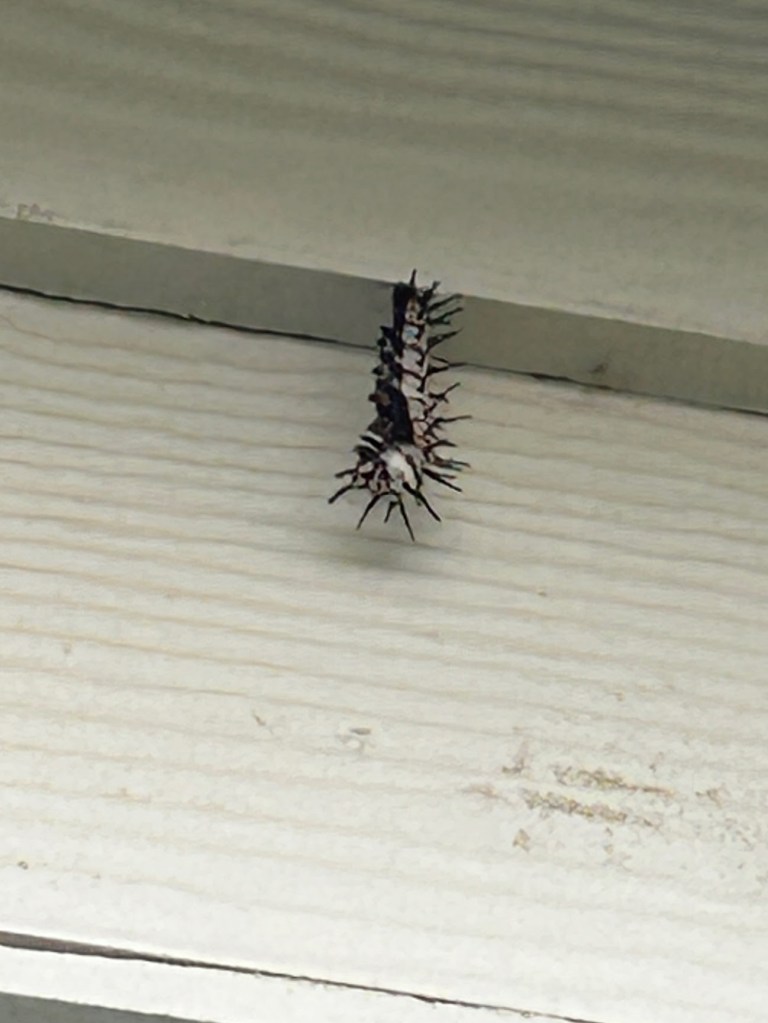
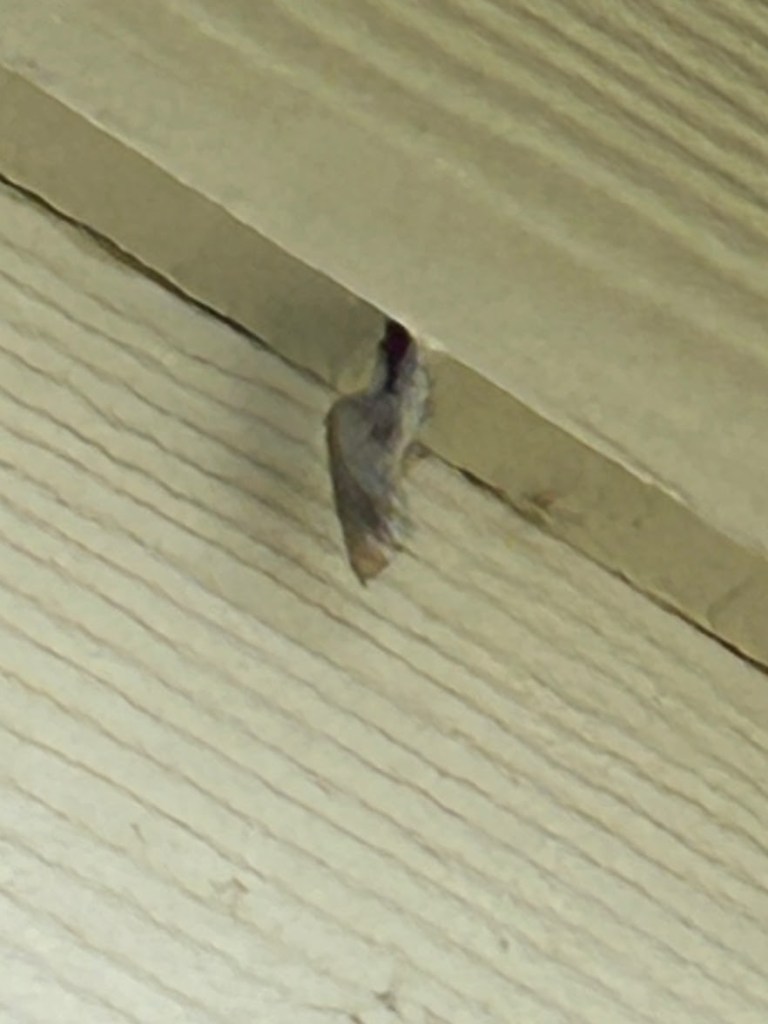
When caterpillars are ready to make a chrysalis, I have often seen them crawl up to the ceiling of the nearby patio. The first change I see is that the body starts to turn white and assumes a “J” shape. Then a chrysalis is formed as the skin is shed, in a shape that I have come to recognize as Gulf Fritillary (compared to other species, such as Monarch, which does not have a bump on one side).
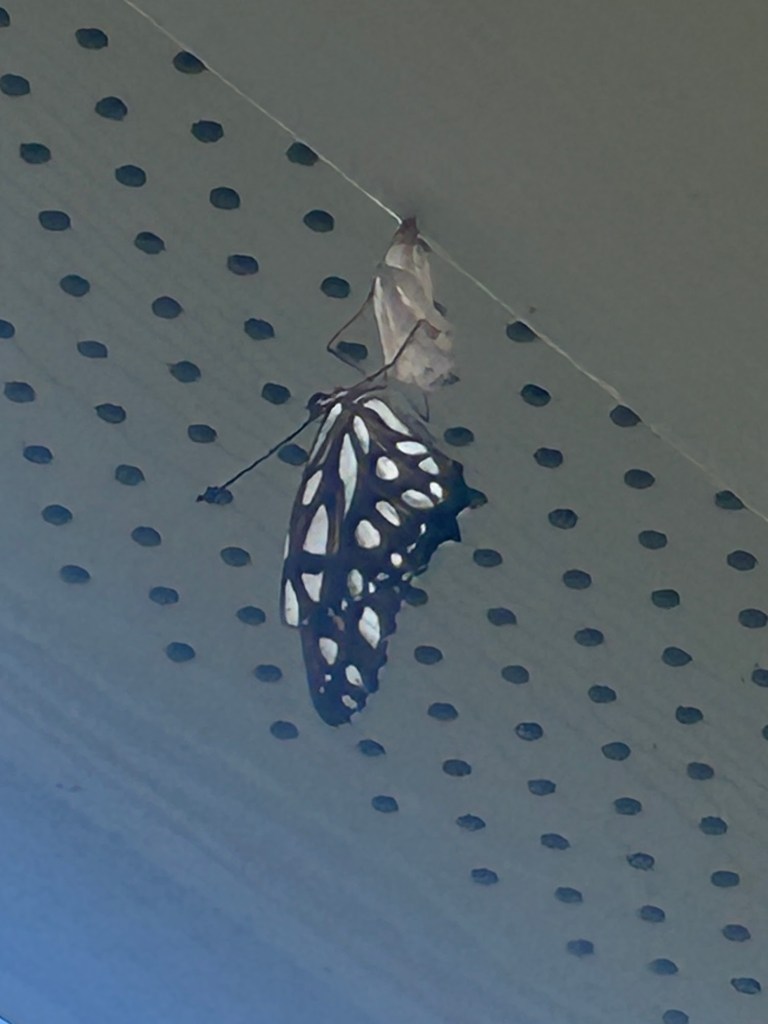
After a few days, an adult emerges from the chrysalis and waits for its wings to be ready before it can fly. I noticed this newly emerged Gulf Fritillary as I was about to go out one day, and when I returned two hours later the butterfly had gone.
Here is a delightful video from the WFSU Ecology Blog showing the life cycle of the Gulf Fritillary butterfly with much better photos and video than I can produce.

 Rewilding My Lot
Leave a comment