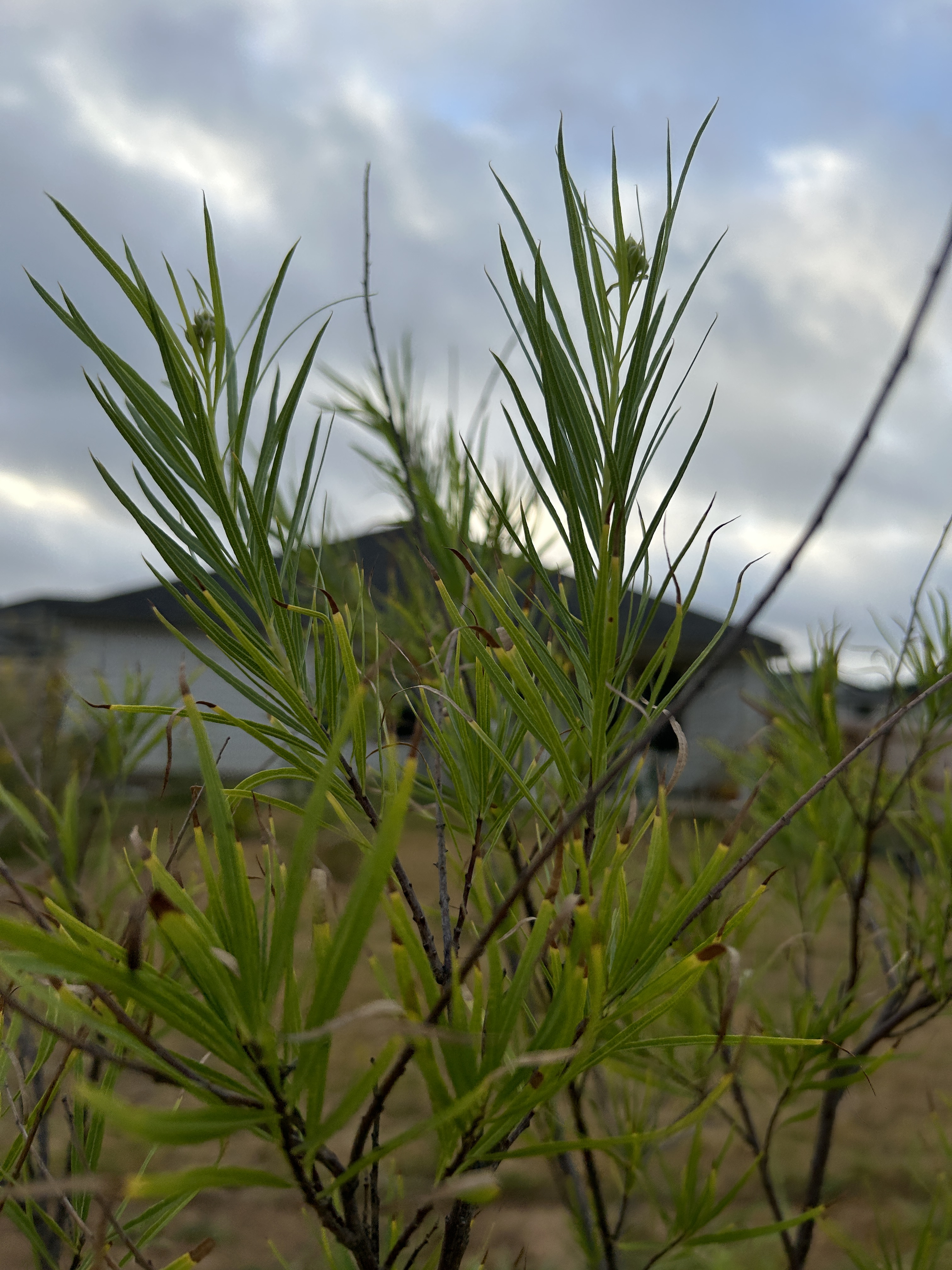
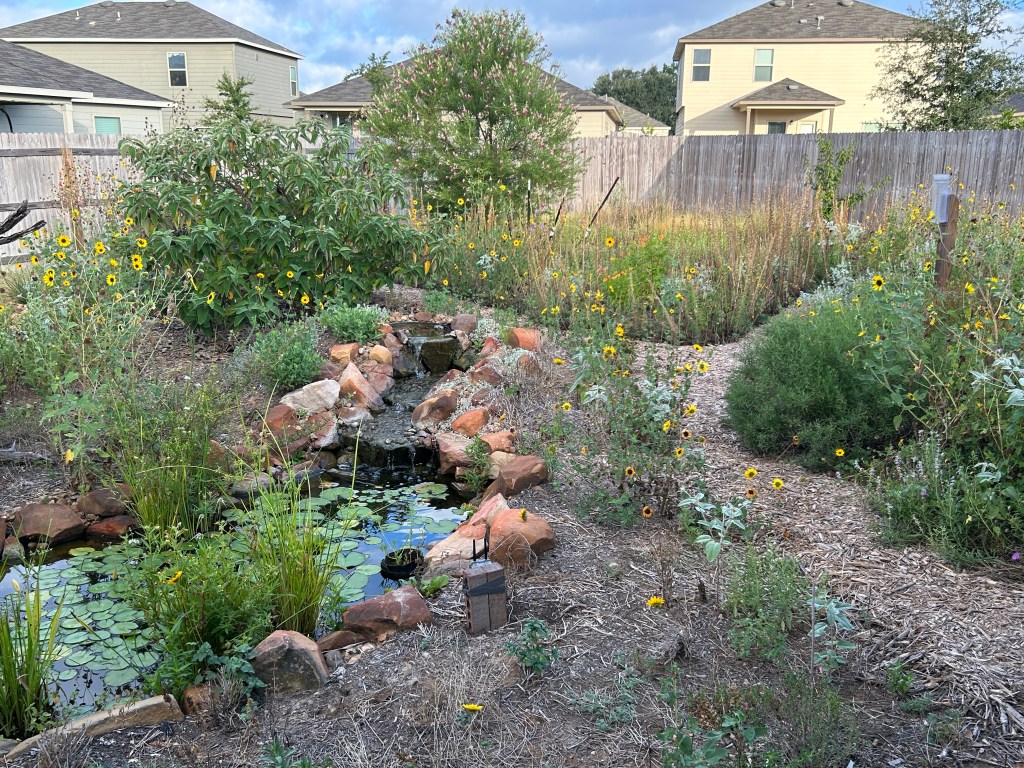
I’ve recently returned from a vacation, and so the garden was ignored for nine days with no rain and with daytime temperatures hovering around 100 degrees F.
Many of the plants thrived and grew while I was away. Native plants have evolved to endure the hot and dry conditions of a Central Texas summer. Here are some standouts in my garden (photos were taken the day after I returned home).
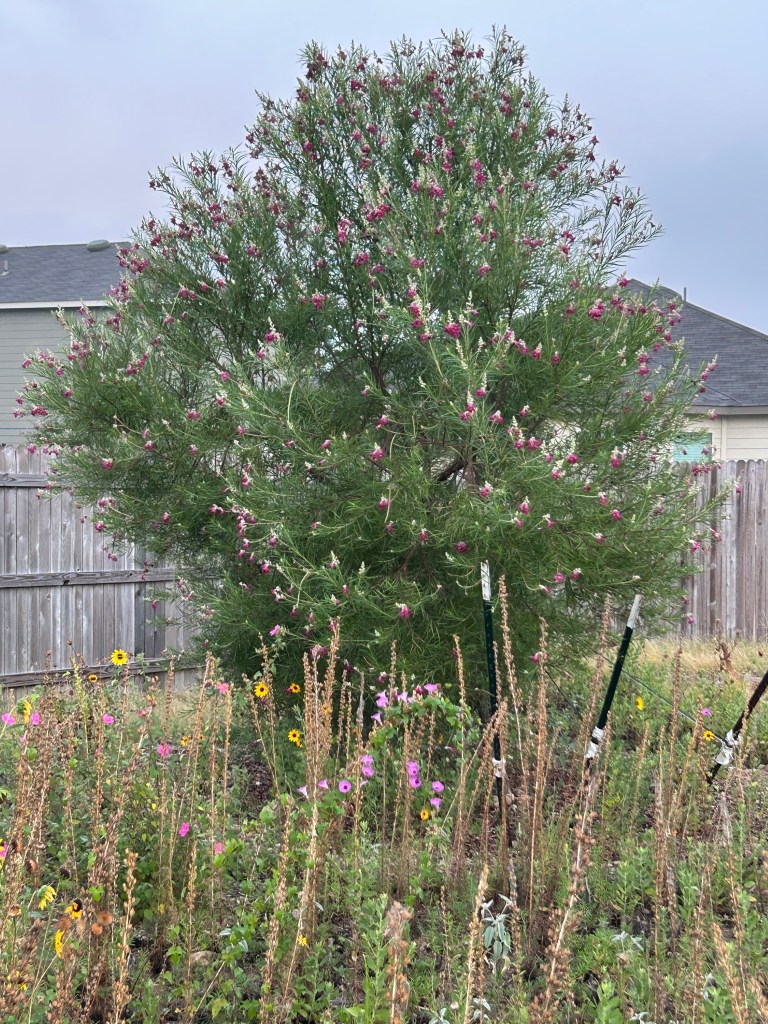
The Desert Willow (Chilopsis linearis) tree has been growing several inches a week all through the summer, in addition to blooming profusely. That continued while I was away and it certainly is an eye-catching feature of the garden now.
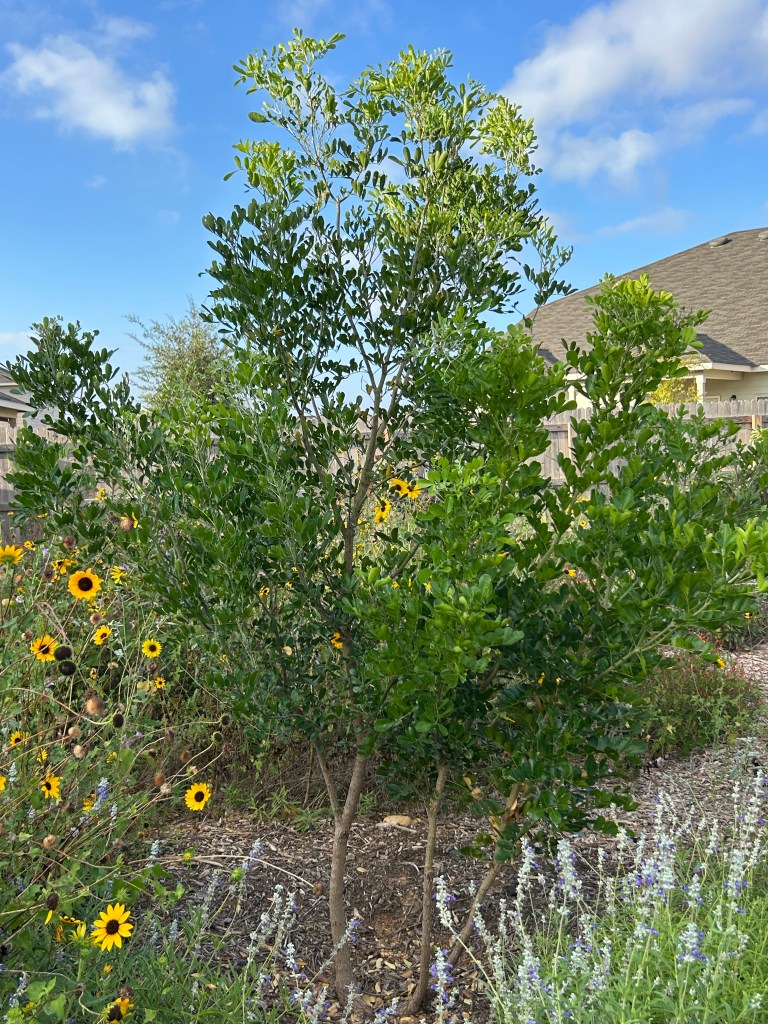
The Texas Mountain Laurel (Dermatophyllum secundiflorum) tree is also growing well this year and is about 8 feet tall now. There are several inches of new growth at the end of its branches (the new leaves are a paler green).
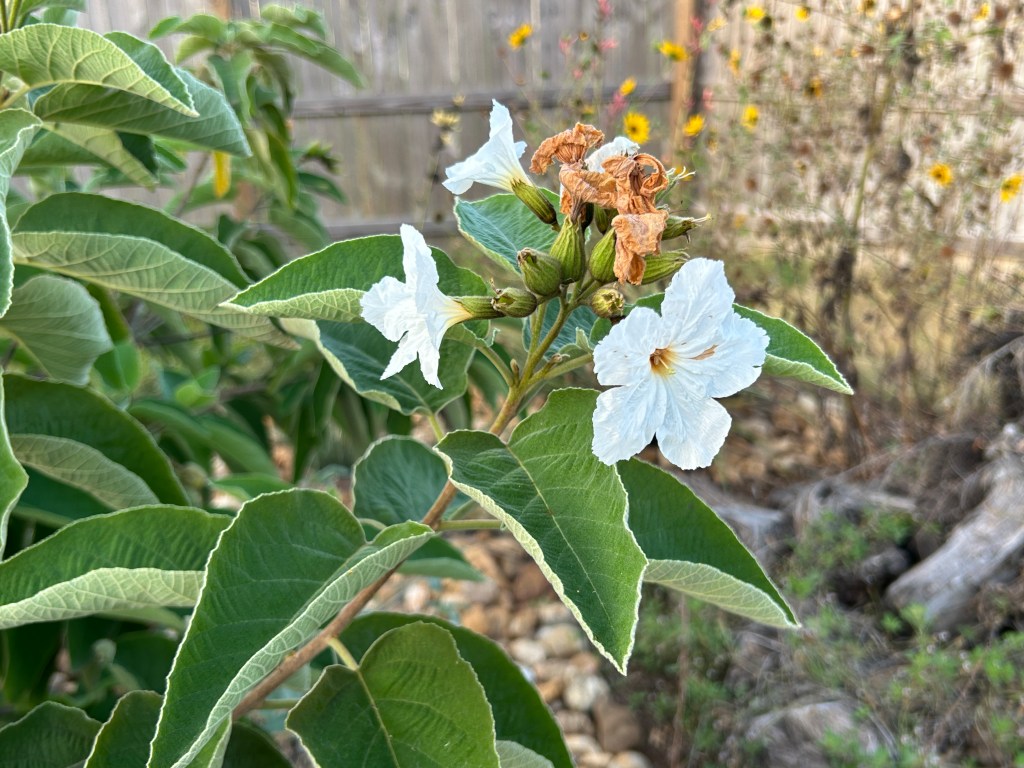
The Mexican Olive (Cordia boissieri) tree is another that is thriving in our summer heat. It blooms on and off throughout the year, and there were new flowers to greet me when I returned.
The Kidneywood (Eysenhardtia texana) shrub/tree planted last fall is almost as tall as me now, and blooming for the first time.

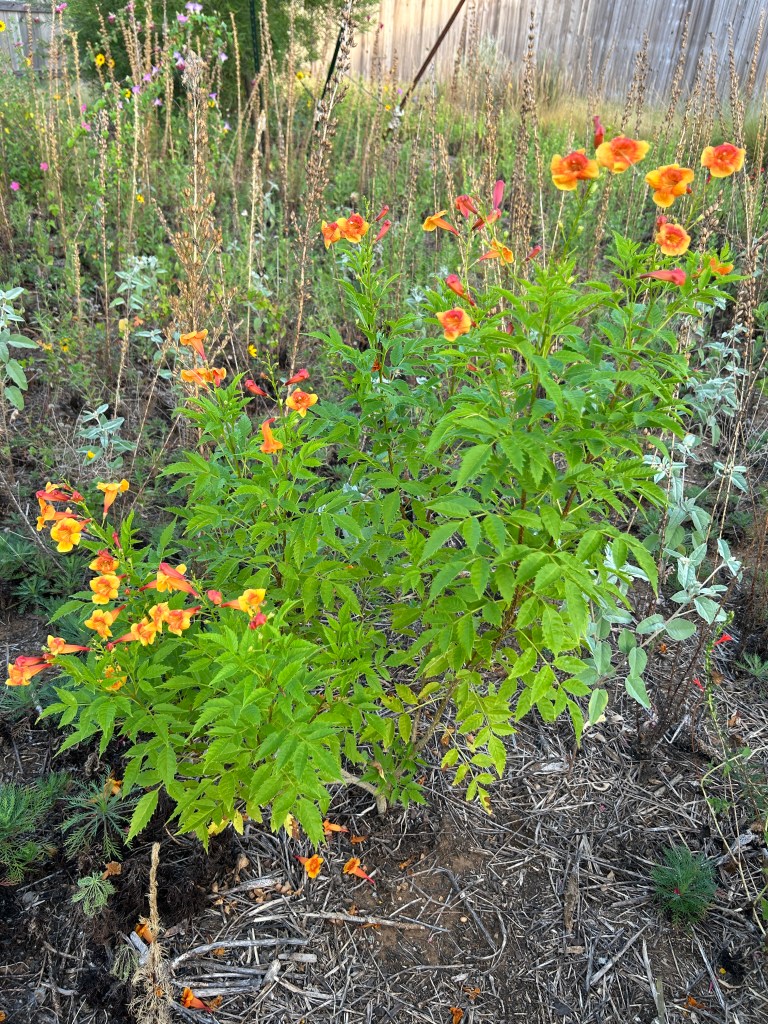
I planted a compact orange-blooming Esperanza (Tecoma stans) shrub earlier this year and it has already grown to several times its original size. It is happily blooming.
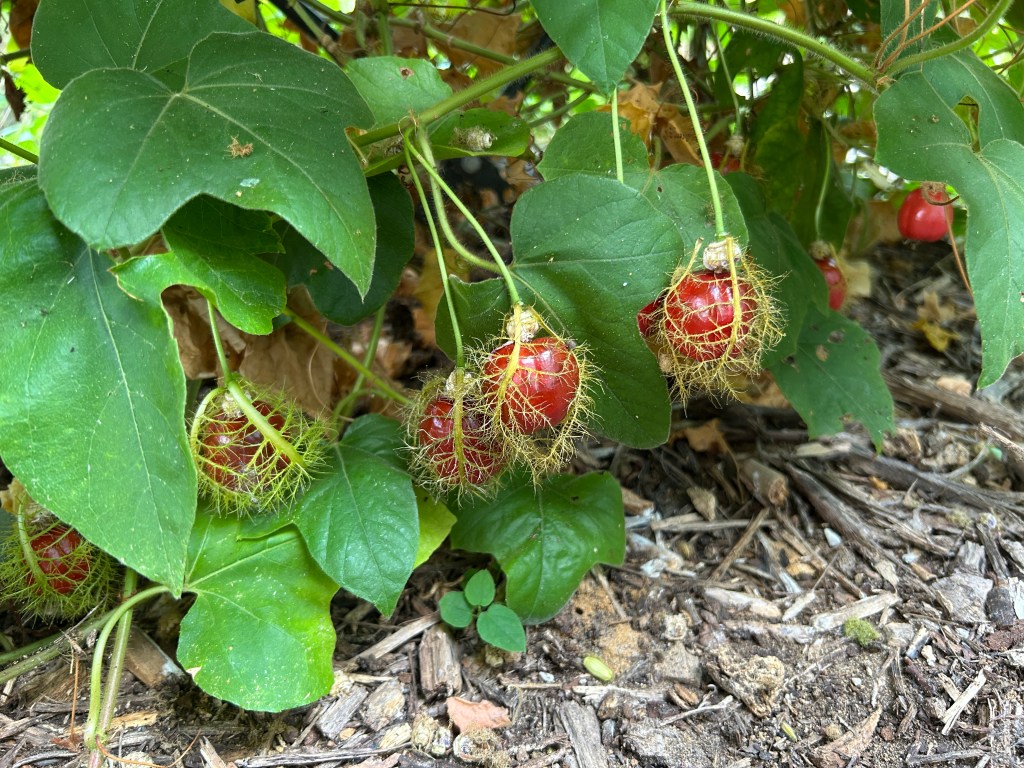
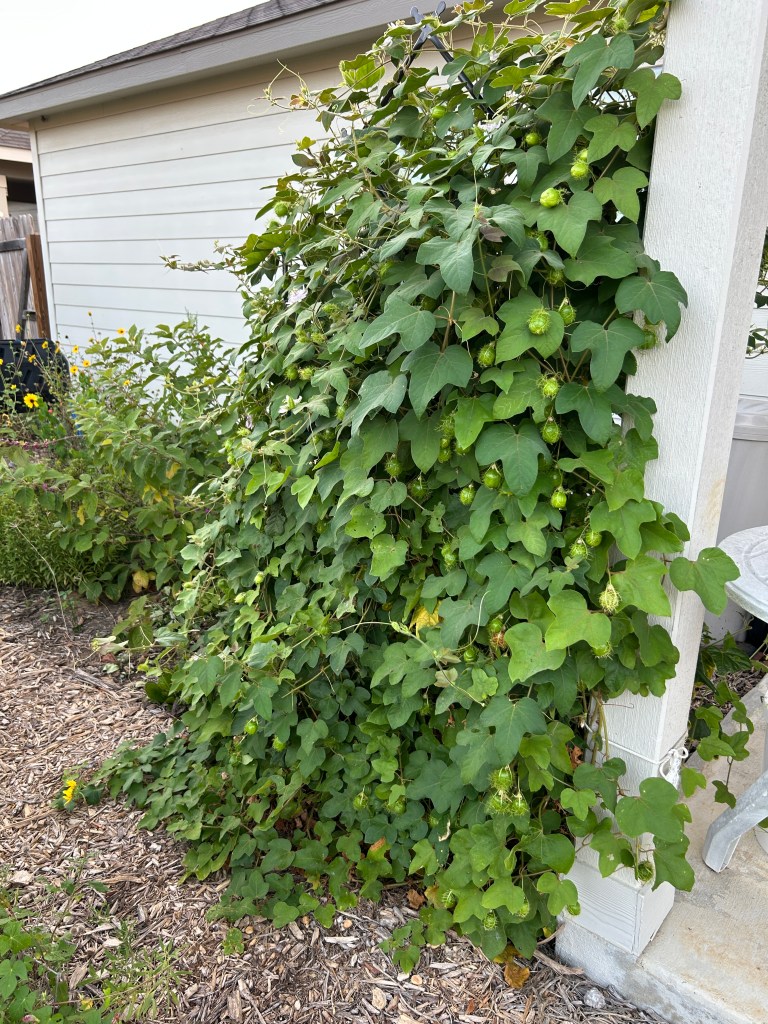
The Scarletfruit Passionflower (Passiflora lanuginosa), planted in 2024, is growing profusely this year, and in fact I have to frequently trim it back to restrict it to its small trellis. When I came back from my trip, this plant had grown a lot and was also filled with blooms, fruits, and Gulf Fritillary caterpillars.
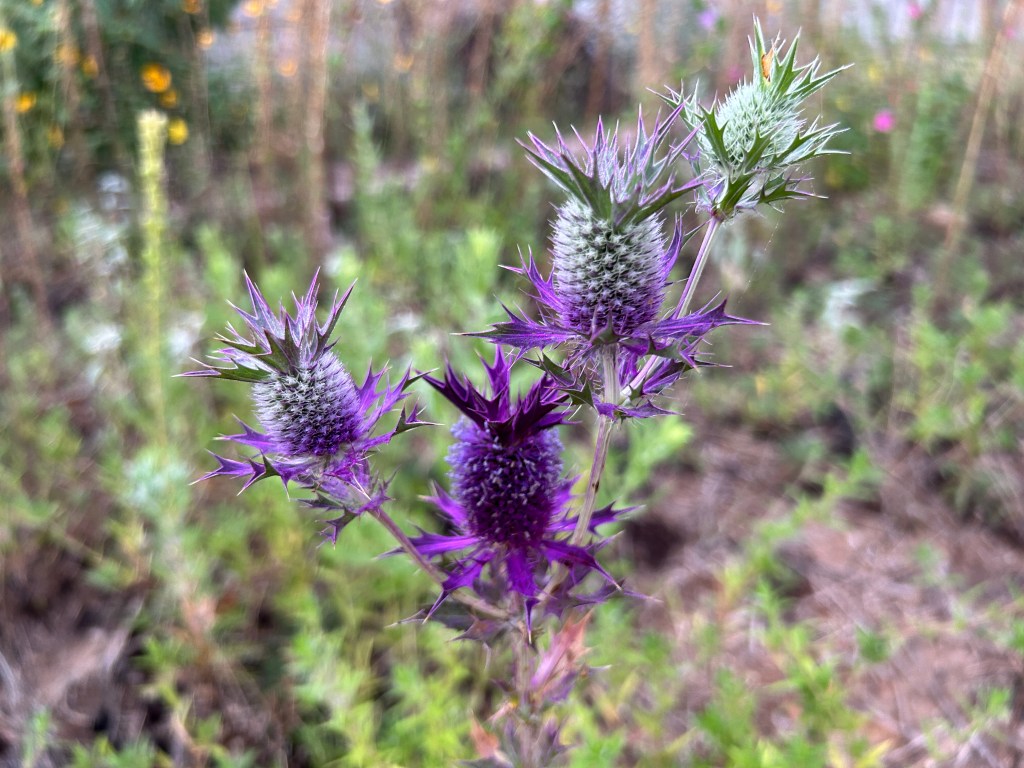
Back in 2023, I scattered seed for Leavenworth Eryngo (Eryngium leavenworthii). I did see some of these striking plants in 2024, but not in 2025. I am pleasantly surprised to see several growing here this year — their deep purple color is quite eye-catching.
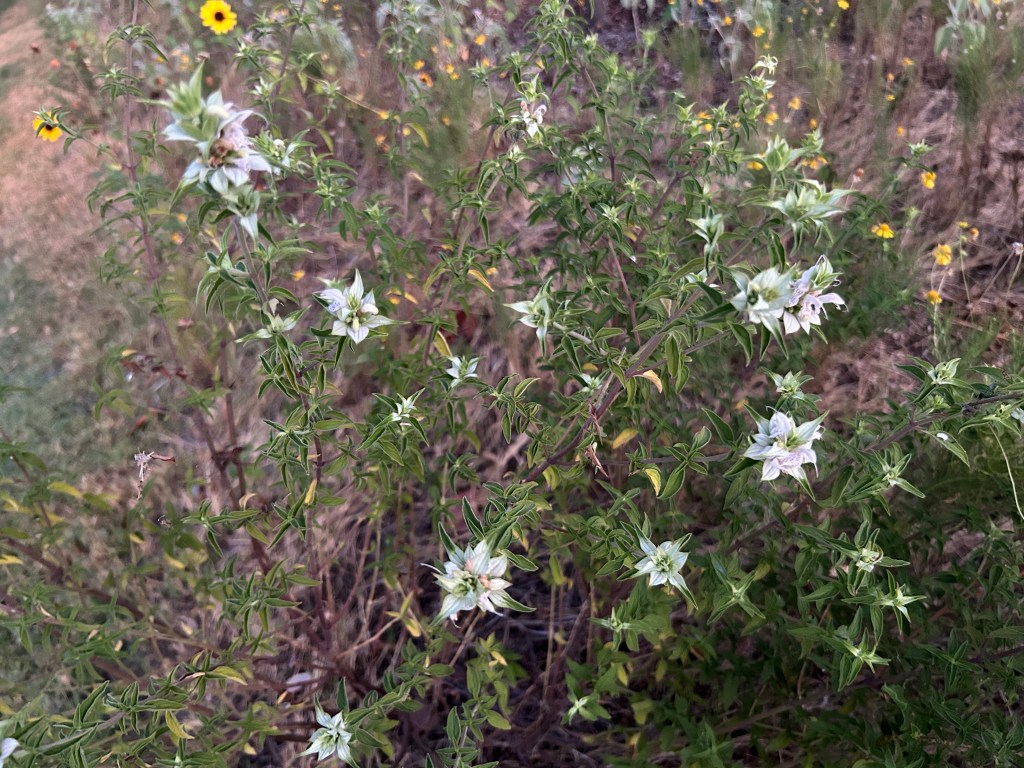
I have Spotted Beebalm aka Spotted Horsemint (Monarda punctata) in several parts of the garden. For some reason, the ones in the wildflower meadow in front of the house are slower to bloom than the others. While I was away, one of the bigger plants in the meadow started to bloom.
In June, I cut the Maximilian Sunflowers (Helianthus maximiliani) down to about 2 feet tall and roped the cluster together to keep it upright. These won’t bloom until about October, but they’re growing taller — currently standing at 4-6 feet. The reason for the “Chelsea Chop” in June was to keep the plants shorter and to stop them splaying out. Last year they grew to about 12 feet tall!

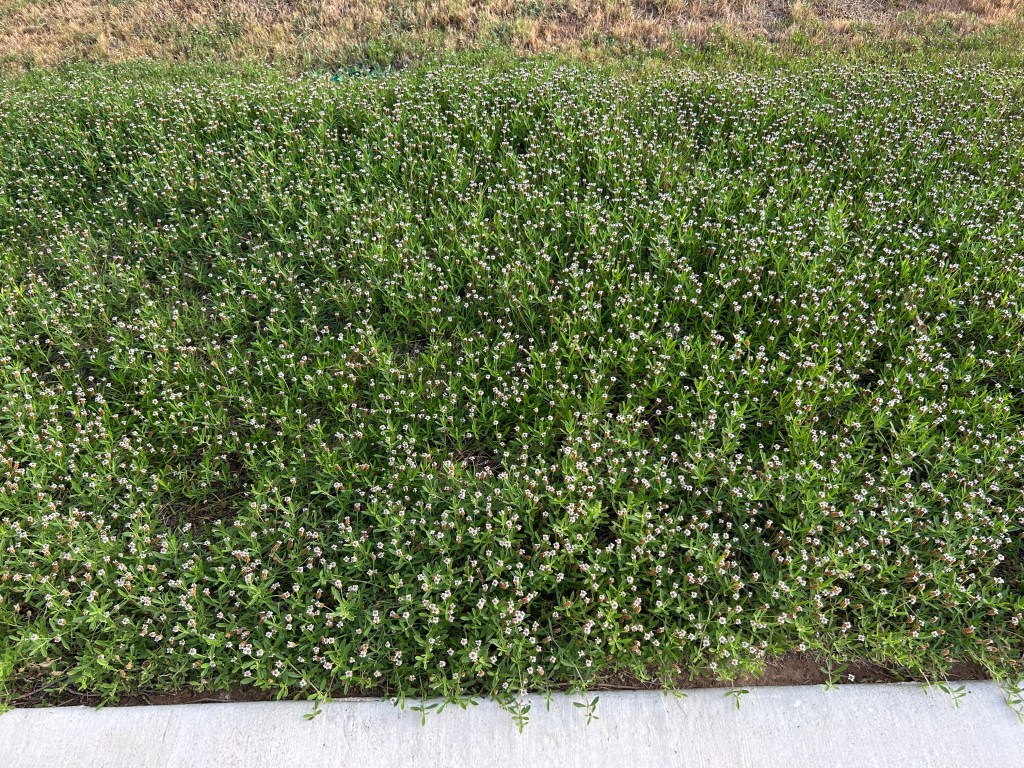
In front of the house I have encouraged Frogfruit (Phyla nodiflora) to take over areas of bermudagrass. The Frogfruit does get mown, but only about every two months. In the meantime, it produces a carpet of tiny flowers that attract a multitude of small bees and butterflies. These areas seethe with pollinator activity on sunny days.
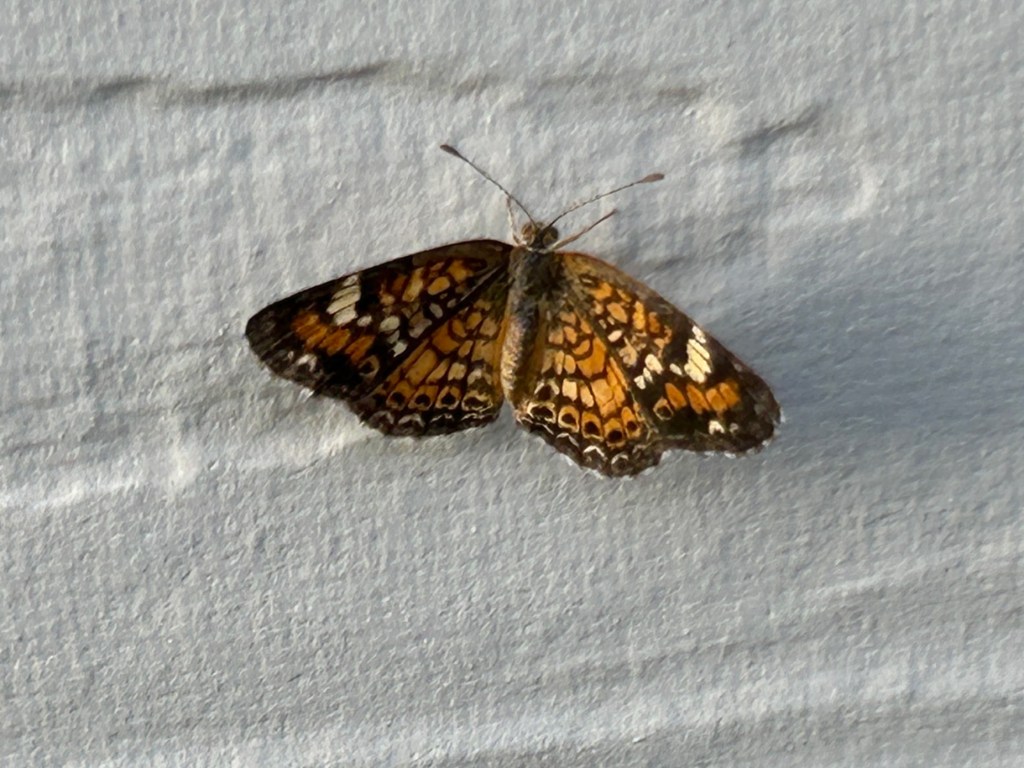
As usual, there were plenty of small creature visitors in the garden, like this Phaon Crescent butterfly (which uses Frogfruit as a host plant)…
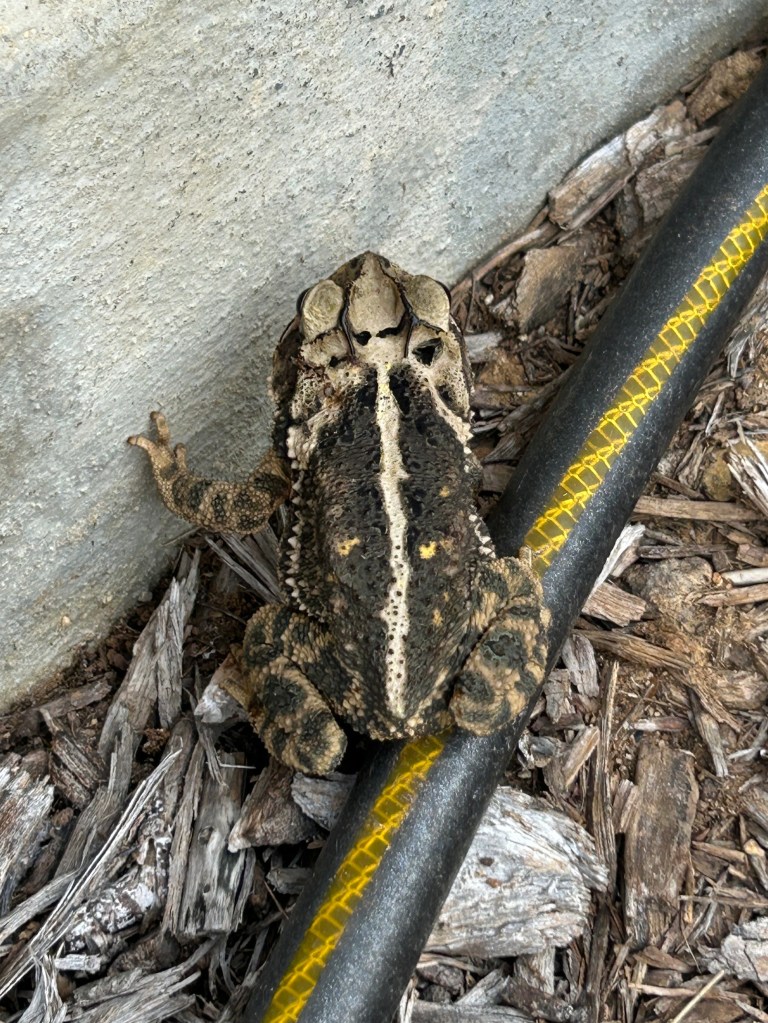
…and this Gulf Coast toad.
There are an abundance of butterflies and lizards as well.


Leave a Reply