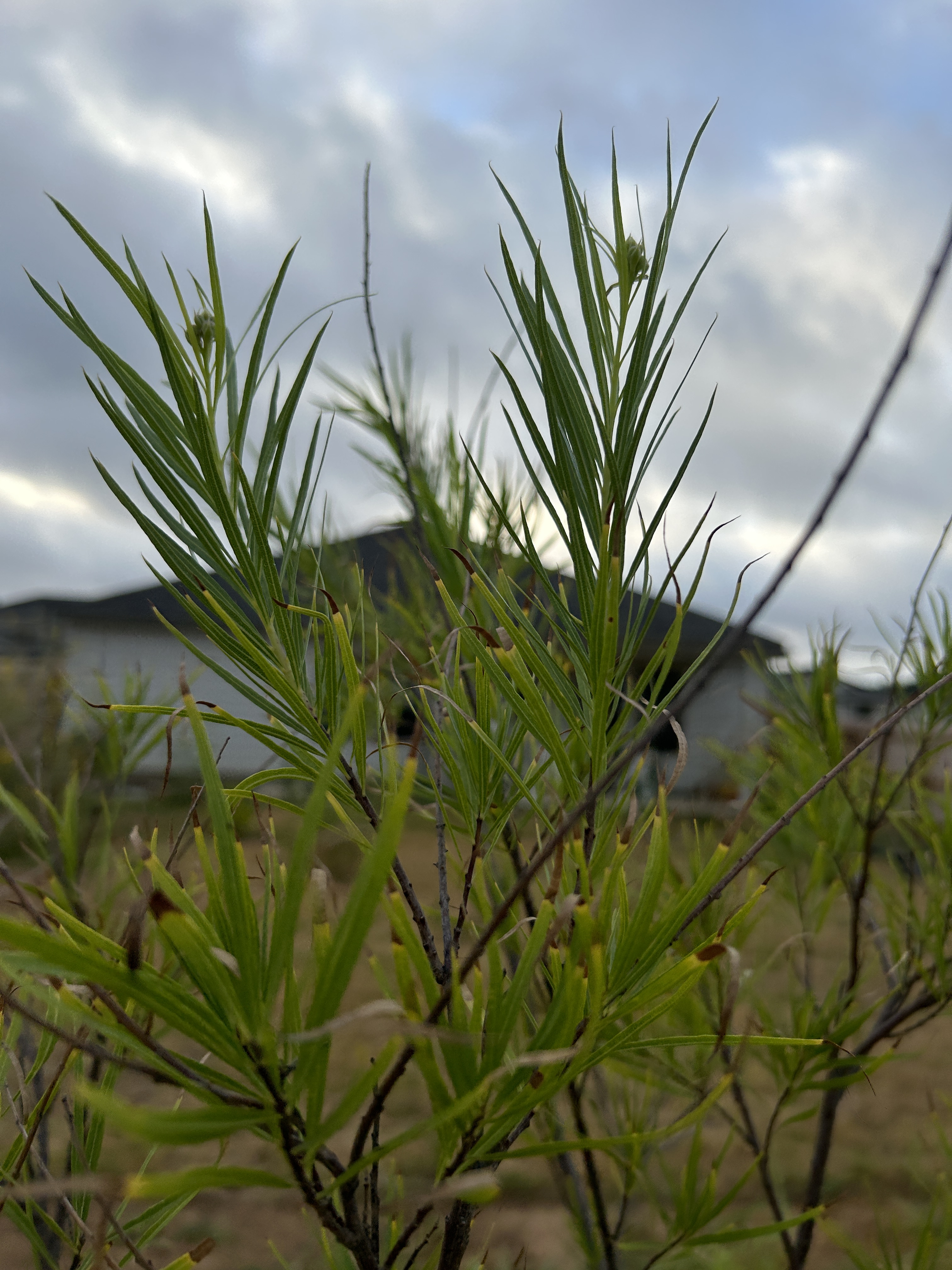
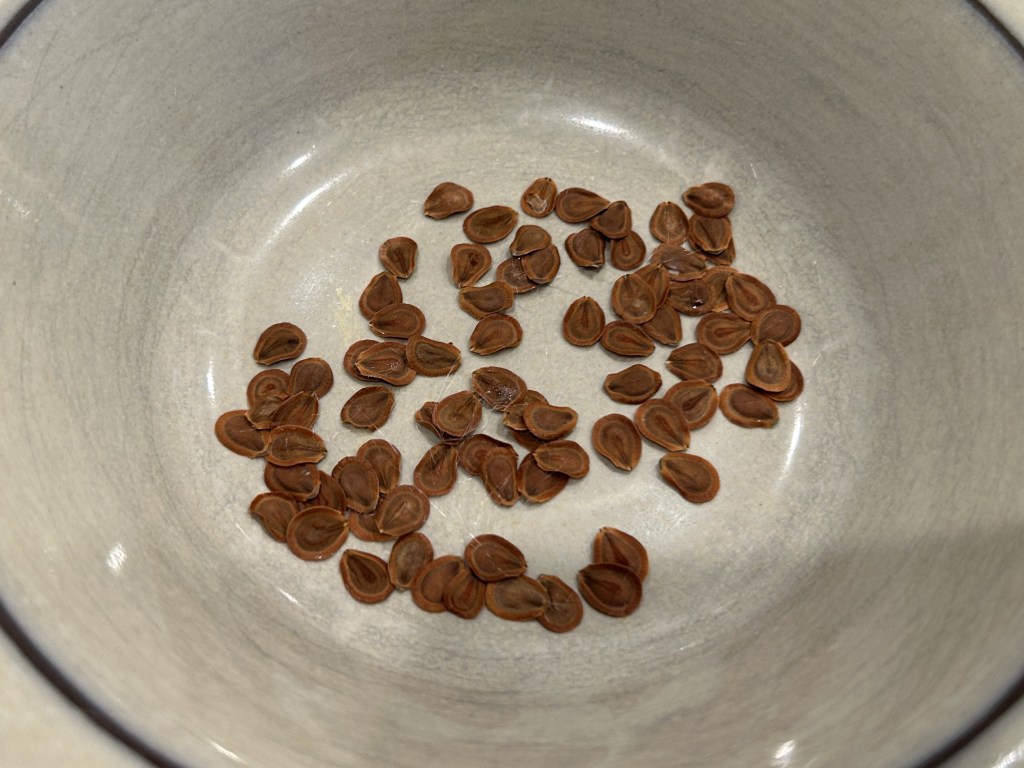
Of the native milkweeds that I am trying to establish in the back garden, by far the most successful is Zizotes Milkweed (Asclepias oenotheroides). I scattered seed in one area in spring 2024, and I think a couple of plants grew from that activity. Now there are about a dozen plants that have apparently self-seeded into various random places, so I think this plant likes my environment — the NPSOT information page lists preferred soil types of “Dry, Gravelly, Limestone, Rocky, Sand,” which is a good fit for my poor quality, sand-based soil.
Many of my plants are now producing one or more seed pods. Until now, I hadn’t considered introducing milkweeds into the front garden, but given that I have a good supply of free seed, I’m going to experiment with that.
One morning in late October 2026 I noticed that a Zizotes seed pod had burst. Unfortunately, I forgot to photograph the seed pod on the plant.
I gathered the pod and any seeds that were still clinging to the plant and brought them indoors. I have learned from experience that handling milkweed seeds outdoors while their “parachutes” are still attached means that they are very likely to blow away. That is their mechanism of dispersal, after all. The white fluffy hairs attached to milkweed seeds are also known as floss, pappus, coma, or silk.
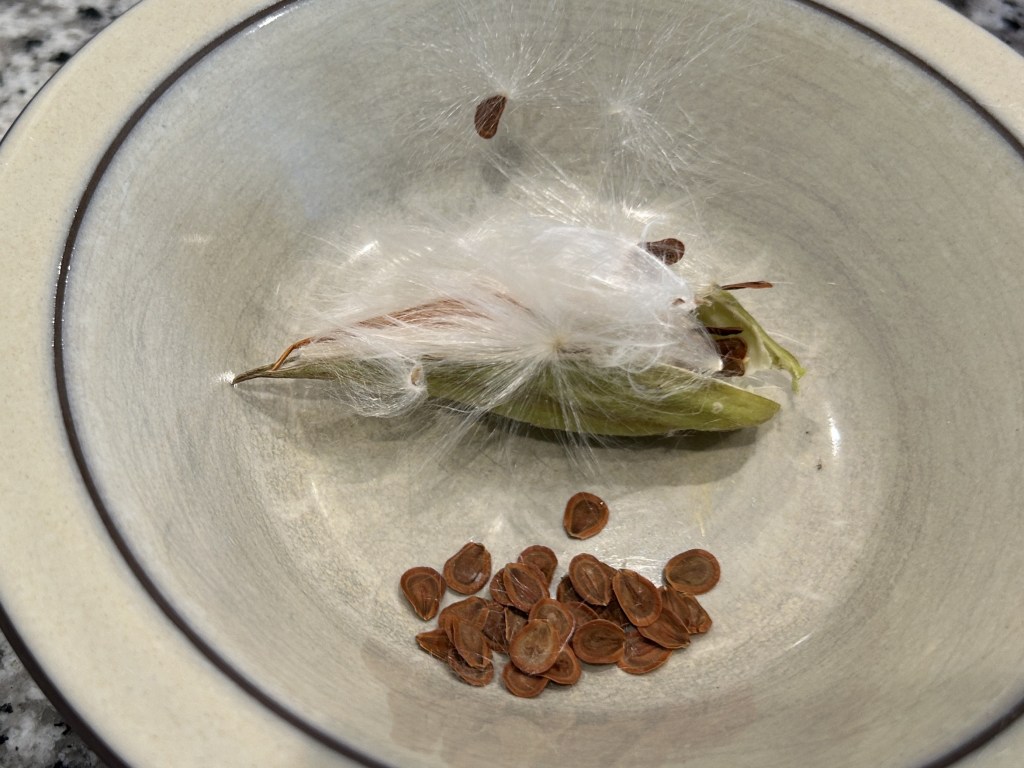
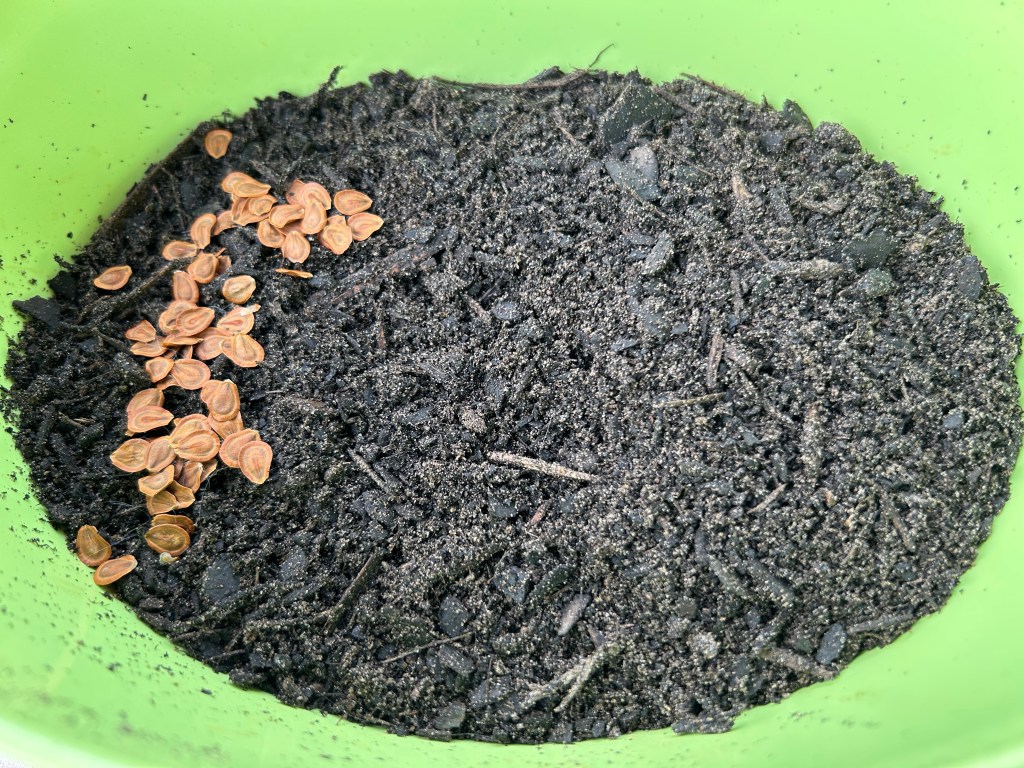
It was a simple process to pull off the floss, and then I mixed the seeds with a few handfuls of soil for easier dispersal.
Most of the area in front of the house that would otherwise be lawn, for several months of the year is a wildflower meadow. I decided to scatter the Zizotes seeds that I had gathered in a small area of the meadow near the porch for a few reasons:
Clustering milkweed plants together means that if there are Monarch or Queen caterpillars (these are two of the butterflies that use this plant as a host), then should there be a need to move from one plant to another, there may be multiple options nearby.
Zizotes milkweeds are not particularly colorful or showy (to humans) and by locating these at the back of the meadow (from the sidewalk/street perspective) places them behind the more eye-catching wildflowers.
Sowing Zizotes seeds near the porch means that I can easily monitor the area for caterpillar activity without having to disruptively walk into the meadow. I walk right past that area every time I go out.
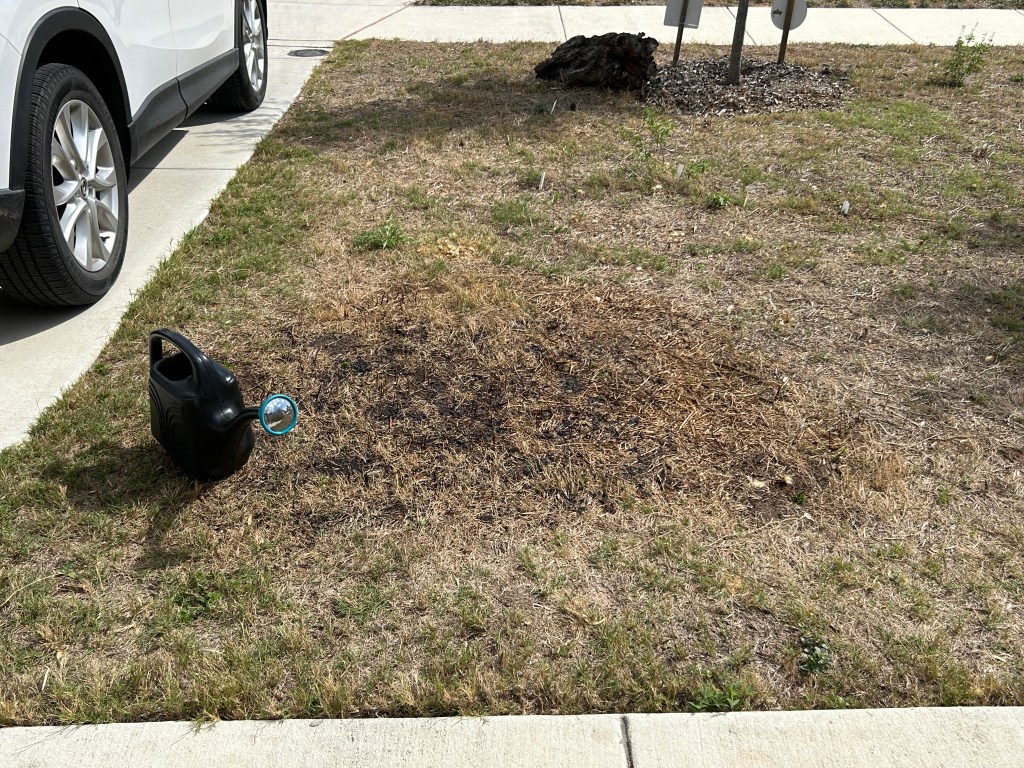
Once the seeds were scattered, I watered them to improve soil contact and that is probably the last attention they will get from me. If they do germinate, I would expect that to happen next spring.
In the photo below, the Zizotes seeds are in the darker damp patch near the watering can.


Leave a Reply